

A single moment, and history rewrites itself. Saudi Crown Prince Mohammed bin Salman's White House visit concluded with fanfare as President Donald Trump announced the sale of F-35 fighter jets, advanced tanks and a raft of additional security gifts to Riyadh, including a possible bilateral defense agreement and the prospect of a civilian nuclear agreement.
Even in the Saudis' most optimistic dreams, a quarter of these presidential gifts would have constituted a dramatic achievement. It is already evident that the sale of such tie-breaking weapon systems (such as the F-35 fighter jets) prior to normalization with Israel directly challenges the longstanding U.S. policy of maintaining Israel’s qualitative military edge (QME). This policy, enshrined in law nearly two decades ago, was overwhelmingly approved by a bipartisan majority in Congress.
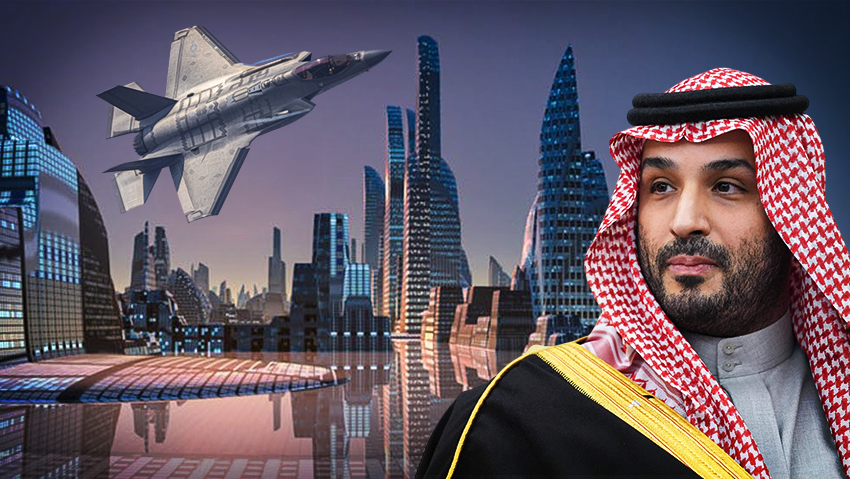
For years, American administrations refrained from unilateral moves on core issues critical to Israel's security: preserving the IDF's military freedom of action, vetoing anti-Israel decisions at the UN’s Security Council, avoiding progress on the Palestinian channel over Israel's head, coordinating on Iran's nuclear program (even if occasional friction arose), strengthening the Abraham Accords and maintaining Israel's QME, including via the multi-year U.S Foreign Military Support (FMS) to Israel.
Yet in the Trump era, the weights on Israel are piling up: affection for dictators like Erdogan, Putin and the Saudi royal family; troubling chemistry with Syria's former ISIS-affiliated ruler; pushing the Muslim Brotherhood axis (Turkey and Qatar) to center stage in the Middle East; and pushing the international community into the Israeli-Palestinian conflict.
In effect, quite a few sacred cows in the U.S.-Israel relationship are being challenged over and over in the Trump era: dilution of the qualitative edge, imposition of permanent tariffs, visa cancellations for the Israeli tech sector, a Palestinian "Balfour Declaration" and more.
The president is undermining the iron foundations of the 'special relationship'
We, as Israelis, all owe President Trump a huge debt of gratitude for returning the hostages back home and striking Iran for the first time in U.S history while fully supporting the Israeli attack on Tehran's nuclear program, but that does not end the matter.
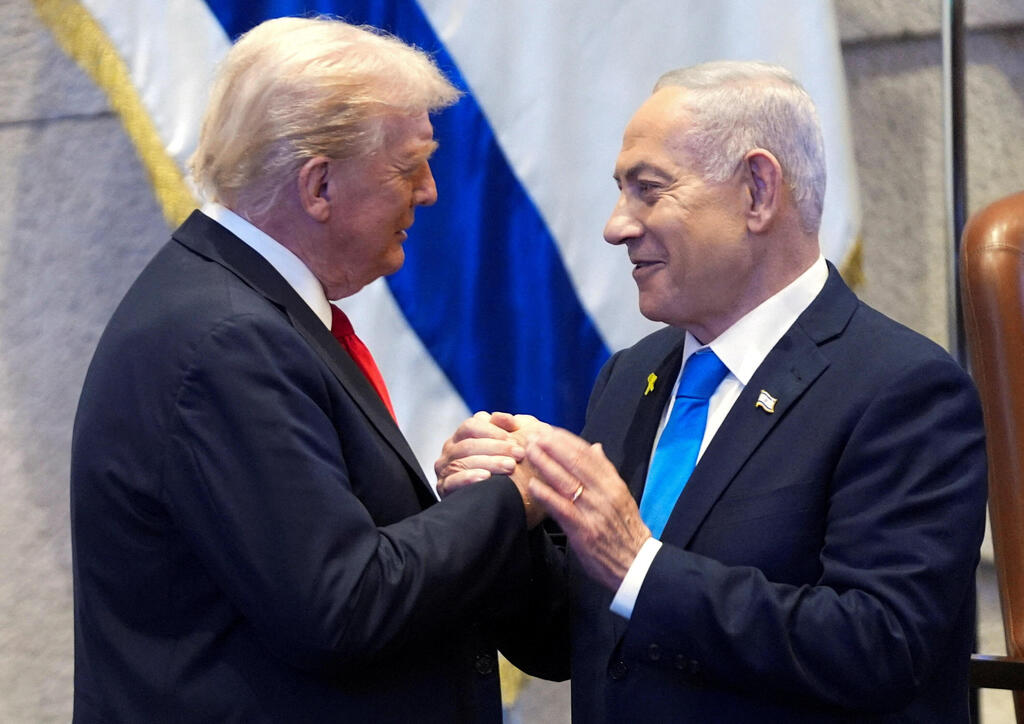
US President Donald Trump and Prime Minister Benjamin Netanyahu
(Photo: JALAA MAREY/Pool via REUTERS, Chip Somodevilla / POOL / AFP)
Less than a year since his inauguration, it can already be said that the president is undermining some of the strongest foundations of the "special relationship" between Israel and the United States as part of his broader presidential agenda to undermine long-standing global norms, understandings and agreements.
True, there have been presidents who were not considered among the greatest fans of Israel (Obama, Bush Sr. and Carter), but the friction points with them were specific, even if principled, and never led to the shattering of fundamental conventions in the relationship.
The harm caused by President Trump is twofold: not only is the longstanding perception of unwavering American support for Israel being undermined, but it’s happening under a president widely seen as one of Israel’s strongest allies. In other words, if long-term strategic harm to Israel occurs under a president widely seen as a strong supporter of Israel, what can be expected when a less sympathetic president takes office?
In effect, unintentionally, Mr. Trump is paving the way for fundamental changes in U.S policy toward Israel, while granting legitimacy to the pursuit of policies less favorable to Israel in the future.
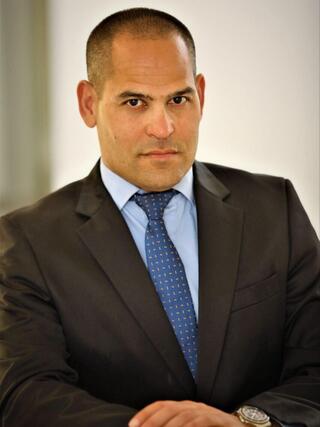 Avi Kalo Photo: Aloni Mor
A particularly jarring preview came just last week during the White House visit of New York Mayor-elect Zohran Mamdani, who claimed again that Israel is committing genocide in Gaza. President Trump did not respond, even though this was the first time that such a grave and baseless statement was made publicly in the Oval Office against the U.S.'s closest ally.
Yet pointing an accusing finger overseas is not the final word, nor does it absolve Prime Minister Benjamin Netanyahu of responsibility for the outcomes in the White House. Reality bites harder than ever: in the shadow of his political and legal weakness at home (notwithstanding the American "pardon letter" to President Isaac Herzog, which carries no legal validity), Prime Minister Netanyahu does not dare challenge President Trump, not behind closed doors and certainly not publicly.
One need only watch in astonishment Netanyahu's statement of support for the UN Security Council resolution on Gaza, which includes a kind of Palestinian "Balfour Declaration" ("a pathway to statehood"), to internalize the depth of the systemic paralysis afflicting the prime minister in his relations with President Trump. The absence of any response to a series of problematic White House initiatives testifies that failing to challenge an American president, whoever he may be, is a privilege Israel simply cannot afford in this tough neighborhood of the Middle East.
It follows, then, that the results of the upcoming Israeli elections will be formative, among other things, for the future of the "special relationship" between Israel and the United States of America.