

In Israel, the debate has reignited over whether it is acceptable to allow Saudi Arabia to acquire F‑35 fighter jets. Many view this as a blow to Israel’s qualitative military edge, regional balance and deterrent power. But this debate rests on an outdated concept—one from before October 7. That morning unveiled a simple truth: technology alone does not save nations.
The stealth jet, designed to vanish from radar, has become a metaphor for us. Sometimes the stealth system causes the real danger to slip out of sight. Instead of seeing the genuine threat, we became trapped by the system’s shine, by pride in our capabilities, by the assumption that the country who holds the most advanced machine necessarily wins.
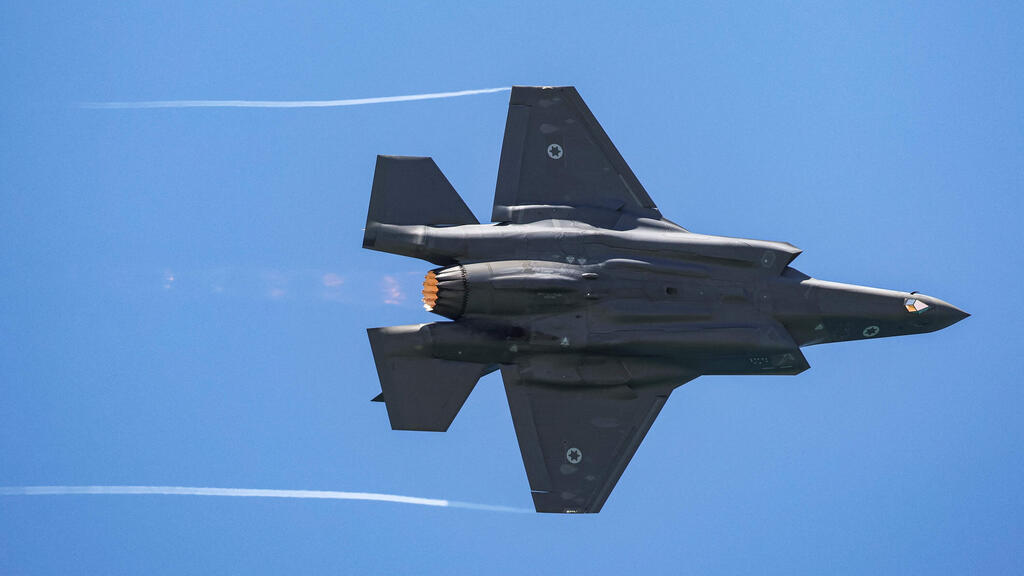
An F-35 stealth jet
(Photo: Jack Guez / AFP)
On paper we entered October 7 with absolute superiority: fifth‑generation stealth jets, world‑class intelligence, advanced offensive and defensive cyber systems, and missile‑defense systems that almost became a national creed. But it all collapsed that morning not because we lacked another jet, but because we lacked a concept. Technology became a camouflage system—not just of itself but of reality.
An example of this can be seen in comparatively small weak states that did not rely on military power but on strategic wisdom.
Qatar became a regional powerhouse in just a few years—not because of a large army but because of its role as mediator, gas giant and deep connection to global influence networks. The UAE made a similar transformation, turning from a small desert state into an economic and technological power through investment in diplomacy, logistics, trade and global alliances. Even Singapore, though far from us geographically, is a model of a tiny state whose strength lies not in military superiority but in long‑term planning, innovation and creating regional and economic dependence.
They all proved that small states can overcome geographic constraints through intelligence, alliances and placing themselves correctly in the big game.
A new concept
Therefore the real question isn’t whether Saudi Arabia will acquire F‑35s. Israel must ask itself a much deeper question: is it ready to adopt a new concept that does not rely on an air power but on strategic vision.
This concept is based on three principles:
1. Intelligence before aircraft
The required revolution is first and foremost in intelligence. Less technological halo, more human penetration, more understanding of the region and the adversary. No longer relying on computers to evaluate what’s happening, but on people who know what’s happening.
 Meir Swissa
2. Strategic superiority instead of technical superiority
Israel’s most significant achievements in the last decade were not operational but diplomatic. The Abraham Accords showed that sometimes peace creates security better than any stealth jet. Israel needs to widen alliances, build regional dependence and become an initiating power, not just a reactive one.
3. Leveraging geography – a strategic weapon in itself
Israel is a natural bridge between Asia and Europe. Instead of fearing another jet in Saudi Arabia, we should make ourselves a central player in trade, energy and infrastructure corridors. A regional hub need not threaten anyone. It simply becomes indispensable.
Saudi Arabia’s F‑35s will not decide the Middle East. But if Israel continues to cling to the outdated concept that technological superiority is the answer to every problem, it risks continuing to miss what lies directly before its eyes.
Because in the end, like the stealth jet itself, the truth can slip off the radar.
Meir Swissa is an advertising executive and political strategist