

The election held Tuesday ended in what appears to be a political deadlock. Neither bloc secured 61 seats. Even if Gadi Eisenkot is tasked with forming a government, his path to the Prime Minister's Office appears virtually impossible. Likud will not join a government under his leadership, the ultra-Orthodox parties will condition their participation on legislation exempting their constituents from military service and Avigdor Lieberman and Naftali Bennett have pledged not to form a government with the Arab parties.
It appears that any path to forming a government would require breaking campaign promises. The likely scenario is familiar: 28 days of coalition negotiations, possibly extended by another 14 days, followed by the return of the mandate to form a government and either its transfer to Benjamin Netanyahu or another round of elections.
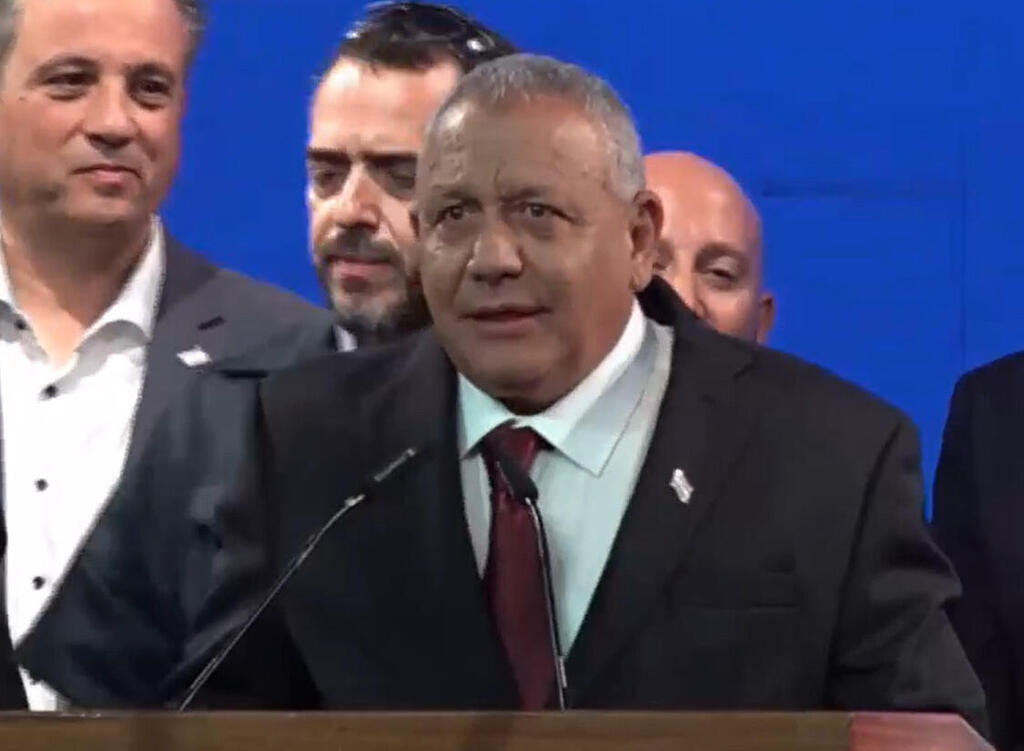
Gadi Eisenkot
(Photo: Gil Nechushtan)
As a constitutional law expert rather than a political commentator, I believe there is another, innovative constitutional approach. It rests on the plain language of Basic Law: The Government and departs from the conventional political assumptions about how governments are formed. I call it the game-of-chicken strategy.
Israeli politics has forgotten that the Basic Law does not recognize the concept of political "blocs" and does not require coalition agreements or the support of 61 Knesset members. The familiar practice of negotiating coalition agreements to secure 61 supporters is a political convention, not a requirement of Israel's constitutional framework.
That convention rests on a reasonable assumption: A party that gains nothing politically from supporting a government will not support it. But I am not convinced that we are operating in the rational, conventional political environment that has characterized every government formation process since Israel's establishment.
The first constitutional step in forming a government is securing the mandate to do so. Section 7(a) of Basic Law: The Government states: "Once a new government must be formed, after consulting the representatives of the Parliamentary Groups, the President of the State shall assign the task of forming a government to one of the Knesset Members, who has agreed to do so."
The customary practice is to give the mandate to the candidate who receives the most recommendations from Knesset factions. In this case, Eisenkot is likely to be that candidate. The Arab parties, or at least some of them, are expected to recommend him, just as they previously recommended Benny Gantz and even Shimon Peres in the 1980s.
In the second stage, under Section 13 of the Basic Law, the lawmaker entrusted with forming a government may inform the president and the Knesset speaker that he has succeeded. The proposed government must then be brought before the Knesset within seven days for a vote of confidence.
The law does not require 61 signatures or signed coalition agreements. It requires only a declaration that a government has been formed, followed by the presentation to the Knesset of a list of ministers, the allocation of portfolios and the government's governing principles.
The government takes office once the Knesset expresses confidence in it. That confidence requires only a simple majority: more votes in favor than against.
This is where the game of chicken begins
Suppose Eisenkot receives the mandate but fails to reach coalition agreements that would give him a parliamentary majority. He cannot form a government with Likud or the ultra-Orthodox parties, and given the campaign promises concerning a government with the Arab parties, reaching agreements with them to secure 61 supporters also appears unrealistic.
Under the prevailing political convention, Eisenkot would return the mandate to the president.
But instead, he informs the president, "I have succeeded in forming a government," and presents the Knesset with a proposed government that has no coalition agreements whatsoever. Its ministers come exclusively from his own party, and its governing principles are those he presented during the election campaign: a commitment to the values of Israel's Declaration of Independence, passage of a law requiring national service for all and the dismantling of Hamas.
Eisenkot then takes the podium and declares:
"I have not signed agreements with any of you, and at this stage I am not offering you ministerial portfolios or places in my government. But I will keep ministerial positions available for those who wish to join in the future.
"I have just one question: Do you want me to become prime minister in five minutes, begin governing according to the principles I have presented and get to work, or do you want Netanyahu and his current ministers to remain in power for many more months and lead us into another election?"
Eisenkot would take the podium and say: "I have just one question: Do you want me to become prime minister in five minutes, govern according to the principles I have proposed and get to work, or do you want Netanyahu and his current ministers to remain in power for many more months and lead us into another election?"
This is a classic game of chicken: Two cars speed toward each other, and whoever swerves first loses.
Every Knesset member who promised voters to replace Netanyahu would have to decide, in a vote before the cameras, whether to support Eisenkot's proposed government despite receiving nothing in return through a coalition agreement and having no place in the government, or vote it down and leave Netanyahu in charge of a caretaker government until the next election.
It is hard to imagine Lieberman and Bennett explaining why they voted alongside Itamar Ben-Gvir, Bezalel Smotrich and the ultra-Orthodox parties in favor of Netanyahu and against Eisenkot and the governing principles he presented.
It is equally difficult to imagine the Arab parties, or most of their Knesset members, voting against the government and thereby keeping Netanyahu and Ben-Gvir in power, even if they receive nothing in return and Eisenkot pledges to dismantle Hamas.
But what about the campaign promises? This is where the proposal's strength lies.
A vote of confidence does not constitute joining a coalition. Lieberman and Bennett would not sign agreements with the Arab parties or Eisenkot, nor would they serve alongside them in the government.
Eisenkot would declare in advance that he has no agreement with anyone, that every Knesset member is free to vote according to his or her judgment and conscience and that he is committed solely to the governing principles he has presented, including the elimination of Hamas, as promised.
If the Arab parties choose to support the government from outside the coalition, Eisenkot could argue that it was their decision and that he had made no commitments to them.
This would therefore not be a government formed together with the Arab parties, nor one in which an Arab party is a coalition partner, as Ra'am, the Islamist Arab party, was in Bennett's government. Instead, it would be a government operating under precisely the principles Eisenkot pledged to uphold during the election campaign.
What the critics will say
Critics will argue that such a government could not function for long. There is merit to that argument.
Every piece of legislation would require its own parliamentary majority, and if the state budget is not approved by March 31, 2027, the Knesset would automatically dissolve.
But this criticism, too, rests on a convention that developed within Israel's political system: the assumption that the government must control the Knesset.
That convention has no constitutional basis. On the contrary, the constitutional framework provides for a separation of powers, with a strong Knesset responsible for overseeing the government.
A government needs the confidence of a majority of those voting in the Knesset. Nothing more and nothing less.
Once a government has won that confidence, it becomes a fully empowered executive authority, possessing the extensive powers granted to the government.
It can establish a state commission of inquiry into the events of the October 7 massacre, make appointments, advance policies and, of course, carry out military operations. None of these actions requires Knesset support.
And what about bringing down the government?
Once the Knesset member entrusted with forming a government has successfully established one, removing it is no simple matter.
A parliamentary majority opposed to the government is not enough. It takes 61 Knesset members who agree on an alternative government, including its composition and governing principles.
It is difficult to see who could assemble a majority of 61 Knesset members for a constructive vote of no confidence, which requires agreement on an alternative government.
The Knesset could, of course, pass legislation dissolving itself. It would also dissolve if the following year's state budget were not approved.
But until then, Eisenkot, as a sitting prime minister, could pursue numerous political initiatives. He would also have far greater room to maneuver in efforts to broaden his government's base of support than he has now.
 Matan GutmanPhoto: Shlomi Yosef
The government and the Knesset are separate institutions.
Under the plain language of the Basic Law, forming a government does not require all its supporters to serve together in the government, nor does it require coalition agreements backed by 61 Knesset members.
All that the law requires is that, at one particular moment, in a single vote following the designated Knesset member's declaration that "I have succeeded in forming a government," more Knesset members vote in favor of the new government than against it.
This proposal shifts the decision on forming a government from closed-door negotiations to the Knesset plenum, in full public view.
In this political game of chicken, the question becomes who is willing to replace Netanyahu's government with an Eisenkot government without joining it and without signing coalition agreements.
The writer is an attorney, holds a doctorate in law and is an expert in public law at Reichman University and a legal commentator for ynet.