


One of the most prominent responses to surprise attacks that create collective trauma is the construction of massive projects by the side that was attacked. These are perceived as an effective response to the threat that was exposed and as a guarantee that the past failure will not be repeated. In most cases, however, they prepare for the challenges of the previous war, while the enemy is already preparing for a different kind of campaign.
The Maginot Line, built by the French between the two World Wars, was intended to block German invasions through the border between the two countries. But it proved useless when Germany launched its 1940 offensive by flanking it through Belgium. The barrier built along the Gaza border after Operation Protective Edge in 2014 did, on October 7, prevent infiltrations into Israel through tunnels, but it collapsed in the face of a broad ground assault.
Since October 7, seizing territory has become a basic pillar of Israel’s security policy, applied in Lebanon, Gaza and Syria. It is presented as a central lesson from the October 7 failure, meant to protect communities near the borders and push the enemy away from them. Some also add the “insight” that “Arabs only understand when you take territory from them,” meaning that Israel’s deterrence image is strengthened. That firm conclusion is voiced by Netanyahu and Katz, who repeatedly declare that Israel will not withdraw from the territories it has seized.
Gallery
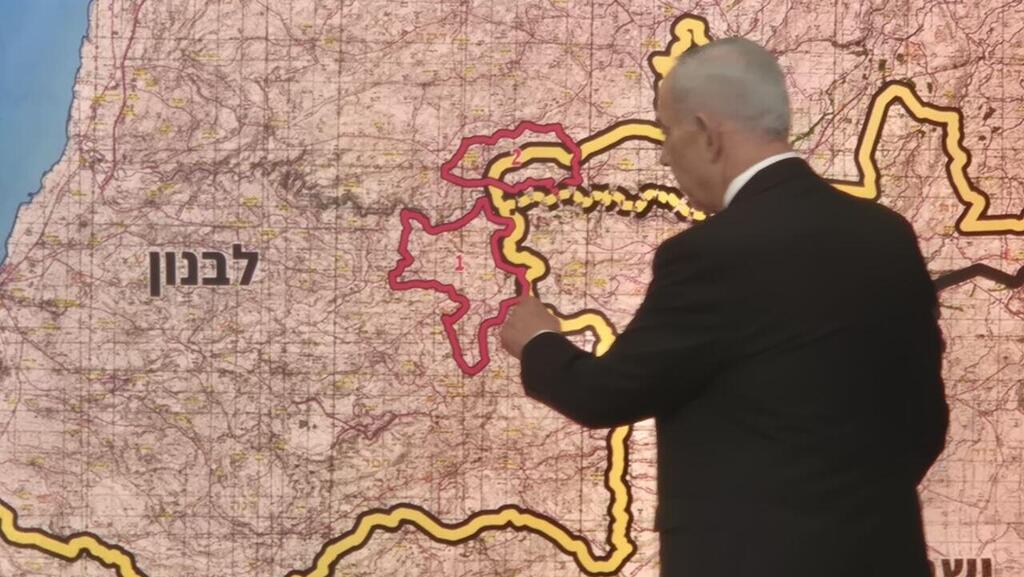
Prime Minister Benjamin Netanyahu outlines what territory Israel holds in southern Lebanon during his press conference
(Photo: Itamar Eichner)
However, critical thinking and memory show that the October 7 failure did not fundamentally stem from the enemy operating near the border, but from the arrogance and complacency that prevailed in Israel, alongside contempt for the enemy and an extreme lack of understanding of its logic. Israel also developed a concept that it could change the enemy’s behavior through economic gestures. In such a situation, even if the border had been located where it is today, a severe surprise attack against Israel would still have materialized.
There is no doubt that it is preferable for the enemy to be kept away from border communities in the north and south and prevented from developing threatening infrastructure along the border. Still, pointed questions must be raised: How long is Israel supposed to remain in the areas captured on the three fronts? Beyond holding territory — or carrying out “creeping erosion,” as some in Israel boast in the context of Gaza — is there also a strategic plan? And how will Israel act in the face of growing external pressure to withdraw, as has already begun in the Lebanese arena? In addition, Israel must understand that continued occupation of territory blocks normalization with Arab states, which are already alarmed by what they perceive as “a territorial expansion plot at their expense.”
At the same time, it would be advisable to strip the holding of these areas of ideological symbols, foremost among them the sectoral vision identified with the religious Zionist movement, whose representatives in the government and Knesset declare that it should also include annexation, expulsion and the establishment of settlements. Strengthening the perception that the seizure of territory in all three arenas, alongside the intensive settlement effort in the West Bank, stems from faith-based motives that are not shared by the entire public and are disguised as an ostensibly strategic justification — “where there is settlement, there is no terror” — will deepen internal debate over the purpose of the campaign.
Israel’s central interest is not holding territory but preserving freedom of action against future threats
The holding of these territories is now being presented as the latest “rock of our existence,” with the constant waving of this issue appearing to be an attempt by the leadership to demonstrate achievements at a time of strategic low point: in light of the agreement with Iran, which threatens Israel’s interests; the restriction of Israel’s room for maneuver in Lebanon and uncertainty over the arrangements there; and growing tension between Netanyahu and Trump. All of this sharpens the questions of whether Operation Roaring Lion was worthwhile, whether it did more harm than good and, more broadly, whether the conditions that existed before this confrontation have worsened.
Indeed, for about a week, Israel has been undergoing a painful process of landing back in reality and regaining the sense of proportion it lost after the start of Operation Roaring Lion. That campaign was accompanied by fantasies about toppling the Iranian regime, eliminating enemies and reshaping the Middle East, with “reflections” in the background about redrawing the Sykes-Picot borders and receiving full American backing for reengineering the regional architecture.
The agreement with Iran began the sobering-up process, and the agreement with Lebanon deepened it. The latter appears to be a “ladder” for a possible Israeli withdrawal from southern Lebanon and represents the lesser evil, preferable to continued war and territorial occupation without a coherent plan. Still, Israel must maintain a sober approach: Lebanon’s government remains weak, and Hezbollah, which does not accept the agreement, remains powerful and is not expected to disappear.
Israel’s central interest is not holding territory but preserving freedom of action against future threats, such as Hezbollah’s force buildup efforts and Iran’s renewed entrenchment in Lebanon. To that end, Israel must preserve proper relations with Trump despite the current tensions, while proving that it knows how to conduct diplomatic activity and is not limited solely to military action.
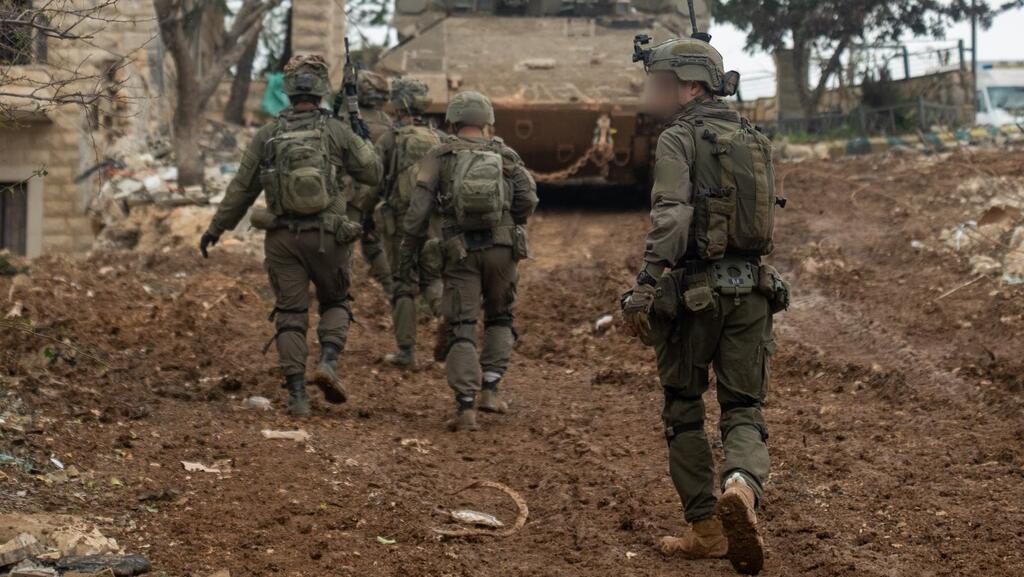
IDF troops operate in southern Lebanon
(Photo: IDF Spokesperson's Unit)
Moreover, Israel should begin thinking about alternatives to a presence without defined timelines or purpose on the three fronts: from the deployment of foreign or local forces, to American supervision, continued control of key strategic points — especially the Philadelphi Corridor — and, most important, ensuring freedom of action against any emerging threat in depth and all the more so along the border area.
This must be accompanied by initiative and offensive action — the principle of prevention — alongside sustained vigilance against an enemy that has not been “eliminated” in any arena, and avoidance of the policies of containment and arrangements that prevailed until three years ago.
In other words, Israel must implement the lessons of the October 7 failure and the flawed concept on which it rested — failures for which those now seeking to shape reality are responsible, though they have never acknowledged or investigated them.
The writer is a senior researcher at the Moshe Dayan Center at Tel Aviv University.