


Saudi Arabia’s wealth and advanced military arsenal were supposed to shield the kingdom from threats across its southern border. Yet renewed Houthi attacks have exposed the limits of that confidence. In October 2026, an attack on Riyadh’s King Khalid International Airport reportedly killed at least 13 people and wounded more than 300, while a strike on an Aramco administrative building in Dhahran caused a limited fire. Houthi claims about other Saudi targets have not all been independently verified. Even so, the combination of infrastructure risks and threats to Red Sea shipping shows how an adversary with fewer resources can impose heavy costs on a much wealthier state.
The Houthi movement, officially known as Ansar Allah, did not emerge overnight, and its rise cannot be explained entirely by Iran. Its roots lie in Yemen’s domestic politics, religious competition, and regional rivalries. Saudi Arabia did not start the movement, but its policies helped shape the environment in which it grew. The 2015 intervention gave the movement fresh grievances to exploit without eliminating its ability to fight.
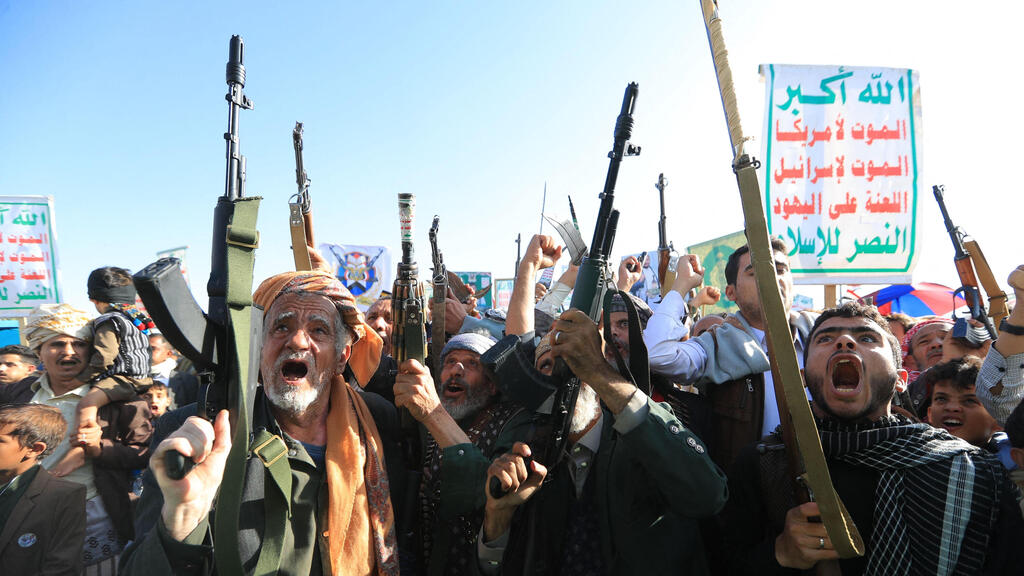
Houthi supporters in Saana
(Photo: Mohammed HUWAIS / AFP)
For decades, Riyadh treated Yemen as a strategic buffer. Religious outreach became one instrument of its policy. Saudi-backed Salafi institutions expanded into areas where Zaydism, a distinct branch of Shia Islam, had deep roots. This competition did not make armed conflict inevitable, but it sharpened anxieties over identity and political authority.
The establishment of Dar al-Hadith in Dammaj around 1980 marked an important stage in Salafism’s spread in Saada. Associated with Saudi-financed outreach, the center attracted students from Yemen and abroad. To many Zaydi communities, institutions teaching a competing tradition threatened their established position. Saudi policy was not the only driver, but it helped turn religious competition into a wider political issue.
The Believing Youth movement emerged in this environment. Founded in 1992 by Zaydi religious figures, it initially promoted religious education and cultural revival. Hussein Badreddin al-Houthi joined in 1999 and helped shift it toward politics. Its appeal reflected not only opposition to Saudi influence but also local grievances, underdevelopment, disputes over state authority, and dissatisfaction with President Ali Abdullah Saleh. Many Zaydis did not initially support the Houthis; their expansion depended on political choices and alliances, not religious identity alone.
The conflict became militarized in 2004, when the Yemeni government moved against Hussein al-Houthi and his followers. Six rounds of fighting followed in Saada through 2010. The campaigns failed to eradicate the insurgency and deepened hostility. Hussein’s death did not end the rebellion; his brother Abdul-Malik eventually became its leader. The movement survived and portrayed itself as defender of communities neglected by the central government.
Saudi policy did not create the Houthi movement, but it helped intensify the conditions in which it grew. Religious competition reinforced sectarian anxieties and weakened confidence in the state’s neutrality. Riyadh was not responsible for every Houthi decision, yet it bears responsibility for the strategic consequences of its long approach to Yemen.
The decisive regional turning point came in March 2015. After the Houthis seized Sanaa in September 2014 and President Abdrabbuh Mansur Hadi’s government lost control of the capital, Saudi Arabia launched Operation Decisive Storm under Defense Minister Mohammed bin Salman. Riyadh said it would restore the internationally recognized government. The campaign relied heavily on airpower and Western-supplied equipment, but tactical superiority did not translate into political success. The intervention treated a complex local insurgency as a conventional military target that airpower could degrade into submission. Instead, it became a prolonged war.
The Saudi-led coalition’s air campaign damaged civilian infrastructure, while import restrictions, economic collapse, and fighting worsened Yemen’s humanitarian crisis. The Houthis also committed abuses and repressed people under their control. Responsibility for Yemen’s suffering extends across the conflict’s participants. Still, international criticism of the coalition’s conduct undermined the claim that military pressure would quickly restore stability.
The intervention furnished the Houthis with a powerful narrative of resistance to foreign aggression. This framing did not excuse their authoritarian rule or domestic abuses, but helped them present the war as a defense of national sovereignty. State collapse and captured government weapons gave them resources beyond those of a local insurgency. Fighting provided experience, and the prolonged conflict accelerated their adaptation.
Iran’s role grew increasingly important. Tehran gained a partner able to threaten Saudi interests at relatively low cost. United Nations investigators have documented Iranian-linked technical assistance, training, weapons, and financial support for systems the Houthis could not produce independently at scale. Yet the movement was not manufactured in Tehran. Its local roots, captured stocks, battlefield learning, and exploitation of fractured institutions expanded its reach. Iranian support amplified an existing actor rather than creating one.
The imbalance is increasingly economic as well as military. Saudi Arabia has invested in aircraft and air defenses, while the Houthis have relied on dispersed sites, drones, missiles, and tactics designed to complicate detection and interception. The attacker does not need to destroy every target to impose costs: uncertainty can disrupt flights, raise insurance premiums, unsettle investors, and force authorities to devote resources to protecting infrastructure. Such effects do not mean Saudi defenses are useless or that every attack succeeds. They show instead that defending a large, open economy against repeated low-cost threats is a different task from winning a conventional campaign, and one that demands political as well as military tools.
By the early 2020s, war’s costs pushed Riyadh toward de-escalation. Oman helped facilitate contacts, and the 2022 United Nations-brokered truce reduced fighting without settling Yemen’s political future. Saudi-Houthi talks in 2023 raised hopes of a wider agreement, but bilateral understandings could not reconcile Yemen’s competing authorities or guarantee that the Houthis would relinquish regional capabilities. A pause was not a durable peace.
The renewed confrontation also exposes how fragile the diplomatic track remains. In July 2026, the United Nations envoy held meetings in Riyadh and Muscat urging de-escalation and preservation of the truce’s gains. The new fighting shows that contacts have not produced a durable framework. Without a broader Yemeni-led settlement covering security, governance, and economic priorities, ongoing local battles can again trigger regional consequences.
The dilemma is that neither pressure nor accommodation has yet produced a durable outcome. Airstrikes can damage Houthi infrastructure but cannot settle who governs Yemen; a bilateral truce can reduce danger but leave rivals vulnerable and the movement armed. Without monitoring, security guarantees and a political process that includes Yemen’s own factions, each side has reason to rebuild its position and prepare to fight again.
The consequences extend beyond Yemen. Threats to Red Sea shipping raise costs for commercial operators and draw outside powers into a locally rooted conflict. Attacks on Saudi facilities challenge the assumption that expensive defense systems can protect every site across a vast territory. Interception matters, but so do intelligence, resilient infrastructure, diplomacy, and a settlement that reduces incentives for renewed attacks.
 Amine Ayoub
For other Middle Eastern governments, the lesson is not that military strength is irrelevant, but that it cannot substitute for political strategy. Alignments are rarely permanent, and local partners may pursue goals that diverge from those of their patrons. A policy designed to preserve influence can intensify rivalries, while war can give an adversary credibility, experience, and new means of retaliation.
The House of Saud did not manufacture the Houthis. But Saudi-backed religious competition aggravated tensions in northern Yemen, and the 2015 intervention gave an established movement further opportunities to mobilize and expand its reach. Decisions intended to preserve regional influence helped strengthen a threat that proved difficult to contain.
Saudi Arabia can reduce its exposure through diplomacy and a serious Yemeni political process, but a ceasefire cannot endure if it leaves the country’s power struggle unresolved. Wealth can buy aircraft and diplomatic influence; it cannot purchase consent or guarantee political success through force. Riyadh’s nightmare is not merely the Houthi arsenal. It is that strategic choices helped strengthen an adversary whose consequences continue to outlast the policies that produced them.
- Amine Ayoub, a fellow at the Middle East Forum, is a policy analyst and writer based in Morocco. Follow him on X: @amineayoubx