


Frederik Willem de Klerk, South Africa’s last white president and a Nobel Peace Prize laureate, reflected years later that his decision to dismantle apartheid was not the result of international pressure but of a recognition that “real and lasting solutions” were needed. Israel now faces a similar crossroads. The aggressive posture it has developed seems to require it to respond to the expected wave of declarations recognizing a Palestinian state.
About 10 such announcements will not topple Israel, but its response could cause far greater damage than the recognition itself — whether by confronting each of these countries directly or by moving toward annexation. In either case, Israel risks worsening its own isolation. Decisions, therefore, must be made with careful judgment, not impulse.
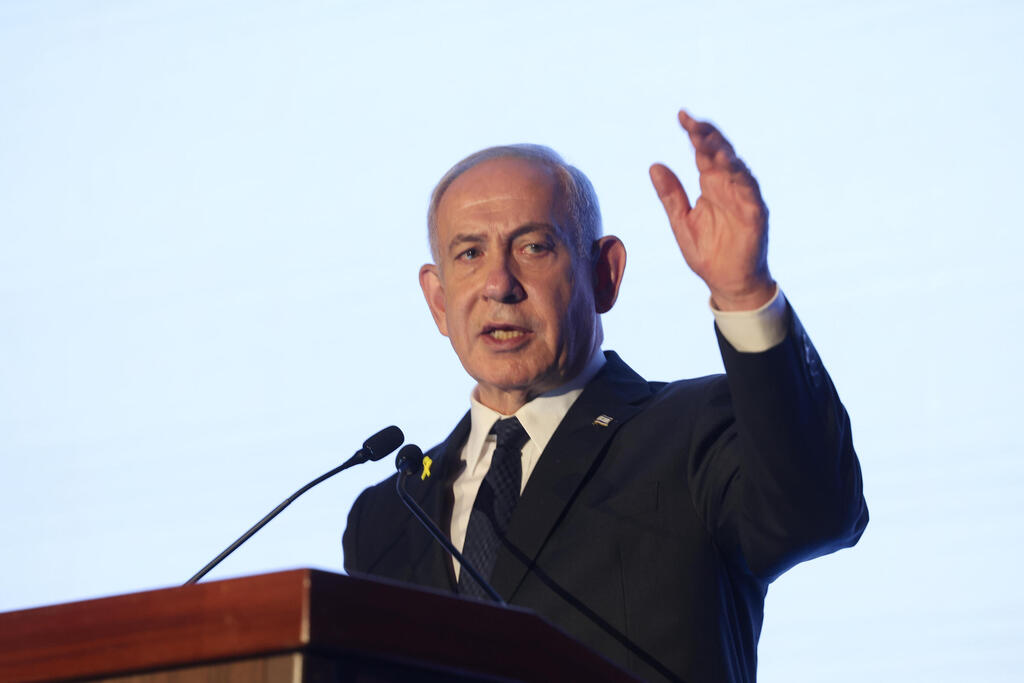
Between 10 and 12 countries are expected this week to recognize a Palestinian state, among them France, Britain, Canada, Australia, Portugal, Belgium, Malta, San Marino, Andorra and Luxembourg. Questions remain about whether New Zealand and Finland will join.
A senior Israeli official clarified Sunday night that no final decision will be made before Prime Minister Benjamin Netanyahu meets President Donald Trump at the White House on Monday, Sept. 29. Significant steps, the official said, should be coordinated with the American president, and Netanyahu wants maximum alignment with Washington.
France and Saudi Arabia will convene the second part of their international conference on the two-state solution at the United Nations on Tuesday. Just over a week ago, the UN General Assembly approved the “New York Declaration,” introduced by France and Saudi Arabia, which calls for “concrete, time-bound and irreversible” steps toward establishing a Palestinian state. The resolution passed with 142 votes in favor, 10 against and 12 abstentions.
Symbolic but significant
The anticipated recognition will not be the first of its kind — 148 countries have already recognized a Palestinian state over the years, with little change on the ground. What is different this time is that three G7 members — France, Britain and Canada — are joining in. For the Palestinians, this is a major diplomatic achievement. For Israel, the refusal of four other G7 members — the United States, Japan, Germany and Italy — to recognize Palestine is viewed as an important counterbalance.
Israeli officials argue that the recognition will not materially change life for Palestinians, neither in the West Bank nor in Gaza. They also point out that most of the countries recognizing Palestine are led by left-leaning governments, with little success so far in persuading centrist or right-leaning states.
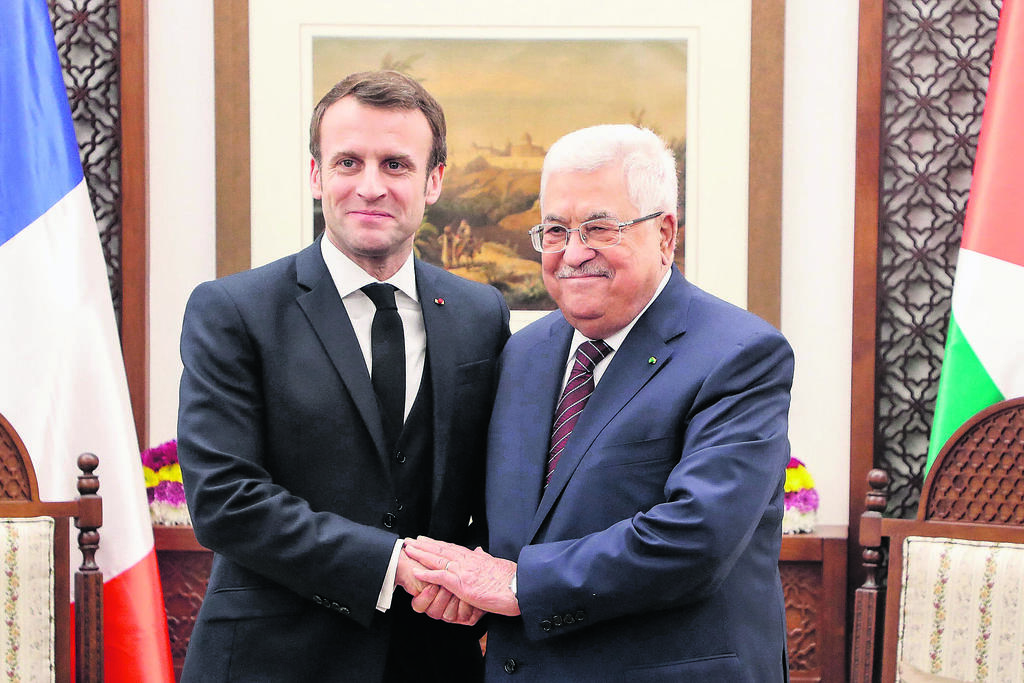
French President Emmanuel Macron and Palestinian Authority Presidnet Mahmoud Abbas
(Photo: Ludovic Marin/AFP)
Palestinian Authority President Mahmoud Abbas, meanwhile, will not be allowed to address the General Assembly in person after the U.S. blocked visas for Palestinian officials. He is expected to deliver his speech by video link, a development Israel considers a sign of the price Palestinians are paying for their diplomatic push.
Behind the scenes
Israel, led by Foreign Minister Gideon Sa’ar, is engaged in intensive lobbying to dissuade countries from recognizing Palestine. Officials have held direct talks with foreign ministers from Finland, Slovakia and others. Japanese officials confirmed they would not recognize a Palestinian state, and South Korea and Singapore are expected to follow suit.
Israel has also warned France of severe diplomatic consequences if it proceeds, including the possible closure of the French consulate in Jerusalem. French officials said such a step would be unacceptable.

Foreign Minister Gideon Sa'ar
(Photo: Olivier Fitoussi / Haaretz)
The United States continues to back Israel, vetoing a UN Security Council resolution last week that demanded an immediate ceasefire in Gaza without condemning Hamas or linking it to the release of Israeli hostages. Still, Israel has not yet determined its course of action and is waiting for Netanyahu’s meeting with Trump. Any significant move is expected only after Yom Kippur.
Possible responses
Options on the table range from doing nothing — considered unlikely — to annexing all of the West Bank, a scenario seen as improbable given U.S. opposition and the potential collapse of the Abraham Accords. A more symbolic move, such as annexing the Jordan Valley, is seen as possible.
Far-right coalition partners Bezalel Smotrich and Itamar Ben-Gvir are pressuring Netanyahu to pursue full annexation, while Trump’s stance will be decisive in shaping the outcome. If the U.S. president blocks annexation, Netanyahu risks angering his base and destabilizing his government.

National Security Minister Itamar Ben-Gvir and Finance Minister Bezalel Smotrich
(Photo: Gadi Kabulo)
Israel may also respond bilaterally by recalling ambassadors or closing embassies, as it did with Ireland, Norway and Spain. At the same time, Germany has warned it would oppose any annexation and hinted it might respond by recognizing Palestine.
Diplomatic gains amid pressure
Despite the mounting diplomatic pressure, Israel has recorded recent successes. A recurring resolution at the International Atomic Energy Agency targeting Israel’s nuclear program was withdrawn when it became clear it lacked majority support. The UN Security Council voted to restore sanctions on Iran, in part due to Israeli efforts with Germany, France and Britain. Meanwhile, Israel managed to block a European Union initiative to suspend trade chapters of its agreements with the bloc, preventing the measure from gaining the required majority.