


While the IDF dismantle terror infrastructure across the Gaza Strip, an internal election has taken place inside the underground leadership of Hamas. During a recent vote to select the head of Hamas's Gaza political bureau, the initial round failed to yield a winner because a significant portion of voting delegates submitted blank ballots.
When the vote moved toward a runoff, the process was halted after Hamas veteran Nizar Awadallah filed a formal procedural appeal regarding voting mechanics. This contest was not an election for overall command of the terror group, a position secured by Khalil Al Hayya following his narrow victory over Khaled Mashal. Rather, it was a direct struggle over who leads Hamas inside Gaza.
Gallery
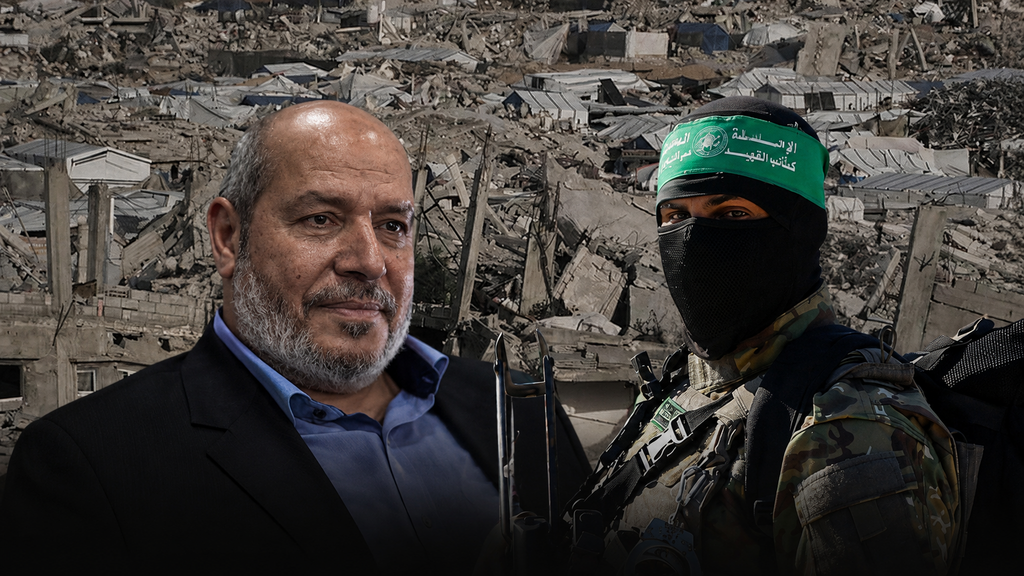
Hamas political chief Khalil al-Hayya, a Hamas operative
(Photo: AP Photo/Jehad Alshrafi, Osama Faisal/AP, REUTERS/Hatem Khaled)
The vote proves that the organization is attempting to maintain its governing political structure even while undergoing heavy physical disruption across the region. This operational reality demonstrates that the terror network actively seeks to preserve institutional continuity despite relentless military pressure.
The blank ballots reflected candidate disagreement rather than institutional rejection of the movement. Even if specific details from anonymous sources remain incomplete, the procedural fact is clear: Hamas maintains functioning internal election mechanisms under fire.
The appearance of blank ballots inside a totalitarian terror organization does not signal a shift toward pragmatism or rebellion. The delegates who cast blank ballots were not demanding peace or an end to conflict. They were disputing which faction should command remaining assets, direct administrative affairs and lead the next phase of confrontation against Israel. Internal disagreement reflects a calculation over tactics and command structure rather than a breakdown of institutional discipline within its core political apparatus during active wartime operations on the ground.
At the center of this deadlock is a rivalry between the local Gaza wartime network and the traditional old guard hierarchy. Ali Al Amoudi, a former prisoner released in the 2011 Gilad Shalit exchange who served as head of Hamas's media division before taking charge of Gaza political bureau affairs, represents the local power structure that solidified under Yahya Sinwar, centered in Khan Younis and built around surviving field commanders.
Nizar Awadallah, a veteran figure from Hamas's founding generation who previously ran against Sinwar for leadership in 2021, represents the historical hierarchy seeking to restore central oversight through traditional institutional rules. When Ali Al Amoudi attempted to consolidate authority over Gaza's political affairs, his actions drew direct pushback from overseas political bureau members who objected to unauthorized administrative decisions and internal personnel shifts within the apparatus.
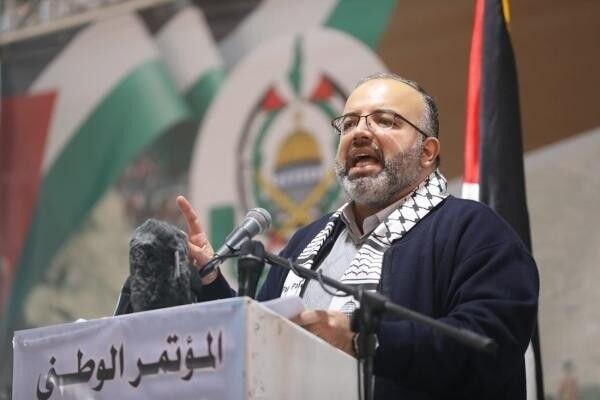
Ali Al Amoudi
This power struggle demonstrates how operational control inside Gaza collides with traditional authority exercised from abroad.
The choice between Ali Al Amoudi's local wartime network and Nizar Awadallah's founding generation is a false choice. One faction executed October 7; the other built the ideology that demanded it. Neither is a partner or a lesser threat.
Any assertion that traditional figures like Awadallah offer more predictable or manageable leadership than hardline Sinwar loyalists like Ali Al Amoudi is meaningless. The founding generation authored the charter calling for Israel's destruction, while the local network executed that mandate on the ground. Both factions remain committed to the total destruction of the State of Israel.
Strategic planning must reject any illusion that one internal faction represents a moderate alternative capable of coexistence or a lasting diplomatic arrangement. Believing that internal leadership changes alter the movement's existential objective ignores decades of established history and ideological indoctrination.
The fact that Hamas can still run structured leadership votes, file procedural challenges and conduct internal consultations under fire proves that its organizational skeleton has not been broken. That skeleton must be destroyed, not managed.
As long as Hamas maintains any administrative or political structure in Gaza, it will continue to appoint political bureau chiefs and rebuild its terror capabilities. The presence of functioning ballot committees and competing political blocs demonstrates that military pressure must be intensified rather than relaxed.
Israel cannot allow a terrorist entity to preserve its governance machinery under the guise of an internal political transition. Sustained military action must eliminate this administrative backbone until no governing mechanism remains capable of organizing political succession or directing local affairs anywhere across the Gaza Strip. Allowing underground political bureau structures to operate guarantees that the movement will retain its capacity to order military actions and preserve command and control over surviving combat units.
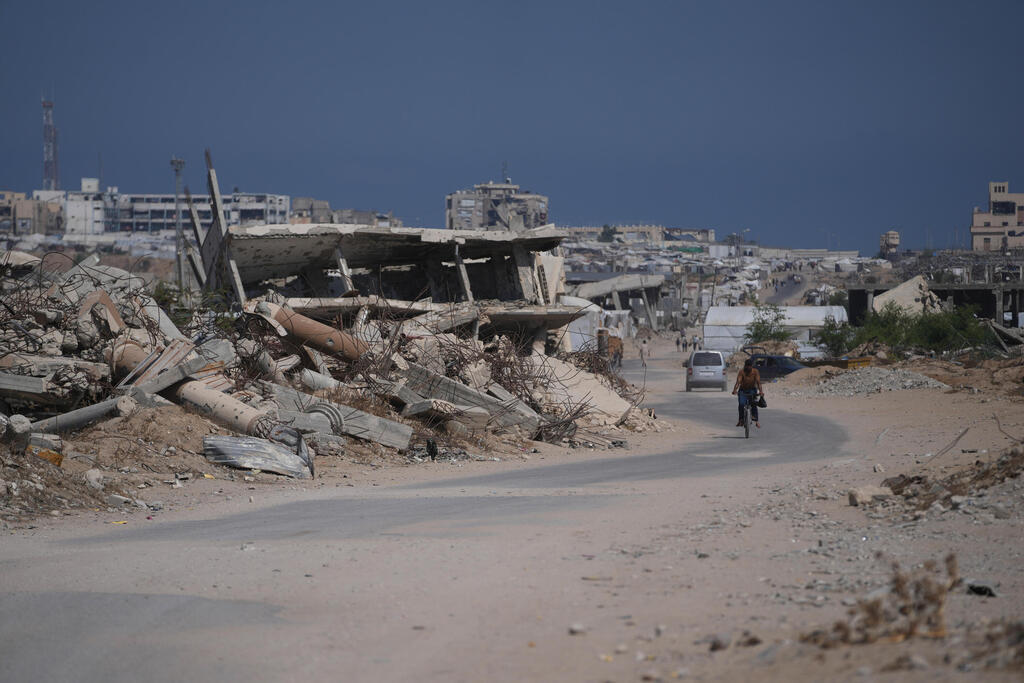
Gaza Strip
(Photo: AP Photo/Abdel Kareem Hana)
Relying on internal Hamas fractures or expecting the movement to collapse under its own procedural weight is a passive error. Terror organizations do not vanish simply because their internal committees fail to reach a consensus on a runoff candidate. Hamas has historically shown an ability to patch over internal rivalries when facing external pressure.
If granted breathing room, the overseas political bureau and the local Gaza cadres will eventually reach a backroom compromise, install a new leader and present a unified front. Israel must not grant them the time or space to resolve their internal crisis through temporary diplomatic pauses or operational halts.
Leaving room for internal reconciliation allows the movement to reconstitute its authority, reestablish local command structures and prepare future attacks against Israeli citizens nationwide. Relentless military focus must eliminate any temporal window before the terror organization consolidates its ranks.
Instead of evaluating which Hamas candidate might prove less hostile, Israeli strategy must focus on eliminating the entire candidate pool. The targets are not merely individual military commanders in subterranean tunnels but the political bureau members, administrative directors and municipal officials who enable the movement to function as a government.
The procedural challenge raised by Awadallah and the administrative interventions by external bureau members demonstrate that Hamas relies on a continuous chain of bureaucratic command. Severing that chain entirely requires targeting both the local Sinwar apparatus and the old guard hierarchy.
Officials who control distribution channels and oversee internal election committees are active operational participants in sustaining Hamas's reign of power. Treating the political bureau as distinct from the military wing previously allowed Hamas to retain its governing backbone despite tactical setbacks. Complete elimination requires systematically dismantling both wings simultaneously.
Neutralizing civil administrators alongside field commanders prevents the terror group from restoring civic control over the local population. Systematically targeting these operatives destroys the administrative scaffolding sustaining organized terror operations.
Postwar Gaza permits only one outcome: Hamas, under any leadership configuration, cannot be part of any future governance reality. Allowing Ali Al Amoudi's local network to retain power ensures a permanent, localized terror insurgency. Allowing Awadallah's traditional hierarchy to regain control ensures the systematic rebuilding of international financial pipelines and political legitimacy for terror.
Israel's war aim must remain absolute. The complete destruction of Hamas's military apparatus and the total eradication of its political bureaucracy are nonnegotiable prerequisites for long-term security. Any postwar framework that permits Hamas political structures to persist guarantees future conflict and compromises national border security.
Israel must ensure that neither faction retains any capacity to influence local administration or command remaining armed personnel anywhere across Gaza. Complete defeat requires the total eradication of every political bureau branch across the entire Gaza Strip. Eradicating political bureau influence removes the primary institutional obstacle to establishing lasting regional security.
Internal electoral disputes change nothing about the existential threat facing the State of Israel. Whether led by local field figures or traditional bureaucrats, Hamas remains a single terrorist movement committed to Israel's destruction.
The blank ballots submitted by Hamas delegates offer a diagnostic look into an organization contesting control under fire. For the citizens of Israel, these internal ballots carry a much simpler message: An enemy still holding elections for its local political bureau is an enemy that has not been defeated. The only acceptable outcome is that no Hamas leader, local or traditional, ever governs any part of Gaza again.
Amine Ayoub, a fellow at the Middle East Forum, is a policy analyst and writer based in Morocco. Follow him on X: @amineayoubx