

The debate over transfer has existed within the Zionist movement from its inception. Senior figures in the movement gave considerable thought to the possibility of relocating the Arab population from the Land of Israel, usually through economic incentives or agreements with countries near and far.
Gaza, identified with the refugee problem, always occupied a central place in the discussion, particularly after Israel took control of it in 1967, when numerous — and unsuccessful — projects were advanced to thin out or empty the enclave of its residents.
Gallery
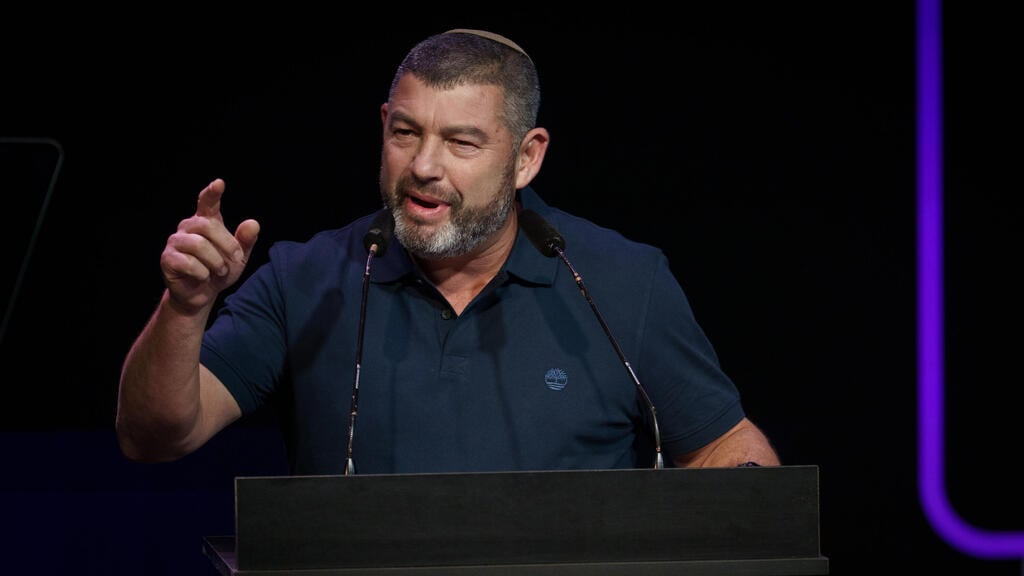
Retired Brig. Gen. Ofer Winter, who formed a new right-wing party called Amcha Israel, says Gazans should be encouraged to emigrate
(Photo: Shilo Shalom)
The secret of Zionism’s strength was always its ability to advance a bold, groundbreaking vision while at the same time acting soberly, identifying limitations and potential pitfalls and, accordingly, showing flexibility and changing policies and goals. This was reflected in the idea of transfer. As it became clear over the years that the chances of implementing it were slim, that efforts to do so would exact a heavy diplomatic price and that it was difficult to persuade Palestinians to uproot themselves “voluntarily,” the idea was pushed to the margins of public discourse. It never disappeared, but it was generally regarded as delusional and even reprehensible, and identified with extremist movements.
Attitudes toward transfer have changed dramatically since the October 7 massacre. In the shadow of the painful trauma, the idea has gradually moved into the mainstream and is now embodied in the agendas of right-wing parties: Netanyahu continues to cling to Trump’s vision of a Mediterranean Riviera, even though Trump himself abandoned the issue long ago, Katz established a migration directorate whose activities remain unclear and the parties to Likud’s right define “voluntary migration” as a central objective.
The debate over transfer reflects the changes in Israeli society since October 7. First and foremost, it is evidence of complex, sober thinking being replaced by fantasies. All this is taking place under the guise of a false image of “correcting the failed thinking that preceded October 7,” which is attributed to “other people.” It is accompanied by contempt for criticism, particularly warnings about the loss of international legitimacy, a concern that once stood at the heart of statesmen’s calculations.
U.S. Ambassador to Israel Mike Huckabee, an unequivocal supporter of Israel in general and the right-wing camp in particular, held up a difficult mirror when he said last night that Jewish terrorism is running rampant in the West Bank and that there is no plan to forcibly remove people from Gaza. The rest of the world is far harsher in its criticism, both regarding what is happening in the West Bank and the evolution of the transfer debate.
The transfer discourse also reflects a radicalization of Israel’s values. The criminal October 7 massacre, accompanied by aspirations to destroy Israel that have not disappeared, justified the severe blows inflicted on the Palestinians during the war. They can be compared with other peoples that suffered brutal attacks and retaliated against their enemies, such as the Soviet Union in Nazi Germany or the Americans in Japan.
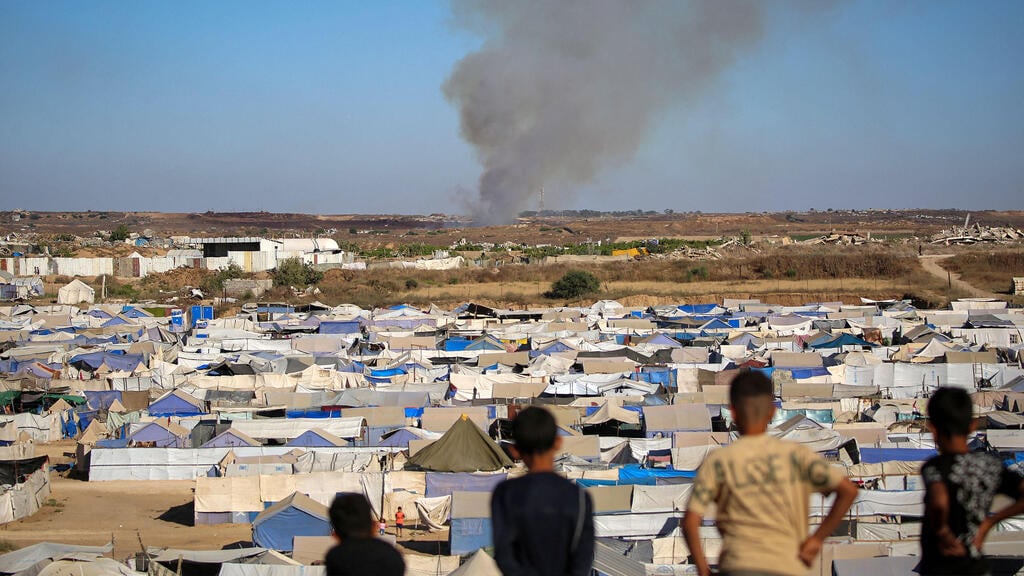
Refugees live in tents in Gaza
(Photo: Eyad Baba / AFP)
But even the lust for revenge is supposed to have limits and logic. It cannot serve as a collective compass or as justification for every type of action at all times, nor can it replace a realistic analysis of the geopolitical map in the region and the world and the formulation of a strategic objective rooted in reality.
Transfer from Gaza, like swallowing up the West Bank, largely embodies the “religionization” of strategic discourse in Israel. These are faith-based, sectoral objectives wrapped in a misleading cosmetic veneer of “strategy,” designed for the broader public, which is less receptive to songs of praise about the need to destroy Amalek and the Philistines - as was recently sung before Netanyahu in Sderot; discrimination against non-Jews in the spirit of the Bible - including Arab citizens such as Yoseph Haddad; silence in the face of severe violence against Palestinians and the burning of mosques in the West Bank; and enthusiasm for building the Temple — aspirations imposed on the public as a whole and presented as “national goals belonging to all of us and for all of us.”
The normalization of transfer is reflected in the casual discussions taking place with proponents of the idea in the media, without confronting them with difficult questions about how the vision would be implemented, its ethical and moral dimensions and the consequences of attempting to carry it out. The media must not “go along” with the effort to normalize it, but instead must cast doubt and raise pointed questions, as it failed to do before October 7, while also avoiding the creation of a forced “symmetry” on the issue.
Throughout history, peoples led by detached fantasies and messianic ideologies have collapsed, and Jews know this well, particularly from the destruction of the Second Temple. The Palestinians initiated the October 7 massacre, see themselves as victims of the war, are not engaging in soul-searching and many of them reject Israel’s right to exist.
Had Israel been a global empire in ancient times, perhaps it could have taken drastic measures. But it is a country that aspires to be part of the family of nations in the 21st century, whose power is not unlimited, which cannot function as an autarkic economy or as a new Sparta, or geographically and demographically engineer the region. It has also been proven that it cannot annihilate its enemies, as the leadership promises its citizens.
A sober Israel is not one addicted to force, acting to realize dangerous illusions and believing in its ability to wage an eternal war. It is one that knows how to strike when necessary but also how to advance arrangements, and recognizes that there are no perfect scenarios or magic solutions.
Normalizing transfer, let alone promoting ways to implement it, will damage — and is already damaging — Israel’s legitimacy in the world and its image as a measured state. It appears that most of its citizens neither recognize this nor understand the consequences, foremost among them growing pressure, punishment and isolation.
This sharpens the realization that, since October 7, Israel may have dealt severe blows to its enemies, but it is suffering from the disintegration of its internal consensus, a radicalization of the values and language of public discourse that once prevailed and devastating damage to its international legitimacy — pillars of its existence that are no less important than military power, and perhaps even more so.
- Dr. Michael Milshtein is a senior researcher at the Moshe Dayan Center at Tel Aviv University.