

Anyone who plays online knows the moment. You enter another competitive match, hoping to spend a quiet hour in front of your computer, and within minutes the chat fills with curses, insults, racism and sometimes even antisemitism. For many, this has become the constant background noise of the gaming world. The question is whether it really has to be this way.
At the Israeli nonprofit ADIR Labs, they believe it does not. After two years of research and development, the organization launched DashCam — a dashboard camera-style tool developed with Modulate.ai for gamers that works across all games. It allows players to identify, document and report toxic behavior, antisemitism and hate without having to leave the game.
Gallery
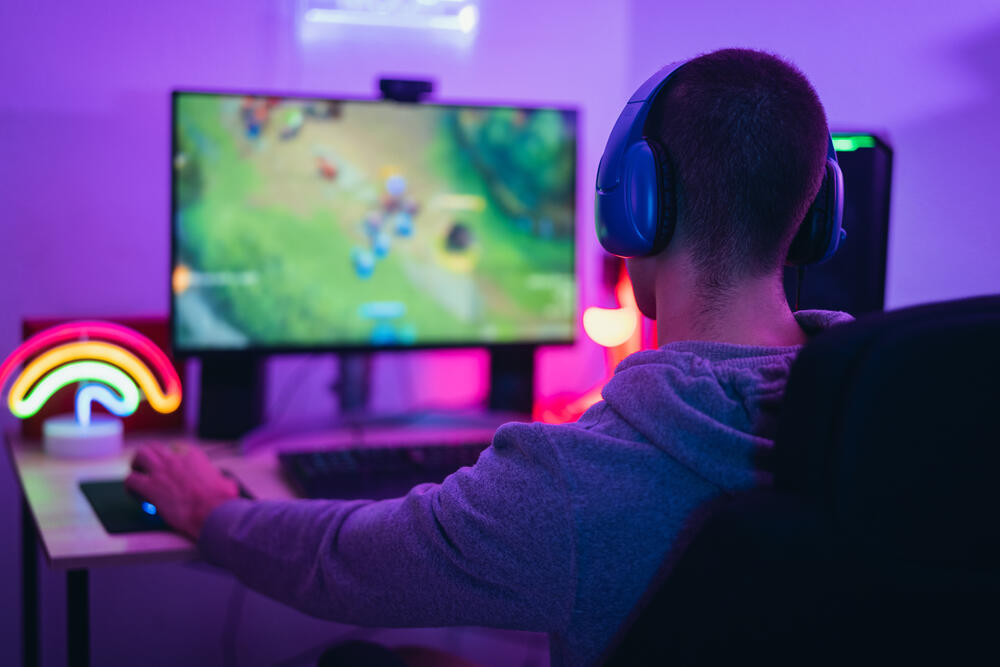
You enter another competitive match, hoping to spend a quiet hour in front of your computer, and within minutes the chat fills with curses, insults, racism and sometimes even antisemitism
(Photo: shutterstock)
The new tool does not promise to eliminate hate from the internet quickly, nor does it aim to punish every player who uses offensive language. Instead, it seeks to solve a more basic problem: turning a phenomenon experienced by many people every day, but rarely documented, into something that can be measured, analyzed and ultimately addressed.
In a conversation with ynet, the project’s developers explained why this is not just another reporting tool, how their personal experiences shaped their views on violence in gaming and how one of the gaming industry’s biggest problems can be tackled.
Distinguishing antisemitism from slang and jokes
The first question that arose was how artificial intelligence can even be taught to identify antisemitism. After all, players constantly use slang, sarcasm, inside jokes and personal humor. Even humans sometimes struggle to determine whether something is a joke between friends or actual incitement.
Mirsaaid Abbasov, DashCam’s lead developer, offered a surprising answer, saying: “The first version of the system does not try to automatically identify antisemitism and hate speech. Instead, it relies on the players themselves.
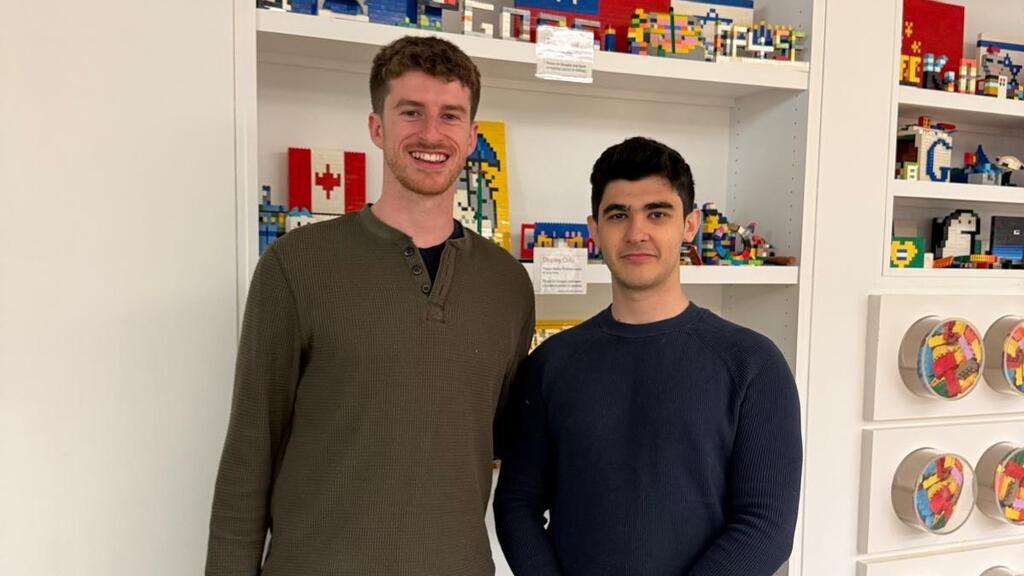
On the right: Mirsaaid Abbasov
(Photo: ADIR)
“When a player encounters offensive behavior, they press a predefined keyboard shortcut, and from that moment everything that happened in those seconds is saved: the image from the screen, the computer audio, the voice chat and what was captured by their microphone.
“All the information is packaged into a single file, to which the player can add a brief explanation of the incident after the game, the name of the game and additional details before sending it for review.”
According to Abbasov, AI models will only be integrated at a later stage. They will be trained, among other things, using the database of human reports that will accumulate.
At ADIR Labs, they say this is one of the biggest challenges in the field. Every AI model relies on existing information, and without a clear agreement on what constitutes an antisemitic statement, what is toxic speech and what is simply “gamer slang,” algorithms will also struggle to tell the difference.
The nonprofit explains that a significant part of its current work is not only building the tool itself, but also creating high-quality databases that could eventually be used to train AI systems more accurately.
Why don’t gaming companies do this themselves?
Abbasov argues that “contrary to popular belief, game studios actually want to reduce toxic speech on their platforms. Not necessarily out of ideology, but because it also harms them. Players leave toxic games, communities fall apart and reputations suffer.

A child plays on a computer. The goal is to give players tools to deal with extremist discourse
(Photo: shutterstock)
“The problem is that most existing reporting systems rely on individual reports without full documentation of the incident. As a result, even the companies themselves struggle to understand the scale of the phenomenon and the patterns that repeat.”
“This is exactly where DashCam comes in. Ultimately, we want to build a ‘library’ of real evidence,” Elad Daniel explained. “Once we can show game developers exactly what types of hate speech are occurring on their platforms, it will be much harder for them to ignore it.”
Another advantage, according to the developers, is that the system does not belong to any specific gaming company. It can work across almost any game, while control remains in the hands of the players.
All of this sounds good, but how do you prevent an overload of reports or false claims? In other words, how do you prevent abuse of the system?
Abbasov said: “One of our first decisions was to reward users not according to the number of reports they submit, but simply for using the app. This reduces the incentive to create fake reports. In addition, every report includes recordings and the original material itself, so it is not simply one player’s claim against another.”
Elad Daniel, product manager at ADIR Labs, also points to another problem with existing reporting systems: “Almost every time you send reports in games, they simply disappear,” he said. “You do not know whether anyone read your report, whether it was handled or whether anything happened with it at all.
“With DashCam, however, every report is saved in the user’s personal history, and they can see whether the report is under review, whether anyone has watched it and what decision was made regarding it. This transparency is something that is missing today in almost every online game.”
Abbasov and Daniel raise another interesting point. They argue that enforcement teams at many games are primarily focused on fighting cheaters, cheats and bug exploitation — in other words, problems that directly harm gameplay and companies’ profits. Toxic behavior, by contrast, is often pushed aside.
DashCam was built specifically for this area — not to address cheating, but to focus on hate, racism and harassment and create, for the first time, a clean database that can be used both to develop future AI systems and to research the broader field.
Since October 7: More hate, but still very little data
It is impossible not to ask: Has there been an increase in antisemitism and hate speech since the start of the war?
To my surprise, the answer was more complicated than expected. Abbasov said: “One of the biggest problems is that there simply is not enough reliable data. It is very difficult to measure a phenomenon that mostly takes place in voice chats, messages that disappear after a game or interactions that no one documents.
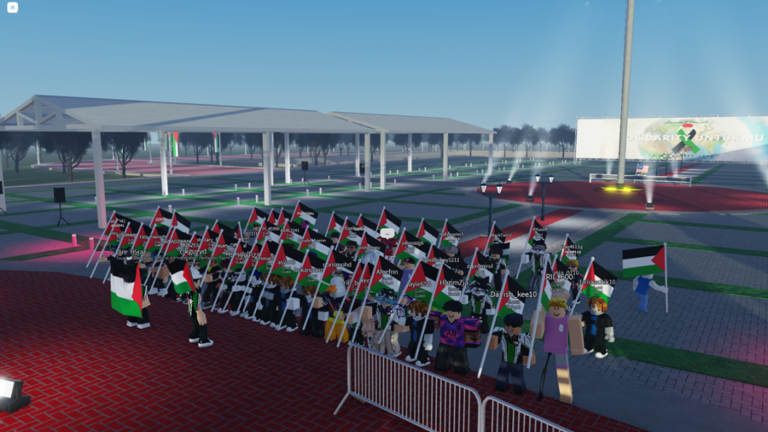
The pro-Palestinian protest in Roblox. Since October 7, levels of violence have increased significantly
(Photo: Roblox)
“I can point to a case that happened to me while playing Valorant. During the game, I was speaking with one of my teammates, and at some point the fact that I am Muslim came up. Very quickly, his tone changed.
“He simply started repeating again and again that I was Arab,” Abbasov recalled. “Even though I tried to explain to him that I am Azeri, and even though it is offensive either way, he continued saying, ‘You are Arab, I don’t want to play with you,’ and repeated it again and again.”
According to him, the harassment did not end with words. The player also began intentionally harming him in the game and sabotaging the team’s progress.
This experience was one of the turning points for the entire project. “After Mirsaaid shared what happened to him, we suddenly realized we were not working on a theoretical problem,” Daniel said. “This is a reality that people we work with and our friends experience firsthand.”
During development, the organization’s staff interviewed dozens of regular players of games including Valorant, League of Legends and Rocket League. Nearly all said they had encountered verbal abuse, racism or other toxic behavior.
The common thread among many of them was that they simply stopped reporting it. “They said there was no point,” Daniel said. “Reports disappear into the system, nobody gets back to them and they do not know whether anything is done.”
ADIR Labs says that although studies indicate a significant increase in hate speech since the outbreak of the war, including a rise in anti-Jewish and anti-Muslim incidents, the organization itself prefers not to rely on isolated numbers. Instead, it aims to build a broad database that can reflect reality more accurately.
For them, this is also why the project does not focus only on antisemitism. “We deal with antisemitism and hate,” Abbasov stressed. “Antisemitism is part of the problem, but there is also hate toward Muslims, women, LGBTQ people and other groups. The technology needs to address all forms.”
Aren’t you worried gamers will object to knowing their entire game is recorded?
According to Abbasov, this is one of the main issues they are working on for future versions. “One option we are considering is allowing players to choose what is recorded — for example, recording only audio or only voice chat without saving the screen image. We want to give users full control.
“The truth is that most reactions from players who have tested the system so far have been very positive, mainly because it brings together all types of evidence in one place — video, audio and screenshots — instead of relying only on a single screenshot or a verbal claim. That is very encouraging.”
Changing gaming culture
Ultimately, is your goal to make games safer, or are you trying to change gaming culture itself?
Abbasov said: “If you ask gamers, many of them will say that toxic and offensive speech is simply part of the game. There have always been curses, insults and people trying to annoy each other. That is the gaming culture we grew up with.
“But there is a clear difference between competitiveness and insults for fun, and hate. When players start attacking each other because of background, religion or gender, or when they intentionally ruin someone’s game just to bother them, that is no longer gaming culture. It is a problem.
“Even if you are not personally targeted, these people can still ruin your game. They can block you, interfere with the team or simply make sure nobody enjoys playing anymore.
“One of the project’s biggest ambitions is to change this starting point. We want to reach a situation where hate and toxic behavior are no longer considered a natural part of the gaming world. That in a few years, parents will not have to prepare their children by saying, ‘That is just how people talk online.’”

ADIR founder and CEO Morielle Lotan
(Photo: ADIR)
ADIR founder and CEO Morielle Lotan, an Israeli-American businesswoman, prefers to temper the enthusiasm somewhat.
“I do not think it is right to declare that we are going to change gaming culture as a whole. There are still so many things we do not know about what happens inside these communities.
“We first want to better understand what is actually happening there. To provide the industry with data it can work with, give regulators reliable information and, above all, give players tools that will help them deal with what they encounter.”
According to Lotan, one of the main problems today is that discussions about gaming are based mostly on feelings and personal stories. Without data, it is very difficult to prove the scale of the phenomenon and even harder to convince gaming companies to invest resources in solving it. “If we manage to collect enough reliable information, it will be much easier to create change,” she explained.
ADIR was founded by Lotan after she lost her nephew, Addir Masika, who was killed at the Nova music festival while fighting terrorists with his bare hands in an effort to save his partner and others hiding in a nearby shelter.
ADIR was established to create technological solutions, harness technology companies and develop talent in the fight against antisemitism and hate spreading throughout the digital space. The organization conducted research and identified gaming as a particularly sensitive field, as it serves as an anonymous meeting place where children and young people spend long hours without parental supervision and with limited enforcement mechanisms.