

Not only F-35s: As part of Saudi Crown Prince Mohammed bin Salman’s visit to Washington, the U.S. Commerce Department approved the sale of up to 70,000 advanced artificial intelligence chips to the Saudi mega-AI initiative Humain and to the G42 conglomerate based in the United Arab Emirates.
Continuation of Trump’s Gulf visit
The move reverses a 2023 decision by the Trump administration that restricted the export of advanced AI chips to 40 countries, including Saudi Arabia, partly to prevent sensitive technology from reaching China. According to the Wall Street Journal, talks on the issue with leaders of both countries have been underway behind the scenes since Trump’s high-profile visit to the Gulf in May.
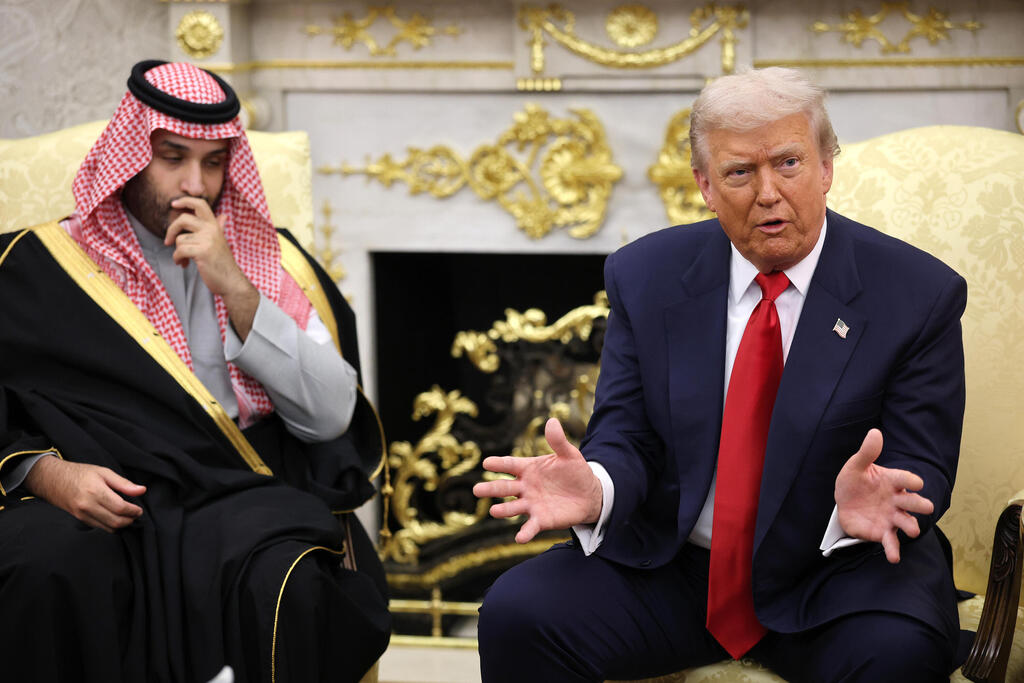
The agreement will allow American companies to sell up to 35,000 Nvidia GB300 servers or their equivalents to the two Gulf tech giants. GB300 servers contain Nvidia’s B300 chips, part of the new Blackwell series, the most advanced on the market and among the most powerful AI processors in the world.
Nvidia’s competitor AMD has already signed a multibillion-dollar deal with Humain. Overall, according to Bank of America, the total revenue American companies stand to gain from supplying graphic processors to Saudi Arabia is estimated at between 15 and 20 billion dollars over several years.
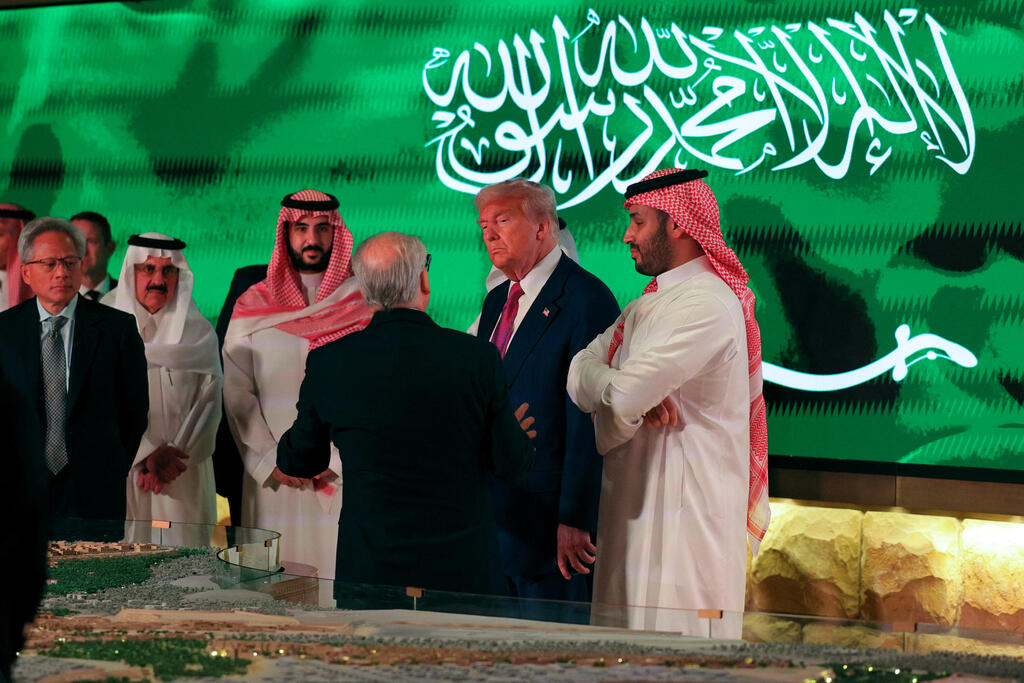
Right: Mohammed bin Salman, US President Trump and Nvidia CEO Jensen Huang during a visit to the Gulf
(Photo: Reuters)
Trillion-dollar quid pro quo
Saudi Arabia and the UAE have pledged 2.4 trillion dollars in investments in the United States. Reports say the president and his family have business ties in both countries in sectors including cryptocurrency and real estate.
G42’s chair is Sheikh Tahnoon bin Zayed, brother of UAE President Mohammed bin Zayed, who also serves as the Emirates’ national security adviser and is considered a technology visionary, placing him in a similar standing to many global tech CEOs.
G42 has active ties with Chinese companies such as Huawei and the Beijing Genomics Institute. After reports about these ties, the company’s CEO previously stated that “all our past investments in China have already been written off.”
Humain, the Saudi entity overseeing the kingdom’s AI efforts, is headed by Tareq Amin, a rising star in global tech and the former CEO of the Saudi oil giant Aramco.
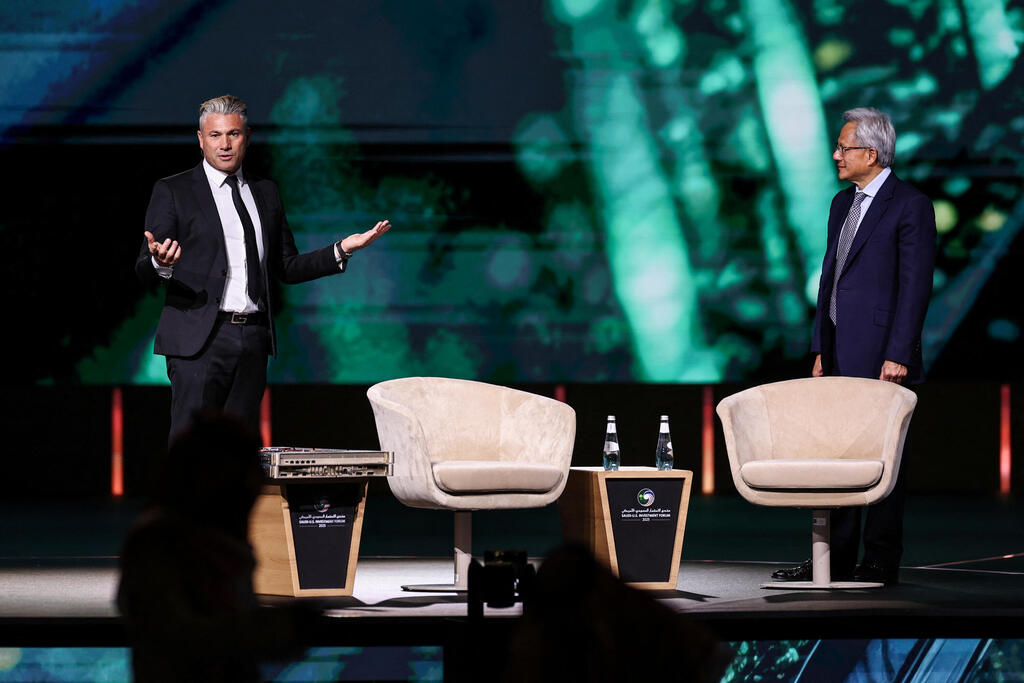
Nvidia CEO Jensen Huang (right) alongside Humain CEO Tareq Amin
(Photo: Reuters)
Fears of technology leakage
According to U.S. experts quoted in the media, such a large quantity of advanced AI chips destined for companies linked to both governments is “significant for national security.” Both Saudi Arabia and the UAE maintain deep partnerships with China, raising concerns that Chinese or other foreign companies could find ways to bypass security protocols.
Only last month, Secretary of State Marco Rubio and U.S. Trade Representative Jamieson Greer convinced the president that even approving a limited version of the Blackwell chip for sale in China was too risky.
The administration said Monday that the agreements include strict protection and security clauses designed to ensure the chips do not reach China. The Commerce Department’s Bureau of Industry and Security, which oversees such issues, stated that “these approvals will promote continued American AI dominance and global technological leadership.”
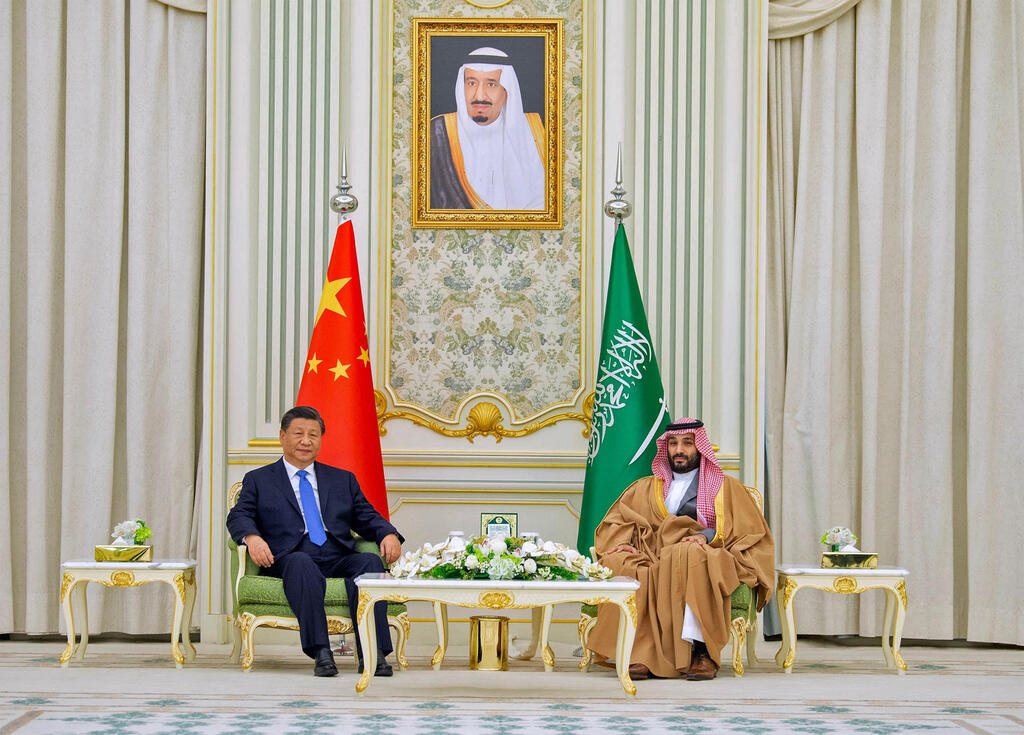
Chinese President Xi Jinping visits Saudi Arabia, hosted by Crown Prince Mohammed bin Salman
(Photo: AFP PHOTO / SAUDI ROYAL PALACE / BANDAR AL-JALOUD)
This is not the first time the Trump administration has used American technology — particularly Nvidia’s chips, which are crucial for AI development and operation — as a bargaining tool with other countries. According to the New York Times, “For years, the government has strengthened diplomatic ties with countries by selling U.S. products like Boeing planes. But the Trump administration began to fold in A.I. chips and partnerships.”
A notable example is Armenia and Azerbaijan. The two countries signed a peace deal in August last year, mediated by President Trump. Immediately afterward, Michael Kratsios, head of the White House Office of Science and Technology, met officials from both countries to discuss AI cooperation. When Kazakhstan recently joined the Abraham Accords, it also signed an agreement to build an AI-based data center using Nvidia chips.
Victory for Huang and Nvidia
The decision marks a win for Nvidia CEO Jensen Huang, who has spent months urging the administration to allow chip sales even to China, arguing they are essential to maintaining U.S. dominance in AI.
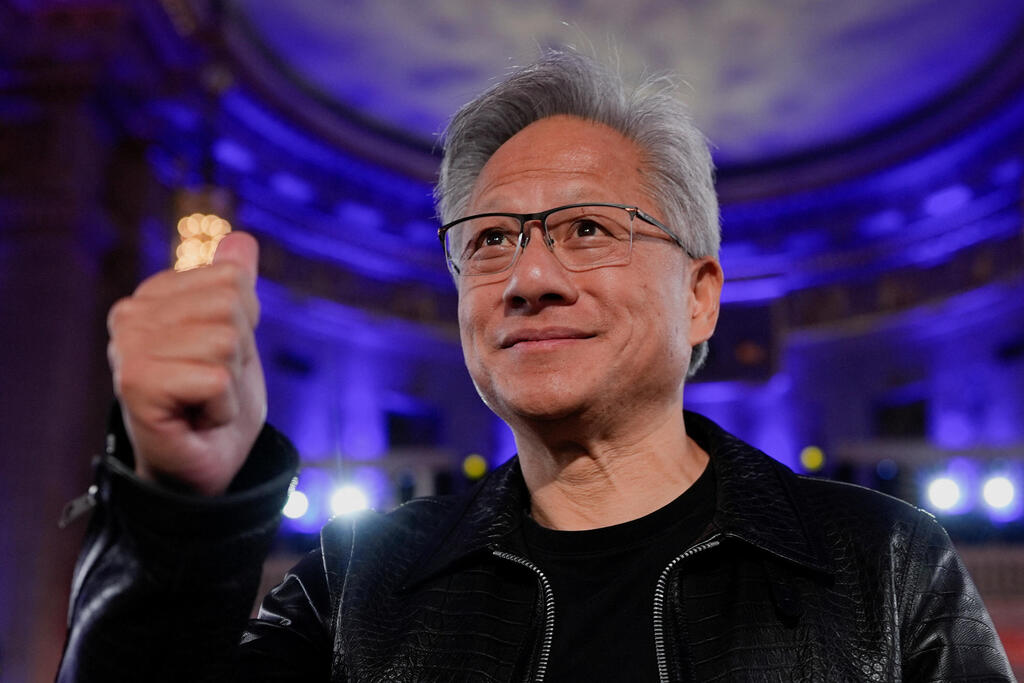
Nvidia CEO Jensen Huang at the US government's AI program launch event
(Photo: Reuters)
Huang has also pledged to invest 500 billion dollars in AI infrastructure in the United States, aligning with Trump’s plan to revive domestic manufacturing. The deal also benefits tech giants like Microsoft and Amazon, which have been waiting months for export licenses from the Commerce Department.
It is worth noting that 70,000 AI chips is indeed a significant quantity for the two Gulf states, but Elon Musk’s xAI data center in Memphis, Tennessee, for example, contains more than 200,000 Nvidia chips.