

Prime Minister Benjamin Netanyahu is scheduled to meet Wednesday at 11:00 a.m. Washington time (6:00 p.m. Israel time) with U.S. President Donald Trump at the White House. This will be their seventh meeting since Trump began his second term, and the sixth to take place at the White House itself, as their previous meeting was held at the president’s Mar-a-Lago estate in Florida. Hovering over Netanyahu’s visit is the question of how Trump will act on Iran, amid ongoing negotiations between Washington and Tehran and against the backdrop of a military option that Trump is keeping on the table.
Speaking Tuesday evening in an interview with Fox Business, the U.S. president outlined his vision of a deal in brief terms: “I prefer to make a deal — no nuclear weapons or missiles, and the other things.”
Donald Trump on negotiations with Iran: 'I prefer an agreement - without nuclear weapons and without missiles'
(Video Fox Business)


Earlier Tuesday, Trump was quoted by the U.S. outlet Axios as saying that he is considering sending an additional aircraft carrier to the Middle East if talks with Tehran fail. At the same time, he expressed optimism about reaching an agreement with Iran: “We can make a great deal, Netanyahu wants it too — he wants a good deal.”
In the Fox Business interview, Trump was asked whether Iran would honor an agreement. He replied: “They want to make a deal. It’s a good question — a lot of people say they won’t. People worry that they’ve been unfair to us. Obama and Biden created a monster with Iran — the nuclear deal was one of the stupidest I’ve ever seen.”
Gallery
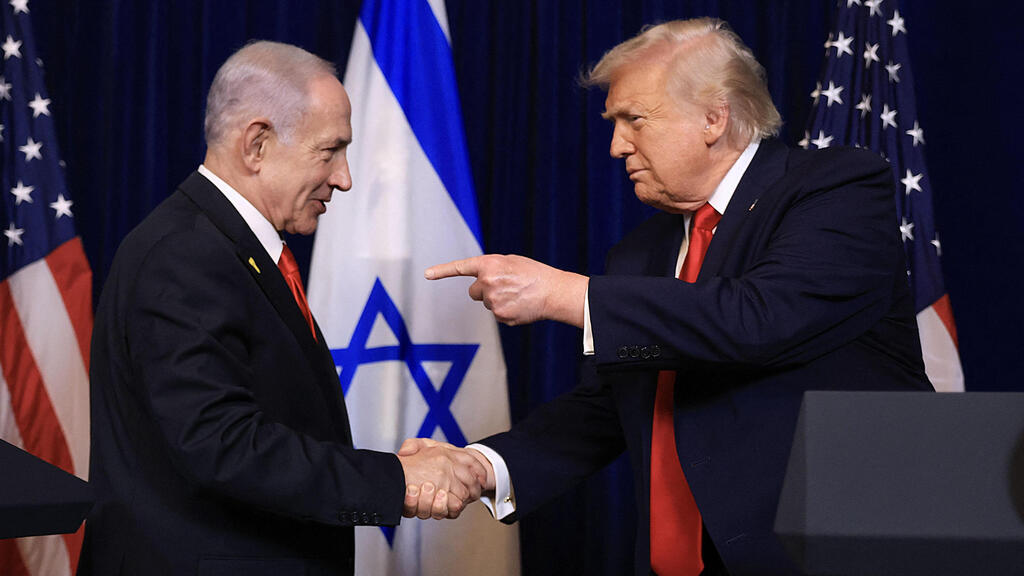
US President Donald Trump and Israel's Prime MInister Benjamin NEtanyahu at their last meeting in the US
(Photo: Joe Raedle / Getty Images North America / AFP)
In Israel, there is concern that a U.S. agreement with Iran would restrict Israel’s freedom to act militarily against the ayatollah regime. After the nuclear deal signed by former U.S. President Barack Obama, Israel said it was not bound by the agreement and would act if necessary — but in practice did not do so. In this context, Israeli officials told CNN that Netanyahu will stress to Trump the need for military freedom of action in Iran even if a new agreement is signed between Tehran and Washington. According to assessments, Iran could possess around 2,000 ballistic missiles “within weeks.”
Netanyahu at Ben Gurion Airport: 'First and foremost, the negotiations with Iran'
Military affairs analyst Ron Ben-Yishai wrote this week that an agreement that does not limit missiles or nuclear weapons could cause Israel to lose its freedom to preempt and strike those projects inside Iran, even if they reach levels that pose a tangible threat to Israel. That is because the current prime minister and cabinet would not dare to violate the calm and “regional peace” that Trump would declare once — and if — he signs an agreement with Tehran. This would likely be true even under different governments in Jerusalem or Washington. Once the United States signs an agreement with Iran, Israel will have little room to maneuver.
Before departing for Washington Tuesday morning, Netanyahu said: “I am now leaving for the United States on my seventh trip to meet President Trump since he was elected to a second term. That does not include his unforgettable visit to Israel and his speech to the Knesset. I think these things reflect the unique closeness and extraordinary relationship we have with the United States, and personally with the president, and between the State of Israel and the United States — something unprecedented in our history.”
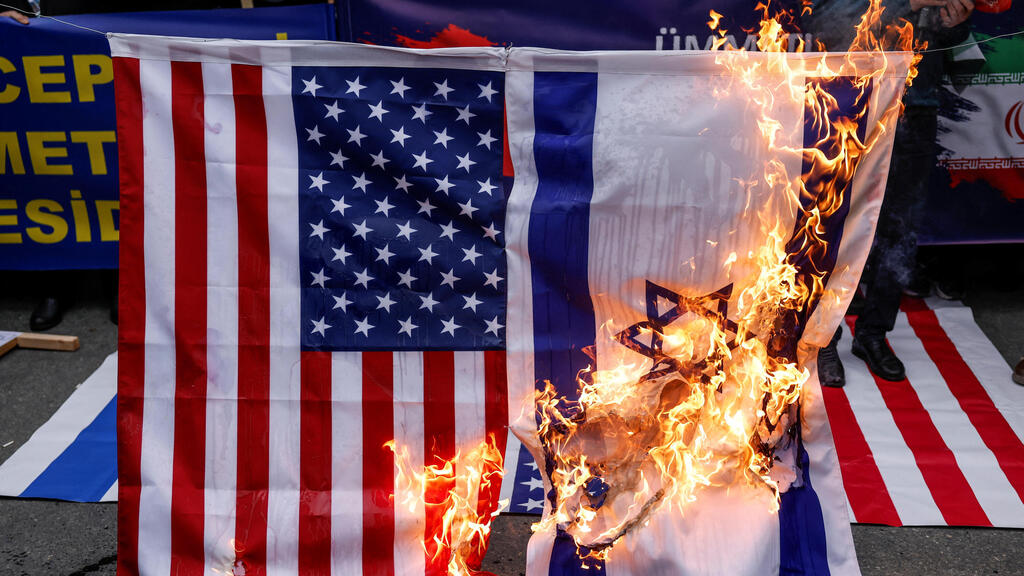
Iranian supporters burn the Israeli-US flag and pictures of Trump and Netanyahu in front of the US consulate in Istanbul, Turkey
(Photo: Kemal Aslan/Reuters)
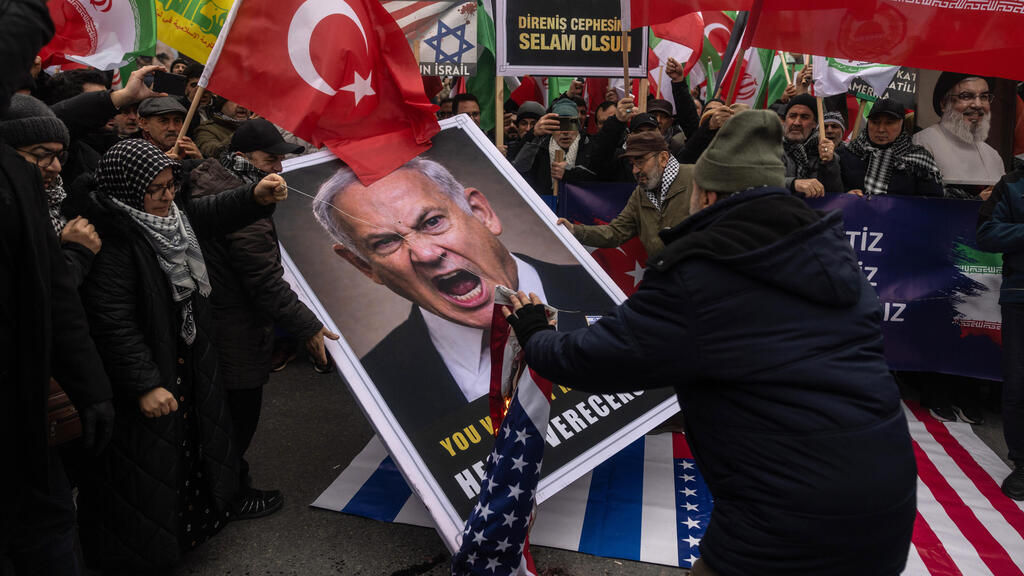
(Photo: Burak Kara/Getty Images)
He added: “On this trip we will discuss a range of issues: Gaza, the region, but of course first and foremost the negotiations with Iran. I will present to the president our views regarding the principles of the negotiations — principles that in my view are important not only for Israel, but for anyone in the world who wants peace and security in the Middle East.”
The prevailing interpretation of why Netanyahu is traveling to Washington at this moment is that he fears Trump may soften Israel’s red lines on Iran regarding ballistic missiles and support for proxy organizations in the Middle East, and settle for a vague nuclear agreement that could earn him a Nobel Peace Prize after averting war with Iran. Trump is under heavy pressure from Israel’s adversaries and Iran’s supporters — led by Qatar and Turkey — alongside figures within his own MAGA movement who do not want the United States drawn into a brutal war with Iran.
However, an analysis of developments behind the scenes suggests that the negotiations the Americans are conducting with Iran are extremely tough — even tougher than last time. In Israel, this is evident not only in statements from the White House and the U.S. State Department, but also in the “security armada” flowing into the region and the massive number of cargo aircraft landing in regional countries, including Israel. In Jerusalem, officials note that the Americans themselves have inserted the issues of ballistic missiles and proxy organizations into the negotiations — a significant change from last year’s talks with Iran, which focused solely on the nuclear issue.
The main reason for Netanyahu’s visit, then, is to share all of Israel’s intelligence with Trump and to “stand guard” — ensuring that Trump does not focus exclusively on the nuclear file. Netanyahu’s message will be: We saw during the 12-day war what happens when Iranian ballistic missiles hit residential areas in Israel — it is like a small nuclear bomb, and we cannot live with that.
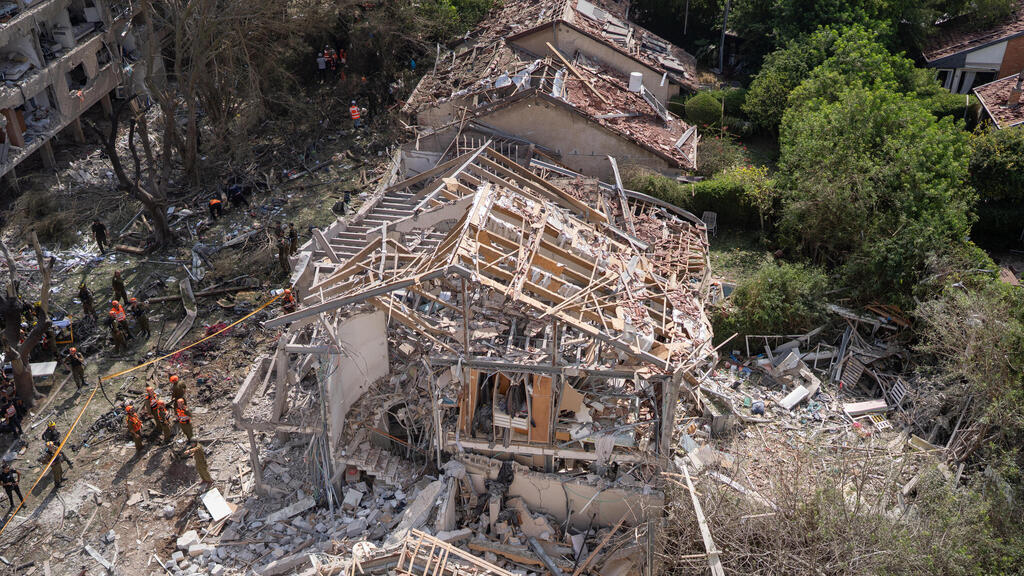
Damage from an Iranian missile strike on Tel Aviv
(Photo: Dima Vazinovich/Getty Images)
Netanyahu intends to brief Trump extensively on Iran’s missile program — not only short- and medium-range missiles, but also long-range ones. Iran, for its part, has plans to develop intercontinental ballistic missiles that could reach the United States, making this a threat to American citizens as well. Even now, Iran does not need ICBMs to reach Israel or Europe, and there is little doubt that the ayatollahs’ ultimate goal is to acquire the capability to strike U.S. soil.
Israel’s message will be that Iran’s ballistic missiles must be limited to defensive purposes only, with ranges of no more than 300 kilometers. Iran continues to infiltrate and influence Syria and even the Gaza Strip via the porous border with Jordan. It has plans and schemes and pours billions of dollars into funding terrorist organizations, even as the Iranian people lack water, electricity and food. Israel will emphasize to the Americans the importance of addressing the proxy issue.
The reason for the closed-door meeting
From Israel’s perspective, Trump is a true friend. Had another president been in the White House, it is unlikely Netanyahu would be making his seventh visit in less than a year. The prime minister and the U.S. president have maintained close ties for nearly 40 years, evident in their phone conversations, for example, where they address each other by their first names. As a result, they agree on the need for frequent face-to-face meetings. This time, the initiative came from Netanyahu — and Trump agreed.
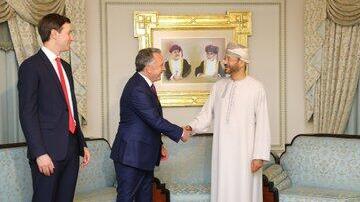
Abbas Araqchi, Steve Wittkopf, and Jared Kushner in consultations on the Iranian nuclear issue and negotiations with the US in Oman
(Photo: Omani Foreign Ministry)
Unlike previous meetings, the Americans have decided that there will be no statements at the start of the meeting and no press conference afterward. From their perspective, this is a working meeting only. This may indicate that Trump does not want any disagreements, if they exist, to be aired publicly. After previously calling Netanyahu a “war hero” and saying that Israel would not exist without him, Trump may now feel less comfortable offering another public embrace. There are limits to the praise he can give.
In Israel, officials assess that the U.S.-Iran negotiations will not yield an agreement and that a military confrontation between the United States and Iran is inevitable. They believe the Americans are building a massive war machine in the Middle East precisely for that purpose. Iran, for its part, is showing no signs of flexibility and is unwilling even to relinquish its right to enrich uranium, let alone limit ballistic missiles or stop funding proxy organizations.
It appears impossible to reach a good agreement with the ayatollah regime. With the Iranian people, perhaps it is possible. Moreover, a key factor has changed over the past year compared with the previous round of talks: a popular uprising in Iran with tens of thousands killed. President Trump promised the protesters that “help is on the way,” a promise that has yet to be realized. Netanyahu wants to discuss these developments with him, which occurred between the previous summit at Mar-a-Lago and the current meeting. In this context, Netanyahu will present Trump with Israeli intelligence on the massacre carried out by Iran against its own citizens, information that Israeli officials say is important for the Americans to see. Sources familiar with the matter say the meeting will include an exchange of intelligence from both sides — including U.S. intelligence of interest to Israel.
Netanyahu will underscore one central point to Trump: Iran is a malign actor in the region, and any nuclear agreement must include the issues of ballistic missiles and proxies. Iran invests heavily in these areas, revealing its true intentions. Netanyahu will seek to lock these demands into the negotiations so that the Americans insist on all components: zero enrichment on Iranian soil, no ballistic missiles beyond defensive needs, and an end to support for proxies — in other words, dismantling the axis of evil. Israel has a historic opportunity and must not miss it.
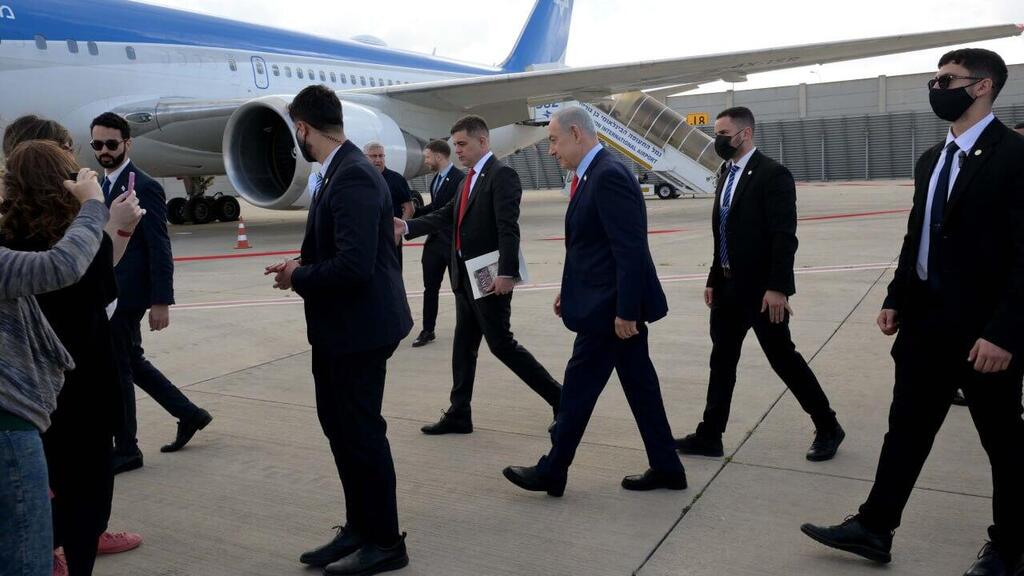
Prime Minister Benjamin Netanyahu leaves for the United States, without his wife, Sara
(Photo: Avi Ohayon/GPO)
Netanyahu chose not to bring senior defense officials with him on the trip, apparently to avoid accusations that Israel is pushing for war. The delegation includes his military secretary, his nominee for Mossad chief Maj. Gen. Roman Gofman, and acting National Security Council head Gil Reich.
Netanyahu traveled to Washington less than 48 hours ahead of the meeting with a very small entourage and, for the first time in years, without his wife Sara, who returned to Israel on Friday after more than five weeks in Miami. Netanyahu is also planning to return to the United States in about a week and a half to address the AIPAC conference — if a war with Iran does not break out before then.
The U.S. sends more aircraft to the region: satellite images
New satellite images released today from U.S. bases in the Middle East show a continued military buildup in case Trump orders a strike against the Islamic Republic. One image from Al Udeid Air Base in Qatar — which was attacked by Iran in response to the U.S. bombing of the Fordow facility last June — shows Patriot missile launchers mounted on trucks, enabling rapid deployment or relocation in the event of launches from Iran.
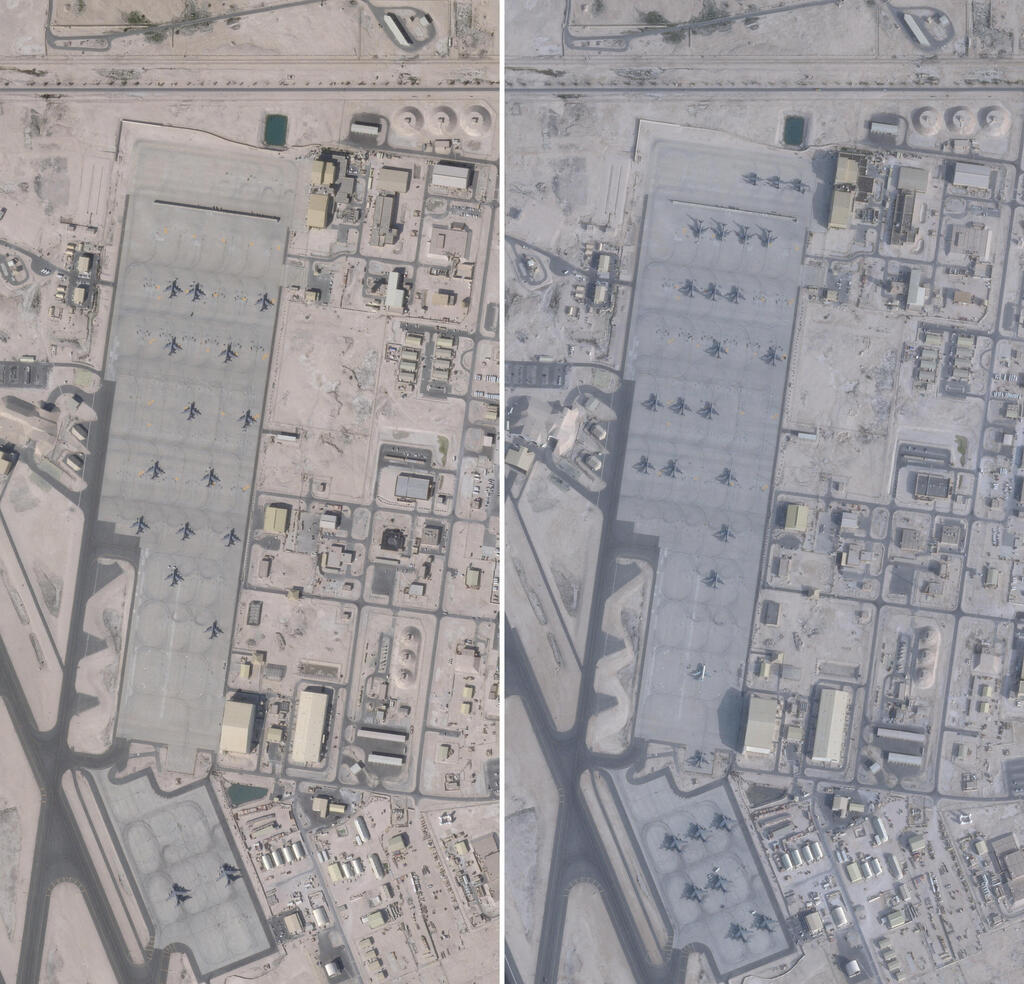
Satellite images shows increase in number of aircraft Al-Udeid Air Base in Qatar, comparing January 17, 2026 and February 1, 2026
( Photo: 2026 PLANET LABS PBC/Handout via Reuters)
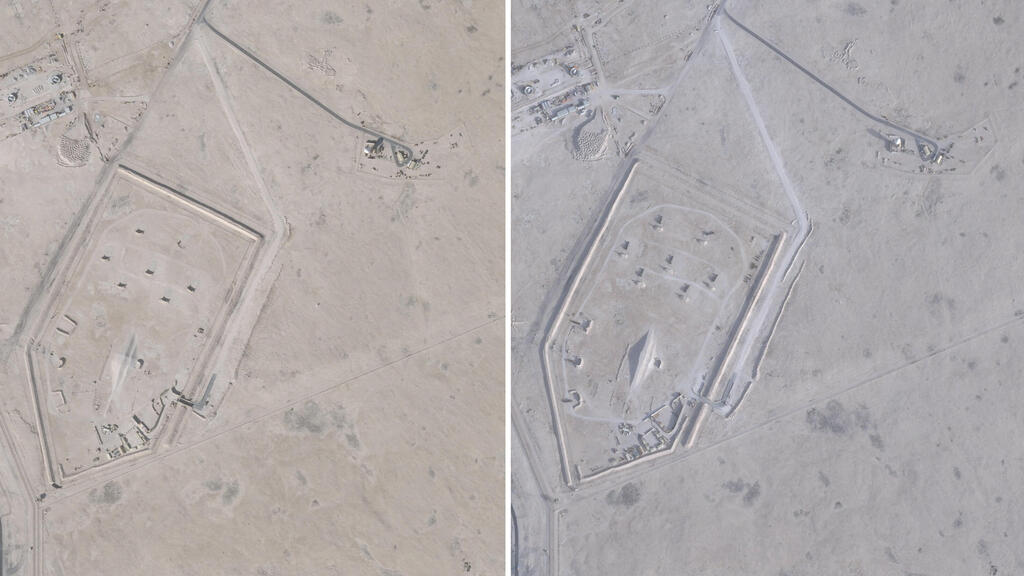
Before and after Patriot air defense systems were placed at Al-Udeid Air Base, comparing January 17, 2026 and February 1, 2026. 2026
(Photo: PLANET LABS PBC/Handout via Reuters)
In January satellite images of Al Udeid showed unmanned positions, while in February Patriot missiles appeared on trucks. In addition, a wide array of aircraft was documented at the U.S. base in Qatar, including KC-135 refueling planes and C-17 transport aircraft. Satellite analysis indicates that over the past month, five additional transport aircraft and four tankers have joined the base.
At Muwaffaq Salti Air Base in Jordan, 17 F-15E fighter jets were documented at the beginning of the month, alongside eight A-10 Thunderbolt aircraft. Satellite imagery also showed four C-130 Hercules aircraft and four helicopters of an unidentified type. According to Reuters, on January 16 the satellite images were of insufficient resolution to identify all aircraft. In another image from a different part of the base, additional Hercules and C-17 transport planes were visible, alongside four Boeing EA-18G Growler aircraft used for electronic warfare. In January, no aircraft were recorded there.
At Prince Sultan Air Base in Saudi Arabia, new U.S. aircraft were documented at the start of the month, including a C-5 Galaxy transport plane and a C-17. At “Bomber Island,” Diego Garcia, seven additional aircraft were recorded last Friday beyond those seen at the end of last month. Additional U.S. aircraft were also documented at a base in Oman.
First published: 01:07, 02.11.26