

"There are more seizures because there are simply more weapons," prosecutors in the Southern District say. While they see early signs of progress, they stress it is nowhere near enough. Judges, too, have sounded the alarm: "We must not lose an entire region to armed militias of lawbreakers."
A new approach is also emerging: "Prison? Losing a new car hurts criminals far more."
Young man shoots from a vehicle in Tel Sheva


Police continue to seize illegal weapons from suspects, uncover arms caches in homes, intercept gun deals, and confiscate firearms ranging from pistols and assault rifles to grenades and even MAG machine guns. Prosecutors, meanwhile, continue filing more indictments. Yet despite these efforts, illegal weapons keep flowing into Israel and onto its increasingly violent streets.
At times, every seizure seems futile — like trying to empty the ocean with a teaspoon. While criticism is often directed at prosecutors and the courts, an examination of Southern District prosecution data shows both the number of indictments and the severity of sentences have steadily increased.
Since 2020, authorities have recorded a consistent rise in the interception of weapons smuggled across the Egyptian and Jordanian borders. In 2021, only a few dozen weapons were seized. That figure doubled in 2022, and by 2023 nearly 200 smuggled firearms had been intercepted.
Gallery
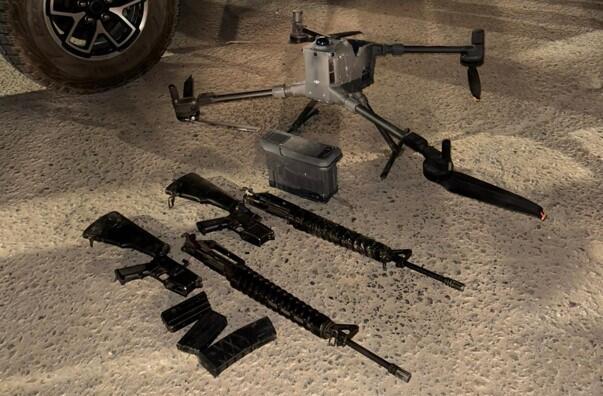
Since 2020, authorities have recorded a consistent rise in the interception of weapons smuggled across the Egyptian and Jordanian borders
(Photo: IDF Spokesperson)
The flow has only intensified. In 2024, smugglers began routinely using drones, and authorities seized 316 pistols and weapon parts. In 2025, another 90 pistols smuggled from Jordan were confiscated. The most dramatic incident came at the end of 2025, when IDF forces shot down a drone carrying four MAG machine guns.
A tougher prosecution strategy
Israel's new enforcement strategy against gun crime began taking shape after the May 2021 Operation Guardian of the Walls riots, when the Shin Bet was brought into the investigation of gunfire directed at a police station in Tel Sheva.
Although investigators never identified the shooter, two suspects from Tel Sheva were transferred to the Negev Major Crimes Unit after investigators found extensive evidence of unrelated firearms offenses on their mobile phones. Southern District prosecutor Assaf Bar Yosef, now the district's coordinator for weapons offenses, filed the indictment. The defendants were sentenced to nine years in prison, later reduced to eight by the Supreme Court.
"Weapons offenses have always been treated very seriously by both lawmakers and prosecutors," Bar Yosef says.
According to him, a major shift began in 2016, when the State Attorney issued new guidelines calling for harsher penalties. Four years ago, sentencing ranges were formally increased. Today, prosecutors seek prison terms of up to 36 months for certain firearms offenses, compared with typical requests of just 12 to 14 months in the past. Another increase is now being considered.
The digital evidence revolution
The Tel Sheva case, which relied heavily on WhatsApp messages, ended in a plea bargain. But the use of chat records and photographs marked a turning point. Prosecutors soon began filing cases based largely on social media videos and images.
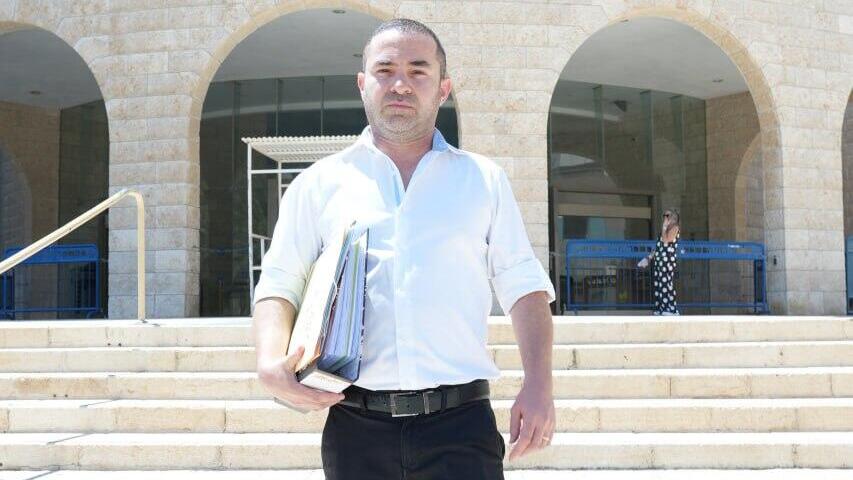
Southern District prosecutor Assaf Bar Yosef
(Photo: Tomer Shunem Halevi)
One landmark case came in March 2025, when Beersheba District Court Judge Yoel Eden sentenced Hitham Algragawi to 12½ years in prison after he was convicted of firearms offenses based on videos he uploaded showing himself firing live weapons.
Although the Supreme Court later reduced the sentence to seven years, it upheld the conviction itself — a ruling prosecutors say paved the way for many similar indictments.
"The sentence mattered, but the conviction mattered even more," Bar Yosef explains. "The key legal question was whether someone could be convicted based on videos. Until then, we'd seen acquittals and plea bargains. That ruling established the precedent we rely on today."
"We started focusing heavily on videos," he says. "After the police station shooting case came what we call the 'written word' cases — suspects exchanging photos of weapons, discussing prices. The more detailed the conversations, the easier it became to prosecute weapons trafficking."
If investigators found only a photo of someone holding a gun, prosecutors could charge illegal possession or carrying a firearm. Videos showing celebratory gunfire led to charges of firing a weapon in a residential area.
"The police and prosecutors were a little behind technologically," Bar Yosef admits. "Criminals are always one step ahead."
Prosecutors also increasingly rely on Israel's Digital Evidence Laboratory, whose experts compare images and videos against known weapon characteristics. While these reports cannot definitively identify a firearm, they provide strong circumstantial evidence.
Combined with testimony from airsoft specialists and ballistics experts, prosecutors have successfully secured convictions even when the actual weapon was never recovered.
'Weapons are pouring in'
Convictions without recovering the firearm have become an important tool in combating traffickers, but illegal weapons continue flooding into Israel.
"There are more seizures because there are simply more illegal weapons circulating," Bar Yosef says. "Weapons imports are one of the most troubling phenomena in Israel today."
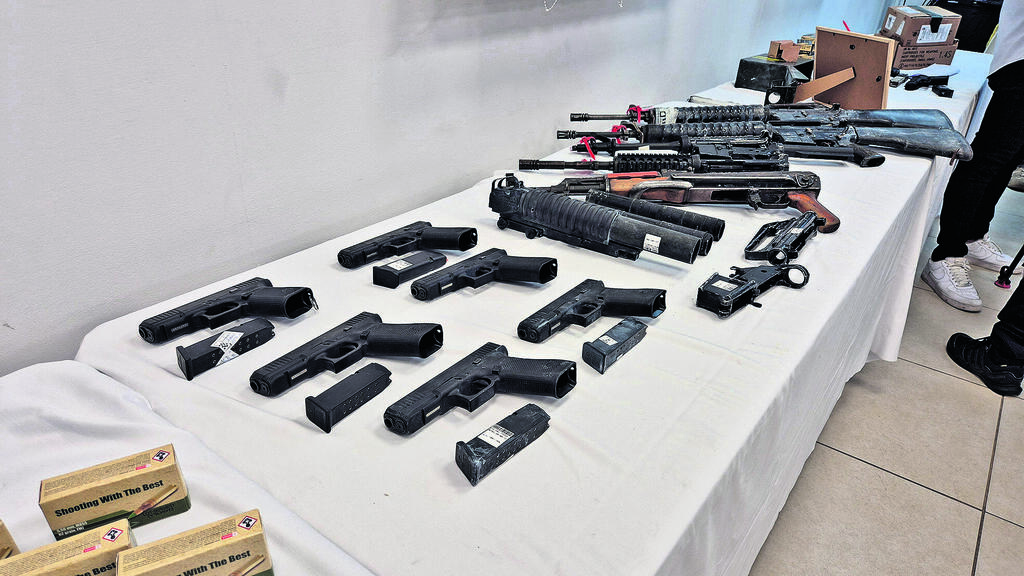
'There are more seizures because there are simply more illegal weapons circulating'
(Photo: Elad Gershgorn)
"They're coming in at insane volumes — both carried across the border and flown in by drones," he says. "Police are making enormous efforts, but there are simply more weapons available, and you can see it in the prices."
He says a Glock pistol that sold for around 50,000 shekels in 2020 now costs roughly 25,000. Other weapons have also become far more accessible.
"The drones are bringing in unbelievable weapons, including MAG machine guns," he says. "Beyond the national security threat, we already know smuggled pistols have been used in terrorist attacks."
Indictments filed by prosecutors explicitly note that smuggled firearms have been used in deadly attacks, including the Beersheba central bus station attack that killed Border Police officer Staff Sgt. Shira Haya Suslik, and the Highway 4 attack that claimed the life of police officer Master Sgt. Adir Kadosh.
"That's why the Shin Bet eventually became involved," Bar Yosef says. "When borders are being breached and weapons are entering on such a massive scale, it becomes a national security issue."
Although suspects are generally not charged with security offenses, he notes that most major smuggling cases are classified within the prison system as security-related.
Judges sound the alarm
Judges have also adopted a tougher stance.
In May 2025, Judge Alon Gavizon sentenced a first-time offender to 36 months in prison for illegally carrying a firearm. In his ruling, he warned that authorities must respond decisively to the explosion of illegal weapons in the Negev.
"Otherwise," he wrote, "we may find ourselves losing a large and important region to armed militias of lawbreakers."
He argued that the surge in murders — particularly within Israel's Arab community — requires significantly harsher punishment rather than rhetoric alone.
Indictments continue to rise. Prosecutors filed 67 indictments for shooting in residential areas in 2024, increasing to 83 in 2025. Cases involving illegal firearm possession rose from 42 to 52 during the same period.
The surge in murders — particularly within Israel's Arab community — requires significantly harsher punishment rather than rhetoric alone
(Photo: Ilana Curiel)
Current sentencing requests can reach up to 72 months for trafficking pistols, 84 months for trafficking rifles, and 48 months for unlawfully carrying a handgun.
Bar Yosef says that in one recent undercover-agent case, prosecutors negotiated fixed prison sentences of up to eight years.
"Defense attorneys would rather agree to a fixed four-year sentence than argue the case in court," he says. "Because sentencing has become tougher, we're now examining further revisions to prosecution guidelines so prosecutors will have stronger tools to seek even harsher penalties."
Still, he acknowledges the scale of the challenge.
"The weapons we seize are ultimately just a drop in the ocean," he says. "It's extremely frustrating. The number of people being killed, particularly in the Arab community, is intolerable. But illegal weapons affect every sector of society."
New legislative proposals
Prosecutors are also pushing for legislative reforms.
One proposal would broaden the legal definition of a firearm to better cover converted replica guns, airsoft weapons, and blank-firing pistols that have been modified into lethal firearms.
Another would amend Israel's Evidence Ordinance to allow spouses to testify against one another in weapons cases.
In cases built around photographs, prosecutors want the burden of proof shifted to defendants, requiring them to prove that the object shown is not a real firearm.
Officials believe these changes would significantly strengthen prosecutors' ability to combat illegal weapons.
Another major proposal would expand asset forfeiture powers.
Documentation from the Abu-Rakiq
family's weapons display
"In many cases, financial penalties are actually more effective deterrents than prison," Bar Yosef says. "What really hurts a criminal is having a half-million-shekel car confiscated two days after buying it. Prison? He'll manage. He can still run his people from behind bars."
"Illegal weapons fuel cycles of severe and deadly violence while posing a grave threat to the rule of law and national security," he says. "Every year we prosecute hundreds of weapons offenders."
Still, he insists enforcement alone is not enough.
"We are working closely with the police and the Shin Bet to further disrupt the supply routes and financing networks behind illegal weapons," Padan says. "At the same time, we are developing prevention programs and strengthening cooperation with local communities, because reducing violence requires a joint effort and shared responsibility from everyone involved."