


Israel is set to hold its first elections on their legally scheduled date in 38 years next week, while a public and legal debate unfolds over a question that has never been fully tested: Can a prime minister whose Knesset has already been dissolved, and who heads a caretaker government, lead Israel into a major military campaign against Iran?
Behind the legal question lies concern about possible political motives: that a war, whether it breaks out before the elections, in the days between the vote and the swearing-in of the 26th Knesset, or in the weeks afterward, could be used to influence the election results, the composition of the next government or even the formation of an emergency government.
Gallery
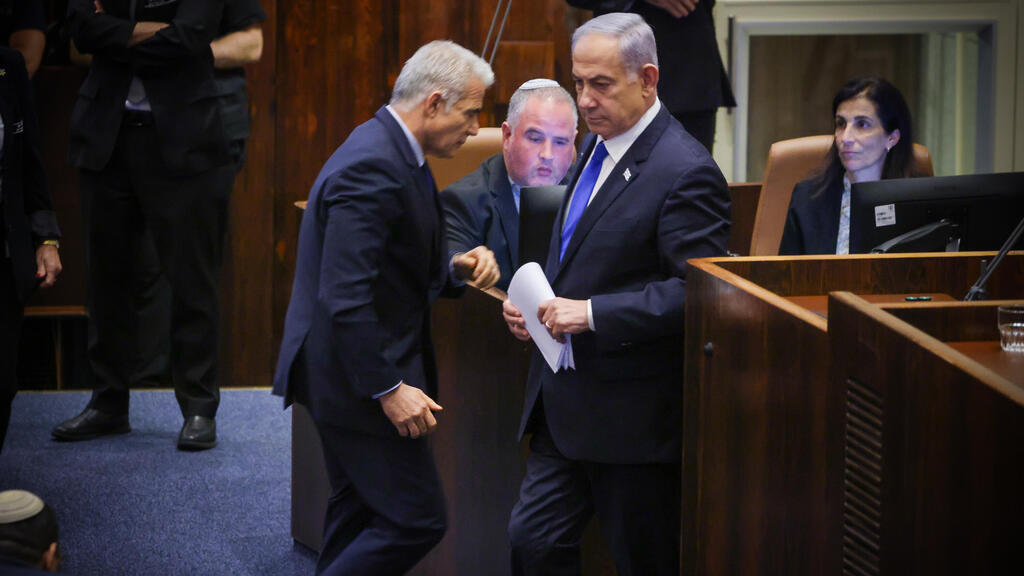
'Launching a war, or undertaking significant military action that is almost certain to lead to war, requires a decision by the government'
(Photo: Noam Moskowitz / Knesset Spokesperson's Office)
There is no public evidence of such an intention, and these concerns remain assessments and suspicions raised by critics and commentators. But the debate itself exposes how unclear the legal boundaries governing caretaker governments become when national security is involved.
The starting point is Section 40 of Israel's Basic Law: The Government, which stipulates that launching a war, or undertaking significant military action that is almost certain to lead to war, requires a decision by the government or the security cabinet.
The provision makes no distinction between a regular government and a caretaker government, nor does past practice. Former Cabinet Secretary Oved Yehezkel explains that the assertion that a caretaker government cannot go to war is overly sweeping and does not reflect the legal reality. According to him, restrictions on caretaker governments focus primarily on appointments and budgetary decisions, while they retain considerable freedom of action in defense and foreign affairs.
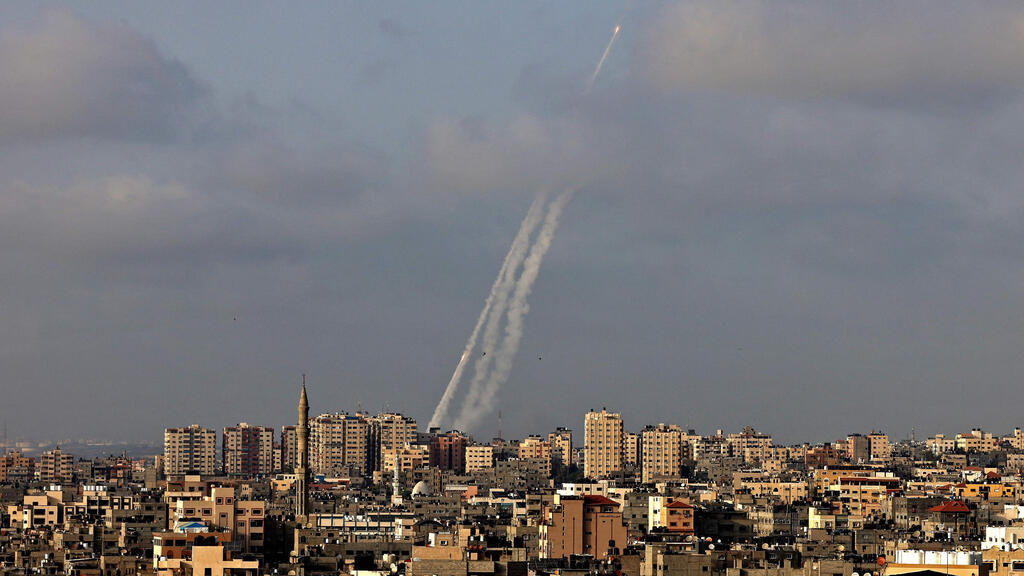
In 2021, after the elections. Rocket fire from Gaza into Jerusalem
(Photo: AFP)
Opposition leader Yair Lapid, who served as caretaker prime minister during Operation Breaking Dawn in August 2022, emphasizes a basic principle: "A caretaker government must not take steps that fundamentally change reality. That's what a caretaker government is." Lapid himself qualifies that statement, however, saying it is "a question for legal experts."
The two precedents cited in the debate point in different directions.
During Operation Guardian of the Walls, Israel was governed by a caretaker government, but the military campaign followed Hamas rocket fire toward Jerusalem. In other words, it was a response rather than an initiative.
Operation Breaking Dawn was launched by decision of Lapid and then-Defense Minister Benny Gantz, without convening the security cabinet and with the approval of Attorney General Gali Baharav-Miara. Some 25,000 reservists were called up during the operation. It was a limited military campaign launched in response to a specific intelligence warning, rather than a full-scale war. Nevertheless, it demonstrated that a caretaker government can initiate military action.
The fundamental distinction, as opposition officials describe it, lies between responding to an immediate intelligence warning and launching a war that has been "manufactured" to influence an election. Even without manufacturing a war, however, a government can argue that a particular threat is too urgent to be postponed.
It is worth listening carefully to what Prime Minister Benjamin Netanyahu said just Wednesday at an officers' graduation ceremony at the IDF's Officer Training School:
"Mojtaba - that's the name of the current dictator, Khamenei's son, Mojtaba - has decided to follow in his father's footsteps. He has taken the safety off, and Iran is once again trying to develop its bombs of death. Therefore, there is only one way to eliminate this threat once and for all: to overthrow the regime in Iran. And that is the directive I have given the IDF, the Mossad and the security agencies."
In other words, Netanyahu appears to be laying the groundwork for a possible imminent war with Iran and establishing a justification for it.
The defense establishment, incidentally, is divided over the accuracy of his statements. Some senior officials ynet spoke with on Thursday said Netanyahu's assessment was accurate. Others said they had no idea what he was referring to and expressed concern that his remarks, combined with his actions, including sending dozens of fighter jets on a flight approaching the Iranian border, were intended to create a situation of "miscalculation."
According to this concern, Iran might launch a preemptive attack on Israel in the belief that Israel was about to strike, thereby providing Israel with justification for attacking Iran.
Scenario one: War before Israel's elections
Only five days remain for this scenario to materialize, a period during which the government remains fully subject to the attorney general's guidelines requiring restraint during an election campaign. The central concern here is not formal legality but the possibility that a war could affect whether the elections take place on schedule.
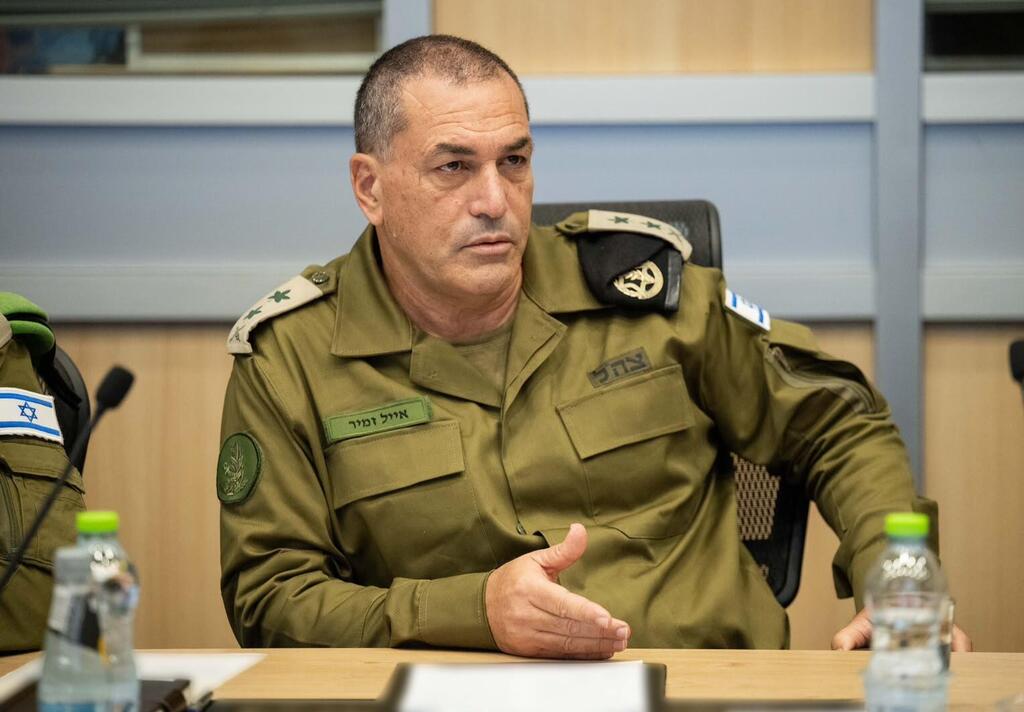
IDF Chief of Staff Lt. Gen. Eyal Zamir has already warned that a war at this time would almost certainly lead to postponing elections
(Photo: IDF Spokesperson's Unit)
Such a postponement is not a decision the government can make on its own. Under Basic Law: The Knesset, extending the Knesset's term, including postponing elections, requires a majority of 80 lawmakers and exceptional circumstances. That was how the elections were postponed in 1973 because of the Yom Kippur War.
In other words, even a war would not allow Netanyahu to postpone the elections without the opposition's consent.
A former senior government official argues that a war cannot be launched for electoral reasons and that any such decision would have to be made by the government as a whole, rather than on the prime minister's initiative alone.
According to him, judicial review cannot prevent such a decision in advance, and even the High Court of Justice would not issue an injunction against going to war. "People will be held accountable by history," he says.
Scenario two: War between the elections and the swearing-in of the Knesset
This scenario is different because the election results would already be broadly known, but the government, potentially the outgoing government, would remain in office. Under the normal legal timetable, the new Knesset would be sworn in approximately two weeks after Election Day, around November 10. The president would then begin consultations on whom to task with forming a government.
During this window, concerns arise that a war could influence the composition of the next government and create pressure to establish an emergency or national unity government. There are precedents for such developments: the national unity government formed on the eve of the Six-Day War and the emergency government established in October 2023.
From a legal standpoint, Yehezkel sees no substantial difference in the government's formal authority across the three scenarios. The distinction, he says, lies primarily in the expectation of restraint and the burden of justification: The less representative a government is of the public, the stronger the justification required for a dramatic decision.
Scenario three: After Knesset is sworn in, but before permanent government formed
During this period, parliamentary oversight is particularly weak.
Although the new Knesset has convened, its committees, including the Foreign Affairs and Defense Committee, generally have not yet been established. Meanwhile, the mandate to form a government is held either by Netanyahu or by whoever receives it. This creates a period in which the prime minister retains full authority while facing very limited oversight.
Here, too, the formal legal position remains the same: If the security cabinet or the government convenes and orders military action, the army may present objections, but ultimately it must carry out the decision.
This brings us to the question of institutional checks and balances, which lies at the heart of the debate. According to Netanyahu's critics, very few independent gatekeepers remain. IDF Chief of Staff Zamir and Attorney General Baharav-Miara, who may argue that a caretaker government's authority to declare war is more limited, are among the last senior figures who were not directly appointed by Netanyahu.
There are also indications that the military opposes launching an attack at this time. Mossad Director Roman Gofman and Shin Bet chief David Zini were appointed by Netanyahu, and critics argue that they owe their positions to him.
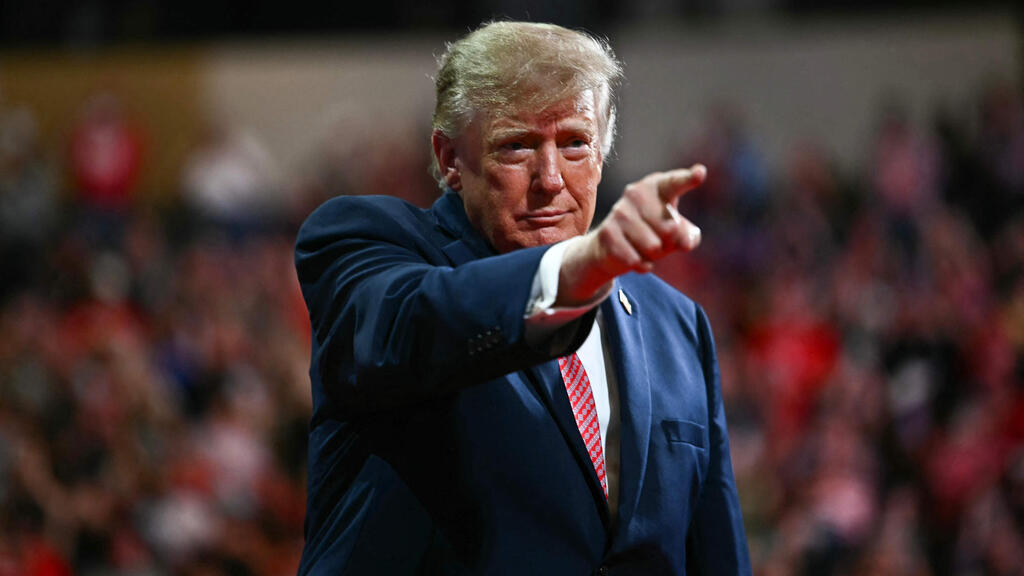
He too has an election looming. Trump at a rally in Kansas this week
(Photo: Kent Nishimura / AFP)
These are allegations made by Netanyahu's critics. The counterargument is that appointments by the prime minister are the standard arrangement under Israeli law and do not, in themselves, indicate a lack of independence.
The regional situation and the American dimension add further weight to the discussion. The current war against Iran began on February 28, 2026, when Zamir announced a "significant, fateful and unprecedented" military campaign coordinated with American strikes.
Another round of fighting followed in June. In late September, Israeli media reported that President Donald Trump had set a deadline: The war with Iran would end immediately after the U.S. midterm elections on November 3.
Some commentators have suggested that Netanyahu is betting on a swift American strike against Iran before the midterms, which would effectively give Israel a green light and allow him to use the war as a campaign issue.
These are assessments, not established facts, and the available time is already running out. Nevertheless, they explain why October 27, November 3 and the swearing-in of the Knesset are being considered together: a period of several weeks in which two election campaigns, one Israeli and one American, overlap with decisions about whether, and how, to fight Iran.
The bottom line is that Israeli law does not prohibit a caretaker government from going to war, but neither does it give that government unlimited authority. The central legal requirement is that the decision be made by the government or security cabinet, rather than by the prime minister acting alone. Beyond that, oversight is primarily public, political and parliamentary rather than judicial.
As Yehezkel put it, it is difficult to imagine a court intervening in real time in a security decision to launch military action against Iran. The principal checks would therefore come from public opinion, Netanyahu's political rivals and the media.
That is precisely the gap between the formal legal framework and the realities of government: The law sets a relatively low threshold, while limits on the exercise of power depend largely on the restraint of those who hold it and the willingness of institutional gatekeepers, however few remain, to say no.