


Seven soldiers were wounded by Hezbollah explosive-laden first-person-view (FPV) drones in southern Lebanon over the past 24 hours, the IDF said Thursday, as tensions rose following an Israeli strike in Beirut targeting a senior Hezbollah commander.
The IDF said one soldier was seriously wounded and three others were lightly wounded overnight by an FPV drone in southern Lebanon. The soldiers were evacuated to a hospital and their families were notified.
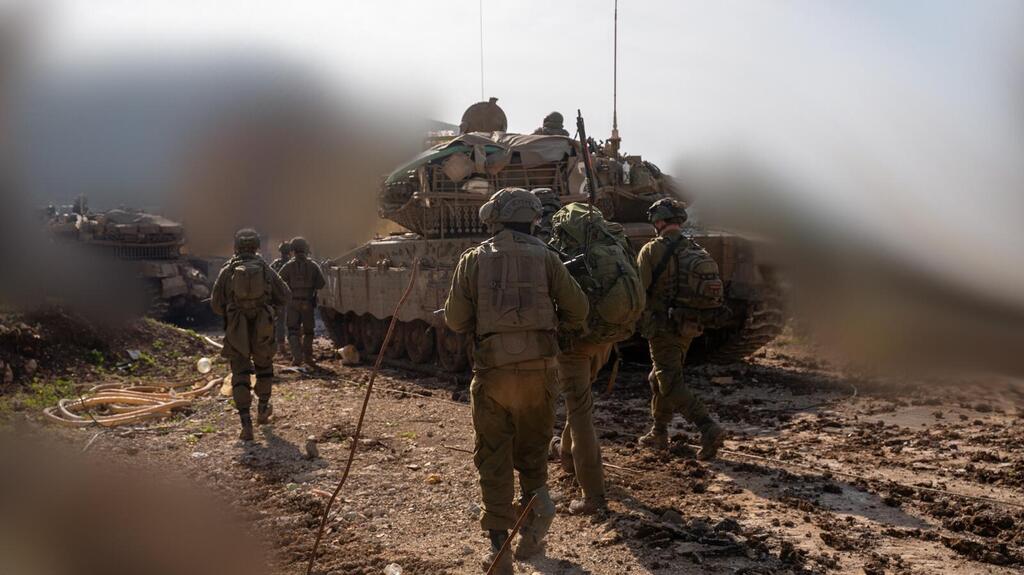
The latest incident followed another Hezbollah drone attack Wednesday in which three soldiers were wounded — one seriously, one moderately and one lightly.
At 12:48 a.m., sirens sounded in Kiryat Shmona over a suspected drone infiltration. The military later said the air force intercepted a “suspicious aerial target” launched from Lebanon. Rocket and missile sirens were also activated in the border towns of Manara and Margaliot due to concerns over falling interceptor fragments.
The escalation comes as the United States and Iran discuss a possible agreement to end the war and address the Strait of Hormuz crisis. According to information received by Israel, Iran insisted that the emerging agreement include a clause linking all fronts and halting the fighting on each of them. As far as is known, Washington agreed, despite the clause posing difficulties for Israel.
Lebanese Parliament Speaker Nabih Berri also appeared to confirm the linkage, telling Al Jazeera that Iranian Foreign Minister Abbas Araghchi had told him that “Lebanon is part of any ceasefire agreement.”
Against that backdrop, the Security Cabinet convened Wednesday night to discuss the latest developments. From the IDF’s perspective, the northern front now presents an uncomfortable dilemma: Hezbollah continues to attack Israeli forces in southern Lebanon, while the army’s freedom of action has been restricted.
Israeli strike on Dahieh district of Beirut


The Israeli Air Force struck Beirut’s Dahieh district Wednesday night, the first strike in many weeks on Hezbollah’s stronghold during the ceasefire. Prime Minister Benjamin Netanyahu and Defense Minister Israel Katz identified the target as Malek Balout, commander of Hezbollah’s elite Radwan force.
An Israeli official said Balout and several other Hezbollah terrorists were killed. A source close to Hezbollah told AFP that “a Hezbollah commander was killed in the strike.”
Balout had commanded the Radwan force since January 2024, after his predecessor, Wissam al-Tawil, was killed. The strike marked the first time Israel targeted a senior Hezbollah figure since the start of the ceasefire and since the killing of the group’s southern front commander in late March.
Security officials said in recent days that, despite appearances, Israel’s hands were not tied in Lebanon and that it was planning significant steps against Hezbollah, including in Beirut, if an operational opportunity arose.
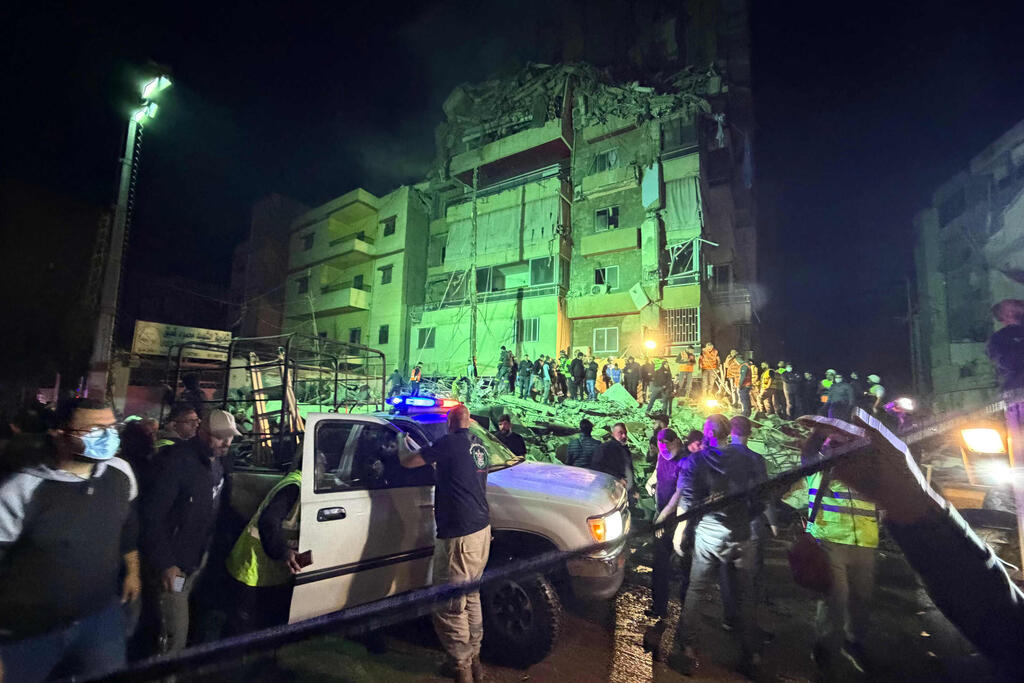
Aftermath of an Israeli strike on Hezbollah command center in Beriut's Dahieh district
(Photo: Ibrahim Amro / AFP)
Strikes in Beirut had been halted in recent weeks after Iran demanded a pause as a condition for entering negotiations with the United States. The latest strike came at a sensitive moment, amid reports of progress in contacts between Washington and Tehran. An Israeli official said the strike on the Radwan commander was coordinated with the Americans.
IDF Chief of Staff Lt. Gen. Eyal Zamir visited the village of Khiam in southern Lebanon on Wednesday and addressed the fighting against Hezbollah.
“IDF troops under the Northern Command continue to operate to carry out the mission of defending the communities, removing all types of threats and deepening the dismantling of Hezbollah,” Zamir said.
“Your mission is to remove every threat to our communities and to our soldiers,” he said. “All of the IDF’s capabilities are at your disposal. Continue the mission to locate the enemy in the area and dismantle terror infrastructure. Since the beginning of Operation Roaring Lion, more than 2,000 Hezbollah terrorists have been struck and eliminated.”
IDF Chief of Staff Lt. Gen. Eyal Zamir in Khiam, southern Lebanon
(Video: IDF)
Zamir said he toured a Hezbollah tunnel about 25 meters, or 82 feet, underground, beneath a children’s clothing store.
“This is further proof that Hezbollah uses civilian areas to carry out terrorist activities under the cover of the civilian population,” he said.
He praised commanders and reservists, saying they were serving on the front line.
“The IDF is the defensive shield for the communities of northern Israel,” Zamir said. “We will not pull back until security is ensured and a long-term solution is secured for the communities of northern Israel.”