


Defense Minister Israel Katz said Monday that Israel could find itself at war with Iran “tomorrow” if Tehran fires missiles at Israeli territory, warning that the IDF has already been ordered to prepare for an independent Israeli operation against Iran if needed.
“If Iran fires missiles at Israel, Israel will strike Iran with force,” Katz told military and diplomatic reporters in a briefing that focused on Iran, Lebanon, Syria, Gaza, Turkey and Israel’s future military capabilities. “There is no equation we will accept in which Iran fires at Israel. This has also been made clear to the Americans. The IDF is just waiting for it and is on alert. There are targets.”
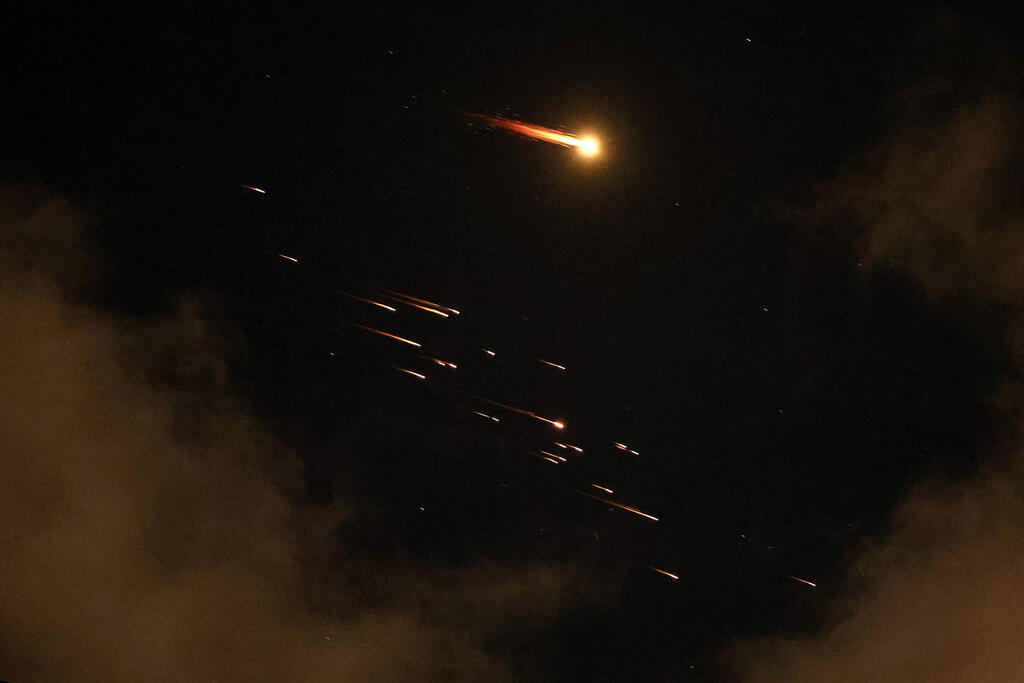
Katz said Israel does not want to disrupt U.S. President Donald Trump’s diplomatic effort with Iran, but added: “When it comes to defending ourselves, there are no compromises, not in Lebanon and not in Iran.”
According to Katz, there are two scenarios in which the war with Iran could resume. “One is that Trump decides the negotiations have run their course and wants to go back to striking, and the second is that Iran attacks us,” he said. “If Iran attacks, that is the third Iran war. The situation is very clear. There is no reality in which Israel will allow missile fire at its territory without responding with force. It could happen within two days. My directive to the IDF is to prepare for a blue-and-white operation in Iran.”
By “blue-and-white,” Katz meant an Israeli-led operation, rather than one dependent on outside forces.
“We are preparing for the possibility that Iran will fire at us,” he said. “The IDF is prepared both defensively and offensively. The IDF is prepared to repel and attack. If necessary, we will put the home front on alert as we did in the last confrontation. We will not hesitate to do so based on the IDF’s recommendations. If we see a concrete danger, we will alert the home front and launch an attack.”
Katz said Iran still has a missile stockpile and the ability to launch it, but argued that Israel’s offensive capabilities could quickly suppress fire. He said Israel had achieved “huge accomplishments” in operations against Iran, causing “enormous damage” and eliminating “the head of their extermination program.” He added that Iran’s leadership was in bunkers, as were the leaders of Hezbollah, Hamas and the Houthis.
Asked about Iran’s supreme leader Mojtaba Khamenei, Katz said he was “marked for death.” He described the Iranians as “good horsetraders” trying to extract concessions in negotiations, and said Israel would not allow Iran to produce nuclear weapons. “If they do it through an agreement, all the better,” he said.
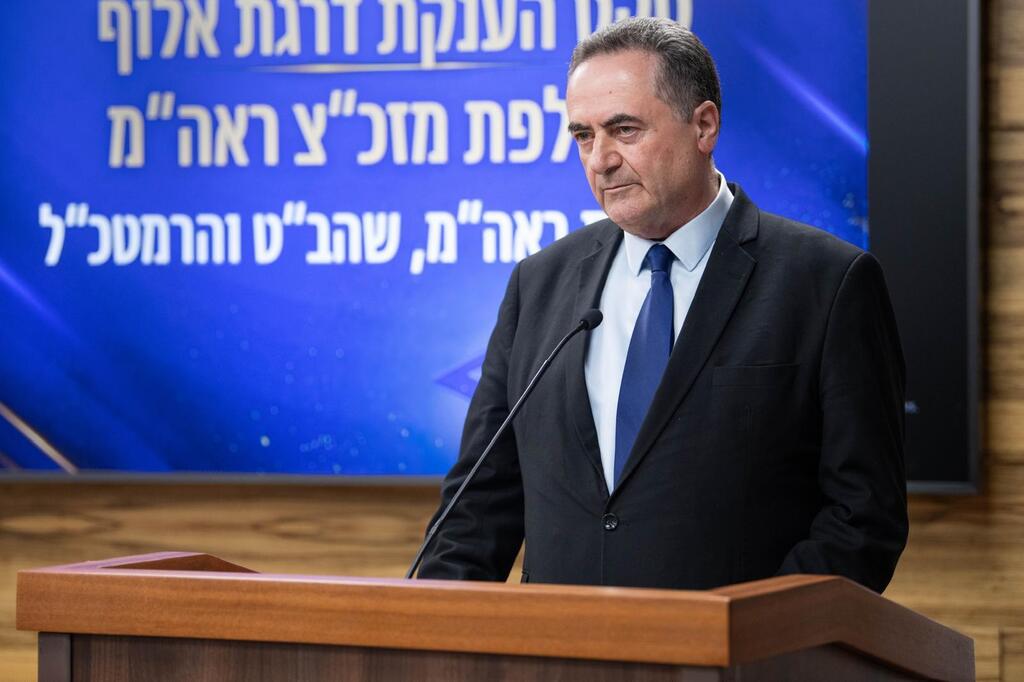
Defense Minister Israel Katz
(Photo: IDF)
Katz was also asked whether the United States would join Israel if Iran attacked and Israel responded. “The defensive partnership with the U.S. exists,” he said. “But if Iran attacks, Israel acts with force. That is not conditional on anything. Trump is a friend of the State of Israel. In his worldview, he knows who the good guys are and who the bad guys are.”
On Lebanon, Katz said Israel would strike Beirut’s Dahieh district, a Hezbollah stronghold, if Hezbollah fires at Israeli communities. He said that equation would not change.
“There was a weekend of fire at our communities and there was a discussion among us,” Katz said. “The prime minister and I believed we should strike Dahieh, and that was not simple because of the Americans. The test of striking Dahieh exists. Iran is pressuring the U.S. and could demand an Israeli withdrawal from Lebanon.”
Katz said he had served as an officer in the First Lebanon War and insisted Israel was “not going into any mud.” Any problem that emerges, he said, would be solved “at the expense of the other side and not at our expense.”
“There are challenges, there will be friction,” he said. “We are investing major efforts to find solutions to fiber-optic drones, and we allocated 2 billion shekels ($540 million) to finding a solution.”
Katz said Hezbollah chose to attack Israel after the start of Israel’s operation against Iran and paid a heavy price. He said Hezbollah Secretary-General Naim Qassem, “whom we have not yet gotten our hands on,” had decided to attack Israel, and that Israel responded with a blow whose scale and force “are not understood.”
“More than 300 terrorists were eliminated,” Katz said. “They were forced to leave Dahieh and positioned themselves in Druze and Christian neighborhoods. There was exemplary intelligence identification here. There were more dead here than in the pager operation.”
IDF blowing up a Hezbollah underground stronghold in southern Lebanon
(Video: IDF)


Katz said one of his central decisions was not to evacuate northern Israeli residents again despite the renewed threat from Lebanon. He said the decision was not easy, especially given the protection gaps in northern communities, but argued that it required Israel to take the initiative along the anti-tank missile line so northern towns would not remain exposed to a ground raid or direct anti-tank missile threat.
He said some ministers opposed that approach, as well as Israel’s move into Syria and the capture of the Mount Hermon crown. He said others had suggested pushing as far as the Litani River or even entering Beirut without entering villages.
Katz made clear that Israel does not intend to withdraw from the areas it currently holds.
“I suggest people not hold their breath waiting for the area from which Israel will withdraw. It will not happen,” he said. “We have no territorial interest in Lebanon.”
He said that in western and central sectors of southern Lebanon, almost all terror infrastructure and villages had been destroyed, while in the eastern sector, 73% of villages and infrastructure had been destroyed. Katz said 200,000 residents who lived in the security area along what Israel calls the yellow line would not return to their homes for a long time.
“There is no return,” he said. “There is distancing fire. They will not return for a long time — 24 border-adjacent villages, where the infrastructure is being destroyed, including houses where weapons and tunnels were hidden.”
Katz said Israel offered the Lebanese army a pilot program before the maneuver on the Ali Tahar ridge, suggesting that Lebanese forces operate there. He said the Lebanese army refused because it did not want a confrontation with Hezbollah.
Katz said he met Friday with U.S. CENTCOM commander Adm. Brad Cooper and told him Israel would not withdraw from security zones in Lebanon, Syria or Gaza.
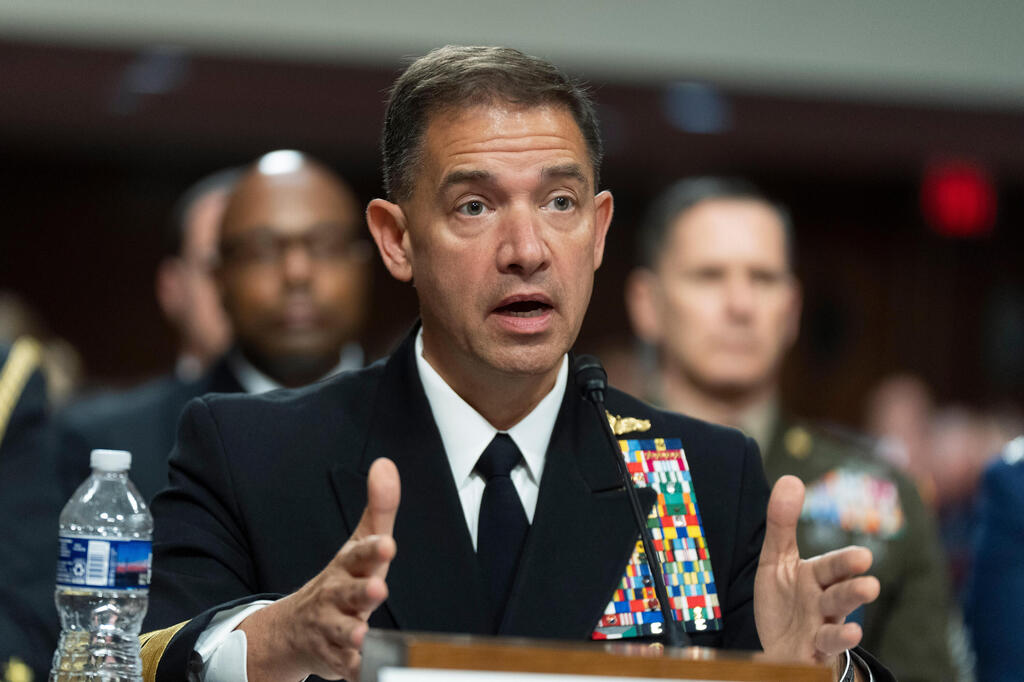
US CENTCOM commander Adm. Brad Cooper
(Photo: AP Photo/Manuel Balce Ceneta)
“That is the most significant achievement,” Katz said. “There is nothing that hurts jihadists more than holding territory. No one will act in our place. The Lebanese army will not become lions.”
Katz said the linking of the Iran and Lebanon fronts prevented Israel from delivering a much more devastating blow to Hezbollah across Lebanon, which he said could have brought about the group’s “practical collapse.” Still, he said, the diplomatic process created pressure for Hezbollah’s disarmament throughout Lebanon and gave Israel U.S.-backed legitimacy to remain in southern Lebanon as long as Hezbollah is not disarmed across the country.
Katz said he witnessed four calls between Netanyahu and Trump in which the U.S. president tried to link Iran and Lebanon in order to reach a ceasefire. According to Katz, Netanyahu pushed back against Trump’s effort, but during a fifth call the two leaders decided on a ceasefire. Katz said Israel and the United States still maintain strategic cooperation.
Under the Lebanon arrangement, Katz said, the Lebanese army is expected to operate between the yellow line and the Litani River. Israel, he said, would demand that Hezbollah terrorists and weapons be removed from the entire area up to the Litani, and that the Lebanese army, with U.S. assistance, prove to Israel and the United States that the mission had been carried out.
Katz said Israel supports the idea of the United States training special Lebanese army units. “Hezbollah threatens Lebanon all the time, and if there are elements in the Lebanese army that can operate against Hezbollah under American supervision, we are in favor,” he said.
On Turkey, Katz pushed back on Trump’s claim that Turkish President Recep Tayyip Erdogan had been a leading candidate to join the Israel-Iran war on Tehran’s side.
“I don’t buy that Erdogan wanted to join the war,” Katz said. “He didn’t even respond to Iran’s missiles against him.”
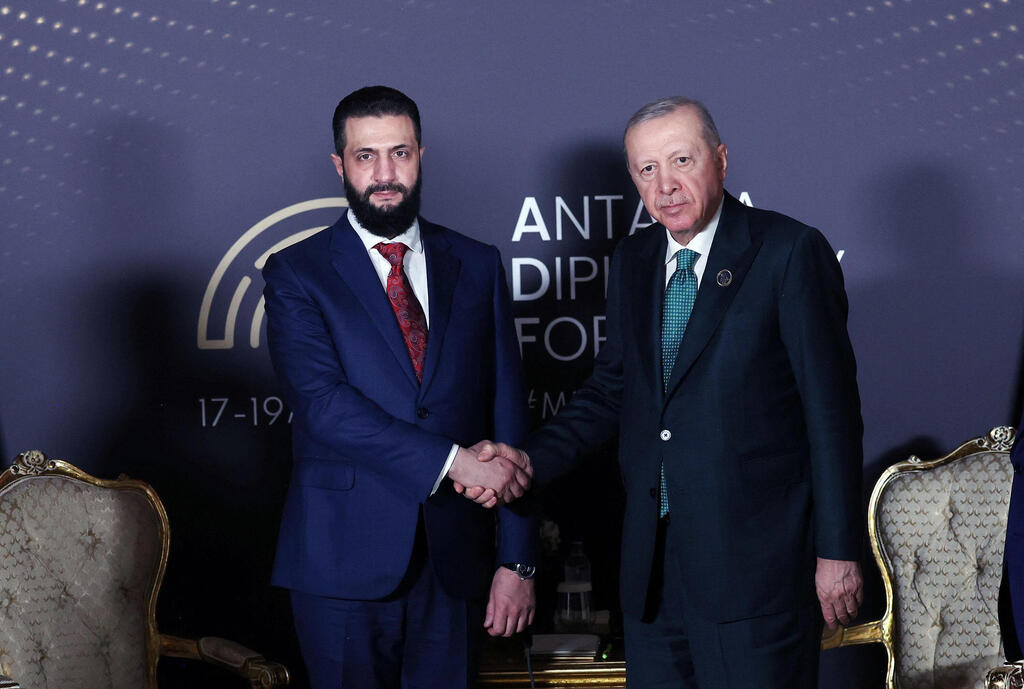
Syrian President Ahmed al-Sharaa with Turkish President Recep Tayyip Erdogan in Antalya
(Photo: AFP PHOTO / TURKISH PRESIDENTIAL PRESS SERVICE / HANDOUT)
Katz said Turkey is “not yet an enemy state,” noting that air routes over Turkey remain open, oil from Azerbaijan still flows and the Bosporus Strait remains open. “There is no doubt Erdogan is becoming more extreme. He is depressed by the Lebanon agreement. He is depressed by our achievements. He has ambitions,” Katz said, referring also to remarks by Turkish ministers about Jerusalem.
Katz said the main point of friction with Turkey is Syria, where Turkish influence and military activity are expanding. “In any case, we are not moving from there,” he said. “We will not leave Syria. We are also responsible for the safety of the Druze. The Turkish influence in Syria and the armament there is something we are preparing for. There are challenges. Will the Turks arm the Syrians, build bases there and harm our freedom of aerial action?”
On Gaza, Katz said Israel would not allow Hamas to rearm and argued that Hamas wants Israel to leave the Philadelphi Corridor so it can bring in weapons. He said Gaza did not join the confrontation with Iran, and that Israel had achieved a clear accomplishment in the Strip, but the mission was not complete.
“We are carrying out targeted operations in Gaza,” Katz said. “We are committed to seeing Hamas disarmed. If it is determined that Hamas has not met the conditions, we will complete it ourselves.”
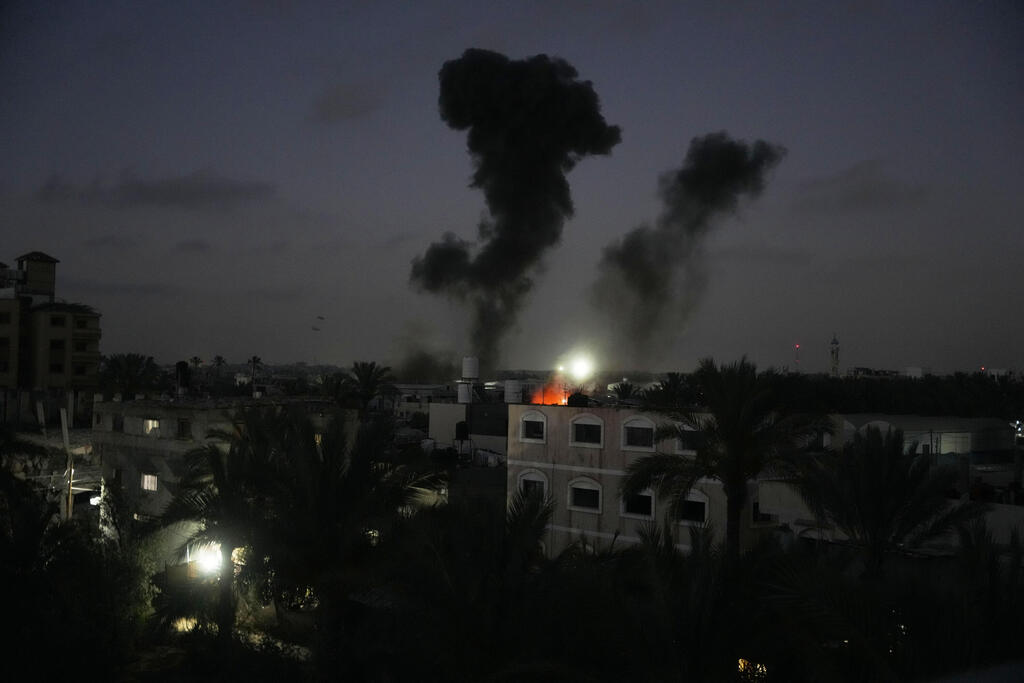
IDF strikes in Gaza
(Photo: AP Photo/Abdel Kareem Hana)
Asked about the Houthis and Israel’s decision not to respond to their latest fire, Katz said Israel had weighed priorities between the different fronts.
“They did not act with great force, and we made a calculation between the arenas,” he said. “They are a more significant threat than was presented. They have capabilities and fanaticism. Assume that we are preparing for all kinds of future possibilities.”
Katz also said Israel sees offensive capabilities in space as one of the most important goals in building the IDF’s future force.
“We are determined to maintain Israel’s security,” he said. “Where is our advantage? In space. We allocated a significant addition. I said, ‘I want the best minds to bring things that do not exist in the world.’ The goal is to be among the world’s top three countries in offensive and defensive space capabilities, using powerful laser beams. That is where I am certain we will be. It also creates ground for cooperation with countries and strategic alliances.”