

President Donald Trump’s decision to pull about 5,000 U.S. troops out of Germany may look at first like another political clash with a European ally, following Chancellor Friedrich Merz’s criticism of him over the war with Iran.
But Germany, like other countries in Europe, has long faced Trump’s criticism for not investing enough in its own defense, enjoying the American security umbrella and leaving Washington to pay the bill.
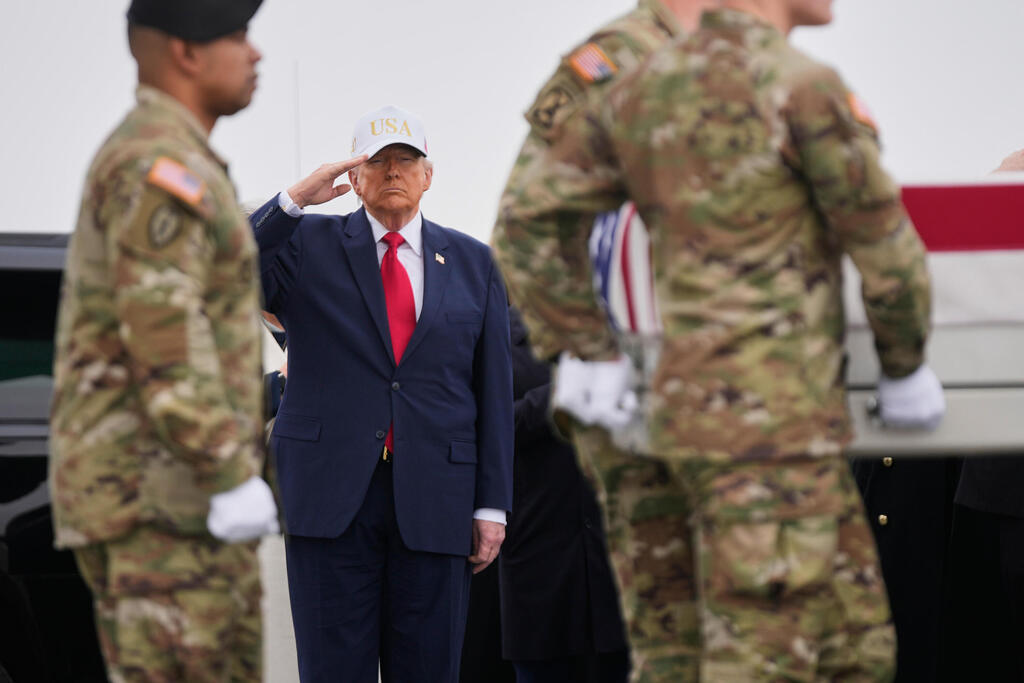
The current move, however, is much bigger than the relationship between Trump and Berlin, the Strait of Hormuz or the fighting with Iran. It touches one of the deepest questions in U.S. foreign and defense policy: Why, eight decades after World War II and more than three decades after the collapse of the Soviet Union, is the U.S. military still deployed in dozens of countries around the world?
From Germany to Japan, from South Korea to Bahrain, from Italy and Britain to smaller bases in Africa, Eastern Europe and the Pacific, the United States is not only a power with a large military. It is a power with a global network of force: bases, runways, ports, military hospitals, ammunition depots, radar systems, special forces and regional commands. Together, they form the infrastructure that allows Washington to respond to almost any crisis in the world within hours or days.
According to the Pentagon’s official personnel database, compiled and published by USAFacts, there were 221,599 U.S. military personnel and Defense Department civilians stationed outside the United States at the end of December 2025. They included 169,589 active-duty troops, 23,169 reservists or National Guard personnel and 28,841 civilian Defense Department employees.
U.S. troops and Defense Department personnel are stationed in more than 160 countries outside the United States, but most of the force is concentrated in a much smaller number of countries. More than half of active-duty troops overseas are in Japan and Germany, and the top 10 countries host 83% of all active-duty U.S. troops outside the United States. The five countries with the largest active-duty U.S. troop presence are Japan, Germany, South Korea, Italy and Britain.
Those numbers do not necessarily include every U.S. force temporarily deployed to a region, troops sailing on aircraft carriers, classified deployments or forces arriving for exercises and temporary reinforcements. But even in the relatively narrow count, the picture is clear: The United States still maintains a global military presence unmatched anywhere in the world.
Germany: from American occupation to NATO nerve center
Germany is where history and strategy meet most clearly. The U.S. presence there began at the end of World War II, when defeated Germany was divided into occupation zones. What began as part of the postwar order quickly became a central front in the Cold War, with West Germany serving as the West’s forward border against the Soviet Union and communist bloc countries.
For decades, hundreds of thousands of U.S. troops were stationed there, meant to serve as the first line of defense in the event of a Soviet invasion of Western Europe.
After the Soviet Union collapsed and Germany was reunified, it might have seemed logical that the U.S. presence would shrink until it disappeared. It did shrink significantly, but it did not disappear. The reason is simple: Germany stopped being only a front line against Moscow and became the most important U.S. logistical, air and command hub in Europe.
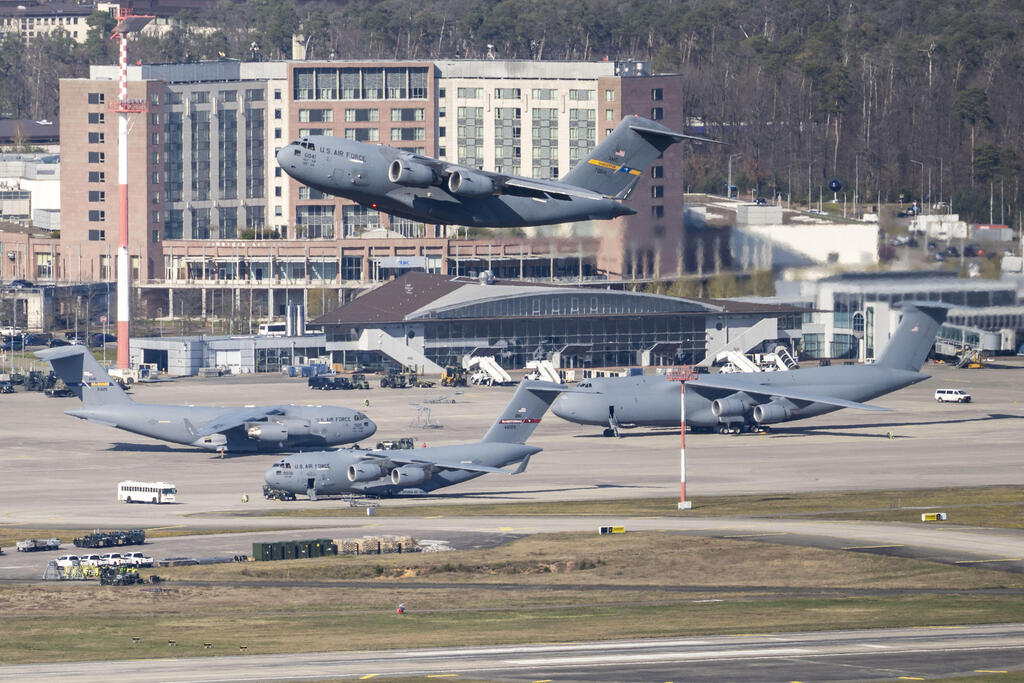
(Photo: Thomas Lohnes/Getty Images)
Ramstein Air Base, for example, is one of the U.S. Air Force’s most important strategic assets outside the United States. Stuttgart hosts major headquarters, including U.S. European Command and U.S. Africa Command. The small town of Landstuhl is home to the largest U.S. military hospital outside the United States, which over the years treated wounded troops from Iraq, Afghanistan and other fronts.
So when an American president threatens to remove forces from Germany, he is not only punishing Berlin. He is also changing, even if in a limited way, the architecture of U.S. power. According to recent reports, about 36,000 U.S. troops are stationed in Germany, and removing 5,000 of them would amount to about 14% of the U.S. force in the country. Reuters and AP reported that the move is expected to take place within six to 12 months.
Trump presents it as part of his long-running campaign against NATO “free loaders” — countries that enjoy U.S. protection but do not pay enough. But the Pentagon and the U.S. defense establishment view Germany not only as a favor Washington does for Europe, but as an asset that serves the United States itself. From there, it is easier to move troops to Eastern Europe, operate aircraft in the Middle East, command missions in Africa and evacuate wounded from distant battlefields.
In that sense, Germany is not only a country that hosts U.S. troops. It is one of the engines that powers American forces around the world.
Japan: the occupation ended, the alliance remained
If Germany is the pillar of the U.S. presence in Europe, Japan is the pillar of the U.S. presence in the Pacific. According to figures from late 2025, Japan hosts the largest number of active-duty U.S. troops outside the United States, about 54,300.
Here too, the story begins in 1945. After Japan surrendered in World War II, the United States led the occupation, dismantled the Imperial Japanese military, reshaped Japan’s political and constitutional system and pushed the country to become a pro-Western democracy. Japan’s Constitution, especially its famous Article 9, limited the use of military force and made Japan largely reliant on its alliance with the United States for security.
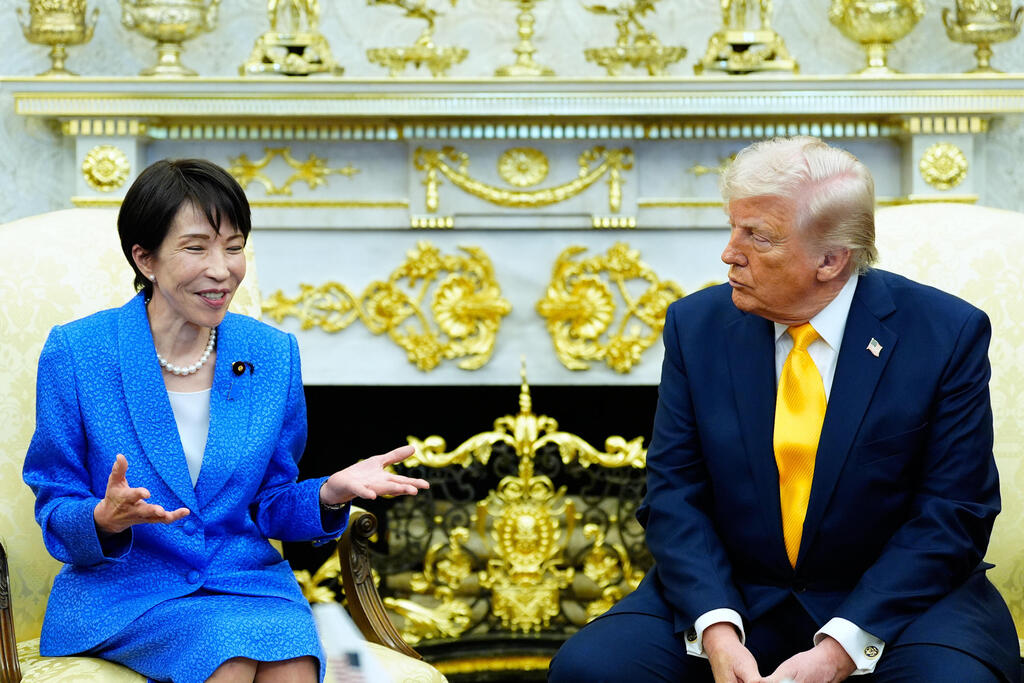
(Photo: AP Photo/Alex Brandon)
Over the years, however, the logic changed. The U.S. presence in Japan is no longer a remnant of occupation but a central component of strategy toward China, North Korea and Russia. Bases in Japan, especially in Okinawa, allow the United States to remain close to Taiwan, the East China Sea, the Korean Peninsula and some of Asia’s most important sea lanes.
In an era in which China is building a huge navy, threatening Taiwan and trying to limit U.S. military freedom of action in the western Pacific, the bases in Japan are not just a historical memory. They are a front line.
That is also why the U.S. presence in Japan is so sensitive. On one hand, Japan’s governments see the alliance with the United States as strategic life insurance against China and North Korea. On the other, Okinawa has seen decades of public opposition to the U.S. military presence over noise, environmental strain, accidents, crime and a deep sense of inequality. Although Okinawa makes up less than 1% of Japan’s total territory, it hosts more than 70% of U.S. bases in the country.
South Korea: the war that never ended
In South Korea, the reason for the U.S. presence is sharper: The Korean War never ended with a peace agreement. An armistice was signed in 1953, but the Korean Peninsula remains divided, armed and tense. To the north is a nuclear state armed with ballistic missiles, a huge army and a regime that periodically threatens Seoul, Tokyo and Washington. To the south is one of the world’s most advanced economies — but also a capital city within range of Pyongyang’s artillery.
According to U.S. data, about 23,500 active-duty U.S. troops were stationed in South Korea at the end of 2025. The State Department describes the presence as part of the security alliance with Seoul and deterrence against North Korea. Official publications sometimes refer to more than 28,000 U.S. military personnel in the country, a gap that stems from different counting methods, including deployments, force definitions and personnel not counted in the same category.
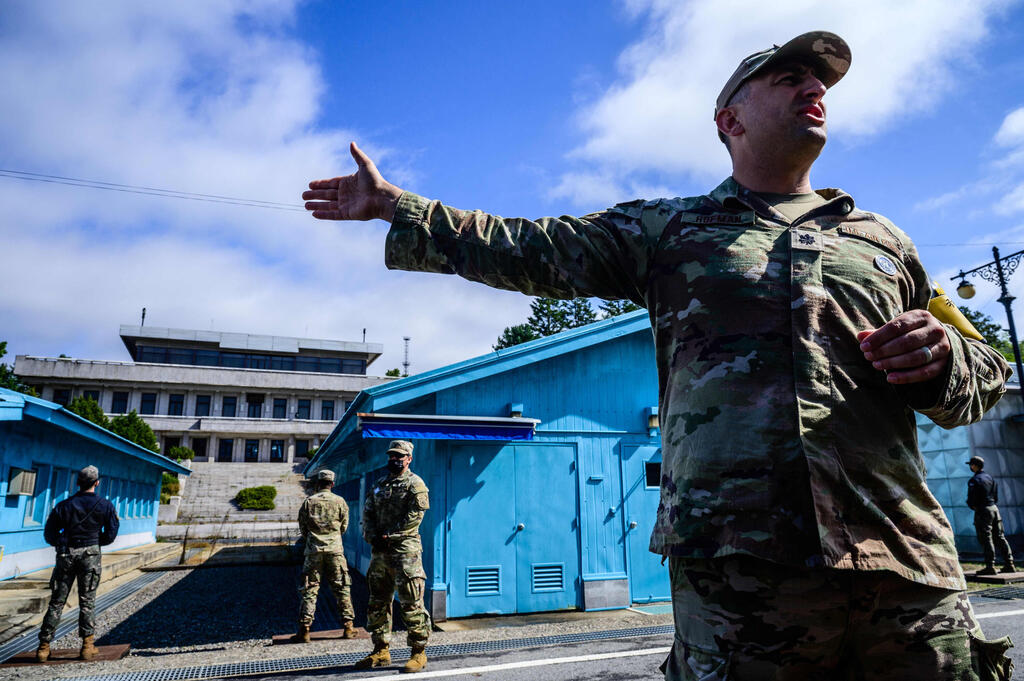
(Photo: ANTHONY WALLACE / AFP)
U.S. forces in South Korea are not meant only to “help” in the event of war. Their very presence is the message. Any major North Korean attack on the South would almost certainly kill U.S. troops as well, instantly turning it into a direct confrontation with the United States. In strategic terms, it is called a “tripwire”: a human and political fuse ensuring that U.S. involvement is not a later choice, but a built-in fact.
Here too, Trump has touched a raw nerve in the past. He demanded that South Korea pay more for the U.S. troop presence and raised questions about the value of the alliance. For Seoul, this is a difficult dilemma: It wants to be more independent and powerful, but it cannot ignore the nuclear threat from the North. For Washington, South Korea is not only an ally. It is also part of the broader balance against China.
Italy, Britain and Spain as launching pads
Germany is the center, but it is not the whole European story. At the end of 2025, about 12,700 active-duty U.S. troops were stationed in Italy, about 10,400 in Britain and about 3,800 in Spain. Together with other countries, including Belgium, Poland, Romania, the Netherlands, Turkey and the Baltic states, Europe serves as a network of bases, ports, airports and headquarters.
In Italy, the United States has especially important assets: bases in the Naples area, Vicenza, Aviano and Sicily. They enable activity in the Mediterranean, North Africa, the Balkans and the Middle East. Britain serves mainly as an air and intelligence hub and as part of the deepest U.S. security relationship with any ally. Spain, because of its location near the Strait of Gibraltar, is especially important to the U.S. Navy and to operations between the Atlantic Ocean, the Mediterranean and Africa.
(Photo: Dmitri Lovetsky/Pool via REUTERS)
Here lies one of the central explanations for why U.S. bases survived after the Cold War: They are useful for other wars, too. A base in Italy can support operations in Libya, a base in Germany can support a mission in Iraq and a port in Spain can be relevant to a crisis in the Red Sea or North Africa. The more unpredictable the world becomes, the more this permanent infrastructure looks to U.S. military planners like an insurance policy.
Since Russia’s invasion of Ukraine in 2022, the U.S. presence in Europe has regained the meaning of classic deterrence. After years in which many in Washington viewed Europe as a relatively stable arena, the war in Ukraine returned Russia to the center of NATO military planning. Poland, Romania and the Baltic states have become far more important, even if many of the forces there rotate rather than being permanently stationed.
The Gulf: Iran, oil and freedom of navigation
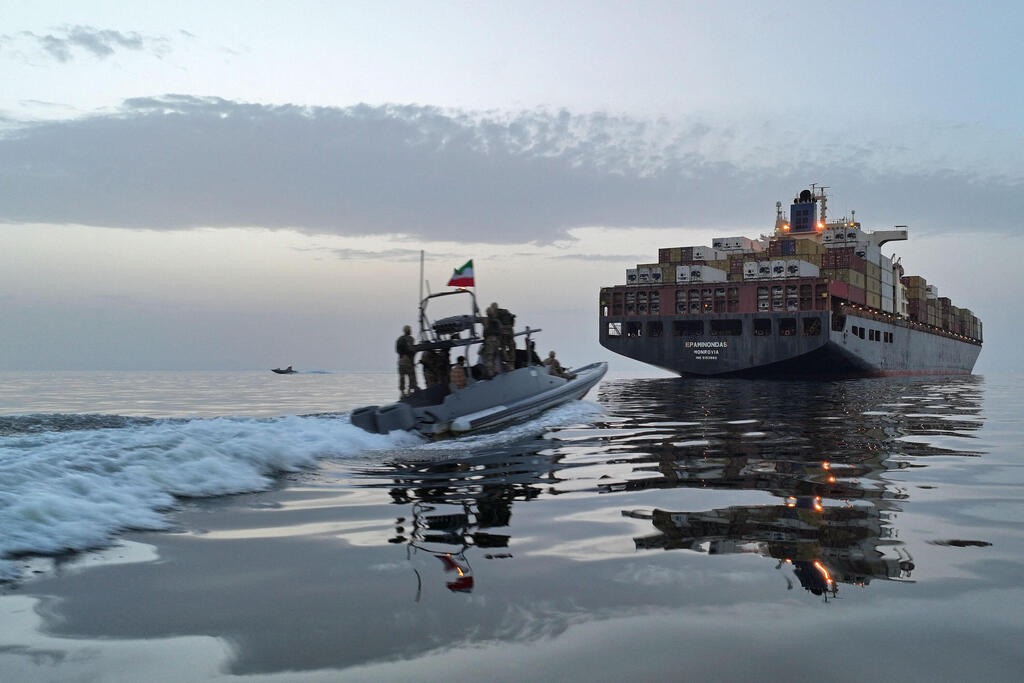
In the Middle East, and especially the Persian Gulf, the reasons for the U.S. presence are different. This is not a direct legacy of World War II, but a mix of oil, Iran, Iraq, terrorism, sea lanes and the U.S. need to protect the flow of global trade. Bahrain, Qatar, Kuwait, the United Arab Emirates, Saudi Arabia and other countries have hosted U.S. forces, bases or military facilities over the years.
Bahrain, for example, is home to the U.S. 5th Fleet, one of Washington’s main tools for overseeing the Gulf, the Arabian Sea, parts of the Indian Ocean and the Red Sea. Qatar hosts Al Udeid Air Base, one of the most important U.S. air bases in the region. Kuwait served for years as a logistical rear base for forces in Iraq, while Saudi Arabia and the United Arab Emirates provide strategic depth against Iran and regional threats.
(Photo: Meysam MIRZADEH / TASNIM NEWS / AFP)
The Gulf is also the arena where the U.S. military presence is directly tied to the global economy. The Strait of Hormuz is one of the world’s most important energy routes, and any Iranian threat to close it, strike tankers or disrupt shipping immediately turns from a regional problem into a global one, as the world is seeing clearly in the current war.
So even those who argue that the United States is no longer as dependent on Middle Eastern oil as it once was have difficulty ignoring the fact that energy prices, markets and strategic alliances are still deeply affected by what happens in the Gulf.
No longer just a military tool, but a bargaining chip
In the current context, the war with Iran makes this debate especially sharp. When Trump demands that European allies do more, open bases or support U.S. action around Hormuz, he is effectively connecting two systems: the U.S. presence in Europe and the need to project power in the Middle East.
From Trump’s perspective, countries that benefit from the security the United States provides in Europe should also help when it acts against Iran. From the perspective of some allies, that is exactly the problem: They want American protection, but do not necessarily want to be dragged into every U.S. war.
Now, Washington is signaling to Europe that if it does not align with U.S. priorities, the security umbrella may also change.
Removing 5,000 troops from Germany will not dismantle the U.S. military presence in Europe, and certainly not the global system the United States has built since 1945. But it does mark an important shift: In the Trump era, U.S. bases are not only a military tool. They are also a bargaining chip.
For Germany, Japan, South Korea and the Gulf states, the question is no longer only how many U.S. troops are on their soil, but how much they can trust that those troops will remain there in the next crisis.
For the United States, the question is the opposite: Does it still want to be the power that carries the world on its shoulders and acts as the world’s policeman, or is it time to charge a higher price for the protection it provides?
First published: 12:08, 05.04.26