

Algeria announced Thursday that it was completely severing diplomatic relations with the United Arab Emirates. Although relations between the North African country and Abu Dhabi have deteriorated in recent years amid Algerian allegations that the UAE has interfered in its internal affairs, the decision caught Abu Dhabi by surprise, with officials there expressing hope that it would be only temporary. However, on Thursday evening, Algeria announced another severe measure against the UAE, saying that beginning Friday it would close its airspace to all Emirati aircraft, both military and civilian. Direct flights between Algeria and the UAE will be temporarily exempt from the ban until existing contracts expire at the end of 2026.
In a statement, the Algerian Foreign Ministry accused Abu Dhabi of “provocative and hostile actions,” saying that “Algeria spared no effort in drawing the Emirati side’s attention to the serious consequences that could result from its regrettable and unjustified conduct and in warning it of those consequences.”
Gallery
The UAE flag. Algeria accuses Abu Dhabi of 'provocative and hostile actions'
(Photo: shutterstock)
“Despite the numerous warnings, the United Arab Emirates continued carrying out these actions to the point where they could no longer be regarded as tolerable within the framework of relations between two sovereign states, nor could they be left unanswered,” the ministry said. “After all avenues for preserving relations were exhausted, the Algerian government decided, effective Thursday, to sever diplomatic relations with the United Arab Emirates. The UAE ambassador was summoned to the Foreign Ministry on Thursday, where he was formally notified of the decision. He was informed that he had 48 hours to act in accordance with the decision.”
The UAE Foreign Ministry expressed hope that the decision would be only temporary but did not respond to Algeria’s serious accusations. “Ministry of Foreign Affairs (MoFA) affirms the UAE’s appreciation for the brotherly Algerian people and its pride in the bonds that unite the two peoples,” it said.
Anwar Gargash, an adviser to the UAE president, also responded on X in remarks that appeared to reflect surprise at the decision. “Diplomatic relations are conducted through logic, communication and clearly defined interests, not through riddles and signals that require deciphering. They should not be held hostage to internal tensions or an inability to articulate interests and set priorities. Ambiguity is not a policy and noise cannot compensate for the absence of vision,” he wrote.
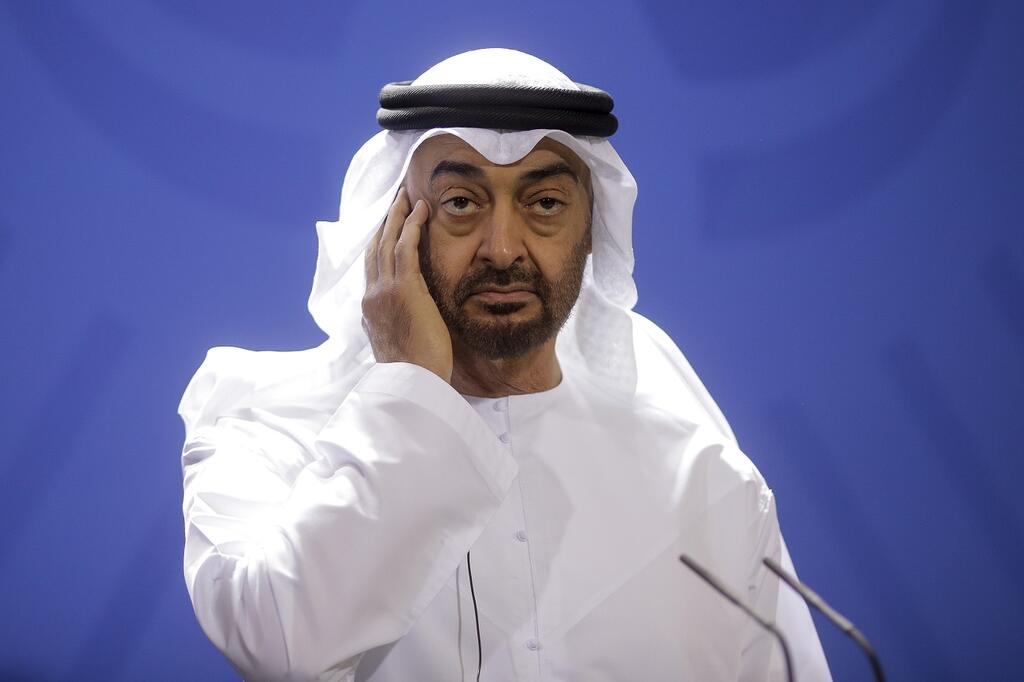
UAE President Mohammed bin Zayed. Abu Dhabi was caught by surprise
(Photo: AP)
The decision to sever relations follows several years of steadily deteriorating diplomatic ties between the two countries, which have grown apart and found themselves on opposing sides of several regional issues, including the Abraham Accords to normalize relations with Israel. Algeria strongly opposes normalization, while the UAE and Algeria’s archrival Morocco joined the Abraham Accords in 2020.
The two countries are also on opposite sides of the long-running dispute over Western Sahara. The UAE supports Morocco’s claim of sovereignty over the territory and even maintains a consulate there, while Algeria backs the Polisario Front, which seeks to establish an independent state in Western Sahara.
More recently, the interests of Algiers and Abu Dhabi have also clashed in the Sahel, where the UAE has expanded its ties in recent years, while Algeria’s relations with several of its southern neighbors have grown strained following a series of military coups in the region.
Last year, Algerian state television also condemned what it called a “hostile media campaign” after UAE-based Sky News Arabia aired an interview with Algerian historian Mohamed Amine Belghit in which he made controversial remarks questioning the existence of the indigenous Amazigh, or Berber, culture. Belghit was arrested and imprisoned in Algeria but was later pardoned by President Abdelmadjid Tebboune.
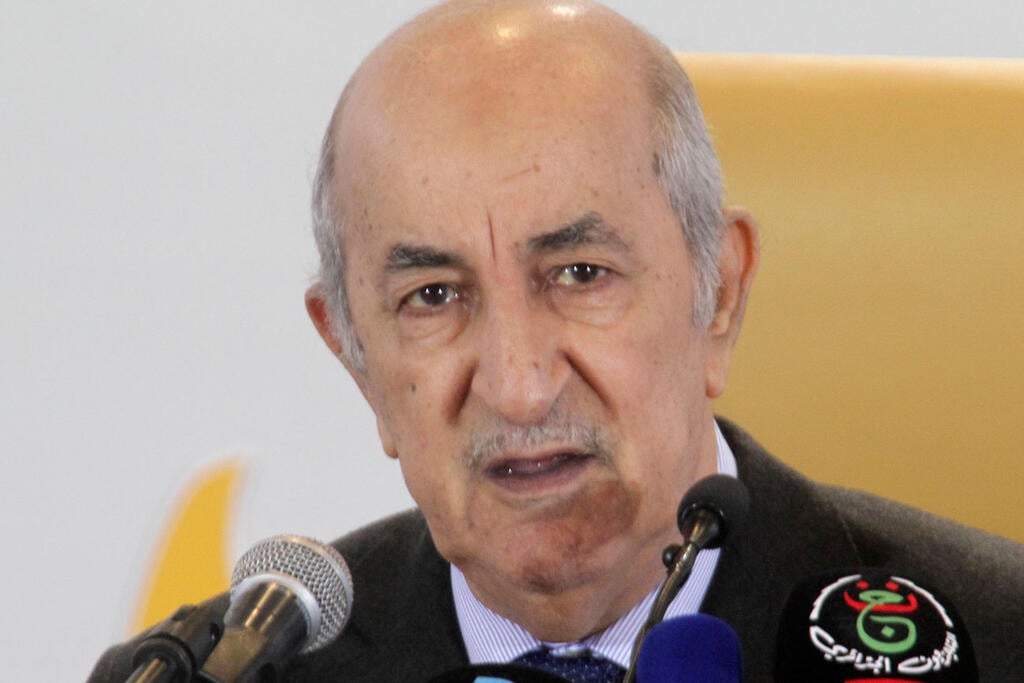
Algerian President Abdelmadjid Tebboune. 'We want them to stay far away so that blood is not spilled in our country'
(Photo: AP)
Tebboune had already hinted at tensions with Abu Dhabi last year when he said Algeria enjoyed warm relations with every Gulf state except one, which he did not name. He described relations with Saudi Arabia, Kuwait, Oman and Qatar as “brotherly,” while accusing the unnamed country of interfering in Algeria’s internal affairs.
In July, Tebboune explicitly attacked the UAE, describing it as a “micro-state” that he claimed was seeking to destabilize several countries in the region, including Libya, Mali and Sudan.
“Wherever they set foot, blood flows,” Tebboune charged in a television interview, saying the UAE had a “very negative influence.”
“We want them to stay far away so that blood is not spilled in our country,” he added.
In the same interview, Tebboune said the severing of diplomatic relations “would have happened long ago,” but said Algeria had hoped to avoid “deepening divisions” in the Arab world.