

U.S. officials met earlier this week in Oman with representatives of Yemen’s Houthi rebels, just days after the Iran-backed militia seized a strategic strip along the Red Sea coast in an offensive that defeated forces loyal to Yemen’s Saudi-backed government, Reuters reported Wednesday. According to the report, the Houthis told the United States during the meeting that they intended to refrain from attacking American vessels in the critical Bab el-Mandeb Strait, which they have effectively taken control of.
According to Reuters, the meeting was not made public but was confirmed by three sources. It took place Sunday at the U.S. Embassy in the Omani capital, Muscat, where the Houthis told American officials they remained committed to the ceasefire agreed with the United States in 2025 and therefore had no intention of attacking U.S. vessels. One source, a Yemeni official, also told Reuters that the militia’s representatives said they would not attack Israeli ships or any other commercial vessels, with the exception of those belonging to Saudi Arabia.
The Trump administration designated the Houthis a “foreign terrorist organization” in March 2025, making any support for the group a criminal offense. Washington nevertheless continued negotiating with them afterward, and in May last year, after two months of U.S. strikes aimed at halting Houthi attacks on Red Sea shipping lanes, the sides reached a ceasefire. The Houthis continued attacking ships near their coast but appeared to avoid striking American vessels.
Over the weekend, following the Houthis’ territorial gains near the Bab el-Mandeb Strait, which effectively gave them control of the waterway, questions mounted over whether the United States and other countries would mobilize to help Saudi Arabia drive the Houthis from the area. The concern was that, alongside the crisis in the Strait of Hormuz, the Bab el-Mandeb Strait could also be completely blocked, further disrupting global supplies of oil and goods.
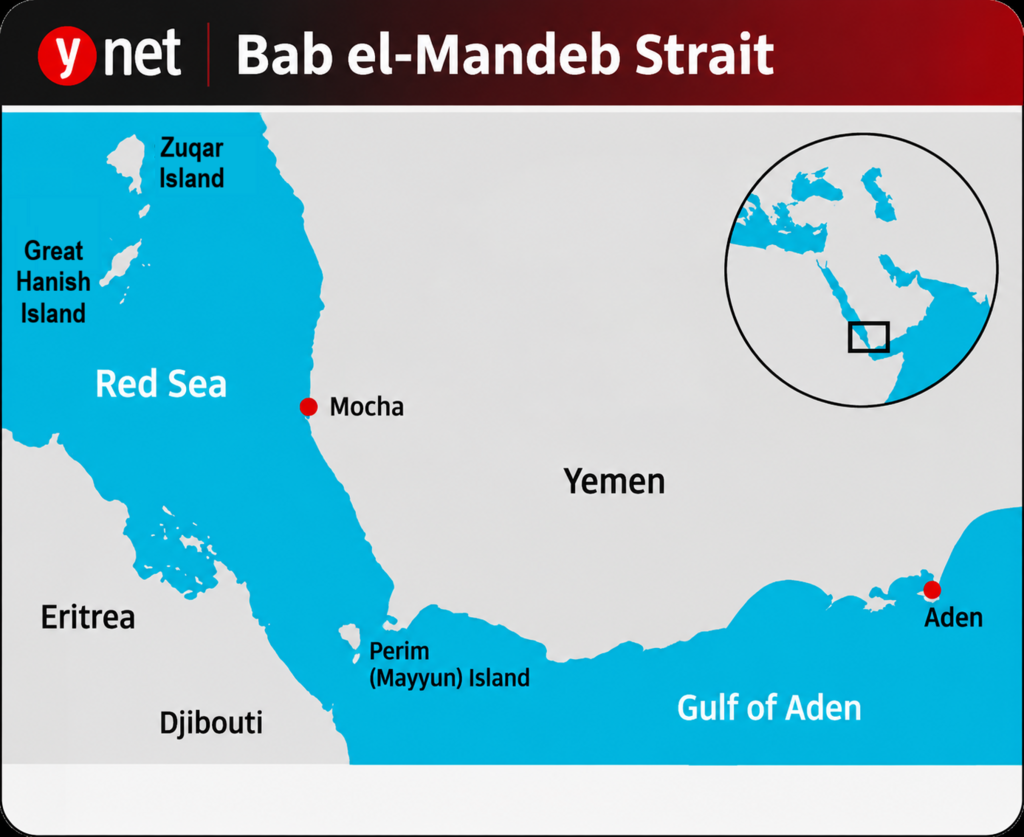
Bab al-Mandab Strait map
(Bab al-Mandab Strait map )
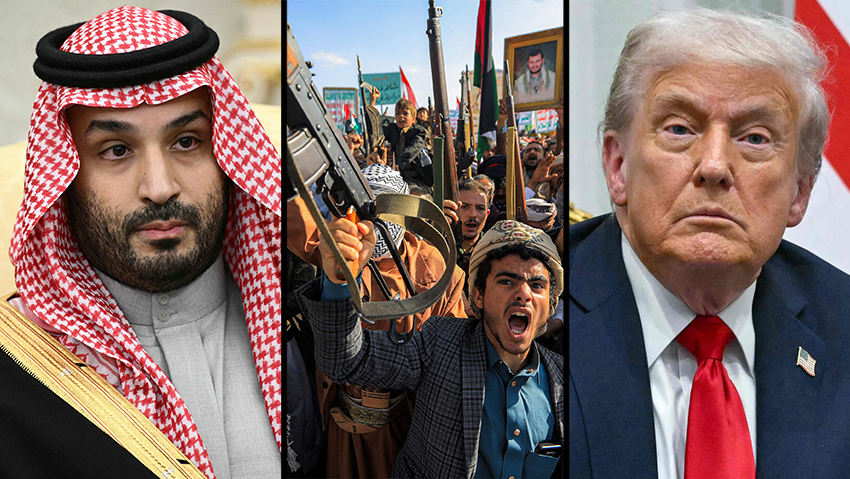
But on Saturday, U.S. President Donald Trump said the Houthis had “called” his administration and asked the United States to stay out of the war in Yemen. On Monday, Vice President JD Vance said Washington was in direct contact with the group, without elaborating. At the same time, it emerged that Saudi Arabia’s de facto ruler, Crown Prince Mohammed bin Salman, had called Trump last week to request U.S. military assistance in light of the Houthis’ dramatic advances, but Washington made clear to Riyadh that it would not intervene directly in the conflict.
Houthis say they did not fire at Mecca, claim to have downed F-15
The current situation has left Saudi Arabia in a strategic bind. Even as the Houthis and other Iranian proxy groups fire into its territory and strike its oil facilities, Washington is not stepping in actively to assist, and neither are Riyadh’s new partners in the so-called “Mecca Alliance,” Turkey and Pakistan. The two countries signed the defense pact with Saudi Arabia only last month but have so far limited themselves to condemning the attacks on the kingdom.
Officials in Turkey and Pakistan said efforts to “institutionalize” the alliance must be completed before it can become operational, and that Riyadh had not, in any case, asked either country for help.
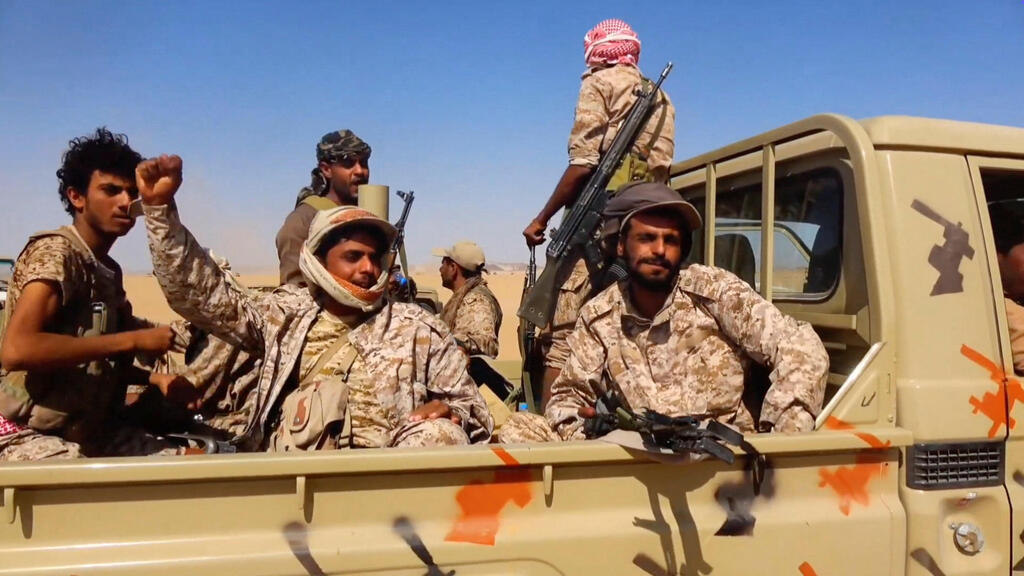
emeni government forces fighting the Houthis in the Al-Hazm areaחאזם
(Photo: Media Center Of The Yemeni Armed Forces/Handout via Reuters)
According to Wednesday’s Reuters report, one source who confirmed the meeting in Oman said the U.S. side was represented by embassy personnel and that one member of the Houthi delegation was Mohammed Abdulsalam, a senior official based in Muscat who is under U.S. sanctions. Those sanctions, it emerged, did not prevent the talks from taking place.
The Houthis seized Yemen’s capital, Sanaa, in 2014 and have been fighting for more than a decade against a coalition led by neighboring Saudi Arabia. More than 100,000 people have been killed in the war, while Saudi Arabia has faced heavy international criticism over its bombing campaign. In recent years, the fighting subsided following the declaration of a ceasefire, but it resumed in July after the Houthis announced a blockade on Saudi shipping in the Red Sea in response to a Saudi blockade of Yemeni ports.
The current wave of attacks on Saudi Arabia has left the kingdom without a secure outlet for its crude oil, in part after pro-Iranian militias in Iraq struck one of its most important oil pipelines.
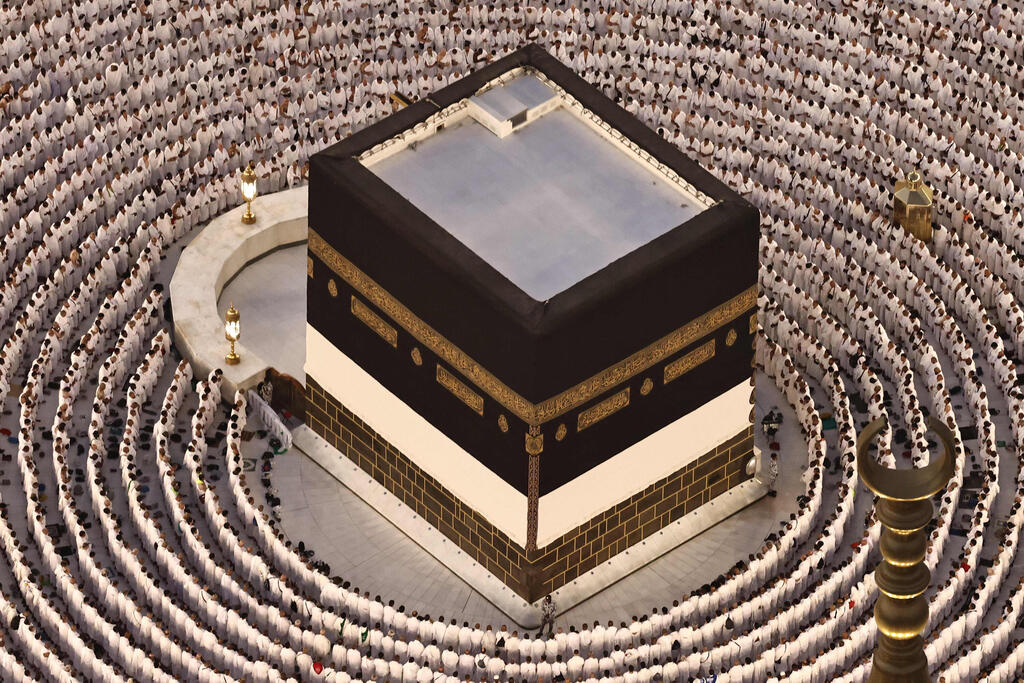
The holy city of Mecca during the Haj
(Photo: Zain Jaafar / AFP)
According to Saudi Arabia, the Houthis on Tuesday launched a drone toward Mecca for the first time in the current round of attacks. Mecca is Islam’s holiest city and home to the Kaaba, with millions of Muslims making the pilgrimage there each year. Riyadh said it intercepted the drone but declared Wednesday that firing toward Mecca, about 1,100 kilometers from the Yemeni border, amounted to “crossing a red line."
The Houthis, for their part, denied launching an unmanned aircraft toward Mecca. The last time they apparently attempted to attack the city was in 2017, when they fired a ballistic missile in its direction.
Meanwhile, the Houthis claimed Wednesday morning that they had shot down an F-15 fighter jet belonging to the Saudi-led coalition over Marib province in central Yemen. They provided no evidence and did not say when the alleged shootdown took place.