

Nearly three years after the war began, after much of Hamas’ senior leadership was killed, its military wing was severely weakened and large parts of its infrastructure were destroyed, the reality in the Gaza Strip underscores the gap between military achievement and political defeat. The IDF has inflicted unprecedented damage on Hamas, but without an Israeli government plan for the “day after,” Israel has not succeeded in replacing it.
With no other actor assuming full responsibility for Gaza’s population, civilian services and public order, the organization Israel went to war to dismantle remains a central force in the Gaza Strip and, increasingly, a party to discussions over its future.
This was not an unforeseen development. From the first months of the war, Israeli defense officials warned that dismantling Hamas’ military power would not be enough and that, without a civilian and governing alternative, it would be difficult to bring down its rule. For much of the war, however, Israel was clearer about who it did not want governing Gaza than about who should take Hamas’ place.

During a tour of Gaza on Tuesday, IDF Chief of Staff Lt. Gen. Eyal Zamir said the military had changed its approach since October 7. “We are implementing lessons, we have changed the concept. The IDF will not return to October 6,” Zamir said. He added that the military would not abandon what he described as its overriding objective in Gaza: “the demilitarization of the Strip and the disarmament of Hamas, by all necessary means.” He said the IDF was continuing to act systematically against Hamas and its leaders while working to prevent the organization from rebuilding its capabilities.
The warning was there from the beginning
In March 2024, then-defense minister Yoav Gallant warned the security cabinet about the consequences of failing to decide who would govern Gaza after the fighting. “If we do not create a governing alternative in the Strip, we will not bring down Hamas,” Gallant told ministers. He presented four alternatives, all of which he described as problematic, and the discussion quickly turned into a confrontation after ministers accused him of seeking to bring the Palestinian Authority back into Gaza. Those who rejected that option, however, did not present a viable alternative during the meeting.
The debate soon reached an impasse. Prime Minister Benjamin Netanyahu repeatedly ruled out restoring Palestinian Authority control over Gaza, saying the Strip would become neither “Hamastan” nor “Fatahstan,” a reference to Hamas and its rival Fatah, which dominates the Palestinian Authority. Other ideas were raised, from empowering local actors inside Gaza to establishing civilian mechanisms backed by Arab and international parties, but none developed for a prolonged period into an effective governing system capable of taking control from Hamas.
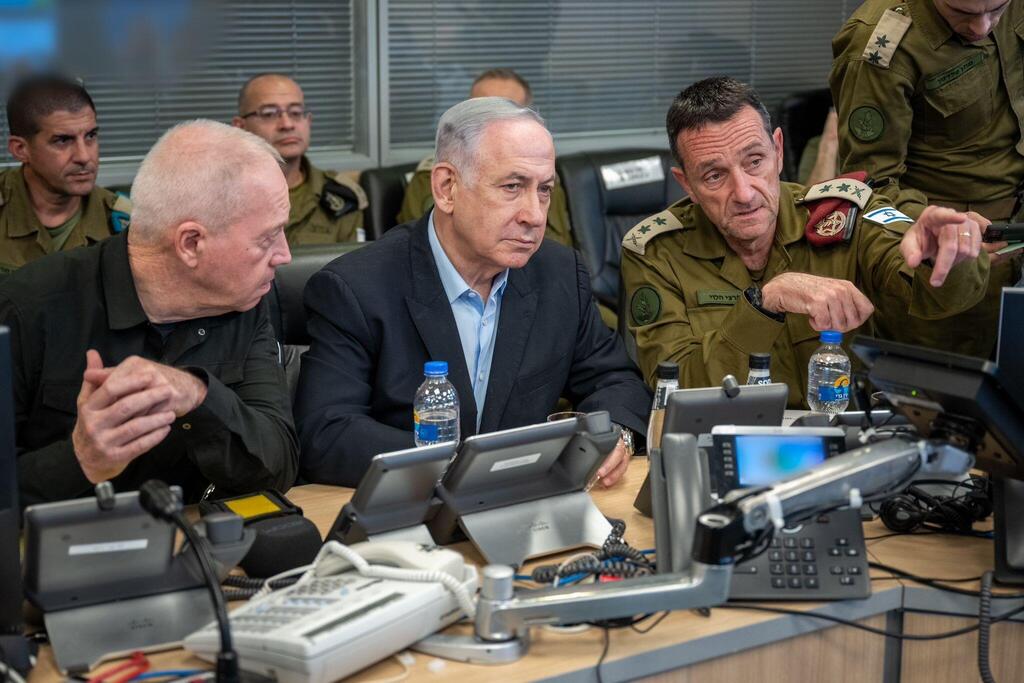
Prime Minister Benjamin Netanyahu with then-IDF chief of staff Herzi Halevi and then-defense minister Yoav Gallant at IDF headquarters
(צילום: דובר צה"ל)
That created a problem that followed Israel throughout the war. The IDF could enter an area, dismantle battalions, kill commanders and destroy military infrastructure, but once troops withdrew, the question of civilian control remained unresolved. Without another authority capable of moving in and governing, military damage to Hamas did not guarantee the disappearance of its institutions.
The IDF struck, Hamas returned to the vacuum
As the war dragged on, warnings from Israel’s defense establishment grew sharper. Officials cautioned that, without an alternative governing authority, military gains could erode because Hamas was able to return to areas vacated by the IDF and reactivate civilian institutions. “The failure to deal with the day after in Gaza will return us to October 6,” senior defense officials said in December 2024.
“In the absence of an alternative, there will be no avoiding the return of Hamas rule,” they said. “A decision must be made now. Even with a ‘small’ deal, Hamas will return to full control. If there is no decision, we are throwing away the achievements of the war and failing to meet one of its objectives, the dismantling of Hamas.” Western diplomats also said at the time that Hamas had succeeded in restoring significant parts of its civilian governing capacity in some areas of Gaza.
The gap between Israel’s two objectives continued to widen. Hamas suffered severe damage as a military organization, but stripping it of its role as a governing system proved far more difficult. For nearly two decades, Hamas built up ministries, police forces, tax-collection systems and a civil service in Gaza. Without another body replacing those institutions, weakening its military wing alone was not enough to dismantle the governing infrastructure beneath it.
Later attempts to find alternatives outside the Palestinian Authority also failed to produce a stable substitute. Israel sought to promote local figures and armed groups that could operate against Hamas in parts of Gaza, but those efforts did not develop into an alternative government. The result, nearly three years after the October 7 massacre, is a paradox: Israel has substantially weakened Hamas militarily, but has not succeeded in making it irrelevant.
Recruiting, paying salaries and collecting taxes
Despite the damage it has suffered, Hamas remains far from absent from Palestinian life. Recent indications suggest that the organization retains both governing and military capabilities, continues paying employees, recruits new members and is preparing to reenter the Palestinian political system.
Reuters reported that Hamas recruited between 10,000 and 15,000 new members during the war, including young men who in some cases received little significant military training. Later assessments said the group set a goal of recruiting about 30,000 young Palestinians for its military wing, the Izz ad-Din al-Qassam Brigades. Israeli assessments published in 2026 also suggested Hamas had recruited about 12,000 new members in an effort to replenish ranks depleted during the fighting.
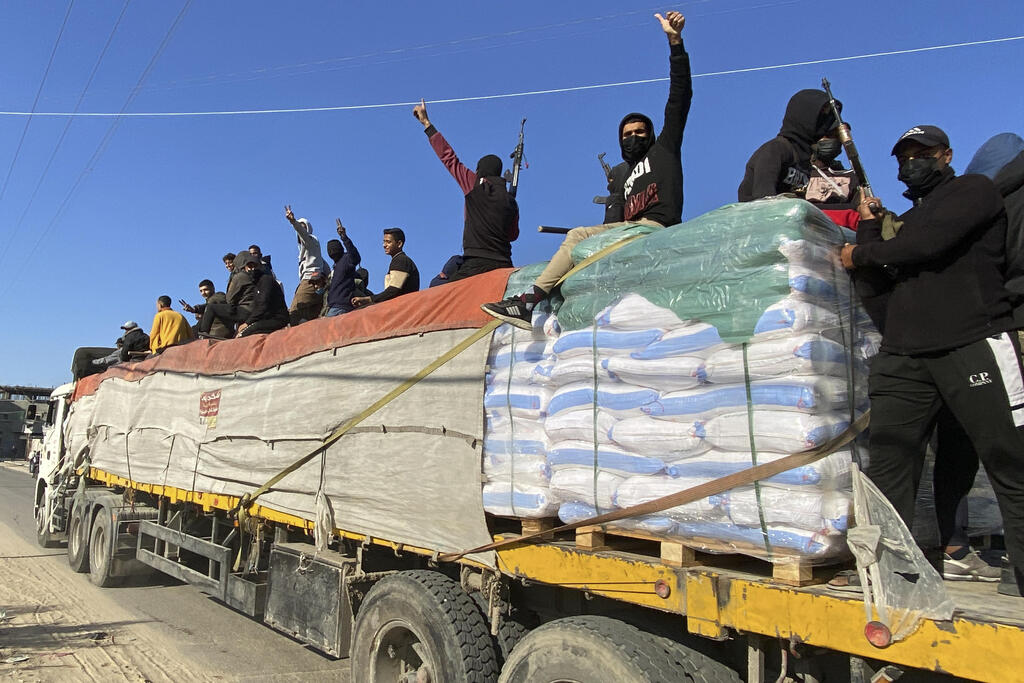
Hamas terrorists on a humanitarian aid truck
(צילום: AP)
The different figures do not make it possible to determine the current size of Hamas’ military force with certainty, as they refer to different periods and definitions. Taken together, however, they indicate that the organization’s recruitment apparatus continues to function. At the same time, Hamas still operates civilian institutions in Gaza. Sources in Gaza who spoke with ynet said the organization continues to pay salaries to tens of thousands of government employees, while its institutions remain involved in policing, tax collection and regulating economic activity in areas where it retains influence.
This month it was reported that, since the ceasefire, Hamas’ administration had collected as much as $100 million in taxes on goods entering Gaza, including levies of up to 20% on declared goods and up to 80% on undeclared goods that were seized. Hamas denies that those funds are transferred to its military wing.
Power is supposed to transfer, but Hamas is still there
Efforts to hand Gaza’s administration to a technocratic committee have also illustrated how difficult it is to separate Hamas from the institutions of government. Even when Hamas announced steps toward transferring authority, Israeli officials argued that some of the moves were largely symbolic and that people and institutions affiliated with the organization remained in place.
That helps explain how an organization that lost Yahya Sinwar, Mohammed Deif and many other senior commanders, and whose military capabilities were severely degraded, can still influence daily life in Gaza. Government is not made up only of battalion commanders and rockets. It also depends on clerks, police, money, taxes and local institutions. In those areas, Hamas has not disappeared.
The group Israel sought to remove is still at the table
Perhaps the clearest sign is visible outside Gaza itself. Hamas remains a party to talks over the Strip’s future. Its representatives continue contacts with Egypt, Qatar and Turkey, and this month U.S. envoy Jared Kushner met Hamas leader Khalil al-Hayya in Egypt. Mohammed Dahlan, a former senior Fatah figure and longtime rival of Palestinian Authority President Mahmoud Abbas, also attended the meeting and has become increasingly involved in discussions about Gaza’s future.
The irony is difficult to miss. Nearly three years after Israel launched a war in which one of its central goals was the dismantling of Hamas rule, a senior U.S. envoy is meeting one of the organization’s leaders as part of negotiations over Gaza’s future. Hamas is now trying to ensure that it retains influence under any future arrangement.
Al-Hayya and other Hamas leaders are seeking to preserve the organization as a political and eventually military power operating behind the scenes, in a model they appear to envision as resembling Hezbollah’s position in Lebanon: wielding power without bearing full responsibility for civilian welfare. At the same time, Hamas is seeking to strengthen its position within the broader Palestinian political system.
Hamas now wants a return through the ballot box
Ahead of Palestinian Legislative Council elections scheduled for November 28, 2026, Hamas is holding talks with Palestinian Islamic Jihad, the Fatah reformist faction associated with Dahlan and other groups about forming a “national alliance” to contest the vote.
The potential significance extends beyond the election itself. After years in which Israel sought to dismantle Hamas’ power, the organization is now attempting to translate its survival into renewed standing within Palestinian politics. Dahlan is playing an increasingly prominent role at the intersection of Hamas, Egypt, Gulf states and the U.S. administration while also promoting closer ties between Hamas and the broader Palestinian political system.
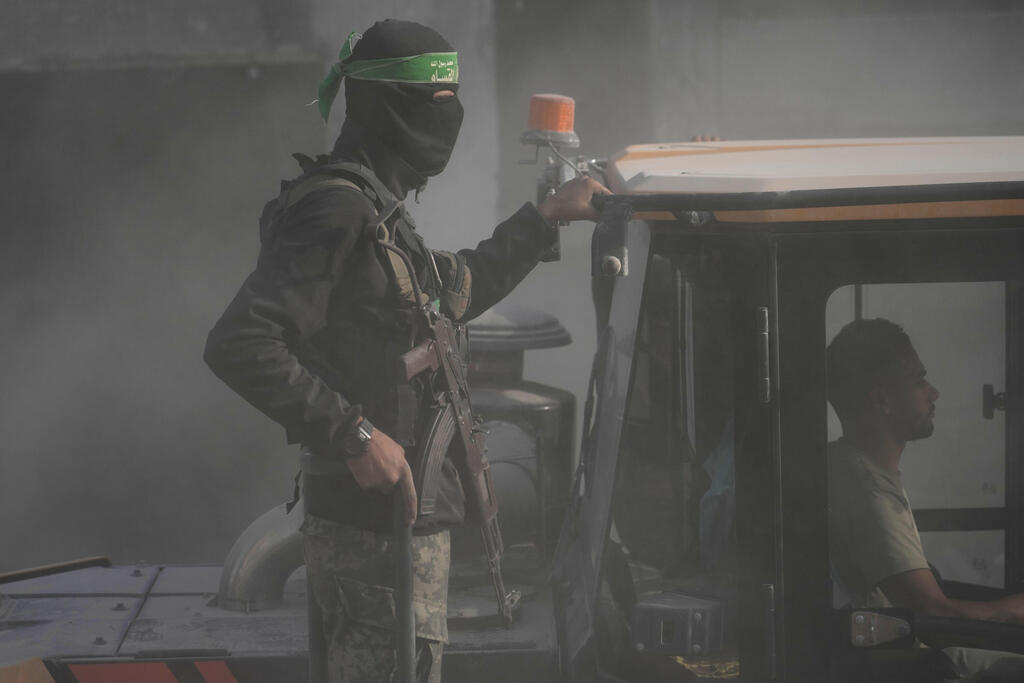
(Photo: Jehad Alshrafi/AP)
Officials in the Palestinian Authority are watching these developments with concern. “Israel did not want ‘Fatahstan,’” a senior Palestinian Authority official told ynet. “The question is whether it will ultimately get ‘Hamastan’ in the form of Dahlan.”
Israel now faces criticism over the effort to disarm Hamas
A further paradox has emerged. Hamas has not disappeared, and now international criticism is also being directed at the way Israel is operating under an arrangement that is supposed, among other things, to lead to the group’s disarmament.
Officials in the Board of Peace established by U.S. President Donald Trump said Tuesday that both sides continue to violate the 20-point agreement. Alongside criticism of Hamas violations, they also sharply criticized recent IDF actions in Gaza. The officials said that the sooner the agreement is implemented, the sooner efforts can begin to disarm Hamas of both heavy and light weapons. If the organization refuses, they said, Israel would then be able to act “with force and with international diplomatic backing.”
Their criticism of Israel was particularly pointed. They said recent IDF operations “are generating a lot of media attention, but these are tactical actions with no meaningful security value that cause significant strategic damage.” They also claimed that the operations “perpetuate Hamas’ civilian and military rule” and argued that for every Hamas member killed, the organization is capable of recruiting 100 young people.
Those are claims by Board of Peace officials, not an official Israeli assessment, but they add another dimension to the debate over the results of Israel’s strategy in Gaza. Israel now faces a complicated reality: Hamas has not been disarmed, its institutions have not disappeared and it remains part of both the political and diplomatic arena, while officials involved in implementing the current arrangement accuse Israel of pursuing actions that undermine the path intended to ultimately disarm it.
Nearly three years later, who actually runs Gaza?
The success or failure of Israel’s strategy therefore cannot be measured only by the number of Hamas terrorists killed, weapons destroyed or tunnels demolished. It must also be measured by a much simpler question: Who runs Gaza when the IDF is not there?
For much of the war, Israel knew precisely who it did not want governing the Strip - Hamas on one side and the Palestinian Authority on the other - but it did not establish an alternative capable of taking control in practice. The alternatives proposed never matured into stable government, and those that were tried failed to replace the existing system. Into that vacuum stepped the organization that already possessed nearly two decades of governing institutions, manpower and experience: Hamas.
As discussions now shift from war toward reconstruction, disarmament, security mechanisms and the Palestinian political system, the implications of that vacuum are becoming clearer. Hamas suffered a severe military blow, lost leaders and commanders, and its rule is not what it was on October 6, 2023. But the organization Israel sought to make irrelevant remains impossible to ignore. Egypt talks to it, Qatar and Turkey talk to it, U.S. officials meet its leaders, and Hamas itself is preparing for a possible return to formal Palestinian politics.
Israel, meanwhile, is facing criticism that its tactical operations are not advancing Hamas’ disarmament and may even be undermining the strategic effort to achieve it. Nearly three years after the war began, Hamas is no longer the uncontested ruler it was before October 7, but it has not become a footnote either.
Israel has struck Hamas with a force the organization had never previously experienced, but so far it has not created a reality in which another actor fully and sustainably replaces it. And when there is no one else firmly in charge, Hamas remains in the room where Gaza’s future is being decided.