


A potential U.S. strike on Iran is still several days away, according to officials cited by The New York Times, who warned that any military action could prompt a strong Iranian response.
The Pentagon has reportedly presented U.S. President Donald Trump with a wide range of options, including strikes on Iran’s nuclear facilities and ballistic missile sites—potentially exceeding the scope of the June airstrikes. However, officials said that less direct responses, such as a cyberattack or targeting Iran’s domestic security forces for their crackdown on protesters, are seen as more likely.
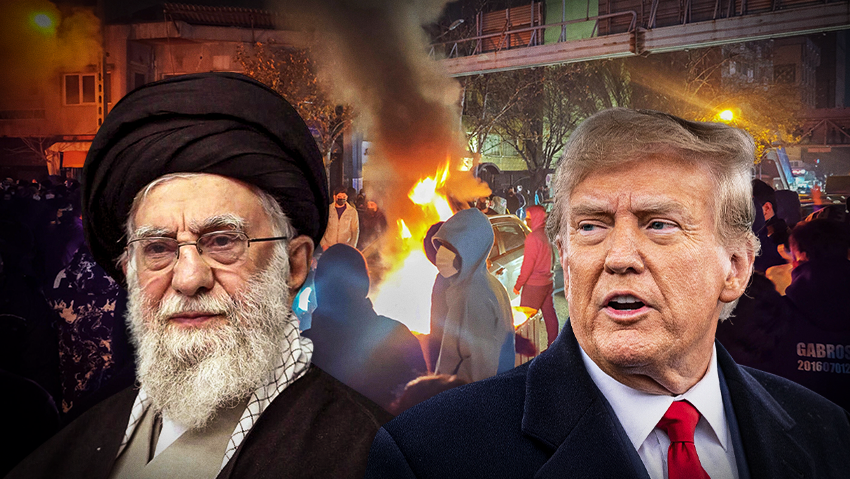
A source close to Lebanon's Hezbollah said that diplomats sought assurances from the Tehran-backed group that it would not respond if Iran were attacked.
Hezbollah offered no guarantees but has no plans to act unless the strike on Iran threatens the regime's survival, the source added.
Earlier, two European officials said that U.S. military intervention in Iran appeared likely, with one saying it could come in the next 24 hours.
An Israeli official also said it appeared Trump had taken a decision to intervene, though the scope and timing had yet to be made clear.
Other officials noted that this does not necessarily mean Tehran will respond immediately by launching missiles at Israel. “It’s not automatic and not certain,” sources said, adding that any response would depend on the nature of the American action.
Trump: 'Too many protesters have been killed in Iran'
(Video: White House pool reporter)


Meanwhile, a U.S. official told Reuters that the U.S. is evacuating some security personnel from its bases in the Middle East amid Iranian threats to target American forces if Iran is attacked. Washington's largest base in the region, Al Udeid in Qatar — which houses around 10,000 U.S. troops — has reportedly begun limited evacuations. The facility was previously targeted by Iranian missiles during the June conflict.
Israel is shifting into high alert on the defensive front, particularly around embassies and Jewish institutions worldwide. Defense officials are also considering the possibility that Iran could use its regional proxies, including the Houthis in Yemen, to challenge Israel from other fronts.
French Foreign Minister Jean-Noel Barrot said Paris is exploring the possibility of moving Eutelsat satellites to help provide internet services to Iranian citizens, who have been cut off from the internet and telephone for several days. "We are exploring all options, and this is one of them," the minister told the French parliament in response to a question on the subject.
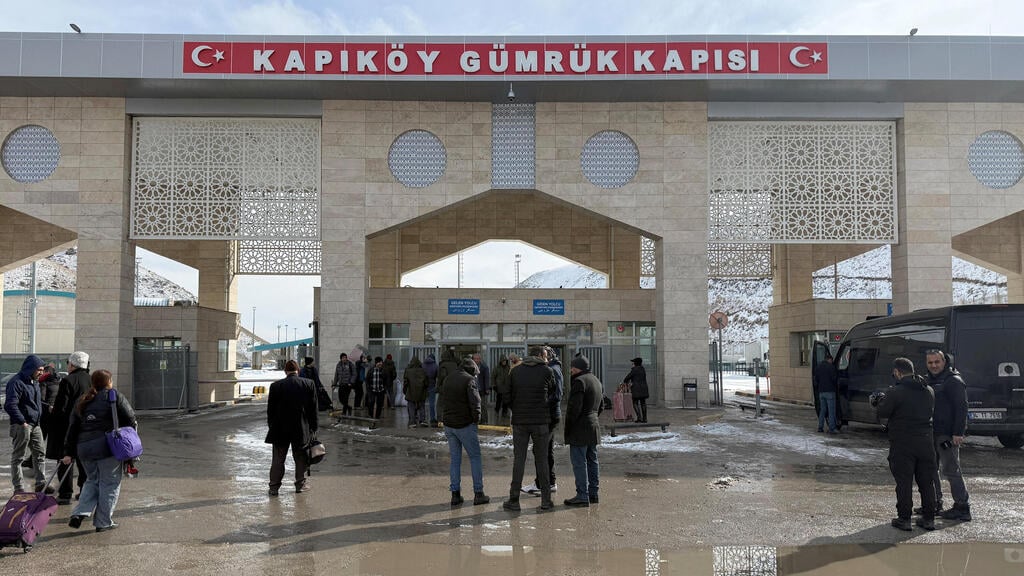
Iranians enter Turkey through the Kapikoy border crossing
(Photo: Ismet Mikailogullari/Reuters)
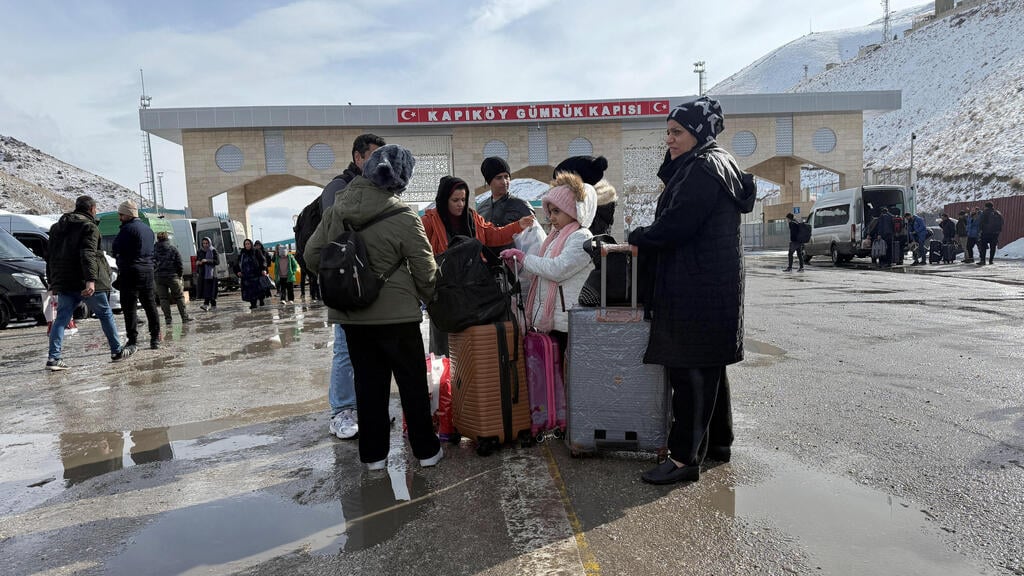
(Photo: Ismet Mikailogullari/Reuters)
At the same time, dozens of Iranians have reportedly crossed into Turkey seeking refuge from the brutal crackdown on protests. Two diplomats told Reuters there has been a noticeable rise in crossings via the Kapikoy border post in Van province. Iranian families, seen carrying luggage and supplies, declined to speak to reporters for fear of regime retaliation.
Iran threatens retaliation
Trump has repeatedly threatened to act militarily against the Iranian regime if it continues to massacre protesters. The protest wave, which began on December 28, has led to the deaths of at least 3,000 people according to Iranian sources, with opposition outlet Iran International reporting over 12,000 fatalities.
Iran’s Revolutionary Guard Corps (IRGC) declared it is on maximum alert. Majid Mousavi, commander of the IRGC's Air and Space Force, said: “Our forces are at the highest level of readiness to confront any aggression.” He claimed Iran’s missile production is now greater than before the 12-day war with Israel last year, and that “all damages have been repaired and the force is at peak readiness.”
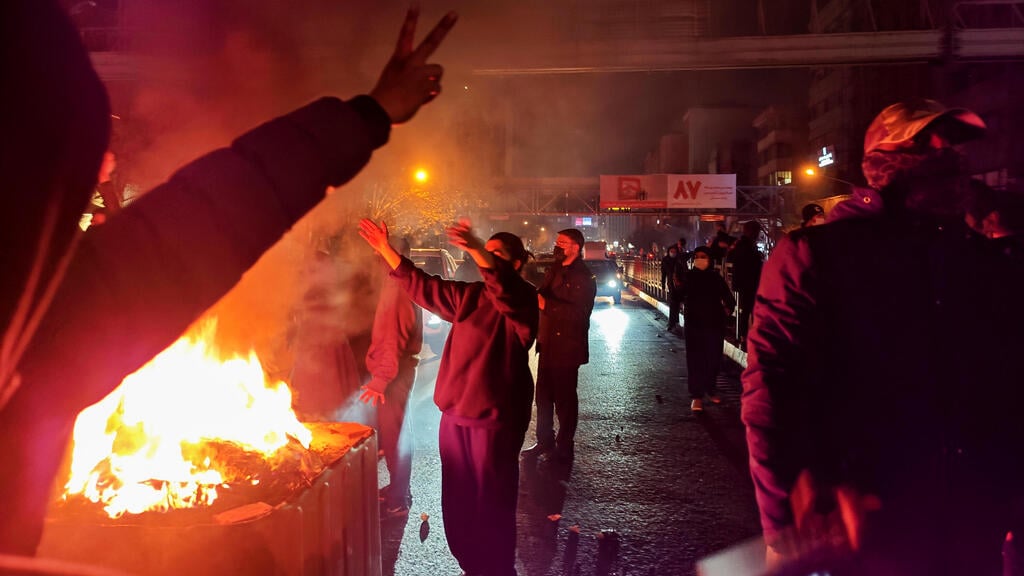
Demonstration in Iran on the night of January 8, when regime violence escalated
(Photo: Anonymous/Getty Images)
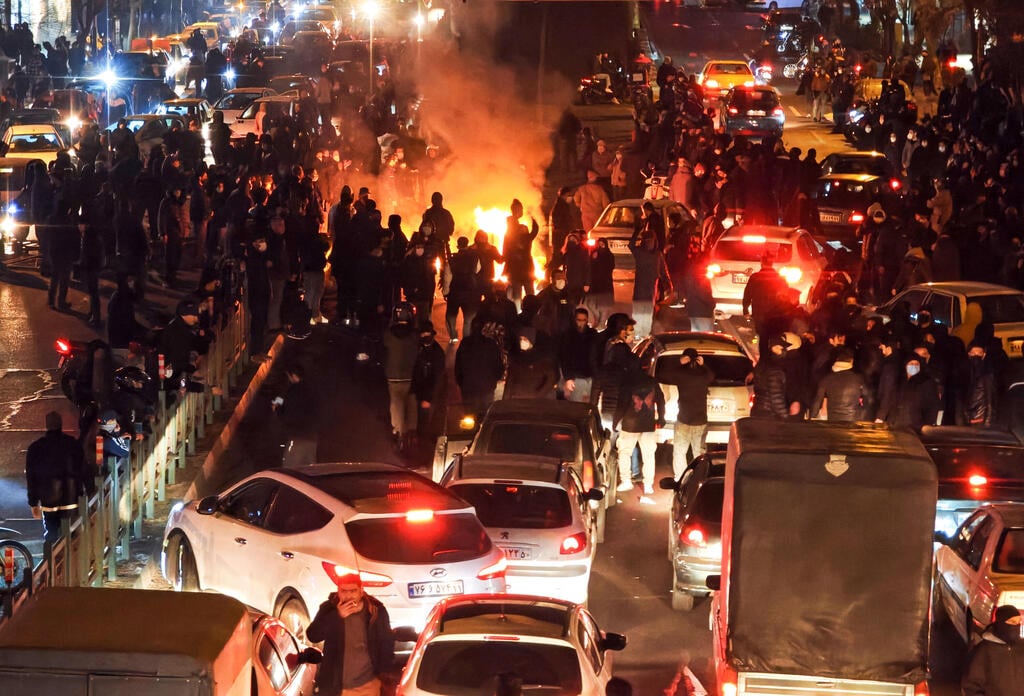
(Photo: Anonymous/Getty Images)
Earlier Wednesday, a senior Iranian official told Reuters that direct communication between Tehran and Washington had been severed following Trump’s threats. Iran also reportedly warned regional states — including Saudi Arabia, the UAE and Turkey — that U.S. bases on their soil would be targeted if Iran comes under attack.
Shortly after those statements, three diplomats confirmed to Reuters that some U.S. personnel at Al Udeid received recommendations to evacuate by the evening. Later reports mentioned limited evacuations from other major U.S. bases in the region as well. A U.S. official described these actions as “precautionary” amid rising regional tensions.
Israeli government jet flies to Crete
In a potentially related development, Israel’s official government aircraft, Wing of Zion departed from Nevatim Airbase Wednesday afternoon, landed briefly in Crete, and returned to Israel soon after. Sources said it was a routine training flight scheduled as part of annual aircraft maintenance. Separately, Prime Minister Benjamin Netanyahu’s testimony in his ongoing trial was shortened again Wednesday.
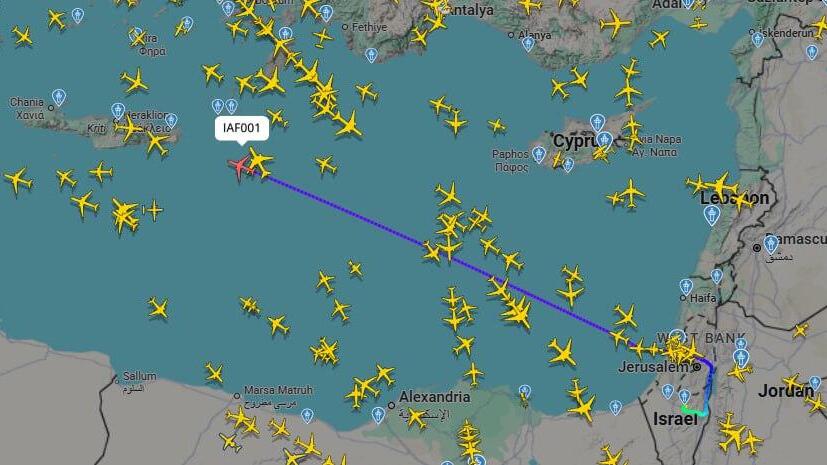
Wing of Zion flies out of Israel
(Photo: Flight Radar 24)
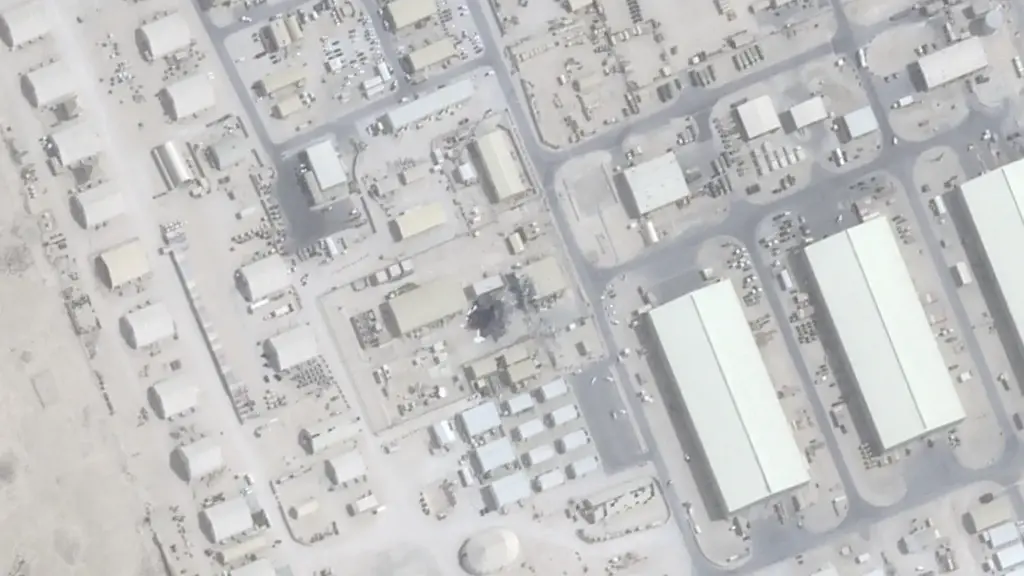
Al-Udeid Air Base in Qatar. Attacked at the end of the "12-day war'
(Photo: Planet Labs PBC via AP)
The wave of protests in Iran broke out on December 28 as a spontaneous demonstration by Tehran bazaar merchants in response to rampant inflation and the sharp devaluation of the currency, which has made it increasingly difficult for citizens—already suffering from over two decades of Western sanctions due to the nuclear program—to afford food and basic goods. The protests gradually gained momentum and, like past uprisings—such as the “Hijab protests” of 2022 that erupted after the death of Mahsa Amini following her arrest by the morality police, or the 2019 protests sparked by a spike in fuel prices—quickly evolved into a revolt against the ayatollah regime and its extensive repression of human and civil rights under the strictly enforced Islamic law.
Masses of demonstrators chanted slogans like “Death to the dictator,” directed at Supreme Leader Ali Khamenei, and “This is the final battle! Pahlavi will return!”—a reference to the exiled crown prince Reza Pahlavi, son of the shah who was overthrown in the 1979 Islamic Revolution.
Unprecedented death toll
Unlike previous uprisings, the current protests erupted while the regime was already in a state of profound weakness—still reeling from blows suffered in the 12-day war and from the weakening of the “Axis of Resistance” across the region in the wake of the Gaza conflict. This, coupled with crippling international sanctions and a worsening economic crisis largely fueled by corruption and mismanagement, set the stage for a more explosive escalation.
A major turning point came last Thursday, when masses responded to exiled prince Reza Pahlavi’s call to take to the streets at exactly 8:00 p.m. As a testament to the regime’s fear, internet access was shut down across the country that same night and has yet to be restored six days later.
Fire in the streets during an anti-regime demonstration in Isfahan
Despite hopes among protest leaders that this time there might be signs of defection within the Revolutionary Guard and its affiliated Basij militia, the forces were deployed in the streets and, under the orders of Khamenei, opened fire on demonstrators in cities across Iran. Thousands were killed. The exact number of fatalities remains unclear, especially given that it's still uncertain whether the uprising has been fully suppressed—although in recent days, a significant drop in protest activity has been observed.
Still, it is already evident that this is the highest death toll in Iranian protests in decades, rivaling only the mass executions that followed the Islamic Revolution, when the regime executed thousands of opponents to consolidate power.
An Iranian official admitted Tuesday that at least 3,000 people have been killed in recent days during the crackdown, a figure he said includes hundreds of security personnel allegedly attacked by armed protesters. Meanwhile, the Human Rights Activists News Agency (HRANA), which operates from the U.S. and reports based on a network of activists in Iran, stated it has confirmed the deaths of 2,571 individuals: 2,403 protesters, 143 regime forces, 12 minors, and nine non-protesting civilians. The agency also reported 18,137 arrests and stressed that the actual death toll is likely much higher.
Israeli sources estimated last night that at least 4,000 people have been killed, while opposition outlet Iran International published an investigation suggesting the death toll could reach as high as 12,000.
Either way, the current numbers far exceed those of previous protests. For example, during the “Green Movement” in 2009, sparked by allegations of election fraud in Mahmoud Ahmadinejad’s victory, millions took to the streets, and several dozen were killed. In the 2019 protests over fuel price hikes, hundreds were killed—with a previous Reuters report citing a death toll of 1,500. In the 2022 Hijab protests, around 500 people were killed.
The current toll, however, recalls only the executions of the 1980s, when the ayatollah regime solidified its rule through mass purges of its opponents.
First published: 16:15, 01.14.26