

“Iran and its proxies are weaker than ever,” Prime Minister Benjamin Netanyahu declared Wednesday night. U.S. President Donald Trump, for his part, claimed that “we have already won” and said Tuesday: “Their missiles have been destroyed.”
But according to a classified CIA analysis revealed Thursday evening by The Washington Post, Iran still retains most of its missile capabilities, and the U.S. intelligence agency assesses that it could withstand the American blockade on its ports for at least three to four months before feeling especially severe economic pressure.
Gallery
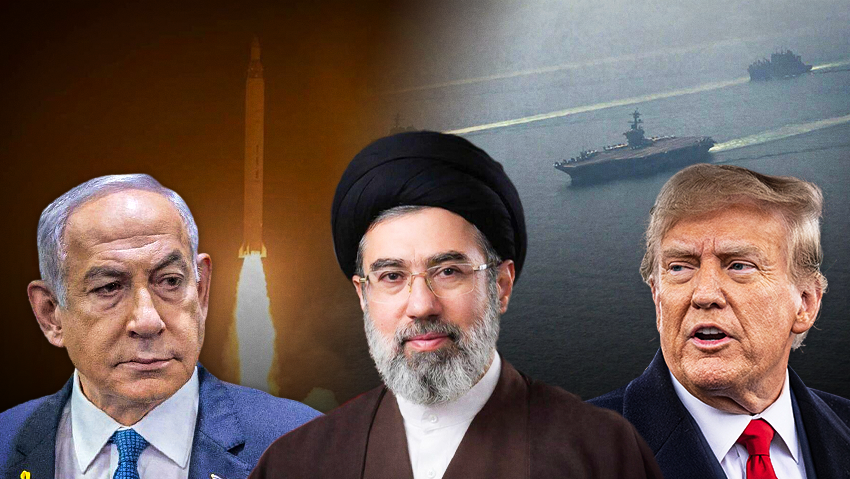
Trump, Mojtaba Khamenei, Netanyahu: Iran's leaders have become more extreme, and more confident'
(Photos: Lev Radin/Shutterstock, Haim Goldberg/Flash 90)
The Post’s report is based on four sources familiar with the classified CIA document, which was delivered this week to decision-makers in Washington. According to the newspaper, the assessment casts doubt on Trump’s optimistic statements about the blockade’s ability to force Iran to compromise in talks on ending the war. Trump has claimed the blockade denies Iran $500 million a day in oil export revenues.
A central hope voiced by Trump and his aides is that the U.S. blockade and Iran’s inability to export oil will cause its oil storage facilities to fill up, forcing it to stop pumping from its oil wells — a halt that could cause them long-term damage. But the sources who spoke with the Post said that, for the economic consequences for Iran to become severe, the blockade would have to last at least 90 to 120 days, and possibly longer.
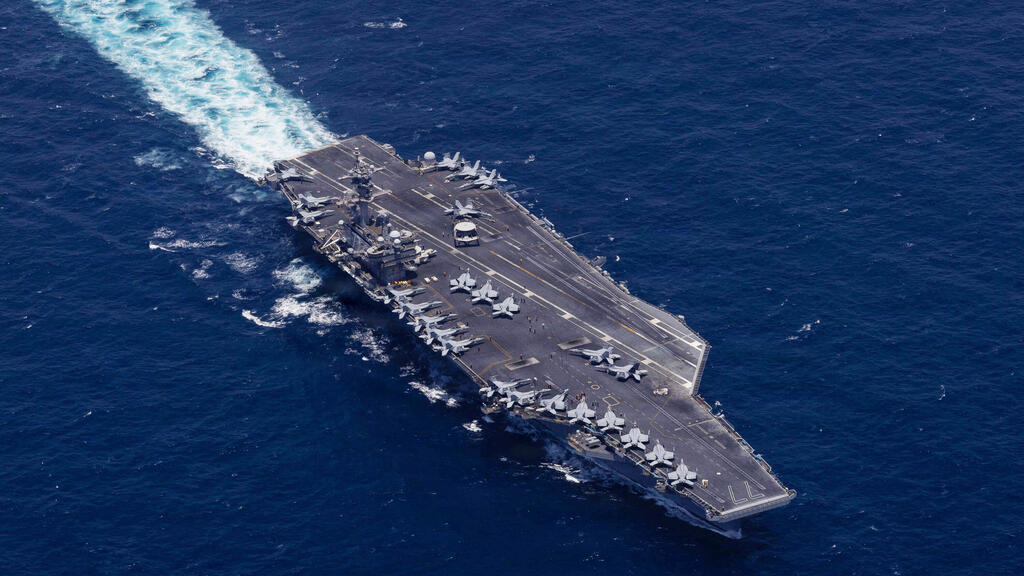
The aircraft carrier "George Bush" in the Arabian Sea, as part of the American blockade of Iranian port
(Photo: US NAVY / NAVCENT Public Affairs via AFP)
One source said one of Iran’s solutions to the lack of storage space is filling oil tankers stuck in the Persian Gulf amid the crisis around the Strait of Hormuz, which had until now been empty. The source said Iran has also reduced the pace of pumping from its oil wells to ensure they continue functioning. “It is nowhere near as dire as some have claimed,” the source said of Iran’s economic situation, even as conditions there have worsened somewhat, with the Iranian currency collapsing further in recent days to a historic low of 1.8 million rials to the dollar.
But even an economic collapse would not necessarily lead the regime to compromise in the talks. One U.S. source told the Post that he believes Iran’s ability to withstand prolonged economic hardship is far greater than the CIA assessment indicated. “The leadership has become more radical and more confident in its ability to outlast U.S. political will, as well as in its ability to continue domestic repression to thwart any opposition,” the source said. “For comparison, similar regimes can be seen surviving for years under prolonged embargoes and wars based solely on air power.”
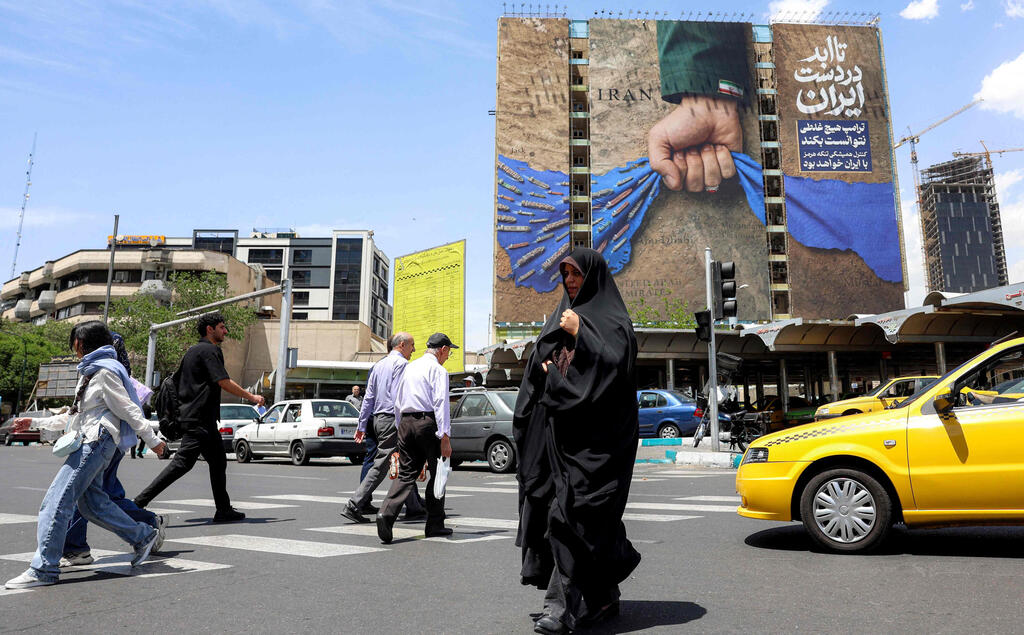
Large banner on a street in Tehran showing a hand holding the Strait of Hormuz captioned: 'Forever in the hands of Iran'
(Photo: AFP)
According to The Washington Post, the CIA document also indicates that Iran still has significant military capabilities — more than has been reported so far. One U.S. source told the newspaper that Iran still possesses about 75% of the missile launchers it had before the war and about 70% of its missiles. The source added that there is evidence the regime has already managed to reopen “almost all” of the underground storage facilities whose entrances Israel and the United States bombed, in part to prevent Iran from launching large barrages at once, and to repair some of the missiles damaged in the strikes.
According to the source, Iran has even managed to assemble new missiles, though only those whose construction had been nearly completed before the war. Another source warned that the timeline has shortened for Iran to resume producing ballistic missiles in “significant quantities.”
Meanwhile, contacts between the United States and Iran continue. Trump froze overnight between Tuesday and Wednesday the operation he had announced only 36 hours earlier — Project Freedom, aimed at renewing ship traffic through the Strait of Hormuz while protecting vessels from Iranian attacks — and said advanced talks on an agreement are now underway.
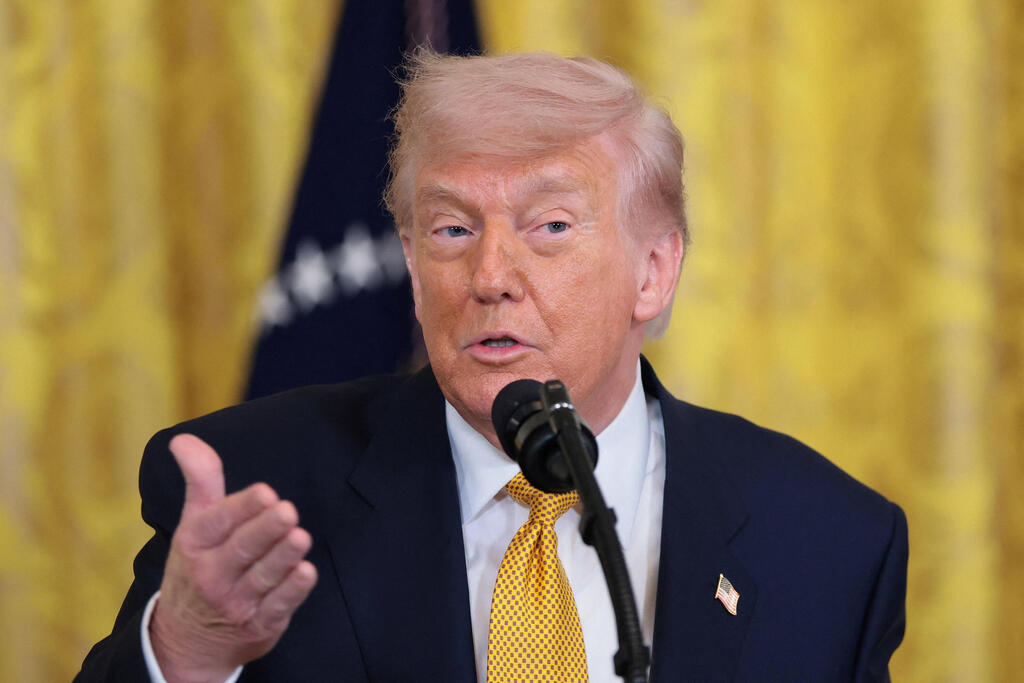
US President Donald Trump
(Photo: Kylie Cooper/Reuters)
Axios reported Wednesday that the talks focus on an initial one-page memorandum of understanding with 14 points, in which the sides would declare an end to the war and the start of 30 days of negotiations aimed at reaching a detailed agreement on the various disputed issues, foremost among them the nuclear program.
According to reports in the United States, the administration is now awaiting Iran’s response to its latest proposal. Tehran responded with some disdain to the reports. One senior official there described the Axios report as an “American wish list,” while Iranian Parliament Speaker Mohammad Bagher Ghalibaf wrote overnight on X: “Operation ‘trust me, bro’ failed. Now back to routine with Operation ‘Fake-sios.’” Ghalibaf was apparently referring to the Axios report.
But the regime in Tehran has confirmed that it is now reviewing a U.S. proposal, which it described as including unacceptable clauses, and is expected to respond later through mediator Pakistan. Islamabad has expressed strong optimism that an initial agreement can be reached quickly. Trump also expressed optimism Wednesday night, but at the same time threatened to resume strikes against Iran if it “does not agree to what has already been agreed,” as he put it.
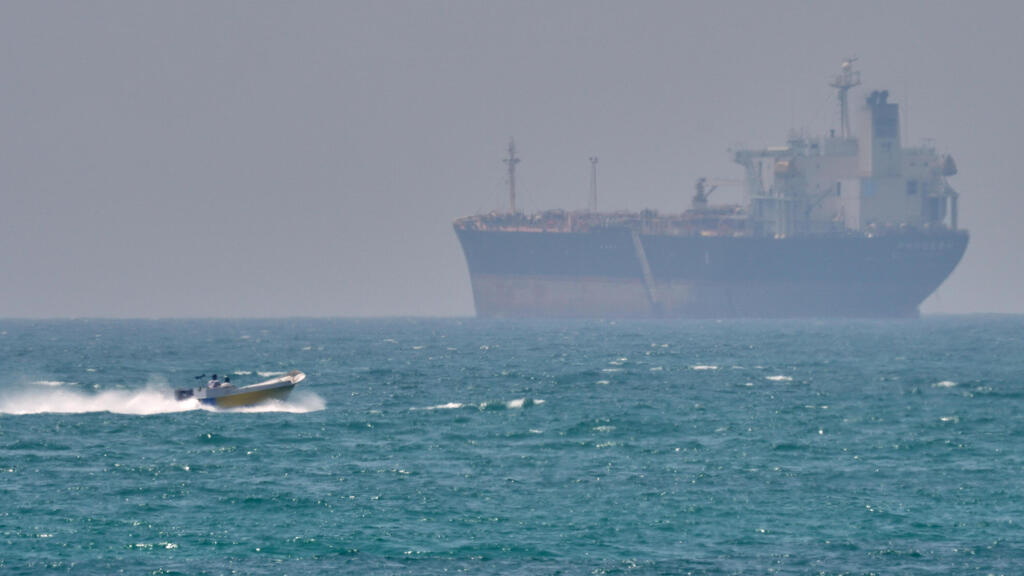
In the Strait of Hormuz
(Photo: Asghar Besharati/AFP)
According to CNN, the memorandum would not resolve the central points of dispute, such as the nuclear issue, frozen Iranian assets and the management of the Strait of Hormuz. Those issues would be discussed only in talks that begin after the memorandum is signed and after the declaration that the war has ended. A regional source familiar with the talks told CNN that the proposal includes “contacts” on freezing uranium enrichment for at least 10 years, while an earlier U.S. proposal discussed a 20-year freeze. Trump himself has said in the past that he wants the freeze to be permanent, but it appears the United States may be willing to show flexibility on this issue — a possibility likely to heighten concern in Israel.
According to the CNN report, the proposal includes removing Iran’s highly enriched uranium from its territory, though the details have not yet been finalized. Trump claimed Wednesday night that the enriched uranium would be handed over to the United States and that Iran would commit not to operate its underground nuclear facilities.
On Hormuz, the question is whether Iran will agree to the U.S. demand for the complete removal of restrictions it has imposed on passage through the strait, where before the war, and under international law, traffic was completely free and required no payment. Iran now claims ownership over the strait and sees it as a strategic weapon almost on par with nuclear weapons, because of its ability to choke off oil and gas sectors around the world.