


Israel fears the emerging agreement between the United States and Iran will not restrict Tehran’s development of ballistic missiles. Israeli officials are also concerned it could undermine the IDF’s freedom of action in Lebanon, and perhaps even lead to a demand for withdrawal. Some diplomatic officials are warning that the IDF could be handcuffed and paralyzed in Lebanon. Added to that are a series of objectives cited at the start of the war as goals Israel sought to achieve — and the emerging agreement does not necessarily address them.
Another concern raised in Israel is that the agreement will unfreeze billions of dollars for Iran, funds that could ultimately be directed toward rearmament and strengthening Tehran’s proxies across the region.
Gallery
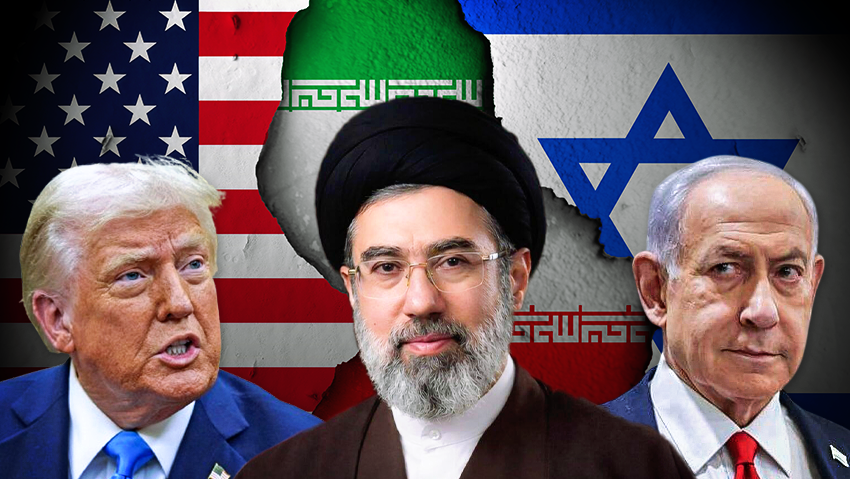
Concerns in Israel about the agreement. Netanyahu, Khamenei and Trump
(Photo: Miriam Alster, Evan Vucci/AP, Shutterstock)
Israeli officials said Wednesday night that most of the Israeli defense establishment supports continuing the siege on Iran, arguing that the Islamic Republic is collapsing from within — and that an agreement would be harmful because Iran is expected to cheat from the outset.
“It is terrible for Israel,” said an Israeli official familiar with the details. “This is a bad agreement that only perpetuates the ayatollahs’ rule. It is a lifeline for them, when every day that passes brings them closer to collapse.”
Israel is also disappointed that the emerging agreement would limit uranium enrichment for only 15 years, even though U.S. President Donald Trump declared that “Iran will never have a nuclear weapon.”
“How is this much different from Obama’s nuclear deal?” one Israeli official asked. “That deal had a sunset clause, and so does this one. Iran cheated anyway and will have to wait in any case, then break out to a bomb when Trump is no longer here.”
The goals vs. the agreement
Israel did not officially publish the war’s goals at the start of Operation Roaring Lion more than two months ago. But in an article published by Gabi Siboni, Prime Minister Benjamin Netanyahu’s leading candidate to head the National Security Council, together with Brig. Gen. (res.) Erez Wiener, they listed what they identified as the main objectives: ensuring Iran never has nuclear weapons, which implies destroying its nuclear program; destroying its ballistic missile array; damaging Iran’s ability to activate proxies; and creating the conditions for the regime’s collapse.
In recent weeks, information published in Western media has made it possible to assess those parameters. So what has been achieved, what has been partly achieved and what has not been achieved at all?
Ensuring Iran never has nuclear weapons
A New York Times review found that when Trump withdrew from the nuclear agreement during his first term in 2018, Iran did not have enough uranium to build even one nuclear bomb. Since then, however, it has accumulated 11 tons of enriched uranium. Perhaps even more seriously, after two military operations over the past year aimed at preventing a nuclear Iran, the fate of Iran’s uranium stockpile remains a mystery. It is unclear what happened to it. Added to that are current U.S. intelligence assessments indicating that the time Iran would need to build a nuclear weapon has not changed since last summer.

The Fordow nuclear facility
(Photo: AFP)
The assessment is that parts of Iran’s enriched uranium stockpile, which is radioactive and chemically hazardous, remain hidden or buried under wartime rubble, making them difficult to extract or destroy. Recent reports indicate that the emerging agreement would limit uranium enrichment for 15 years. Even if Iran does remove its enriched uranium stockpile, there is no guarantee it will not resume enrichment in 15 years. If so, this goal is not achieved under the agreement.
Destroying the ballistic missile array
IDF officials estimated at the end of Operation Rising Lion last summer that Iran still had a stockpile of about 1,500 ballistic missiles. According to U.S. officials, Iran has demonstrated impressive missile capabilities and has significantly increased production since last summer in preparation for the next confrontation. Last month, The Wall Street Journal reported that even after Operation Roaring Lion, Iran still had thousands of ballistic missiles, some stored in underground stockpiles, along with launchers ready for immediate use.
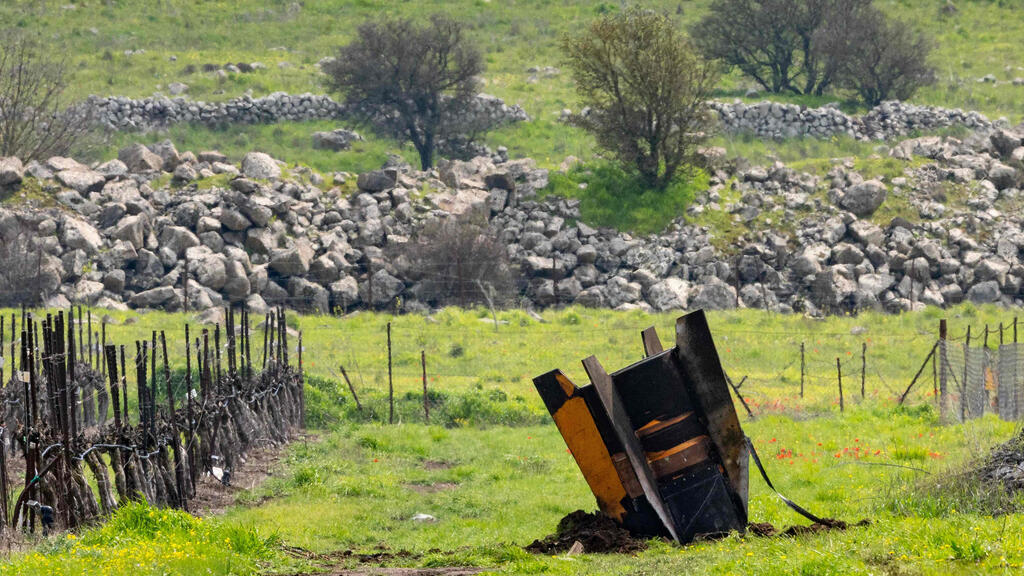
Iranian ballistic missile that landed in the Golan
(Photo: Odd Andersen / AFP)
U.S. officials have also expressed concern that Iran is using the current ceasefire to substantially rebuild its missile arsenal. In the final analysis, although U.S. military officials said during the latest war that Iran’s missile-launching capabilities had been significantly damaged, U.S. and Israeli sources told The Wall Street Journal that Iran still has thousands of ballistic missiles available for immediate use. At this stage, there is also no information on what understandings Washington and Tehran will reach on this issue. Therefore, this goal will not necessarily be achieved.
Damaging Iran’s ability to activate its proxies
Since the October 7 massacre, Israel has taken the gloves off against Hezbollah, eliminating the leadership of the Shiite terrorist organization and the senior command structure of its military wing. Israel has also acted against weapons and money-transfer routes from Iran. But recent weeks have shown that Hezbollah, despite the blows it has suffered, remains a significant threat on the northern border.
During the fighting, Hezbollah fired missiles and drones at northern Israeli communities and disrupted the daily lives of many Israelis. It also managed to surprise IDF forces operating in southern Lebanon by using fiber-optic drones, and so far the IDF’s attempts to counter Hezbollah’s import from the Ukrainian battlefield have not succeeded.
For now, Israel does not know how a U.S.-Iran agreement would affect the northern front. But Lebanese Parliament Speaker Nabih Berri was quick to declare yesterday that the Iranian and Lebanese arenas are linked, meaning that an agreement on Iran would also bring an end to the fighting in Lebanon.
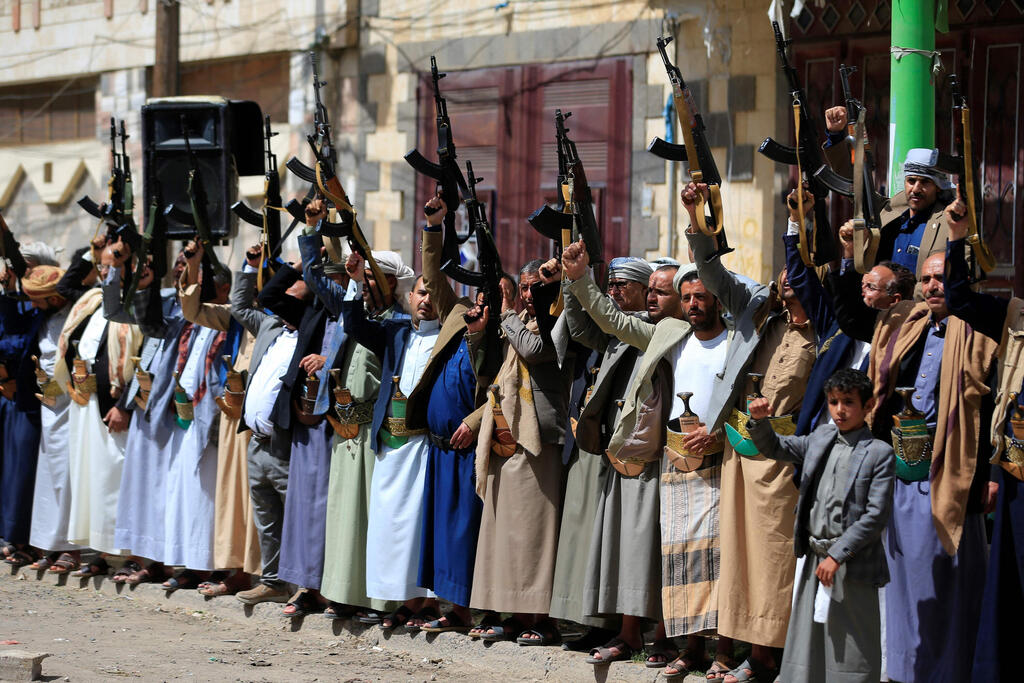
The Houthis in Yemen
(Photo: Mohammed Huwais / AFP)
The Houthis also proved during the fighting that, despite the strikes they have sustained from Israel, they can still launch missiles and drones, meaning the threat they pose remains very real. It is not yet clear whether the United States and Iran have agreed that Tehran will no longer be able to transfer aid to its proxies. But even if they have, there is no certainty Iran will not do so through indirect channels. This goal, too, will be achieved only partially — if at all.
Creating conditions for the regime’s collapse
After the broad protest wave at the beginning of the year, which was violently suppressed by the regime, some expected crowds to return to the streets once the U.S. and Israeli bombardments began. However, citizens stayed home, and during and after the fighting expressed concern that the regime would settle accounts with anyone who exploited the situation to try to bring it down.
For now, the regime has not fallen. But reports are multiplying of severe economic distress among civilians and internal disputes within the leadership, which is trying to recover from the assassination of Supreme Leader Ali Khamenei. As for this goal, it is still too early to assess how events will develop — but as Israeli officials have argued, the agreement could instead end up saving the ayatollahs’ regime.