


Next week will mark 1,000 days since the beginning of the longest war in Israel’s history — a war that began with the most severe military and security failure the country has ever experienced on October 7, and at its most dangerous strategic moment of vulnerability. It was a reality that could have escalated into an existential multi-front threat. Iran, Hezbollah, the West Bank, and the Gaza Strip could have converged into a simultaneous campaign.
A military that prepares for the previous war may be surprised by the next one.
Gallery
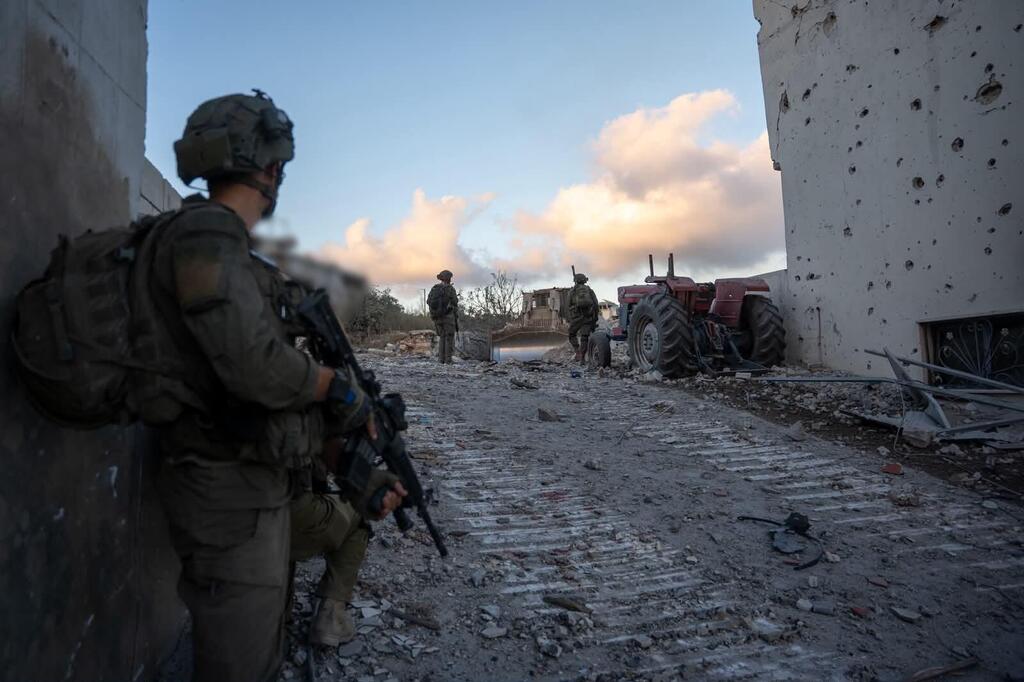
Next week will mark 1,000 days since the beginning of the longest war in Israel’s history
(Photo: IDF Spokesperson)
But the number 1,000 may be misleading. Even if high-intensity fighting fades, the war itself will not truly end. In the Middle East, wars do not end with surrender ceremonies or peace agreements that erase threats. They change form: periods of intense fighting, pauses, targeted operations, shadow warfare, renewed enemy buildup, and struggles over perception. This is not a story of an ending, but of an ongoing shift. Each generation receives a security reality, attempts to improve it, and passes it on to the next in a slightly better condition.
After the initial collapse, the IDF managed to stabilize the situation and, after several months, shift to a counteroffensive. That campaign produced significant achievements, most notably the return of all hostages from Gaza — a development few believed would happen in full, with a significant role attributed to U.S. President Donald Trump. This was followed by victory in Operation “Northern Arrows” against Hezbollah, the destruction of most of Syria’s military capabilities, and the establishment of a forward position on the Golan Heights. In the Gaza Strip, Israel now holds about 60% of the territory, while also achieving two clear military successes against Iran in the operations “Rising Lion” and “Roaring Lion.”
However, it is important to distinguish between two concepts: victory and decisive victory. Israel has achieved impressive battlefield victories in nearly every arena. But victory does not necessarily mean resolution. Decisive victory means the enemy has lost either the ability or the will to continue fighting over time. That has not yet happened. Hamas, Hezbollah, and Iran have all suffered severe blows, but none have abandoned the struggle. Each is attempting to rebuild, learn, and continue fighting in a different way.
Even when Israeli offensives succeeded, Israel’s enemies — sponsored by Iran — managed to prevent military collapse and shift the situation on the diplomatic stage. The Iranian regime did not fall, the Strait of Hormuz was closed without American readiness to respond, and there was diplomatic failure in the negotiations led by Trump. This eroded some of Israel’s strategic advantages and weakened its deterrence across the region.
Ahead of the 1,000-day milestone, it is worth looking forward: where things stand and where they are heading. Above all, Israel must break its historical pattern — a state that absorbs a severe blow, learns and improves, but after victories often drifts into complacency, stagnation, and erosion of its gains.
Gaza: considering a return to major fighting
In the arena where the war began, IDF forces have established a line that provides better defense against future infiltration attempts. Forces continue to dismantle underground infrastructure, and since the start of Operation “Roaring Lion,” airstrikes have intensified and Hamas operatives are being targeted again. Still, caution is required.
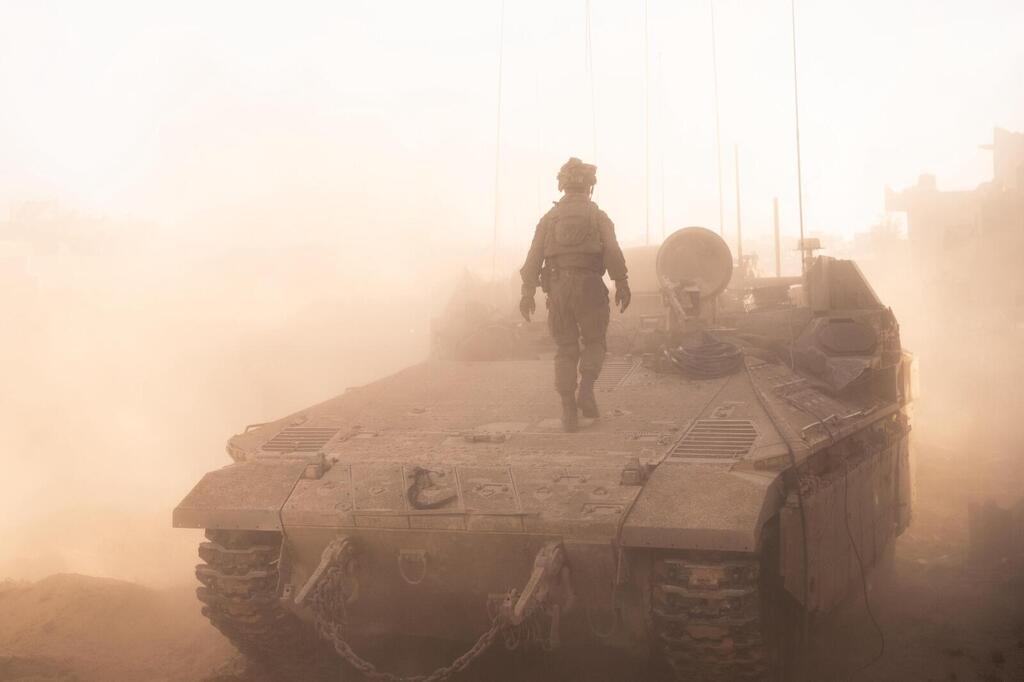
An army that prepares only for the previous war may be surprised in the next one
(Photo: IDF Spokesperson)
It is possible the IDF is well prepared for the previous threat — ground infiltration — through territorial control inside enemy territory. But it must not be caught unprepared for the next threat: autonomous drone swarms launched from Gaza aiming to penetrate border communities. An army that prepares only for the previous war may be surprised in the next one.
At this stage, the Southern Command chief, Major General Yaniv Asor, is pushing for a return to broad combat operations. In his assessment, Hamas is at a point of weakness, while the IDF has improved its capabilities and methods and can continue systematically degrading the organization. However, he has not yet convinced the General Staff or the political leadership. The military argues that there are active fronts in Lebanon, the West Bank, and Syria, and that manpower is insufficient due to the strain on reserve forces. Prime Minister Benjamin Netanyahu is currently aligning with the military’s position, but ahead of elections — and without fulfilling his promise to defeat Hamas — the debate continues.
Lebanon: improved situation — then partial erosion
In Lebanon, the picture is more complex. On one hand, Israel succeeded in dismantling the main threat it faced before the war. Hezbollah, which held around 150,000 rockets and threatened a Radwan Force invasion, previously deterred Israel even from removing tents it had set up on Israeli territory. Today, the organization lacks effective leadership, holds fewer than 10,000 rockets, and most of its forces are north of the Litani River. At the same time, the IDF still maintains forces deep inside Lebanon, while negotiations are underway for a phased arrangement under which Israel would withdraw from predefined points and the Lebanese army would deploy in its place.
The Defense Minister declares that Israel will not leave southern Lebanon, and the Prime Minister speaks of maintaining a security buffer zone. However, neither commits to avoiding withdrawal from current IDF positions, nor defines where that buffer zone would actually run.
Either way, it is necessary to distinguish reference points. Compared to October 7, Israel’s position in Lebanon is significantly better. The Radwan Force invasion threat has been removed, and Hezbollah is far weaker than before the war. But compared to the immediate aftermath of Operation “Northern Arrows,” there has been some erosion: the IDF still holds deeper positions in Lebanon, but has lost the broad freedom of action it enjoyed under the November 2024 agreement.
The West Bank: an ongoing war of attrition
In the West Bank, a war of attrition continues against Palestinian terrorism and nationalist crime, alongside dealing with Jewish extremist violence. The number of deadly attacks has decreased significantly, but popular terrorism is on the rise.
Under the cover of the ceasefire, Iran is rebuilding terror infrastructure in the West Bank. Expansion of settlements and the establishment of dozens of new outposts are increasing the area the IDF must secure and requiring additional forces. Accordingly, the Chief of Staff has ordered reinforcement of the West Bank Division with an additional paratrooper brigade, bringing the number of battalions in the sector to 24.
Iran: deterrence has been weakened
Above all the fronts looms Iran — and especially the policy direction associated with Trump.
The impressive military operation carried out by the two most advanced militaries in the world ended in negotiations that allowed the Iranian regime — more extreme and confident than ever — to partially restore its standing and present itself as victorious. Militarily, Iran suffered a severe blow, and the fear barrier against direct Israeli action was broken. But in terms of perception and politics, it succeeded in building a narrative of resilience and even victory.

Israel must therefore ensure that American interests align: Trump and Vance
(Photo: AP Photo/Jacquelyn Martin)
The fact that Israel today cannot operate as freely in Lebanon as before, that Iran dares to launch missiles at Israel, and that the United States reviews every Israeli response — all indicate a weakening of Israeli deterrence, something clearly recognized across the region. Statements by US Vice President J.D. Vance and Trump himself, along with Trump’s rapprochement with Turkish President Recep Tayyip Erdoğan, require a reassessment of the strategic reality.
The implication is clear: the United States is Israel’s most important ally, but it acts out of interests, not friendship. Israel must therefore ensure that American interests align with continued support for Israel through direct, continuous, strategic dialogue between Netanyahu and Trump.
At the same time, at some stage there will be no alternative to action that restores weakened deterrence, alongside a deep process of independent force buildup. Israel must also prepare for the possibility of US arms restrictions or an embargo. While there is currently no real substitute for American air platforms, in areas such as munitions, drones, unmanned systems, electronic warfare, cyber, command and control, interceptors, and ammunition, Israel can significantly increase its independence.
Despite Netanyahu’s announcements of a 350 billion shekel defense buildup plan over a decade — a sum that may still be insufficient given recent developments — no funds have yet been transferred to the defense establishment for its implementation. Meanwhile, the Defense Ministry still owes the defense industries about 13 billion shekels, delaying production expansion and the force buildup required for the new reality.
The first 1,000 days of the war teach two seemingly contradictory but complementary lessons. First, Israel knows how to win. Compared to October 7, its position is better in almost every arena. But the second lesson is no less important: none of these arenas has been decisively resolved. The enemies have not disappeared; they are changing methods, recovering, and waiting for the next opportunity. In the Middle East, victory is not the end of the road — it only creates better starting conditions for the next round.
Therefore, the most important lesson of October 7 is that Israel must always be the initiating side — tactically, operationally, technologically, diplomatically, and strategically. Not to wait for the next threat, but to shape it in advance. This is not only the way to win the current war; it is the way to pass the baton to the next generation in a better condition than the one in which it was received.