


Recent developments surrounding the future of the Gaza Strip present a complex picture. Hamas has already announced its willingness to give up civilian control and transfer management of the Strip to a Palestinian transitional body as part of the implementation of the Trump administration’s “20-point plan.” But on the ground, there is still no functioning mechanism, no agreement among the main players and, above all, no certainty over who will hold real power in Gaza the day after.
According to sources in Gaza, the technocratic committee, which is still in Egypt and has not yet entered Gaza to govern, is supposed to manage daily life and oversee the distribution of humanitarian aid, basic services, infrastructure rehabilitation and the management of civilian institutions. Hamas’ government, which has ruled the Strip since the group seized control in 2007, announced last week that it was prepared to step aside in favor of the technocratic committee, but nothing has moved forward since.
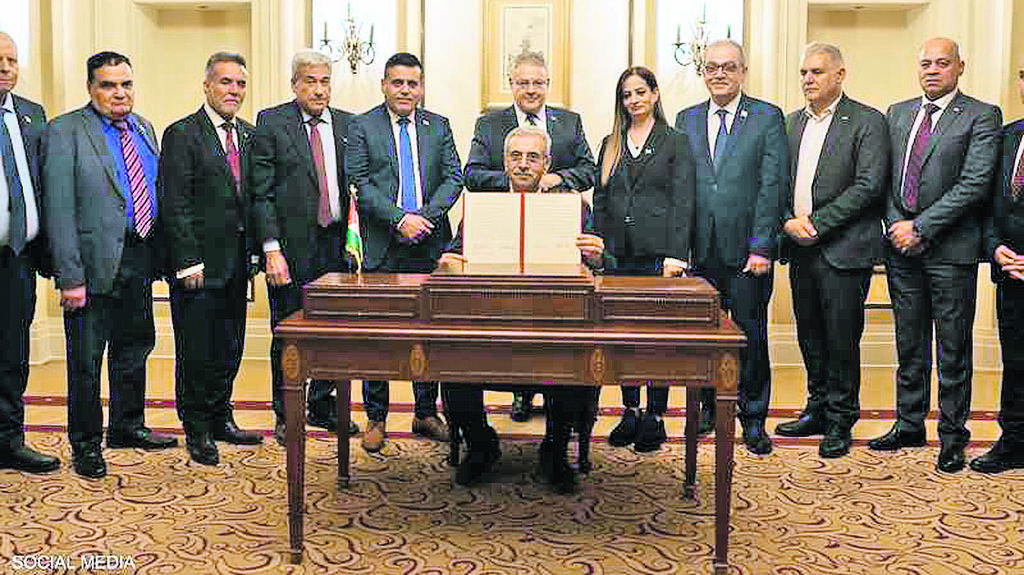
Committee members are still waiting in Cairo for approvals, security guarantees and a coordination mechanism that would allow them to enter the Strip and operate without becoming targets in an unstable reality.
While the United States and international officials present the move as a first step toward creating a new order in the Strip, sources in Gaza are deeply skeptical of the new framework’s ability to bring about real change.
“The problem in Gaza is not only who distributes the food or who runs the municipalities. The central question is who holds the power," a Gazan political source said. "If Hamas keeps its weapons, there is no real change, and if Israel reserves the ability to decide when to enter and attack, then there is no Palestinian sovereignty either.”
“People in Gaza do not currently see any horizon for peace or reconstruction,” he also said. “There is a feeling that everything depends on decisions made outside the Strip — in Israel, the United States and countries in the region.”
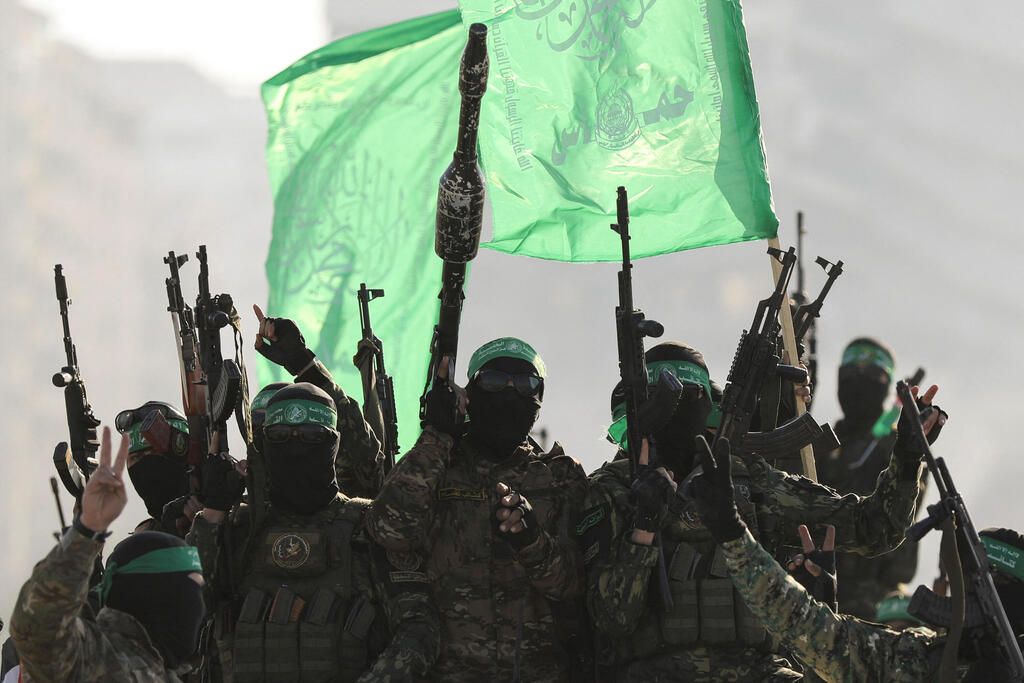
Hamas agreed to give up control of Gaza but not their weapons
(Photo: Dawoud Abu Alkas/Reuters)
Public figures and Palestinian commentators also have voiced sharp criticism of the Gaza Board of Peace and the new civilian body. They argue that it is an external mechanism that does not necessarily reflect the will of the Palestinian public and could become a management tool rather than a political solution.
Israel has made clear that the transfer of civilian administration alone is not enough. Its central demand remains the full demilitarization of Hamas and the other armed groups in the Strip. Israeli officials say that, as long as Hamas maintains its military capabilities, any new civilian body will be limited in its ability to operate independently. Israel’s message is that, without a fundamental change on the issue of weapons and security control, there can be no progress toward full reconstruction of the Strip.
Among Gazan officials, there is an understanding that even after the establishment of a new civilian body, Israel will still retain the ability to dramatically influence reality in the Strip. “If Israel decides that the arrangement is not working from its perspective, it can return to fighting,” a source in Gaza said. “There is currently no mechanism that guarantees stability, and no one who can guarantee residents that the war will not return.”
So far, most of the 20 points in the Board of Peace plan have not been implemented, including the committee’s actual entry into Gaza, the establishment of an agreed security mechanism, resolution of the issue of Hamas’ weapons and guarantees for long-term reconstruction.
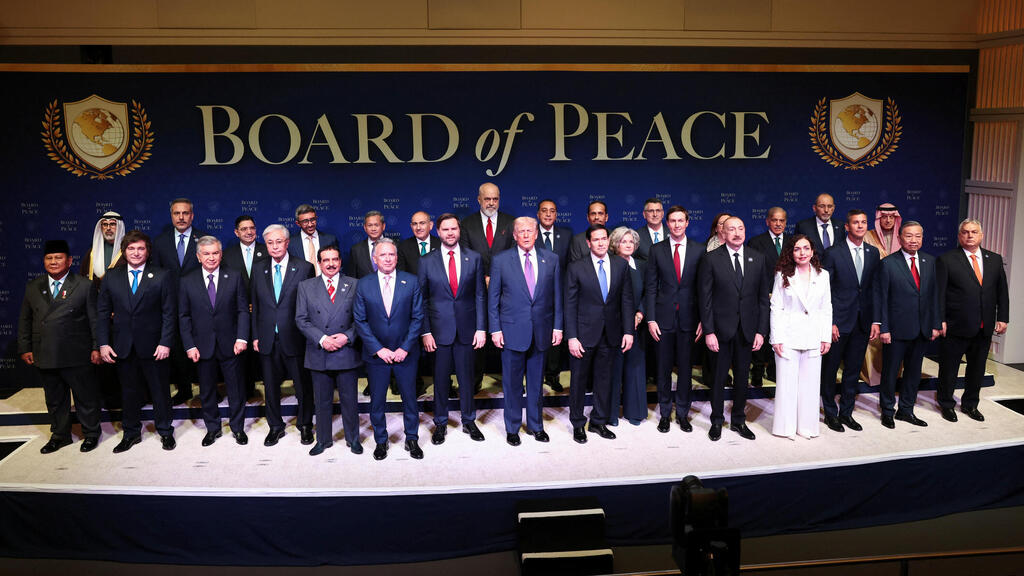
Trump's Board of Peace at first meeting in Washington
(Photo: Kevin Lamarque/Reuters)
Respected Palestinian commentator Lamis Andoni told the Qatari newspaper Al-Araby Al-Jadeed (The New Arab) that she views Hamas’ decision to distance itself from governance as surreal.
“Hamas found it extremely difficult to make the decision to hand over its powers to a committee operating under what is called the ‘Board of Peace’ but this is acceptance of the conditions of the United States and Israel, if not surrender and acceptance of American-Israeli guardianship over Gaza,” she said.
Andoni explained that Hamas had been pushed into an impossible corner. “Hamas’ mistake was that it launched a major operation without having a strategic vision for the day after,” she said. “Now, isolated, with the Arab world abandoning the resistance and the framework agreements in Lebanon dealing a severe blow and leaving the movement with a sense of loneliness and betrayal, the pain and destruction suffered by Gaza’s residents, which exceeded every limit of human suffering, forced Hamas to give up power in order to prevent further suffering.”
In this context, Dr. Ibrahim Fraihat, a lecturer in international conflict resolution, said Hamas’ move marks a shift from governing to managing influence. According to him, the step ends the phase in which the organization combined civilian rule with armed resistance, but does not mean the end of Hamas’ political path.
Political commentator Ahmed al-Tanani said the general mood in the Gaza Strip is now one of anxious anticipation. Residents, he said, hope the current move will open serious channels for discussion on the future of governance in the Strip and lead to an end to what he called “Israel’s war of attrition.”