


Prime Minister Benjamin Netanyahu is expected to depart Sunday for an important diplomatic visit to the United States, during which he will meet U.S. President Donald Trump at Trump’s private Mar-a-Lago estate in Florida and seek understandings on a series of critical issues. The meeting between the two is expected to take place on Monday at 10:30 p.m. Israel time. Prior to that, Netanyahu will meet with U.S. Secretary of State Marco Rubio.
The prime minister’s schedule includes meetings on Monday with Trump and Rubio. At this stage, no details have been released regarding Tuesday’s agenda, and it is possible the day will be used for a meeting with U.S. Vice President J.D. Vance. On Wednesday, Netanyahu is expected to meet with leaders from the evangelical community, and later he and his wife will attend an event at a synagogue in Miami. Netanyahu is scheduled to depart the U.S. on Thursday and return to Israel on Friday.
Gallery
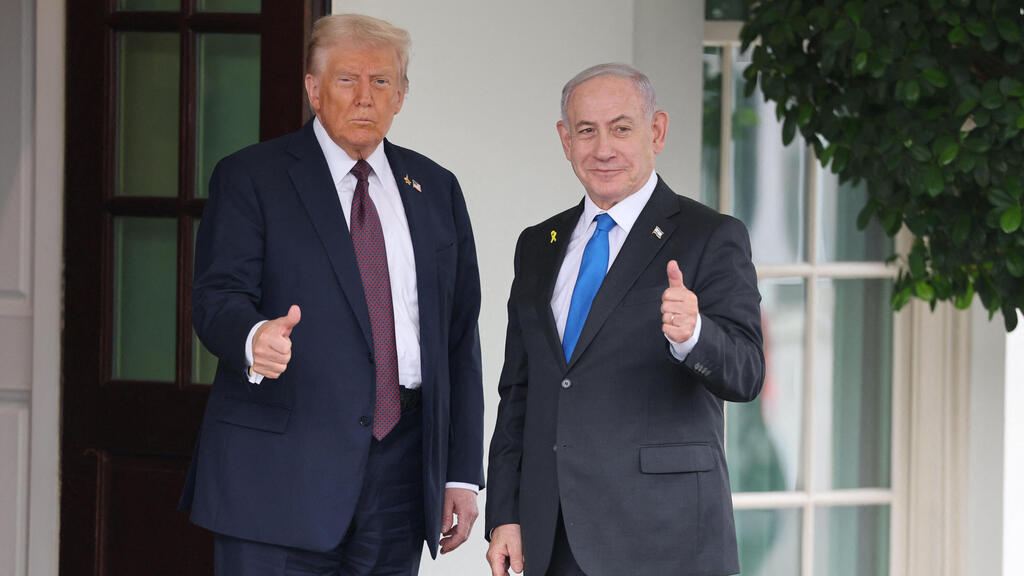
President Donald Trump and Benjamin Netanyahu at the White House in September
(Photo: Jonathan Ernst/Reuters)
The range of diplomatic and security issues concerning Israel, including matters requiring significant decisions, will be divided between discussions with Trump and Rubio. The meeting with Trump is important, but not considered decisive. It is unclear whether an additional meeting between the two leaders will take place later in the week. That decision will depend on the outcome of the first conversation, though there is a high likelihood of a second Netanyahu–Trump meeting. At present, no meetings or calls have been scheduled with Vance or Defense Secretary Pete Hegseth.
Netanyahu will fly to Florida aboard the official Wing of Zion plane. As in previous trips, the aircraft is expected to take a particularly long route that bypasses countries that could honor the international arrest warrant against him in the event of an emergency landing, including Britain, France and Portugal. Because of the extended route, the Prime Minister’s Office has not allowed journalists to join the flight. Some members of the delegation will travel to the U.S. on commercial flights.
Strengthening the partnership
Bilateral ties with the U.S.: Netanyahu will discuss with his interlocutors how to strengthen cooperation between the two countries in strategic innovation fields, with an emphasis on artificial intelligence, quantum technologies and cybersecurity, areas in which Israel is considered highly advanced and a global leader.
Gaza
Two key questions are on the table: What is President Trump’s vision regarding the demilitarization of Gaza and the disarmament of Hamas? From Israel’s perspective, these are foundational issues for any progress on reconstruction, governance in Gaza and related matters. Netanyahu wants to hear Trump’s vision and understand how the international stabilization force (ISF) the U.S. president is assembling in Gaza would carry this out.
Netanyahu’s circle stresses that everything already exists in Trump’s so-called 20-point plan, which Israel has accepted, and that the focus now is on implementation. From there, discussions move to the tactical level, including which countries will participate in the international mechanism. During a recent meeting of the security cabinet, it was reported that the U.S. has secured commitments from three countries to send troops to Gaza.
Netanyahu will make clear that, from Israel’s perspective, countries such as Turkey and Pakistan cannot be part of the stabilization force. In Jerusalem, there is support for the inclusion of other countries such as Indonesia, Azerbaijan and Italy. The leaders will discuss in detail how to move to the second phase of the Gaza ceasefire deal, with an emphasis on removing Hamas, Turkey and Pakistan from the equation. Trump, for his part, is expected to present Netanyahu with his reconstruction plan, “Project Sunrise,” which is set to begin in Rafah.
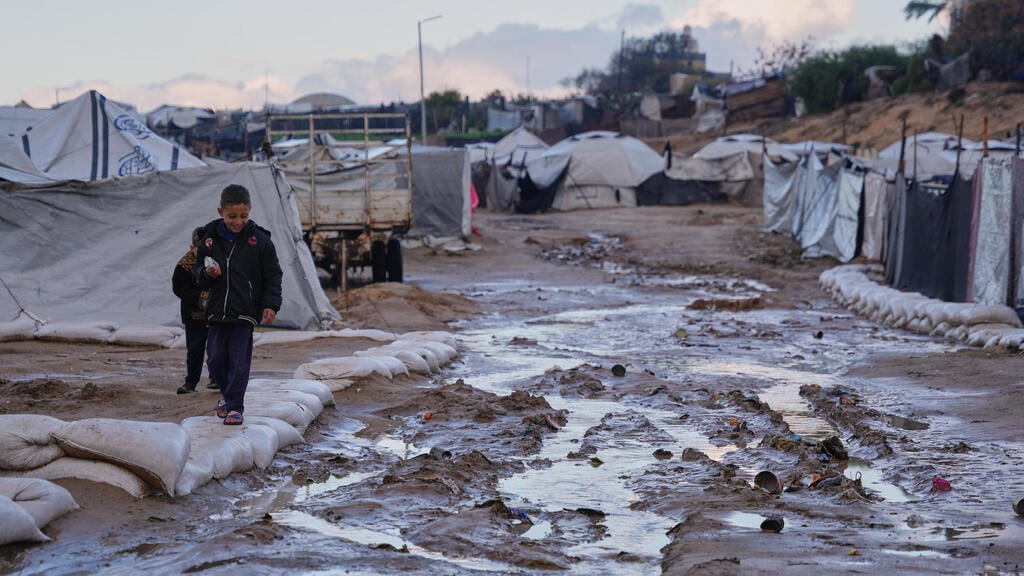
Gazans live in tents
(Photo: Abdel Kareem Hana/AP)
Israel is conditioning the transition to the second phase on the return of the body of the killed hostage, First Sgt. Ran Gviliy. Netanyahu is bringing Gvili’s mother and brother to the summit to present them to Trump, who has recently said at least twice that “all the hostages have been returned.” In Israel, there is hope that the focused effort agreed upon during the Israeli team’s meeting with mediators in Cairo will yield results in the coming days.
According to assessments, following his meeting with Netanyahu and sometime in January, Trump will announce the transition to the second phase and the establishment of the stabilization force. The troops are not expected to arrive immediately, as several more weeks of logistical preparations will be required. The force is likely to begin operating in areas under Israeli control rather than Hamas-controlled territory.
Israel wants to ensure that the plan guarantees genuine disarmament of Hamas, not symbolic gestures or maneuvers, and the same applies to the demilitarization of the Strip. The possibility of involving a Palestinian technocratic body in Gaza’s administration will also be raised, including who will be part of it and who will not. Israel seeks to ensure a complete break from Hamas on one hand, and minimal ties to the Palestinian Authority on the other, preferring professional and moderate figures in the style of former Palestinian prime minister Salam Fayyad.
A senior Israeli official said after Thursday’s cabinet meeting: “The main plan of Trump and Netanyahu was to expand the Abraham Accords after the war ends and the hostages are returned. That has now run into a bigger challenge. What will be at the center is the second phase and the multinational force. Turkey will not be there. No one will be imposed on us whom we do not want, and we do not want Turkey.”
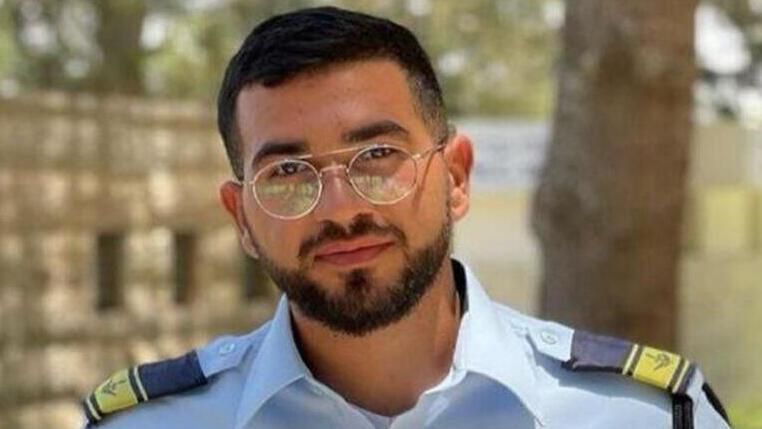
First Sgt. Ran Gviliy.
(Photo: Israel Police spokesperson)
He added: “Even if Ran Gvili were to return, it would still take time to move to Phase II because not all of the force is ready. It’s not as if a force arrives tomorrow. The Americans want everything to be organized before the force enters. In Israel there is significant doubt whether the international force will succeed in disarming Hamas, but it must be given the opportunity. As for Hamas, intelligence assessments show it is still active, rearming and rebuilding, but it has not returned to its former strength.”
Syria
Netanyahu will deliver a very clear message to Trump and Rubio: the army of Syrian President Ahmad al-Sharaa, seen chanting “To Jerusalem” and “We are coming to Gaza” during the anniversary of Assad’s fall, includes fighters wearing ISIS patches, a situation Israel cannot rely on or view al-Sharaa as a stable partner. Netanyahu will say Israel wants first and foremost to build trust, including a demilitarized zone in southern Syria that does not threaten Israel, protecting the Druze population to prevent another massacre, and preventing Damascus from becoming a depot for advanced weapons systems.
Regarding Russian involvement in Syria, a senior official said such a scenario could actually be a blow to Turkey. Still, the Syrian president faces significant internal challenges. On the possibility of reaching a security arrangement with Syria, the official said: “We thought it could happen faster, but they are unstable.”
Iran
Netanyahu will convey two messages on Iran: escalation must be avoided, and heavy economic pressure must be applied to the Islamic Republic. He will seek an understanding with the Americans on what a “good deal” with Tehran should look like. Such an agreement must include zero uranium enrichment, zero centrifuges and intrusive, continuous IAEA oversight. This line must not be crossed.
Iran’s ballistic missile program will also be discussed, with Israel presenting intelligence on developments that are causing concern. However, Israeli officials stress that the two threats must not be conflated: from Israel’s perspective, the nuclear program is an existential threat, while missiles are a threat Israel has dealt with in the past.
Lebanon
Lebanon and Hezbollah are a secondary issue at the summit, as Israel and the U.S. largely see the northern border situation the same way. According to a senior official, “We believe the Lebanese army is moving too slowly and incompletely, and we expect disarmament to continue. If there is no choice — and for us this will not happen tomorrow or the next day — we will have to strike Hezbollah again.”
Israel emphasizes that gaps between Jerusalem and Washington on Lebanon are minimal. The official said: “The Lebanese government very much wants to disarm Hezbollah but is struggling. Israel’s inclination is to continue holding territory and conducting operations. We are monitoring the situation continuously and are prepared to act if and when we feel all other options are exhausted.”
Turkey
Trump holds regard for both Netanyahu and Turkish President Recep Tayyip Erdogan. From Israel’s perspective, Turkey is a rival, not an enemy. The challenge for Israel, together with Trump, is to define rules of the game, to determine where rivalry ends and avoid sliding into outright hostility, which would be bad for both sides.
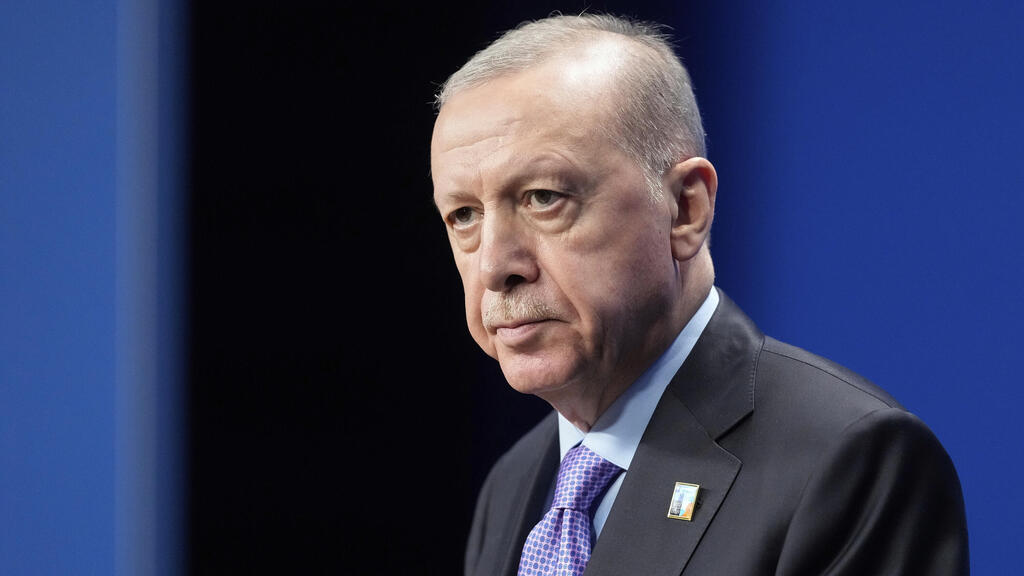
Turkish President Recep Tayyip Erdogan
(Photo: Markus Schreiber/AP)
That said, Turkey will not be a central topic. The issue of supplying F-35 fighter jets to Turkey has arisen in Israel–U.S. discussions, but there has been no progress. U.S. legislation currently bars supplying the advanced aircraft to Turkey as long as it operates Russian weapons systems.
Saudi Arabia
It is unclear whether normalization with Saudi Arabia will be discussed at the Florida summit. The Saudis appear frustrated with Israel’s current government and prefer to wait until after Knesset elections. Still, it is possible Trump will raise the issue with Netanyahu.
Netanyahu arrives at Mar-a-Lago amid growing frustration around Trump toward Israel and Netanyahu, amid perceptions they are obstructing the president’s regional plans. In Israel, however, there is confidence that once Trump hears Netanyahu and reviews the intelligence he presents, he will be persuaded.
According to a senior official, “Past experience shows Trump is supportive of Israel and will not make decisions that endanger it. There is no monolithic bloc of advisers all opposed to Israel; some are more supportive. The chemistry between Netanyahu and Trump gives the prime minister the ability to influence decisions. This time, it just won’t be easy.”
The settlers’ aspirations regarding annexation in Judea and Samaria are not expected to be raised at the meeting.
Netanyahu’s visit comes as Trump is close to brokering a ceasefire agreement between Russia and Ukraine. Trump is expected to meet Ukrainian President Volodymyr Zelensky before Netanyahu arrives. Riding this momentum, Trump may test the possibility of progress in the Middle East as well. It remains unclear whether this will translate into increased pressure on Israel — or the opposite.