

U.S. President Donald Trump has frequently criticized the 2015 Iran nuclear deal, officially known as the Joint Comprehensive Plan of Action (JCPOA), signed at the initiative of then-president Barack Obama. In March, as U.S. and Israeli strikes began, Trump wrote on Truth Social that had he not withdrawn from the deal in 2018 during his first term in the White House, Iran “would be sitting with a massive nuclear weapon three years ago.”
A New York Times review presents different findings: When the United States withdrew from the agreement, Iran did not have enough uranium to build even one nuclear bomb, but it has since accumulated 11 tons of enriched uranium. Perhaps even more troubling, after two military operations intended to prevent a nuclear Iran, the fate of Iran’s uranium stockpile remains a mystery. It is unclear what became of it. Added to that are current U.S. intelligence assessments indicating that the time Iran would need to build a nuclear weapon has not changed since last summer.
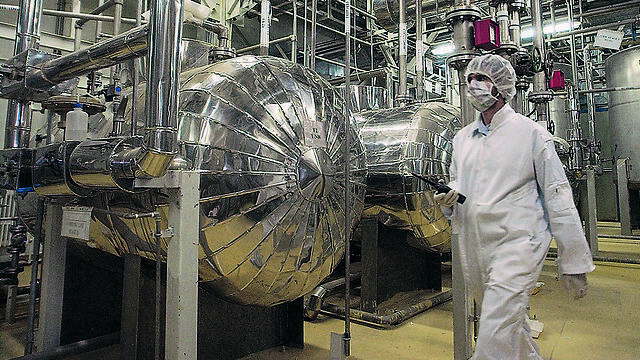
The Times describes a slow but steady acceleration of Iran’s nuclear program over roughly a decade, which led the Obama administration to pursue an agreement limiting the Islamic Republic’s nuclear activity. Iran began enriching uranium in 2006, saying the program was for peaceful purposes. In 2010, Iran announced it would begin enriching uranium to 20%, ostensibly to produce fuel for a research reactor. That level is the official dividing line between civilian and military uses of uranium.
That move brought Iran closer to a bomb, and at that stage, the Obama administration began a diplomatic effort to curb Iran’s nuclear ambitions. In 2015, an agreement was signed under which Iran would reduce its stockpile of low-enriched uranium that could be used as fuel for a bomb by about 98%, to 300 kilograms enriched to 3.67%, for 15 years. The agreement also established oversight and monitoring mechanisms meant to ensure Iran complied with its commitments.
According to the Times, Trump’s decision to withdraw from the agreement in 2018 and reimpose a series of economic sanctions on Iran led Tehran to accelerate uranium enrichment — first to 20% in 2021, just before the end of Trump’s first term. Later, during President Joe Biden’s tenure, Iran enriched uranium to 60%, a short technical step from the 90% needed for weapons-grade material.
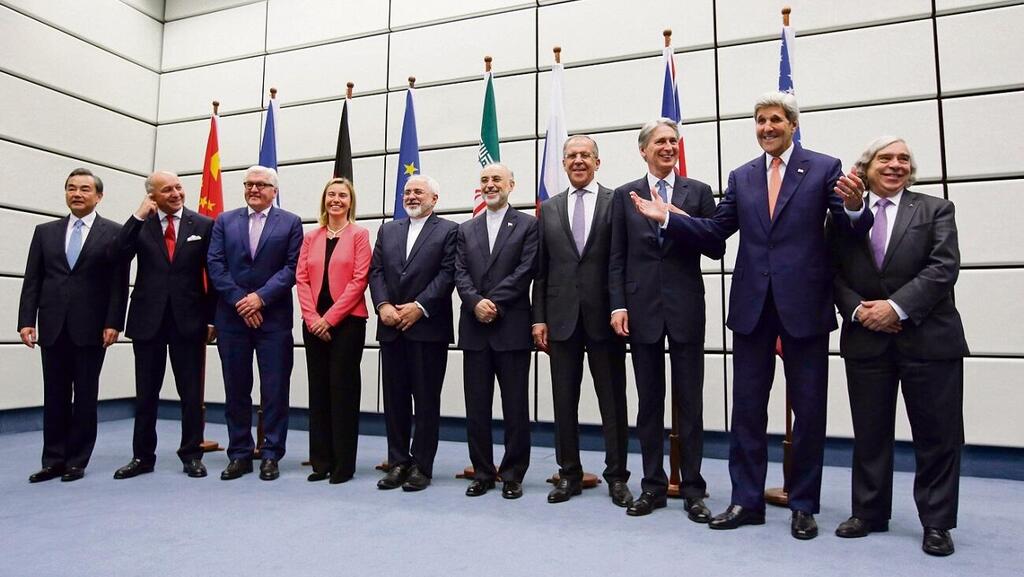
Foreign ministers at the signing of the nuclear deal in 2015
(Photo: AP)
According to the International Atomic Energy Agency (IAEA), by 2025, when Trump returned to the White House, Iran’s enrichment rate was the highest recorded since monitoring and inspections began. In June 2025, during the 12-day war, the United States bombed Iran’s enrichment facilities at Natanz and Fordo, as well as its uranium storage tunnels in Isfahan.
A month later, Iran suspended cooperation with the IAEA. As a result, the location of Iran’s 11 tons of enriched uranium remains uncertain. Even U.S. satellite surveillance has not located the full stockpile. Officials assess that some of it, which is both radioactive and chemically hazardous, remains hidden or buried under wartime rubble, making it difficult to access or destroy.
Although the Trump administration argues that U.S. satellites are monitoring uranium buried underground and that the stockpile is "not very valuable" to Iran, analysts who spoke with The New York Times cast doubt on those claims. They said Iran may even have built an enrichment facility last year at a site inside tunnels near Isfahan. According to those analysts, Iran may have a secret site where it could conduct new rounds of enrichment should it decide to take another step toward a nuclear bomb.
Assessment: Iran’s stockpile may be enough for 10 bombs
U.S. intelligence assessments indicate that the time Iran would need to build a nuclear weapon has not changed since last summer, when analysts assessed that Israel and the United States' operations Rising Lion and Midnight Hammer, respectively, had set the timeline back by nine to 12 months, Reuters reported Monday evening, citing three sources familiar with the matter. The news agency noted that the lack of a significant delay in the timeline indicates that Iran’s nuclear program would only be significantly harmed if the enriched uranium were removed from the country or destroyed.
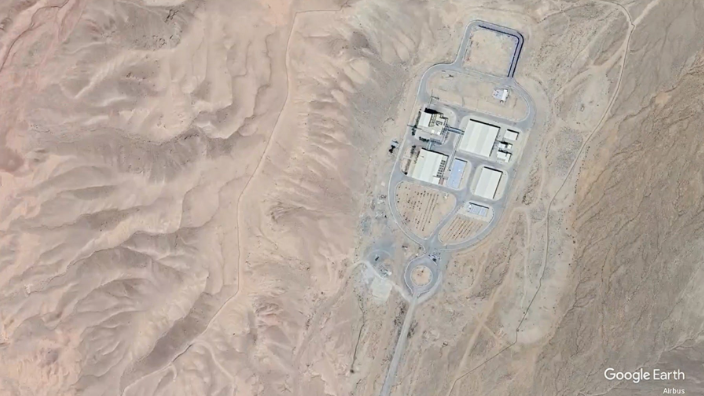
A secret nuclear site in Iran
(Photo: National Council of Resistance of Iran)
According to the sources, assessments of Tehran’s nuclear program have remained largely unchanged even after two months of war, one of whose central goals is to prevent the Islamic Republic from developing a nuclear bomb. Reuters noted that U.S. strikes during the war focused on conventional military targets, but that during Operation Roaring Lion, the IDF also hit several key nuclear facilities.
According to assessments, the strikes destroyed or at least heavily damaged the three enrichment facilities known to be active at the time. However, the IAEA has been unable to verify the whereabouts of about 440 kilograms of uranium enriched to 60%. The agency believes that about half of it was stored in an underground tunnel complex at the nuclear research center in Isfahan, but has been unable to confirm that since Iran refused to allow its inspectors back in.
The IAEA estimates that Iran’s total stockpile of highly enriched uranium would be sufficient for 10 bombs if enriched further.
First published: 13:08, 05.05.26