

The inevitable conclusion from the near-final results of the 2026 election is clear: There is no decisive winner, and for a government to be formed after the election for the 26th Knesset, someone will have to break one or more campaign promises.
For now, and probably even after the remaining absentee and special ballots are counted, neither bloc is close to securing the 61 seats needed to form a stable government on its own. Without relying on the Arab parties, which achieved a record 19 seats, the opposition's bloc for change remains far from being able to form a government to replace Prime Minister Benjamin Netanyahu.
Gallery
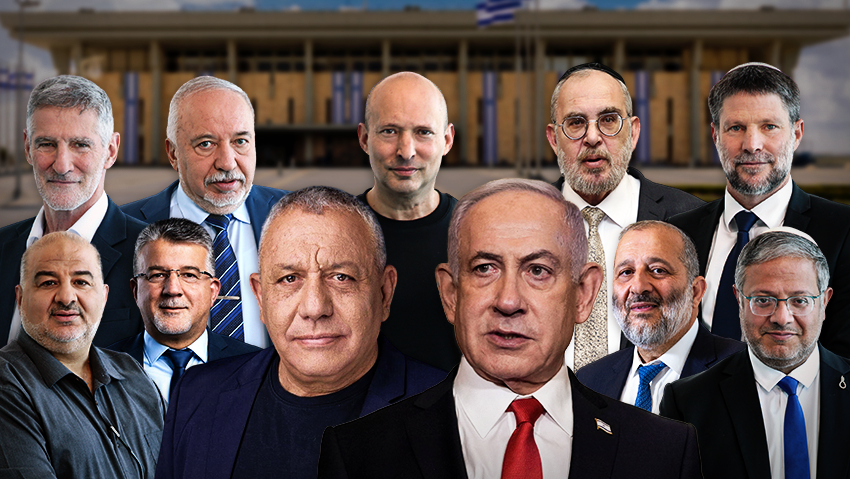
(Photo: Shutterstock, Shalev Shalom, Elad Malka, Joint List, Ryan Froiss, Alex Kolomisky, Oliver CONTRERAS/AFP)
So, with the emerging results giving Netanyahu's bloc a slight advantage over the bloc for change led by Gadi Eisenkot, is there a way to avoid another election? The answer is yes, but in every such scenario, political players on both sides would have to break several campaign promises.
These are the possible scenarios for forming a government, based on the actual election results that defied pollsters' predictions:
Unity government under Netanyahu
In light of the election results, this has become one of the most plausible scenarios, but also the one that would require the most broken promises across the political spectrum.
Under such an arrangement, Netanyahu could break his pledge to form a government with all the parties in his existing coalition, a promise he repeated several times in recent weeks. On the other side, Gadi Eisenkot, Naftali Bennett and Avigdor Liberman, the potential partners in such a government, would break their promises to voters not to serve under Netanyahu, whose Likud party finished far ahead of its rivals as the largest party.
ynet reported before the election that this was the scenario President Isaac Herzog had sought from the outset. On Wednesday, Herzog commented for the first time on the emerging results, saying everything possible must be done to avoid another election, another indication of his efforts to bring about a unity government amid the political deadlock.
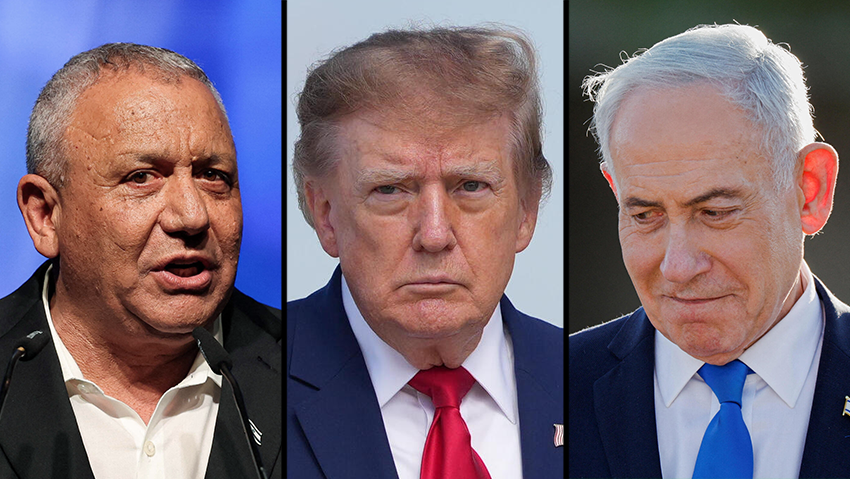
Gadi Eisenkot, Donald Trump, Benjamin Netanyahu
(Photo: Jack GUEZ / AFP, REUTERS/Amir Cohen, AP Photo/Mark Schiefelbein)
U.S. President Donald Trump, who made no secret of his willingness to intervene in Israel's election before Oct. 27, could also become involved afterward to help bring about such an arrangement. A unity government could make it easier for him to advance diplomatic initiatives, including expanding the Abraham Accords, the normalization agreements between Israel and several Arab countries.
Unity government with Netanyahu first in a rotation
Given Netanyahu's double victory in the election, both in leading the largest party and in heading the larger political bloc, excluding the Arab parties, it is doubtful he would agree to a power-sharing rotation. Still, the possibility cannot be ruled out entirely.
Under this scenario, the leaders of the change bloc would also break their promises to voters, having pledged not to serve under Netanyahu. Some even argued that Netanyahu was unfit to serve as a minister after the failures of Oct. 7 and therefore should have no place in any government, even one he did not lead.
Netanyahu government with defectors from the change bloc
In this scenario, the politicians breaking their promises would be members of the change bloc who chose to join a Netanyahu-led government.
All the bloc's party leaders, and apparently members of all four parties, promised not to serve under Netanyahu. Most also pledged not to cooperate with the ultra-Orthodox parties, which have traditionally been Netanyahu's natural coalition partners.
Even before the election, ynet reported that if Netanyahu emerged closer to the 61-seat threshold, as now appears to be the case, Likud was counting on the possibility of defections, particularly from Eisenkot's Yashar! party.
As ynet previously revealed, Likud even established a special team tasked with persuading lawmakers from Eisenkot's party to cross over to Netanyahu's bloc after the election.
Temporary minority government or caretaker government led by Eisenkot
Under this scenario, every leader of the change bloc except Yair Golan would break a campaign promise.
Throughout the campaign, Golan said Arab parties were legitimate partners in a future government. Senior figures in his Democrats party reiterated that position Tuesday night, saying political leaders must "show political courage" and form a government with Ra'am, the Islamist-leaning Arab party led by Mansour Abbas.
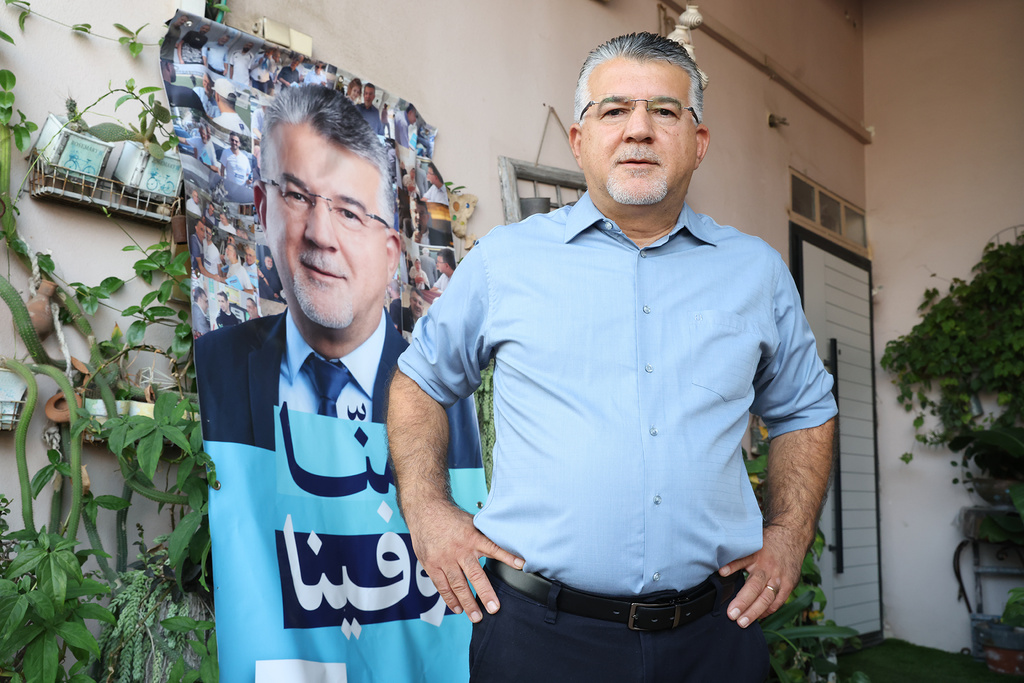
Joint List leader Yousef Jabareen
(Photo: Elad Gershgorn)
Eisenkot, too, did not rule out such a move during the election campaign, particularly when asked about Ra'am. However, he faced opposition from his main partners in the bloc, Bennett and Liberman.
All three parties, Yashar!, Beyachad and Yisrael Beytenu, have figures who are firmly opposed to such an arrangement.
Meanwhile, in statements over the past 24 hours, the Arab parties have not ruled out the possibility and have said they would help remove Netanyahu from power.
Netanyahu has already launched a campaign to delegitimize the Arab parties, even claiming they "stole the election in Israel" following their dramatic electoral gains.
Another possibility is that the change bloc, together with the Arab parties, could seek to take control of the Knesset. That would mean replacing Knesset Speaker Amir Ohana and, at a minimum, advancing the establishment of an official state commission of inquiry into the Oct. 7 massacre.
In such a scenario, the Knesset could be dissolved immediately after those measures are carried out, sending Israel to another election.
Another election
That leads directly to the scenario that appeared most likely before Oct. 27: another election.
If no one breaks the many promises made over the past several months, Israel, once again caught in a political deadlock, could find itself heading back to the polls within a matter of months.
The election results revealed something most polls failed to predict: Likud's enduring support. Although the party lost some ground, it remains by far the largest in the Knesset.
According to most assessments within the political establishment, another election could primarily benefit Netanyahu.
Disillusionment within the change bloc could depress turnout in center-left strongholds and perhaps also among Arab voters, who turned out in unprecedented numbers in this election, effectively fulfilling the familiar political refrain about voters "flocking to the polls in droves."