

Noa Harnik woke up on Monday morning to a flood of messages, including one sent by her beloved nephew on WhatsApp. It contained a screenshot of the news announcing “IDF captures Beaufort Castle 26 years after Israel withdrew from Lebanon,” alongside a few words: “Now I can tell you I’m here, I promise I’ve been thinking about you a lot.”
Aunt Noa is the younger sister of Goni Harnik, the Golani Reconnaissance Unit commander who fell in the battle for the most famous outpost in Lebanon on June 6, 1982. She is the daughter of Raya Harnik, Goni’s mother, a gifted poet who devoted her life to opposing the endless war in Lebanon’s security zone.
What does a bereaved sister say to a nephew? “Take care of yourself! I wish this didn’t have to happen again and again.”
Again and again. These may be the most defining words of the Israeli mythology. Again and again in the same sectors, in the same mud, with the same worn-out symbols, living the same storyline without a horizon.
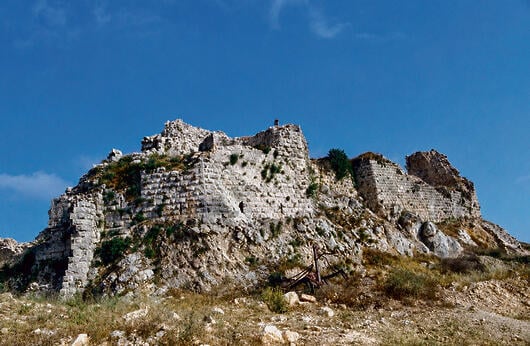
The recapture of Beaufort turned into a media celebration this week: IDF spokesperson announcements, a Golani Brigade commander change-of-command ceremony held at the site, and ministers and MKs boasting about the fortress as if it were a cornerstone of existence itself.
Prime Minister Benjamin Netanyahu delivered an emphatic statement in which he said: “Last night our heroic soldiers captured the Beaufort outpost. They proudly raised the Israeli flag and the Golani Brigade flag. I remind you that 44 years ago this place was a symbol of heroic battle, but also a symbol of deep internal dispute. Today we returned to Beaufort differently. We returned united, determined, stronger than ever.”
The prime minister, in an attempt to repair public opinion regarding the faltering northern campaign, used Beaufort in a desperate effort to generate national pride. He did not mention that the heroic battle in 1982 opened the door to 18 years of entanglement in the Lebanese mud that cost the lives of hundreds of soldiers.
Even his claim that today “we returned to Beaufort differently” is false: every issue, even the smallest, is deeply disputed in Israel, especially the continuation of the war, how it is managed and the sending of soldiers into security zones whose purpose is questionable.
The romanticization of Beaufort itself did not really convince anyone, perhaps except for a Channel 14 reporter. He urgently called one of the leaders of “Four Mothers,” the bereaved mother Manuela Dviri, whose son fell at the Carcom outpost in 1998. “We are going back to Beaufort, and because of you we left Beaufort,” he accused. “Do you think it was a mistake to leave there 20 years ago?”
Symbolism is everything
In the current war, symbolism is everything. Instead of confronting the challenges of the moment, reality is wrapped in cellophane once called “total victory” and once “the war of rebirth.” Now a symbol of bereavement and failure has returned to center stage as an example of aggressiveness and border defense in the north.
The rebranding is limited. The blood-soaked entrenchment in Lebanon left an indelible mark on Israeli society and culture that is difficult to erase. The name Beaufort stops the heart rather than uplifting it.
“The Mountain of Curse” was the title of an iconic magazine feature written by Ron Leshem in “7 Days” in 2001. The title reflected its content well: a sense of futility and heavy dependence of soldiers on a mountain that had become a monster. A story that became the voice of a generation, the Lebanon generation.
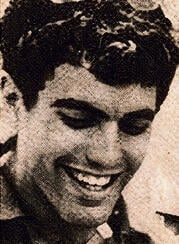
Goni Harnik, the Golani Reconnaissance Unit commander who fell in the battle for the most famous outpost in Lebanon on June 6, 1982
It took years for those soldiers to process what happened to them in that unnamed war. They received recognition only five years ago, when a special committee awarded them decorations following a public campaign.
The article by Leshem became the bestseller “Beaufort” and the blockbuster film. Three works that are essentially one creation, one that dared to look into the eyes of soldiers forced to maintain the security zone without knowing how or why.
Many iconic scenes are remembered from the film, which was even nominated for an Oscar. “Your children will be here too,” says Oshri Cohen, playing the outpost commander, to Ohad Knoller, playing an engineering soldier. In the same scene Knoller describes how his uncle was killed just meters away in 1982 and now he is in the exact same place in 2000.
And now, in 2026, Goni Harnik’s nephew stands on that very same cursed ground. The scene is not a prophecy fulfilled, but a sober assessment that found artistic expression. There were those in the IDF who considered calling this week’s capture of Beaufort “Operation Goni.” It is good they reconsidered.
In a reality of Sisyphean war, the mythology of living by the sword becomes ever more solid. It is far harder to rally the public with a complex truth. It may be that the capture of the Beaufort ridge is a security necessity, required for the safety of our soldiers and communities. There is no doubt the soldiers are doing their duty faithfully. But this is a tactical achievement, even if necessary. That is all.
And also: today we are in a far more fragile and complex situation than in the “golden” 1980s. The earlier security zone was largely held by the South Lebanon Army alongside a minority of IDF troops, and it still led to a draining entanglement and a withdrawal from Lebanon without any proper agreement, a withdrawal that contributed to Hezbollah’s buildup.
The current security zone is held exclusively by IDF soldiers, alongside three other active fronts and a shortage of about 10,000 combat troops. Israel is fighting with one hand tied, constrained by the United States and unable to shape a meaningful move with the Lebanese government. There is not a trace of romance in the captured outpost, not a shred of euphoria in the return to cursed Lebanon.
A father weeps for his son, weeps for a son
The song “Fathers and Sons” by Aviv Geffen touches the most sensitive nerves of the parent-child bond. It became a memorial song almost instantly with the release of “Beaufort” in cinemas. In one scene a weary soldier quietly plays the song inside the dark outpost and the camera moves across his exhausted, frightened and collapsing comrades.
It is a turning point in which a song becomes an anthem that captures a moment in time. When society fractures and war grinds on, only a hollow cult of bereavement remains. A father weeps for his son, weeps for a father.
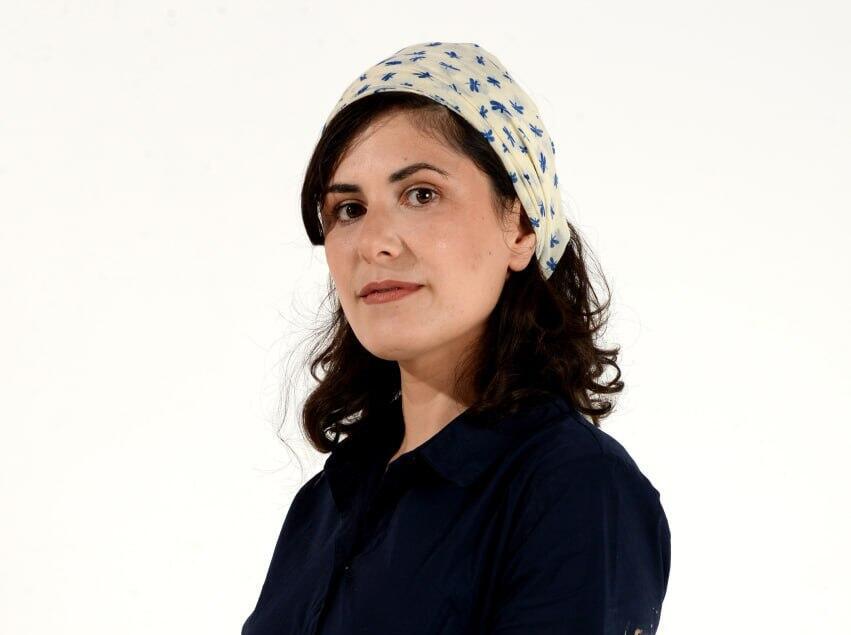
Chen Artzi Sror
(Kobi Koaneks)
Dr. Ori Yosef Silvester, a physician in the Shaked Battalion of the Givati Brigade, wrote on his birthday which came shortly after the release of hostages, an optimistic post: “I hope this moment is the beginning of a healing process for everyone. I hope the doomsday prophecy in the phrase ‘someone sang it before’ will be disproven and after an unprecedented war we will break the cycle of wars and enter an era of peace and prosperity with no expiration date. Finally there is hope for a better future and there is no greater gift to begin a decade with.”
Ori fell on Monday in southern Lebanon, at the age of 30. The 15th soldier killed since the ceasefire.
A father weeps for a son, weeps for a father.