

The pager operation marked a turning point in the Middle East and beyond. The Mossad's elaborate plot dealt a devastating blow to a humiliated Hezbollah while giving a much-needed boost to Israeli national morale, which had been at a low point since October 7. The ambitious plan and its impressive execution restored the Israeli intelligence agency's former glory in the eyes of many around the world. The documentary "Paging Hezbollah" sets out to reveal what happened before and after the operation, at least according to its stated purpose.
While the film's first half offers a detailed and gripping reconstruction of the planning and execution behind the scenes, its second half is devoted almost entirely to Prime Minister Benjamin Netanyahu and his decision-making process. As the film unfolds, a question emerges: Was American director Justin Folk's documentary made for curious international audiences, or is it really a piece of cinematic propaganda aimed primarily at Israeli voters just a week before the elections?
Questions about the film's true purpose are compounded by the mysterious circumstances surrounding its production. "Paging Hezbollah" is scheduled for release in the United States on October 30, about three days after the Israeli elections. Yet the publicity campaign and media discussion surrounding it began Monday night, roughly a week and a half before Israelis head to the polls, with its messages and revelations already making their way into news coverage.
The premiere will take place next Monday in Los Angeles, just hours before the elections, as part of a special event organized by ICAN, a conservative pro-Israel organization. The event will be attended by the American filmmakers and Israeli entrepreneur Rotem Avny, who is credited as a co-producer.
The timing alone raises questions, as previously reported in ynet Global. No less puzzling, however, is the secrecy surrounding the production and the obscure company behind it, Aveiled Productions , which does not appear to be registered anywhere as a production company.
'Paging Hezbollah' trailer


A press release was distributed about three weeks ago alongside the launch of a trailer and website, but there is no information about the people involved in making the film. Even the customary credits are missing. Who initiated the project? Who financed it? Who handled production on the ground in Israel? And who arranged for the American director to gain direct access to senior Israeli defense officials and Netanyahu himself? There are no answers, nor is there any disclosure of potential interests. Questions submitted by ynet to the director and the publicist went unanswered.
The pager operation received extensive coverage in foreign media and generated an extraordinary international response, reminiscent of the enthusiasm surrounding the success of the Entebbe rescue operation, which inspired no fewer than two Hollywood action thrillers at the time, along with Menahem Golan's "Operation Thunderbolt."
American moviegoers who make their way to theaters will get a glimpse into the Mossad's shadowy world, along with a detailed account of the operation and the preparations leading up to it. Folk also provides extensive political context from an American perspective, tracing the Lebanese Civil War, Hezbollah's establishment at the initiative of Ayatollah Khomeini and the attacks the terrorist organization carried out against American targets in Lebanon.
Viewed through American eyes, 'Paging Hezbollah' is a fascinating true-crime documentary thriller. For Israeli viewers, however, the experience is entirely different
Within the film's historical narrative, Israel's withdrawal from its security zone in southern Lebanon is portrayed as a defeatist decision by Ehud Barak, influenced by the complaints and tears of worried Israeli mothers. By contrast, the October 7 massacre is presented alongside Netanyahu's subsequent "War of Revival," which he continues to wage despite the pleas and anguish of the hostages' families, culminating in the pager operation and the killing of Hezbollah leader Hassan Nasrallah in September 2024.
Viewed through American eyes, "Paging Hezbollah" is a fascinating true-crime documentary thriller. For Israeli viewers, however, the experience is entirely different, if only because of their awareness of and sensitivity to the film's overt and underlying political context.
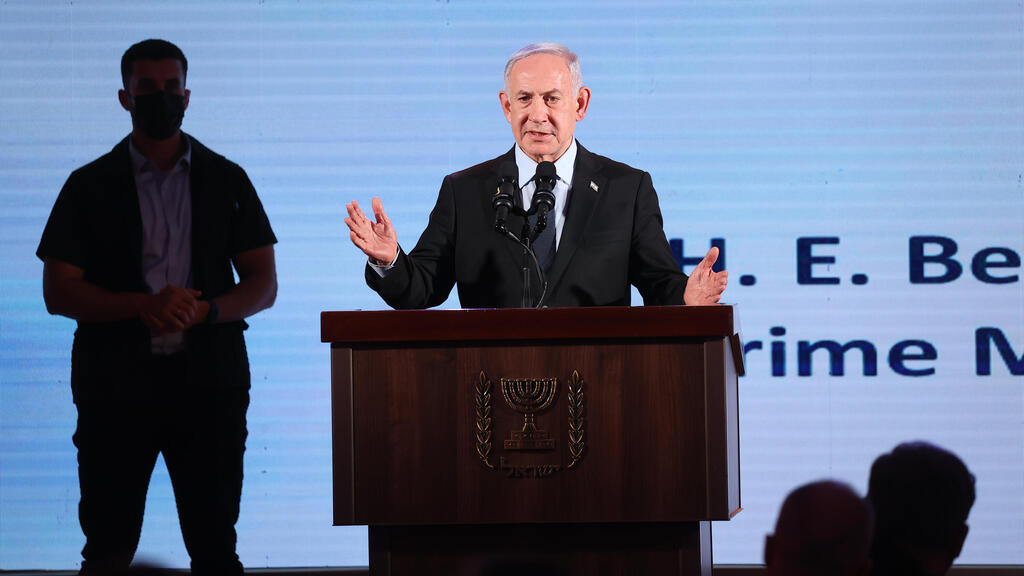
Prime Minister Benjamin Netanyahu is the hero of the film
(Photo: Amit Shaabi)
In the film's telling, every thread leads to its central hero: Netanyahu, the measured and determined leader who makes decisions while others hesitate.
The Mossad and Israel's senior defense officials conceived and planned the operation in its original walkie-talkie form back in 2014 and were responsible for implementing the plan seven years later in the more effective pager version. We learn a great deal about how events unfolded from Mossad chief David Barnea, former Northern Command chief Ori Gordin and others.
In retrospect, however, the operational details, challenges and deliberations seem to serve primarily as a buildup to Netanyahu, who dominates the screen and takes credit as the man who made the decisive calls, often against the advice of senior defense officials, who are subtly portrayed as hesitant and negligent.
In one surprising moment that fits neatly into the film's developing thriller narrative, as well as its version of events leading up to October 7, Netanyahu reveals how senior Mossad officials withheld crucial intelligence from him and nearly caused the pager operation to fail.
"I learned from our security chiefs that Hezbollah had sent three of the pagers to Iran for examination. And I said to them, 'When did this happen?' And they said, 'A week ago.' And I said, 'A week ago? And you're only telling me now?' So I gathered all the security chiefs and told them we had to act quickly," he says to the camera.
He follows this with another revelation, this time directed against the American leadership on the Democratic side of the political spectrum.
"Some senior security officials asked that we inform the Biden administration about [the operation] in advance, and I said no. It could be leaked, and then the whole thing would fail,"he said.
Behind the pagers: How the Mossad built its elaborate deception
Before the reconstruction of the Israeli intelligence community's remarkable operation turns into a one-man show starring the prime minister, the documentary actually provides a clear account of the history of the Israel-Hezbollah conflict, the turning point of October 7 and the covert preparations that led to the activation of the booby-trapped pagers.
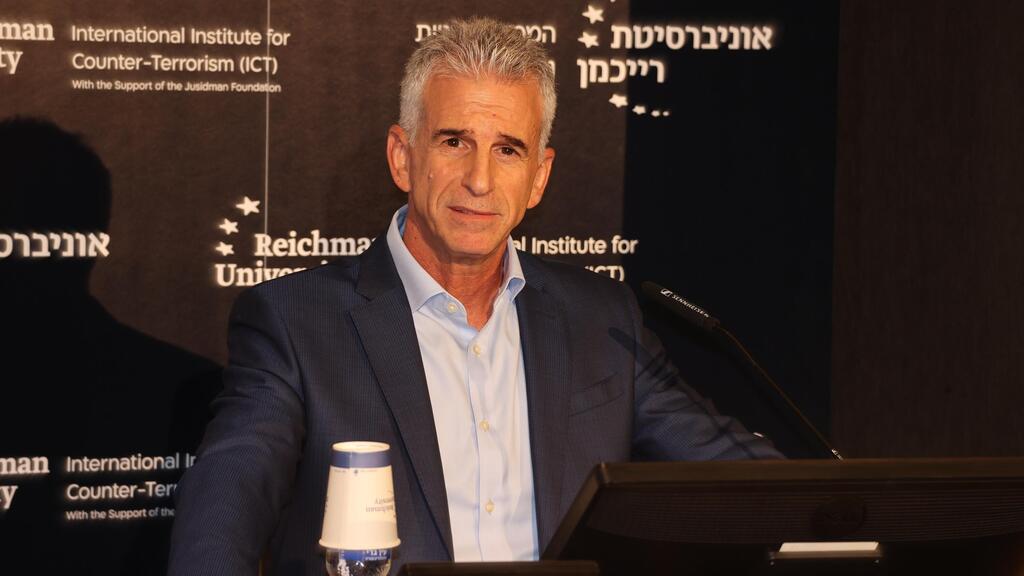
David Barnea Leads the viewer as a tour guide through the shadowy world of the Mossad
(Photo: Yariv Katz)
The real star is David Barnea, who opens the film by acknowledging that this is the first time he has spoken about the operation on camera. From there, he guides viewers through the shadowy world he knows so well as head of the Mossad.
There is something unusual about this relatively extensive exposure of Israel's intelligence agency. The Mossad's longstanding reputation has been built on ambiguity and secrecy, qualities that have only heightened public curiosity about the operations behind its impressive achievements.
One can assume that the willingness to share so much with an American film crew stems from the operation's success, which revived national pride and restored the intelligence services' reputation for capability and deterrence.
"Israel's enemies should know that the Mossad is like a fist aimed at your face, and we will find a way to reach your face," Barnea says.
It is a general warning to those plotting against Israel. But following the devastating intelligence failure of October 7, it is difficult not to see the documentary's revelations as an attempt to rehabilitate the agency's international image as well.
Despite the natural curiosity surrounding the operation, the film does not reveal classified details. The Mossad's security personnel made sure the information disclosed remained within the boundaries of what had already been reported in Israel and abroad. Even so, placing the operation within a cinematic narrative that combines Barnea's testimony with dramatic reenactments featuring actors creates a compelling account of a major military and intelligence achievement.
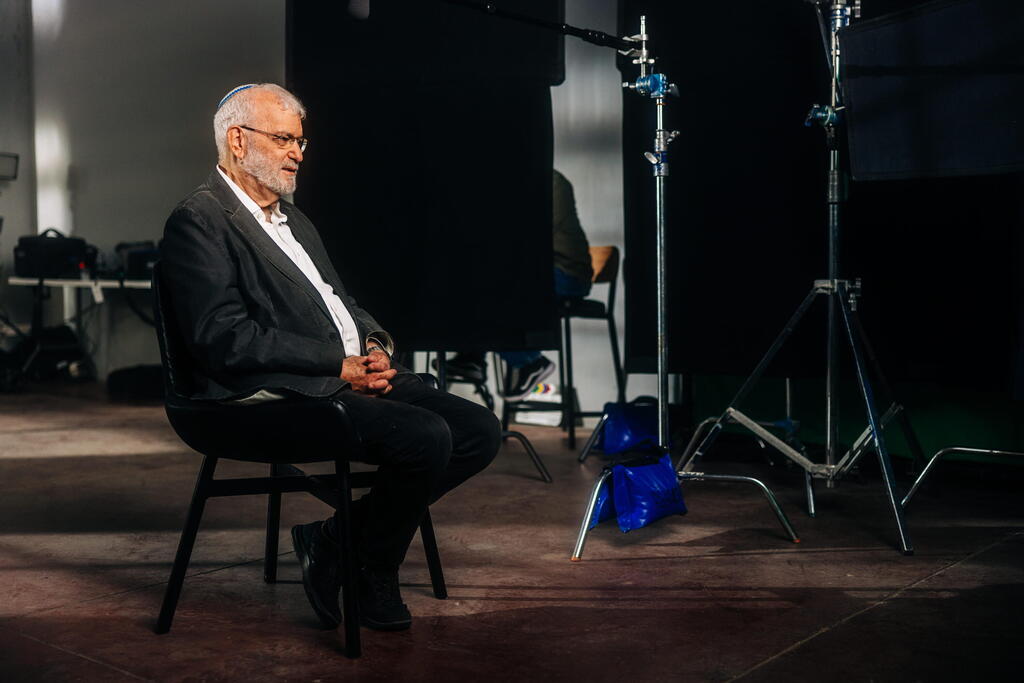
National security adviser Yaakov Amidror in 'Paging Hezbollah'
(Photo: Public Relationms)
The Mossad chief describes the original idea, developed in 2014, of planting explosives in Hezbollah operatives' walkie-talkies, followed by the decision to adapt the plan for pagers in 2022. He reveals how Mossad engineers found a way to conceal enough explosives inside the small devices and explains how ergonomic considerations shaped the design of the AR-924 model, which was developed at Mossad headquarters.
The plot was planned down to the smallest detail, and Barnea discusses some of those details at length. He also dwells on its marketing dimension: A sales representative for Gold Apollo, who knew nothing about the operation, convinced Hezbollah that when it came to pagers, bigger was better.
According to Barnea, this led to the creation of a makeshift pager supply chain designed entirely to inflict targeted injuries on Hezbollah operatives, but not to kill the people around them. "We didn't want collateral damage. We wanted to injure them, not kill them, so they wouldn't become martyrs. Killing was not the objective. The goal was to make clear the price of threatening Israel," Barnea reveals.
These details are genuinely surprising and fascinating. Barnea even adds touches of dark humor, recounting how complaints arrived from Beirut's Dahieh neighborhood about malfunctioning pagers. In response, as a gesture of courteous customer service, the defective devices were replaced free of charge with new and improved models, without requiring the old ones to be returned.
Barnea is joined by a long list of commentators, including Gordin, former senior Mossad official Eyal Tsir Cohen, former national security advisers Yaakov Amidror and Yaakov Nagel, intelligence expert Sarit Zehavi, former Israeli ambassador to Washington Michael Oren and even right-wing influencer Yoseph Haddad.
On the American side, participants include former CIA director Gen. David Petraeus and expert Matthew Levitt. Lebanon is also represented by a government official who appears anonymously, with his face obscured.
Notably absent, and not even mentioned by name, is former Defense Minister Yoav Gallant, whose account of the operation's timing and the considerations behind it differs from the prime minister's.
'I told the security chiefs: That's it, we're taking Nasrallah out'
As a documentary filmmaker, Folk does not appear particularly interested in presenting events from different perspectives, let alone critical ones. Instead, he constructs a thriller that moves toward a conclusion already known to the audience.
To a large extent, everything described in the first half by Barnea and others, from the initial planning and establishment of the pager supply chain to its marketing to Hezbollah, serves as a buildup to the greatness of the man who makes the difficult decisions: Netanyahu.
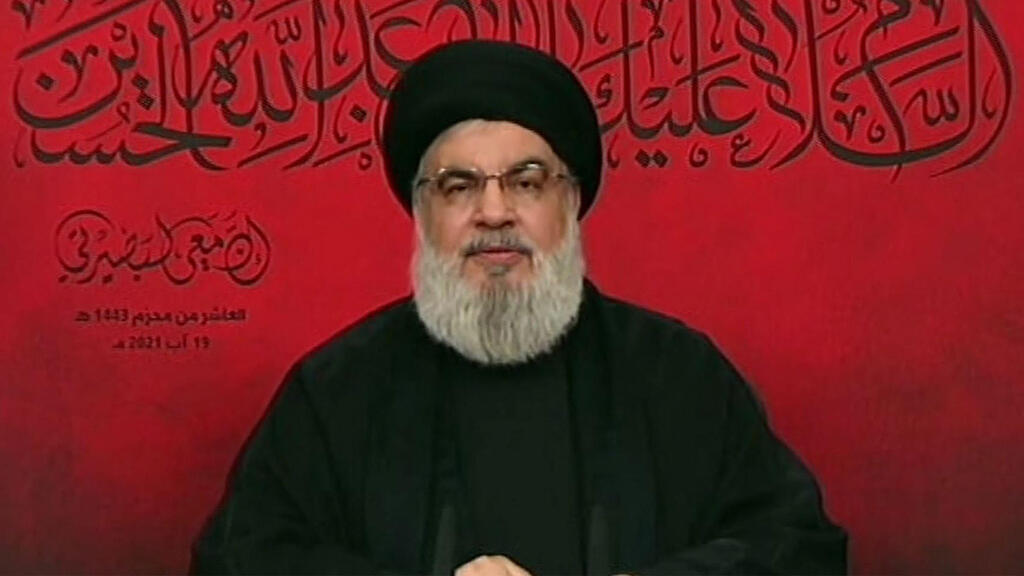
Decided to eliminate Hezbollah leader Hassan Nasrallah
(Photo: AFP)
In this case, those decisions do not concern his policies toward Hamas before October 7, or even the order to launch the war in Gaza. Instead, they focus on the increasingly volatile northern border: Should Israel open another front in Lebanon?
The prime minister decides to absorb Hezbollah's attacks while preparing for a military offensive incorporating the pager operation at an unexpected moment.
"This is the most important decision since the beginning of the war," Amidror declares.
It is worth noting that the Supreme Court recently permitted publication of the fact that his son, Lt. Col. Aryeh Amidror, served as the Gaza Division's intelligence officer at the time of the October 7 massacre.
And so, for nearly a year, Hezbollah bombards northern Israel on a daily basis, forcing tens of thousands of residents to leave the Galilee. Public criticism of the IDF intensifies, and its commanders are accused of lacking initiative and failing to respond.
Gordin reveals that special forces were sent on targeted missions behind enemy lines, but those operations could not be publicly discussed for fear of triggering an all-out war in the north.
In this chess match between Netanyahu and the man portrayed as his personal adversary, Nasrallah, the film barely pauses to consider the heavy price paid by northern residents.
The pressure grows following the shelling of a soccer field in Majdal Shams that killed 12 children. But, according to the documentary, Netanyahu withstands that pressure and calmly waits for the right moment to activate the pagers, followed by a military ground operation.
"Others said, 'It's a tactical toy,' and I said, 'It's not a tactical toy,'" Netanyahu recalls. "This had never been done in history."
Barnea agrees: "It's a game changer, and the prime minister really understood the potential."
Ultimately, Netanyahu gives the order to activate the pagers immediately, earlier than planned and without coordinating the operation with the military plan to capture southern Lebanon, after learning, belatedly according to his account, that the plot might have been exposed.
At 3:30 p.m. on September 17, everyone involved holds their breath. Shortly afterward, the pagers explode in Hezbollah operatives' hands, causing severe injuries and deaths. A day later, the booby-trapped walkie-talkies that had been gathering dust in storage are brought into use as alternative communications devices and explode as well.
The first phase is hailed as an enormous, unprecedented success. But Netanyahu says he cannot savor the achievement because even more difficult decisions lie ahead.
At this point, the chapter devoted to the pager operation, ostensibly the reason we are watching, comes to an end. The film, however, does not. Instead, it transforms into a political thriller starring Netanyahu alone, as he faces the decision of whether to approve Nasrallah's assassination.
Intelligence gathered by Mossad agents in Beirut points to a one-time opportunity to strike the Hezbollah leader. Netanyahu describes how others tried to persuade him not to proceed. "There is disagreement in the Cabinet, and I ask, 'What are your doubts?' And the answer was, 'A full-scale Iranian attack with ballistic missiles against our cities.' Maybe an all-out war with Iran. And my answer was, 'We are actually at war with Iran. That is essentially what is happening when we are at war with Iran and its six proxies,'" Netanyahu recalls.
The prime minister was scheduled to fly to New York for the United Nations summit. "I took the defense minister and the chief of staff into a side room and told them I understood that we needed to think about it seriously, so I would fly to the UN and reflect on it.
"After sleeping for two hours during the flight, I asked my military secretary to arrange a secure line and told the security chiefs, 'That's it, we're taking him out.' Then I spent the night writing a speech, and in the morning I went to the UN."
According to Netanyahu's version, he effectively set the assassination of Nasrallah in motion while clearing away the obstacles placed in his path by his hesitant partners in government and the defense establishment, including Defense Minister Gallant and IDF Chief of Staff Herzi Halevi.
Documentary, promotional film or election campaign ad?
Whoever is behind the mysterious Aveiled Productions, and whatever interests motivated the production, "Paging Hezbollah" also appears to function effectively as a film that enhances the prime minister's image ahead of the Israeli elections.
Folk is associated with conservative political filmmaking and was selected to direct the project alongside talent agent Kirby Williamson, who collaborated with him as a producer on his two previous projects under the auspices of the Daily Wire, the news outlet founded by Ben Shapiro, which has extensively covered the new film.
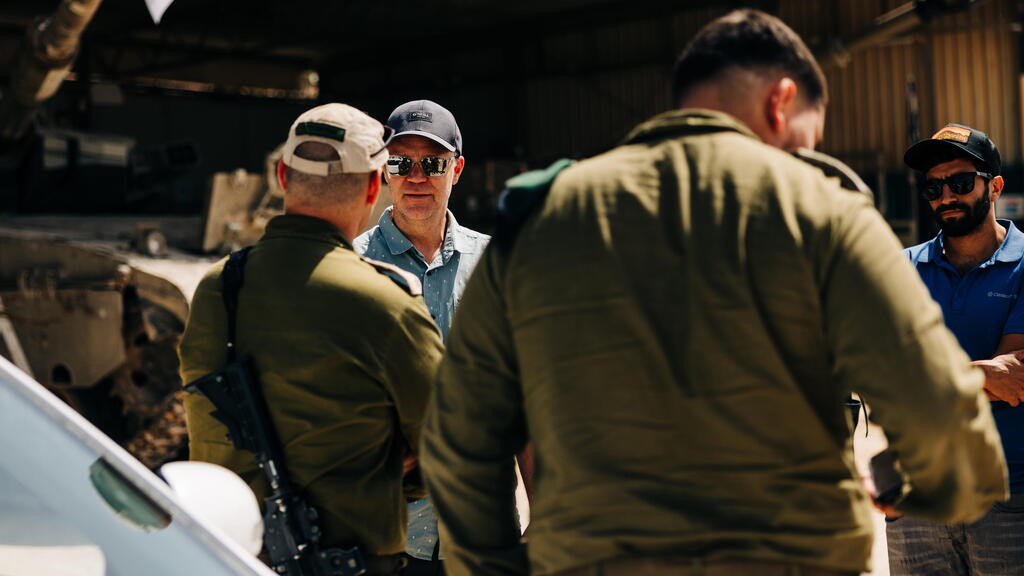
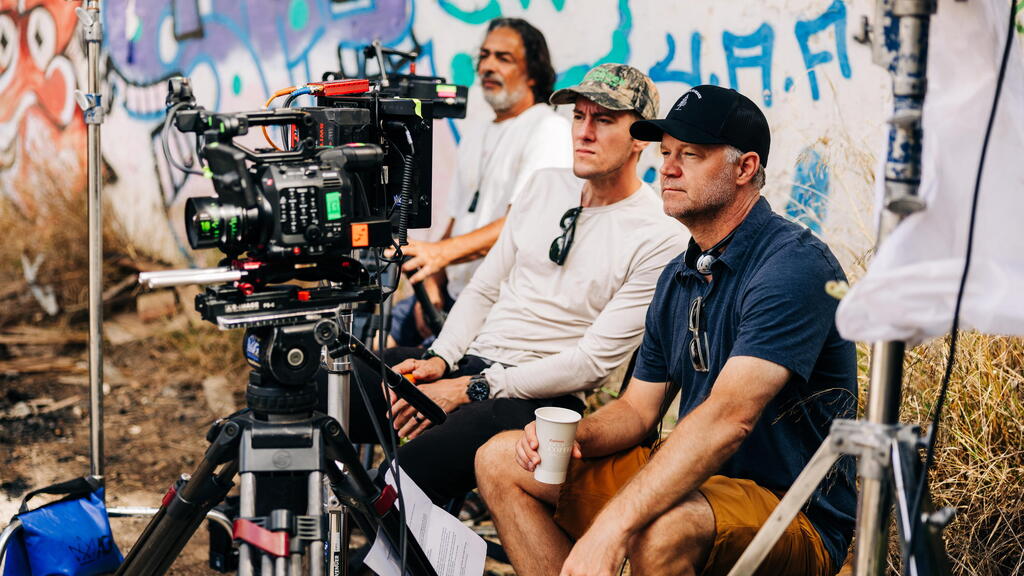
Justin Folk during filming of 'Paging Hezbollah'
(Photo: Public Relations)
The documentary will be distributed independently by Aveiled Productions, with support from Hammond Entertainment, a company owned by businessman Chris Hammond. The firm specializes in distributing conservative and Christian dramas and has taken responsibility for bringing the film to American audiences.
Beyond the questions surrounding the secrecy of its production and the timing of its release, "Paging Hezbollah" provides Netanyahu with an effective defense of his actions on the international stage.
As is well known, the Israeli prime minister is currently the subject of an arrest warrant issued by the International Criminal Court on suspicion of war crimes and crimes against humanity. The cinematic platform given to Netanyahu allows him to present himself to viewers in the United States and around the world as a leader who demonstrates not only strength and determination, but also compassion and consideration for civilians.
In his on-camera interview, Netanyahu says he ordered the IDF General Staff to prepare an operation to take control of southern Lebanon, building on the momentum of the pager operation and Nasrallah's assassination to restore security to northern Israel.
Although IDF raids uncovered large quantities of weapons in homes belonging to local residents, Netanyahu recounts how he instructed commanders to do everything possible to avoid harming civilians.
"There was a problem because, under the circumstances, the operation was launched a month too early, and the military still didn't have an attack plan. So I asked them, 'Prepare a plan for me,'" he recalls. "The most important thing I'm asking you to do is come up with a plan to move Lebanese residents out of their homes."
Intelligence expert Sarit Zehavi reinforces this version of events, arguing that everything was carried out in accordance with international law.
The documentary concludes by further strengthening Netanyahu's image, without undermining his portrayal as a powerful leader in Israeli domestic politics. This is a tension the filmmakers attempt to resolve delicately through scripted scenes featuring actors.
In one scene, a Hezbollah operative panics and unplugs the television, landline telephone and even the microwave, fearing another Mossad operation, while his wife and children look on in astonishment. In another, a family watches Netanyahu deliver a televised address warning civilians of the danger they face.
"The war is not against you. It is against Hezbollah. For a long time, Hezbollah has used you as human shields," he says as they listen intently. "The IDF has warned you to flee the danger. I urge you to take that warning seriously. Don't let Hezbollah endanger your lives and the lives of your loved ones. Don't let Hezbollah endanger Lebanon."
At least according to the documentary, Netanyahu and his policies not only saved Israel from danger but also helped bring about the fall of the Assad regime in Syria and peace talks with Lebanon, paving the way for a better future for the people of the region and the entire world.
A "New Middle East," as Shimon Peres once envisioned. Except that in the film's version, it is Netanyahu who is now making that vision a reality through his confident, determined and compassionate leadership.
Now we can understand why Netanyahu prefers not to have stenographers document his meetings in real time. After all, why spoil a good story like "Paging Hezbollah" with spoilers from the meeting rooms?