

Today, Sept. 15, marks five years since the Abraham Accords – Israel’s most impressive diplomatic achievement in decades. The agreements with the United Arab Emirates, Bahrain, Morocco and Sudan did more than establish political and economic ties; they also crossed social and cultural boundaries for the first time. Hundreds of thousands of Israelis traveled to the Gulf, built business partnerships and discovered a new Arab world – sometimes warm and welcoming, sometimes simply ordinary, but above all, normal.
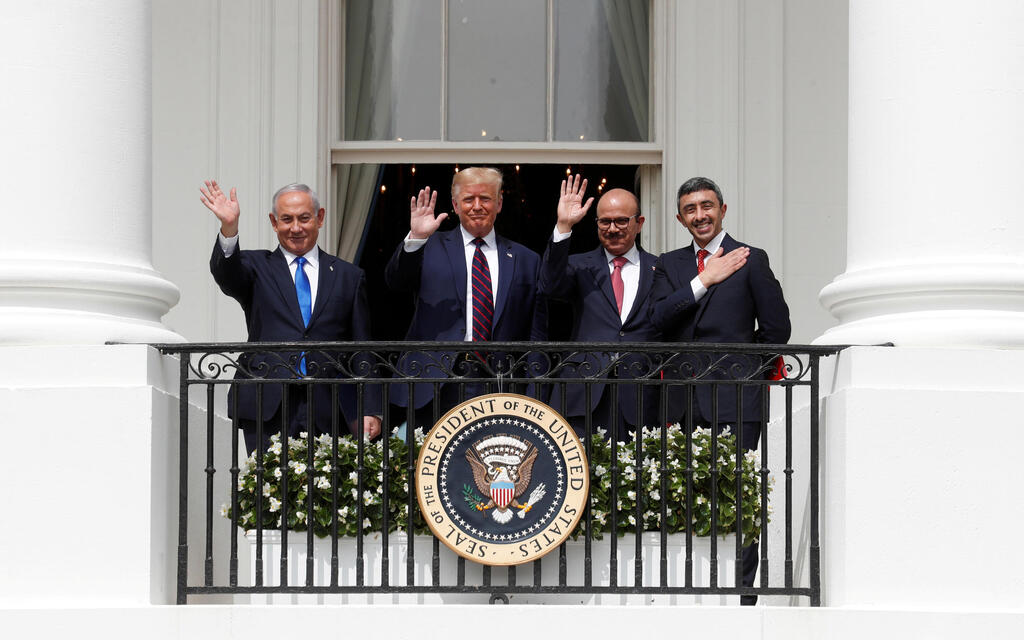
On Sept. 15, 2020, President Donald Trump, Prime Minister Benjamin Netanyahu and the foreign ministers of Bahrain and the UAE signed the accords at the White House in Washington.
Yet today, Qatar is expected to host an Arab summit discussing boycott measures against Israel – a bitter irony. The assassination attempt in Doha against Hamas's senior leadership was not an “operational success” but rather a move symbolizing a strategic shift in Israel’s policy toward Qatar. The country presents itself as a mediator but in practice acts as a wolf in sheep’s clothing. Qatar repeatedly pushes the narrative that Israel deliberately sabotages hostage deals, while avoiding use of the real leverage it holds. It has no interest in Hamas giving up control of Gaza, even if it claims otherwise. To understand its true stance, one need only look at Al Jazeera, the main channel through which Qatar shapes public opinion. A shift in the network’s tone toward Hamas could immediately weaken the group’s legitimacy, but Qatar chooses not to do so.
A race to the bottom – at home and abroad
The irony is twofold: The accords, meant to bring regional stability, are being undermined by a wave of populism occurring simultaneously in Israel and the West. These are not separate processes; they feed one another.
In August, for example, Netanyahu said in an interview with i24News that he “feels connected to the vision of the Promised Land and Greater Israel.” While most Israelis viewed the remark as symbolic, it played directly into the hands of Israel’s adversaries. Turkish President Recep Tayyip Erdogan, who promotes his own neo-Ottoman vision, presented the comment as proof that Israel actively pursues the idea of “Greater Israel.” Anti-Israel propaganda quickly seized on the quote, turning it into an effective tool, linking it to Israeli policies on the ground and amplifying it across the Arab world. The uproar was so great that Netanyahu was forced weeks later to issue a formal clarification that Israel has no territorial claims against its neighbors.
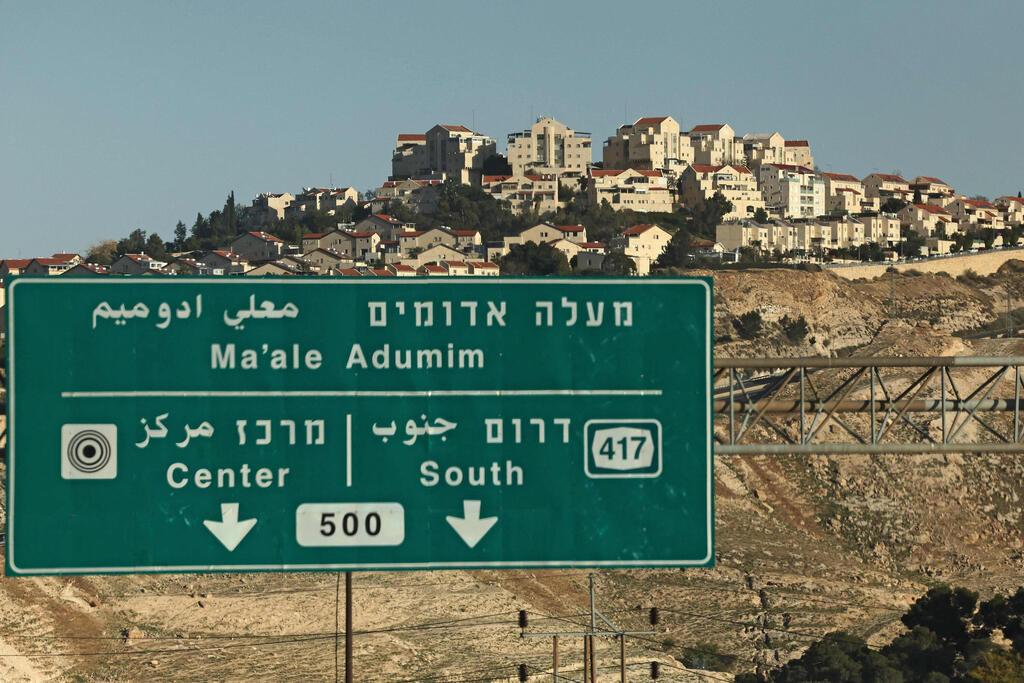
(Photo: AHMAD GHARABLI / AFP)
As the accords turn five, the challenge is not only to return to diplomacy but also to act on the level of public perception, to reduce risks and limit damage. The future of the accords – and perhaps the future of Middle East stability – depends on it.
Meanwhile, Western leaders are issuing their own populist declarations. French President Emmanuel Macron threatened to push for recognition of a Palestinian state at the United Nations. Spanish Prime Minister Pedro Sánchez went even further, saying that “if he had nuclear weapons, he would stop Israel.” Such remarks may aim to score points domestically but in practice they fuel anti-Israel propaganda, strengthen the narrative of Israel’s enemies and further destabilize the accords.
This creates an international race to the bottom: every populist statement on one side feeds extremism on the other. On social media, provocative voices gain the most traction. The real cost is Israel’s weakened position and direct harm to the Abraham Accords.
The breaking point – annexation
It is important to remember that one condition for normalization with the UAE was freezing annexation plans. For that reason, any reference to sovereignty or “Greater Israel” becomes a dangerous vulnerability. Even if not official policy, talk of annexation is seen across the Arab world as a real threat that could make the accords more fragile than ever. A full rupture may not be imminent, but this is the most sensitive moment since the accords were signed.
Where do we go from here?
The Abraham Accords are not just another agreement; they are a breakthrough that could have served as a model for regional stability. But they are not immune to populism, both local and international, that feeds on every word spoken. As a democracy, Israel has a clear vulnerability: political free speech generates countless statements that end up as weapons in the hands of its enemies. For this reason, awareness of the importance of language, responsible communication and preserving proper channels with partners are essential.
 Shiri Fein-Grossman
On the fifth anniversary of the accords, our challenge is not only to return to diplomacy but also to act consciously on the level of perception, to reduce risks and minimize harm. The future of the accords – and perhaps the stability of the Middle East as a whole – depends on it.
Shiri Fein-Grossman, a former senior official at Israel’s National Security Council, is a member of Forum Dvorah, Israel’s leading nonpartisan network of women in foreign policy and national security.