

The framework agreement signed between Israel and Lebanon represents an extraordinary Israeli diplomatic achievement. For the first time, an Arab state has ratified an Israeli presence in its territory that is not time-limited and is entirely contingent on the Lebanese Army’s success in disarming Hezbollah.
Unfortunately, given the internal balance of power in Lebanon, the agreement is expected to remain without practical effect on the ground. Iran and Hezbollah will do everything in their power to undermine it, the organization will not be disarmed by the Lebanese Army and the new security zone will remain an active combat area for a long time.
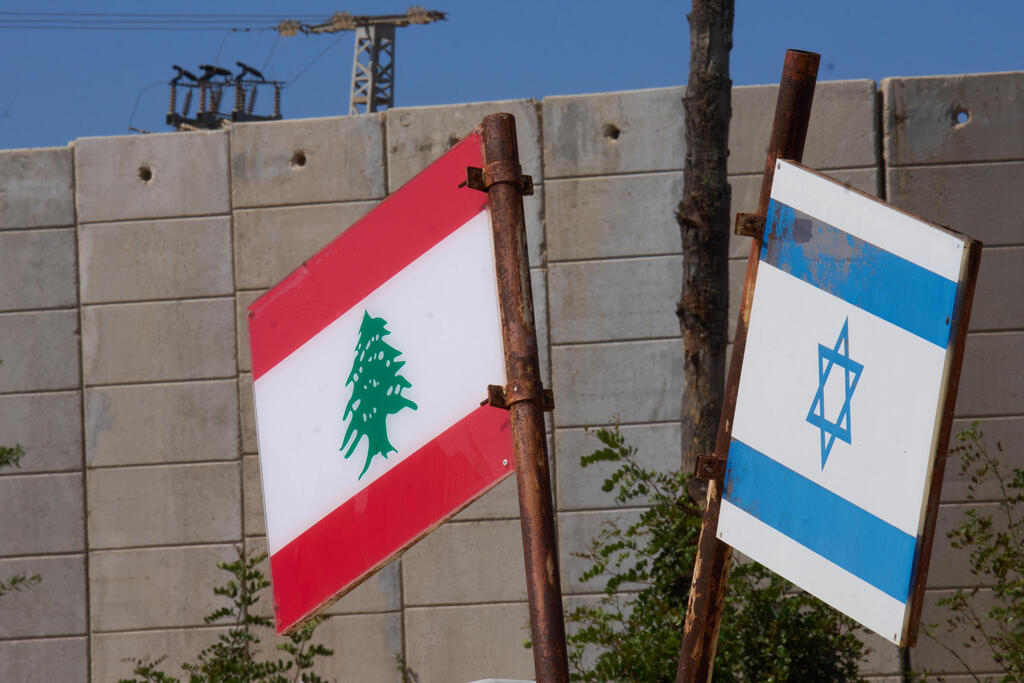
The agreement is expected to remain without practical effect on the ground
(Photo: AP Photo/Ariel Schalit)
The historic signing ceremony in Washington indeed marks a clear Israeli victory at the tactical level since it grants Israel almost everything without requiring it to pay a price in return. It also highlighted differences in approach within the U.S. administration.
While Vice President Vance led the signing of the memorandum of understanding with Iran, which was full of holes and violated almost daily, Secretary of State Rubio achieved a more impressive outcome, largely attributed to direct Israeli involvement in the negotiations and the heavy military pressure it is exerting on the ground. Some would also say the United States agreed to accept Israel’s maximum demands on Lebanon in order to compensate for American failure in the Iran agreement.
However, the path to implementing the agreement is still very long and highly uncertain. Despite Hezbollah being severely weakened in recent years and losing many of its military capabilities, it remains the strongest non-state armed actor on the ground and its capabilities currently appear to outweigh those of the Lebanese Army.
According to statements by the parties, much of the Lebanese Army’s ability to succeed in the pilot project and later expand it to additional areas depends on generous U.S. support in equipment, funding and training. However, the problem is not only the Lebanese Army’s lack of military capability. Estimates suggest that Shiites make up roughly 40 percent of the army’s personnel and even if not all of them are active Hezbollah supporters, the likelihood that they would turn their weapons against their own community is extremely low.
Moreover, the senior command and in particular the chief of staff Haykal, who was nearly declared persona non grata in Washington due to his ties with Hezbollah, believes the army should not confront Hezbollah by force and warns that doing so could lead to internal collapse and renewed civil war. These positions have led to rumors that President Aoun wants to dismiss Haykal to prevent any possibility of deliberate sabotage of the agreement, and in response Nabih Berri warned Aoun that such a move would cross a red line.
The response from the Loyalty to the Resistance Bloc (Amal and Hezbollah) was unambiguous. They rejected the agreement outright and senior figures, including Naim Qassem, Hassan Fadlallah and others, pledged it would remain a dead letter as a humiliating surrender agreement that contradicts the Islamabad Agreement and its central achievement, which conditioned a final deal with the United States on a complete Israeli withdrawal from Lebanon within 60 days.
On the military civilian level, it will be very easy for Hezbollah to derail the agreement before it takes shape. Its actions could include unarmed protests as already seen in Beirut, escalating military resistance against the IDF in the security zone, disrupting the pilot project, political assassinations if necessary and creating a political crisis with the five ministers of the Loyalty to the Resistance Bloc. Nabih Berri, the most powerful figure in Lebanon, has warned against civil war and called for restraint but at the same time fully rejected the agreement and described it as serving the enemy.
The organization set Beirut ablaze in 2008 over far less and this time its claims are also heard by many Lebanese, including those who despise it, since the agreement effectively entrenches the Israeli presence and does not resolve the issue of refugees or the rebuilding of destroyed villages in the south.
- At the same time, the strongest card lies on the international stage and is held by Iran. Even before the Israeli-Lebanese agreement was signed, Iranian leaders stated that no final deal with the United States would be signed without a full Israeli withdrawal and now even more so. In Iran, there is a sense that the United States has once again betrayed them, in their view, and that the Lebanese agreement is a clear violation of Article 1 of the deal between them. Accordingly and regardless of other disputed issues between the countries, Iran is expected to refuse to sign a final agreement without an Israeli withdrawal from the security zone. In doing so, it will attempt to turn the tables once again, drive a wedge between the United States and Israel, entrench the Islamabad Agreement as overriding the Israeli Lebanese agreement and portray Nawaf Salam and Aoun as “Zionists” and traitors without significance. In any case, Israel is expected to remain in the security zone for a very long time and it will remain an active combat arena, but this time with the authorization of the Lebanese government as long as it overcomes the challenges ahead.
Dr. Haim Golovenzits is a Middle East scholar and commentator on Middle East affairs.