

The day after the end of Ali Khamenei’s funeral procession finds the Islamic Republic at its most critical crossroads since its founding in 1979. The death of the leader who shaped the system for nearly four decades is not merely a routine change of personnel. It is a test of the resilience of the entire governing structure.
Behind the scenes, the regime must now maneuver between preserving the revolution’s religious legitimacy and confronting realities on the ground: a plunging economy, crumbling infrastructure, mounting public pressure, an increasingly fraught international arena and a memorandum of understanding hanging by a thread and subject to the whims of Donald Trump.
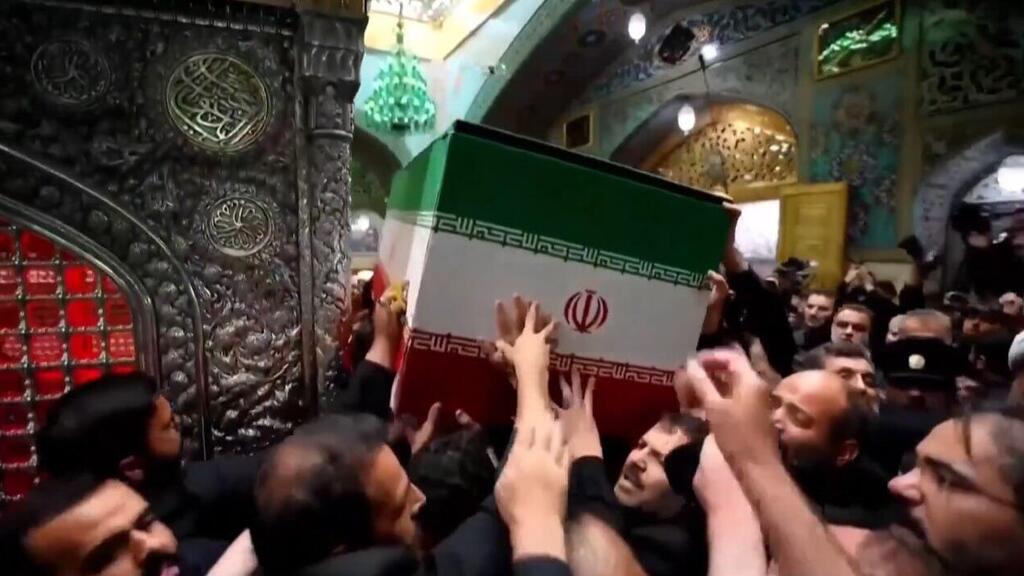
Khamenei’s funeral ceremony
(Photo: Reuters)
What will the day after look like? The government in Tehran now faces three main scenarios that could determine how the regime is run and shape its future.
The religious dynasty scenario: A myth of distance and sanctity
Those pulling the strings behind the scenes wanted to show both the Iranian public and the world that the regime remained strong and stable. That pressure led them to install Khamenei’s son, Mojtaba Khamenei, in an unprecedented, expedited process.
But the appointment immediately raises a question: How long can it last when it runs counter to the regime’s ideological foundations, particularly while the newly appointed successor has yet to appear in public?
For now, the governing strategy rests on a myth of distance and sanctity. The regime is trying to use Mojtaba’s physical absence from public view to build an aura around him as a supreme leader who stands above everyday politics.
The message to the public is clear: The leader is working for you from the shadows and managing the global struggle against the West, while the technocratic government must answer for the country’s economic and social problems.
But the risk is profound. Succession from father to son is widely seen in Iran as a complete betrayal of the principles of the 1979 revolution, which was launched to overthrow the shah and reject hereditary monarchy.
Such a move could ignite widespread public protests challenging the regime’s very legitimacy and require especially violent and aggressive repression to preserve it.
The military option: An IRGC junta
The Islamic Revolutionary Guard Corps has long been more than a military force. It is an economic, political and technological power center that controls broad sections of the country and wields considerable influence beyond Iran’s borders.
The second scenario would mark the completion of an IRGC takeover of state institutions.
Under this scenario, the Guard could leave a cleric in the supreme leader’s office as a largely ceremonial figure. Alternatively, it could push through constitutional changes abolishing or reducing the institution of velayat-e faqih, or rule by the Islamic jurist, in favor of national security leadership.
In practice, Iran would become a semireligious military junta, replacing global Shiite ideology with militaristic Iranian nationalism and focusing almost exclusively on domestic stability, regime survival and management of the centralized economy.
Compromise and tactical reform: The pressure-valve model
President Masoud Pezeshkian and more pragmatic figures within the temporary succession council could try to promote a more moderate course to prevent a social explosion.
The strategy would involve a degree of tactical openness abroad, including attempts to renew diplomatic channels with the West in hopes of easing sanctions, while loosening some social restrictions at home, such as reducing enforcement of dress codes and internet controls.
The constraint is clear. The Islamic Republic’s history shows that its conservative and security establishment views any compromise as a sign of weakness.
Such openness could therefore trigger bloody internal power struggles between pragmatists and the ultraconservative camp. Rising international tensions and the latest exchanges of fire have also done little to ease domestic suspicions about Western intentions regarding Iran’s future.
A gamble over the regime’s survival
The government in Tehran is now gambling with its survival, but the ambiguity surrounding Mojtaba is only a temporary bandage over an existential wound.
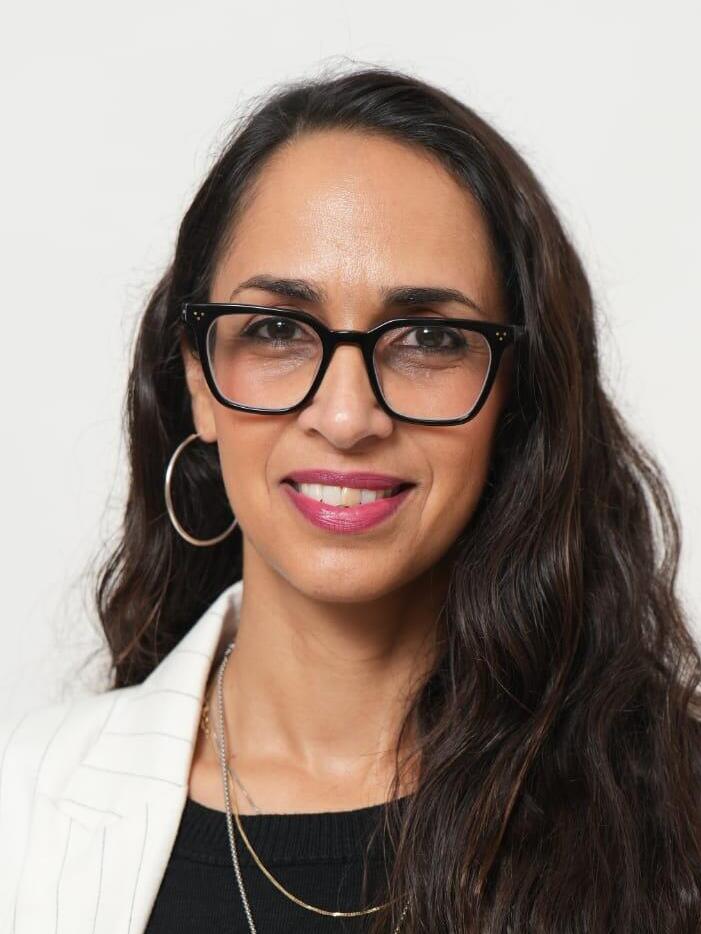 Dana Sameah Photo: Yakir Assido
A renewed external attack, which I believe is unavoidable, would leave the regime little room to maneuver. It would force the government to drop its masks and decide whether Iran is moving toward an overt military dictatorship that would destroy what remains of its religious legitimacy, or toward a direct, violent and unavoidable confrontation with an Iranian public waiting for the moment when the new king is exposed.
Dana Sameah is an independent researcher, commentator and lecturer specializing in Iranian society and civil protest movements from the revolution to the present day.