


The post-1945 international order is witnessing its most severe existential crisis since the fall of the Berlin Wall. As global leaders gather for the 2026 World Economic Forum in Davos, the conversation has moved away from traditional multilateralism toward a disruptive, transactional model of global governance led by the United States.
President Donald Trump's "Board of Peace" is no longer just a proposal for Gaza; it has become a functional alternative to the United Nations Security Council, effectively creating what diplomats have dubbed a "Trump United Nations." This new mechanism, chaired by Trump, seeks to replace the bureaucratic inertia of the United Nations with a structure that prioritizes pragmatic results over ritualistic denunciations.
Gallery
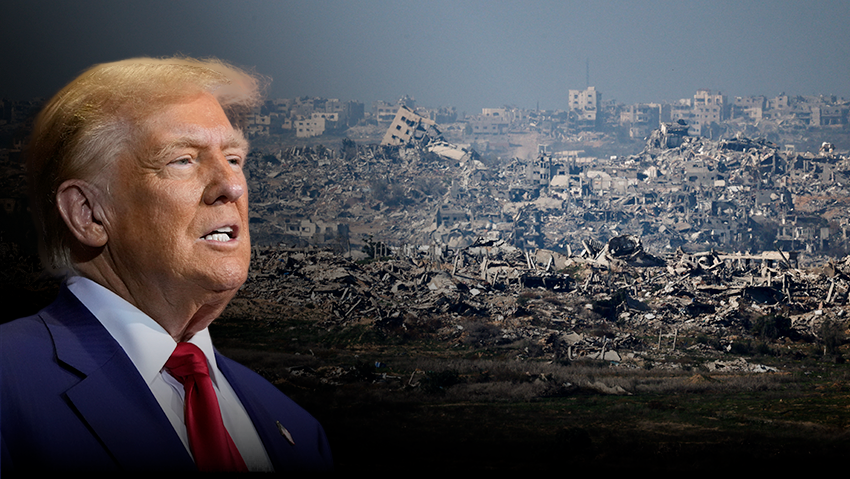
President Donald Trump's "Board of Peace" is no longer just a proposal for Gaza; it has become a functional alternative to the United Nation
(Photos: Alex Brandon/AP, Amir Cohen/Reuters)
The move is a direct response to the perceived failure of the United Nations Security Council to address modern security crises, particularly the ideological stalemate that has defined the Israel-Palestine conflict for generations. Critics of the traditional international model point to the persistent paralysis caused by the veto power of Russia and China, both of whom notably abstained from Resolution 2803 in late 2025. In contrast, the Board of Peace operates on a three-tier executive model designed to bypass the need for broad consensus in favor of a coalition that is willing to pay for its participation.
Perhaps the most radical departure from international norms is the monetization of permanent membership within this framework. A United States official confirmed that a $1 billion cash contribution to the Gaza reconstruction fund secures a permanent seat on the Board of Peace, a requirement designed to ensure that participating nations have significant skin in the game. This turns international diplomacy into a high-stakes investment, where influence is secured through reconstruction capital rather than diplomatic tenure. While countries like Hungary and Canada have signaled a willingness to join, either in principle or through formal acceptance, the move has sparked a firestorm of criticism in Western Europe.
France, in particular, has held off on accepting its invitation, expressing grave concerns that the body will systematically undermine the United Nations Charter and return the world to a colonial era of governance. European diplomats have criticized the charter for lacking Palestinian political representation at the executive level, viewing the structure as an American-driven invention that imposes solutions rather than mediating them. However, proponents of this new model argue that traditional enforcement frameworks have failed against ideologically aligned threats, and that a more nimble body is required to ensure that Gaza transitions from conflict to development.
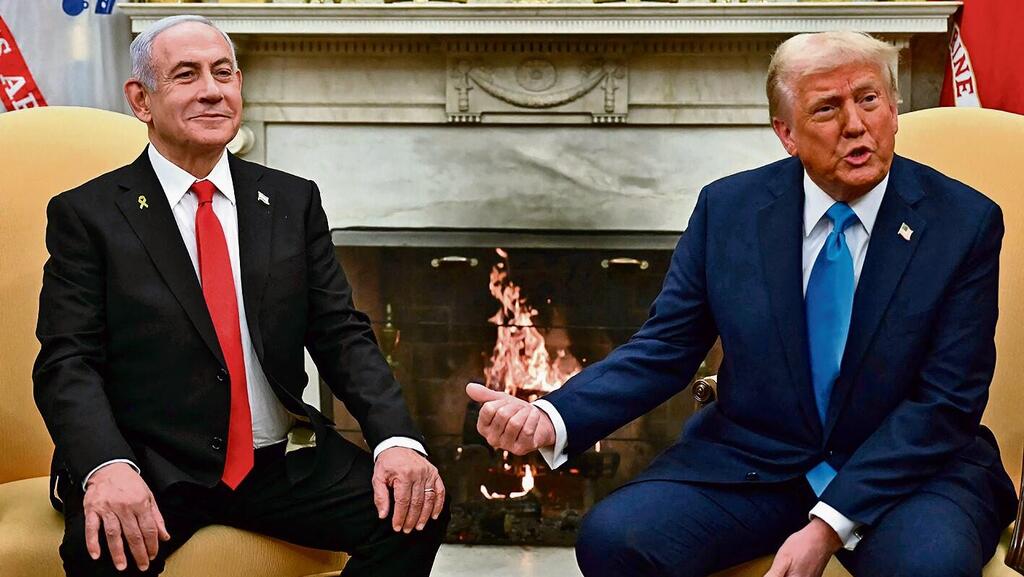
Prime Minister Benjamin Netanyahu and President Donald Trump at the White House in June
(Photo: Andrew Caballero-Reynolds, AFP)
The Board of Peace faces equally fierce opposition from within the Israeli government. Far-right Finance Minister Bezalel Smotrich has dismissed the plan as a raw deal, asserting that Gaza's future is a matter of Israeli sovereignty that should be managed through a military administration rather than an international board. Smotrich has even suggested renewing a full-scale offensive if Hamas does not accept a short ultimatum for disarmament and exile. Prime Minister Benjamin Netanyahu has also voiced dissatisfaction, stating that the composition of the executive board—which includes regional actors like Turkey and Qatar—was not coordinated with his government and contradicts Israeli security policy.
Despite this friction, the operational machinery of the Board is already moving into the second phase of its comprehensive plan. This phase includes the deployment of an International Stabilization Force led by Major General Jasper Jeffers and the empowerment of a 15-member Palestinian technocratic body known as the National Committee for the Administration of Gaza, chaired by Dr. Ali Shaath. The Board is tasked with the responsibility of disarming Hamas and rebuilding civil institutions, a mission that the international community has historically been unable to execute. By integrating regional actors into the Gaza Executive Board, the administration seeks to force these nations to finance a technocracy that will stabilize the region.
As the Board of Peace expands its mandate beyond Gaza to address other conflicts as they arise, the international community is forced to confront a new reality. The era of the world forum is being superseded by the world boardroom, where security is a commodity and peace is a project managed by a select group of executives and investors.
While the diplomatic old guard in Paris and New York warns of dark times and the erosion of the rules-based order, the rapid consolidation of the Board suggests that the world’s most intractable conflicts may finally be subject to a different kind of pressure: the cold, transactional logic of a new era of global leadership.
Amine Ayoub, a fellow at the Middle East Forum, is a policy analyst and writer based in Morocco. Follow him on X: @amineayoubx
First published: 09:11, 01.20.26