

As the world speculates about the fate of Iran’s regime, Saudi Crown Prince Mohammed bin Salman (MBS) is already executing his next move. Riyadh sees a regional vacuum emerging and aims to capitalize on Tehran’s internal unrest to cement its hegemonic position in the Middle East.
A fierce online campaign targeting the UAE, steps toward forming a security alliance with Turkey and Pakistan, and, most notably, Saudi airstrikes in southern Yemen and the violent dismantling of a separatist regime — all mark a strategic shift. These are necessary steps for the crown prince to fulfill what he views as the mission of his life: the most extreme and far-reaching political reform of the 21st century, a vision now colliding with economic and geopolitical reality.
To grasp the weight of this moment, one must return to the beginning. MBS didn’t merely “inherit” power — he was handed it while his father was still alive, in order to implement an ambitious political vision of historic proportions. The defining moment came on that infamous night at the Ritz-Carlton in Riyadh, when he detained the kingdom’s wealthiest elites, ministers, and even his own relatives. It was a calculated and brutal act designed to break the old economic guard and signal to the world that the traditional power centers were gone. There was now one man in charge, accountable to no one.
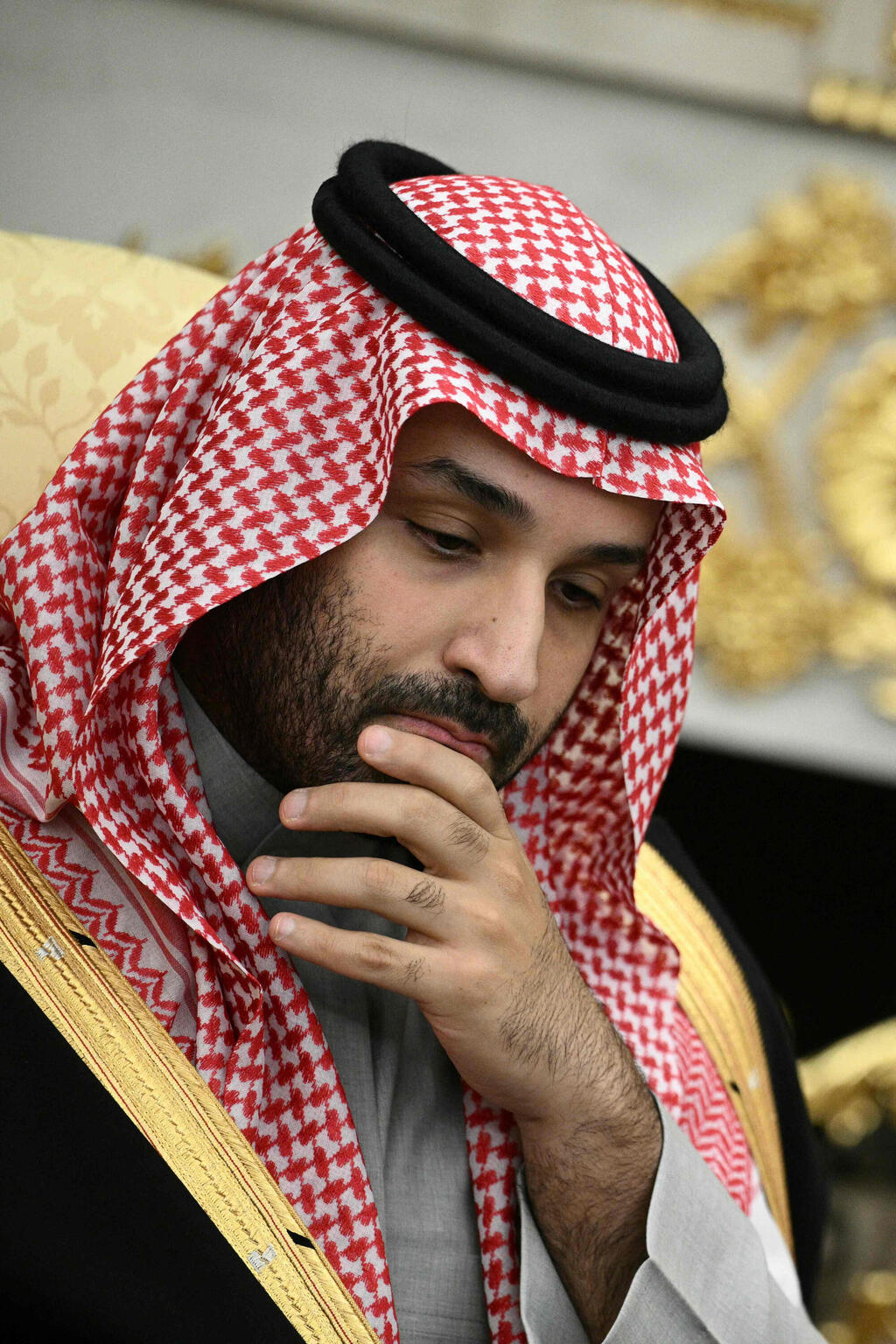
Saudi Crown Prince Mohammed Bin Salman
(Photo: Brendan Smialowski / AFP)
From there, MBS launched a total war against the kingdom’s own DNA: against the Wahhabi religious establishment that had long held the country in ideological stasis, against the marginalization of women, and against the cheap oil dependency that had crippled national productivity for a century. His drive for radical change stems from the convergence of two looming threats: the global transition to alternative energy, which could undermine Saudi Arabia’s oil-based economy, and a ticking demographic clock — around 63% of Saudis are under 30. To secure their future, MBS has shattered long-standing norms, boosting women’s participation in the workforce from 17% in 2017 to around 36% by the end of 2025.
From the start, the crown prince understood that achieving his vision would mean confronting entrenched power centers and making sharp pivots. His inexperience and overconfidence led to the catastrophic mistake of ordering the murder of Jamal Khashoggi. The cost was swift and severe: he was recast from “young reformer” to “pariah,” as President Joe Biden labeled him, and doors in Washington slammed shut.
But the more painful lesson came from the Gulf. His perceived weakness didn’t deter Tehran’s hardliners — it emboldened them. In 2019, sensing his isolation, Iran launched cruise missiles and drones deep into the kingdom, striking Aramco facilities — the lifeblood of Saudi Arabia. The world remained silent. That moment reshaped MBS’s worldview: the West would not come to his rescue.
He quickly recalibrated. Out of this crisis — diplomatic exile in Washington and paralyzing fear of Tehran — the “Israeli turn” was born. MBS didn’t become a Zionist. He was seeking an American defense pact and understood that the path to securing it ran through normalization with Jerusalem. Israel was to be the protective vest that would bring him back into the West’s embrace and shield him from Iran. The gamble paid off: Trump entered the White House and gave MBS the backing he needed, including support for strikes on Iran and a defense partnership.
But promises are one thing; reality is another. In recent months, MBS has faced a second, equally painful collision with reality — this time in the economic arena. The assumption that the kingdom’s resources are limitless is unraveling. Aramco, still the primary economic engine, reported $121 billion in profits in 2023 — a 25% drop from its peak. At the same time, the budget deficit is soaring into the tens of billions, and the world is not rushing to invest: Saudi Arabia’s annual foreign direct investment (FDI) target of $100 billion remains far from reach, hovering between just $12 and $20 billion. Meanwhile, Trump expects MBS to invest hundreds of billions — in the U.S.
In Israeli public discourse, Saudi Arabia is often viewed through a narrow lens: normalization or not. But Israel is not the center of the story — Riyadh is. The crown prince is once again confronting reality and recognizing the magnitude of the challenge. Along the way, he will need to recalculate again and again in order to survive the revolution he himself unleashed.
Therefore, Israel’s strategic anchor should lie in the second ring — not in hesitant Riyadh, but in rising New Delhi. Regional thinking must shift eastward, toward a partner where interests are more stable and the economy is not subject to the whims of a prince trying to rewrite history in real time.