


This is not the first crisis between an Israeli government and a U.S. administration. We have been here before. In 1975, it was the “reassessment,” following the administration’s anger over the failure of Israel–Egypt negotiations. Under President Gerald Ford’s instructions, the United States halted economic aid and froze arms shipments. There have been many other crises over the decades. One of the most severe came in 2015, amid the confrontation over the Iranian nuclear issue and Prime Minister Netanyahu’s insistence on addressing Congress — against the wishes of President Obama and Democratic Party officials.
But the context then was entirely different. In 1975, 76 senators signed a letter supporting Israel, rejecting accusations that it was responsible for the failure of negotiations, and demanding the renewal of security and diplomatic aid. The pressure worked. The “reassessment” ended. Joe Biden was among the signatories. In 2015 as well, 83 senators signed a letter to Obama stating: “We are prepared to support a long-term agreement that would significantly increase aid and help provide Israel with the resources it needs to defend itself and maintain its qualitative military edge.” Strong words.
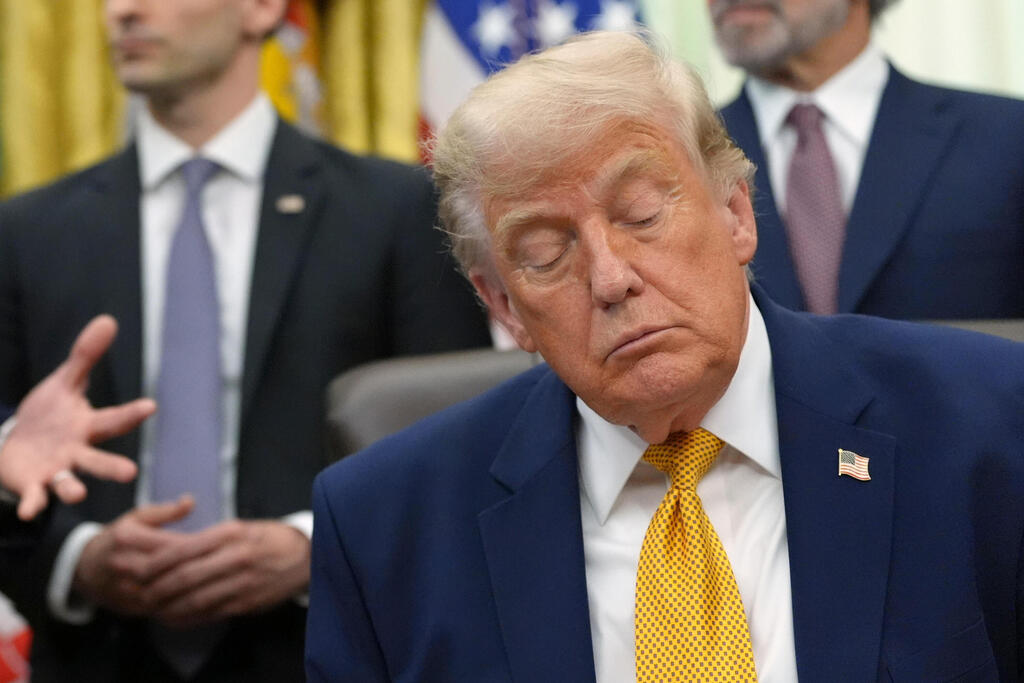
Since Trump’s reversal, Israel is in a different position. There is no one left to defend Israel in Congress. There will be no more letters. There is no favorable public opinion
(Photo: AP Photo/Jacquelyn Martin)
The implication is often that if we have been through such crises before, there is no reason for alarm—we will get through this one as well, backed by strong congressional support. But that is not the case. We are in a completely different reality. This time, the situation is fundamentally different because in all previous crises Israel still enjoyed favorable American public opinion. Congressional support was bipartisan, a direct reflection of that public sentiment. That is no longer the case. In the past decade, public opinion—shaped in part by massive Qatari investment and by a progressive “woke” current that has taken hold in academia—has shifted dramatically. Since October 7, except for brief periods, Israel is no longer the public’s favorite. The collapse is already underway. We are in the midst of a transformation. What was once a U.S. administration versus Israel clash, offset by public support for Israel, has become the opposite: a pro-Israel administration facing hostile public opinion.
But even that was true only until two weeks ago. Since Trump’s reversal, Israel is in a different position. There is no one left to defend Israel in Congress. There will be no more letters. There is no favorable public opinion. True, Trump is currently facing sharp criticism over what is seen as his “capitulation agreement” with Iran. But that criticism does not help Israel. It is rooted in the question of why go to war at all if the outcome is capitulation. Much of it, across the board, blames Netanyahu for dragging Trump into war.
The problem is not merely a critical or even hostile administration. The deeper issue is the alarming shift in Israel’s standing. A self-preserving American politician will distance themselves from Israel. Association with AIPAC — which once signified support from the pro-Israel lobby—has become a liability, something to disavow, and at times even apologize for in retrospect. What was once a source of pride is now seen as a mark of shame.
We should not blame the Americans. Nor should we blame only Qatar or the progressive “woke” wave. And we should not default to calling it antisemitism—though antisemitism certainly exists. If we want change, and we must, we should look inward. We are at fault.
When ministers speak about erasing Palestinian villages, they undermine U.S. support for Israel. When Jewish extremists attack innocent Palestinian farmers, they serve Israel’s enemies. When those attackers are rarely arrested and receive direct or indirect backing from government ministers, Americans—Jewish and non-Jewish alike—choose to distance themselves. When there is talk of settlement in Gaza or southern Lebanon, they conclude Israel has lost its way. When a soldier damages a statue of Jesus, it no longer resembles the country they once supported. And when Israel continues to establish numerous outposts, Americans no longer see it as the peace-seeking state they once backed.
At times, there are attempts to explain: these are fringe elements, this is not Israel. Even settlers distance themselves from the hooligans. That once helped. Today, in a government where Ben Gvir and Smotrich are among the most dominant, vocal, and influential ministers, such explanations no longer hold. And when the prime minister is unable to distance himself from them, the damage only grows.
Israel does not have Qatar’s trillions. It also cannot effectively counter an academic and ideological current that portrays it as a colonial state. But Israel can change course — and it must. This is not only a moral obligation, though it is important; it is a national and Zionist imperative. With all due respect to “hasbara,” and there is due respect, policy comes first. A policy that restores Israel’s place among the family of nations. A policy that allows us to say, at least to those willing to listen, that the alliance is based not only on interests but also on shared values. There is no real chance of this under a Ben Gvir–Smotrich–Goldknopf government. There is a chance — though a difficult one — under a different national and Zionist government.