


On September 3, 2026, American Vice President JD Vance delivered what financial markets took as a reassuring speech Maritime oil transit through the Strait of Hormuz, he announced, had returned to pre-war baseline levels, with approximately 15 million barrels of crude flowing daily despite regional hostility. Global supply chains absorbed the shock of Iranian drone attacks, crude futures stabilized and high oil prices crashing Western economies were averted. Simultaneously, reports confirmed that Defense Secretary Pete Hegseth had officially extended force deployments for military operations against Iran through 2027.
To market analysts, this combination represented a triumph of calibrated superpower management. The United States contained a Persian Gulf conflict without triggering a global energy collapse. But seen from Israel, this outcome represents a dangerous strategic trap. The stabilization of global oil prices is not a victory for Israel; it is a catastrophic success. Price normalization deprives the United States and its allies of any urgent imperative to force a decisive conclusion against Iran. With energy markets quieted and Western voters unbothered at the fuel pump, the American administration can comfortably settle into an open-ended war of attrition. For global commodities traders, this is business as usual. For Israel, managed containment is a slow, systemic bleed.
Gallery
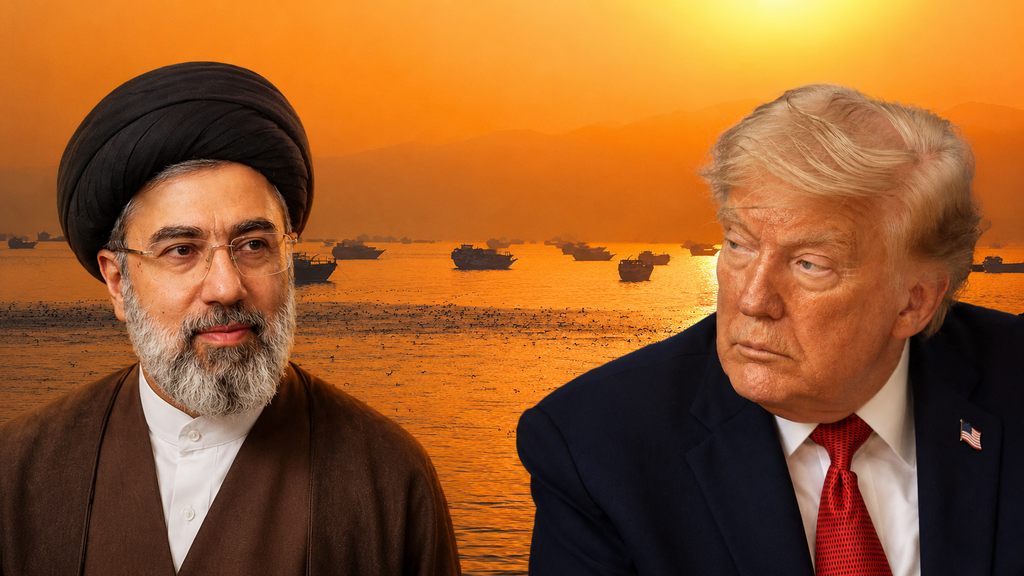
Mojtaba Khamenei, Donald Trump and the Strait of Hormuz
(Photo: Stringer/Reuters, Anna Moneymaker / GETTY IMAGES NORTH AMERICA / AFP)
The illusion of a controlled conflict is the result of deliberate political messaging in the United States. In late August and early September 2026, a public rift over actual human costs laid bare the official narrative dilemma. During a national television interview, Commerce Secretary Howard Lutnick characterized the conflict with Iran as a mere economic strangulation operation, claiming no Americans had been killed in direct action. Hours later, President Donald Trump clarified on social media, confirming that 18 American service members had died since the onset of major hostilities.
This messaging confusion stems from administrative renamings inside the Department of Defense. Combat operations under Operation Epic Fury, launched jointly by the United States and Israel on February 28, 2026, were declared concluded by Secretary of State Marco Rubio and Defense Secretary Hegseth on May 5. The campaign was quietly rebranded as Project Freedom and grouped under generic overseas operations in the region. When four American personnel were killed in July across Jordan and Iraq, casualty classifications were categorized under peripheral force protection mandates rather than direct combat. This bureaucratic recategorization allows the United States to reframe a major regional war as a routine maritime security patrol, creating a facade of manageable containment for a domestic electorate facing upcoming congressional elections.
When hostilities erupted across the Persian Gulf, initial military models predicted an immediate global shock. The Strait of Hormuz carries roughly twenty percent of global petroleum and traditional defense doctrine held that any sustained attempt by Iran to disrupt this maritime chokepoint would force Western powers into delivering a rapid military blow to reopen sea lanes. That assumption proved wrong. Financial markets and logistics networks did not collapse; they adapted.
This adaptability creates a dangerous double-edged sword. When oil prices spike wildly, Western politicians face immediate political crisis. Gasoline lines and runaway inflation force the American administration and European prime ministers to seek swift military resolutions or aggressive diplomatic interventions. But when markets adapt, urgency vanishes.
The crisis loses its political sting in the United States. Iranian aggression against international shipping has been transformed from an existential threat to the global economy into a routine cost of doing business. As long as global tankers keep moving, American leadership loses motivation to deal a definitive, regime-ending blow to Iran.
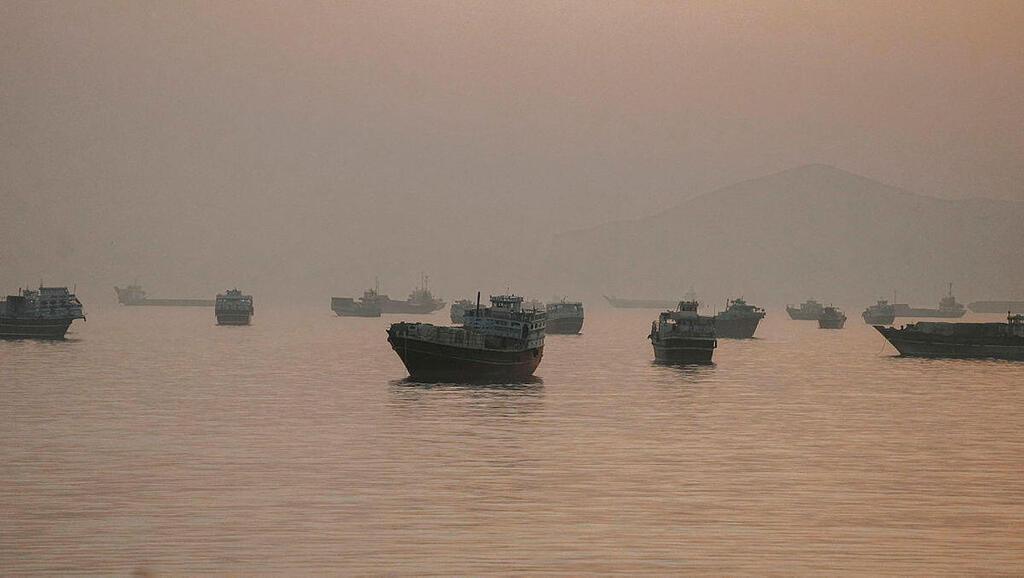
The Strait of Hormuz carries roughly twenty percent of global petroleum
(Photo: REUTERS/Stringer/File Photo)
This market resilience coincides with growing strategic friction inside the American national security establishment. The preference of the United States for an open-ended, low-simmer posture ahead of national elections has come into direct conflict with long-term global force commitments. Senior military commanders across European and Indo-Pacific theaters have raised sustained institutional concerns regarding global force posture degradation. Sustaining a forward deployment of over 50,000 American personnel, two carrier strike groups, multiple guided-missile destroyers and land-based fighter wings in the Middle East through 2027 exerts immense strain on global defense readiness.
The primary operational bottleneck is ammunition expenditure. High-rate consumption of advanced naval interceptors alongside Patriot air defense missiles severely depletes stockpiles earmarked for potential high-end conflict in East Asia. Naval ship maintenance schedules are accumulating backlogs across major shipyards, forcing extended deployments that strain hull life and crew readiness. Rather than confronting Iran with decisive military leverage, the current posture of the United States consumes high-tier strategic assets to maintain an open-ended defensive shield over Gulf sea lanes.
To be sure, Iran is far from immune to structural economic stress. The country operates under severe domestic vulnerabilities, including hyperinflation exceeding 40 percent, dramatic devaluation of the national currency, chronic electrical grid brownouts and underlying risk of public unrest driven by an economically suffocated population. Ongoing regional operations require constant financial capital at a time when Iranian domestic infrastructure is deteriorating rapidly.
However, a critical analytical distinction exists between economic hardship and political vulnerability. Over four decades of international isolation, Iran has perfected the mechanics of authoritarian survival. The ruling security apparatus maintains a monopoly on violence and controls gray-market financial networks. The regime excels at externalizing economic pain directly onto its civilian population while prioritizing resource allocation for its defense apparatus and proxy network.
By contrast, democratic societies like Israel operate under entirely different structural dynamics. The highly integrated, technology-driven economy of Israel absorbs war friction through transparent political systems, active public consensus and market sentiment. High-intensity reserve mobilizations withdraw skilled labor from key productive sectors, municipal budgets strain under civil defense requirements and continuous air defense expenditures accumulate daily.
While the authoritarian structure of Iran allows it to absorb domestic economic decay over extended horizons, the democratic social contract of Israel requires strategic clarity and temporal boundaries. A slow, grinding conflict of attrition plays directly to the structural strengths of an autocratic regime willing to impoverish its people to sustain its ideological objectives.
If Israel is to avoid being trapped in an indefinite war of attrition, it must replace its rejection of containment with a clear operational framework presented directly to the United States. Israeli strategy must center on three clear operational demands to force a rapid war-ending outcome. First, the United States and Israel must establish formal red lines triggering immediate retaliatory strikes against core regime infrastructure if Iran or its proxies maintain sustained fire against Israeli territory or commercial shipping.
Second, military operations must target critical economic engines funding Iranian power projection, specifically the primary crude export facilities at Kharg Island and subterranean nuclear enrichment infrastructure at Natanz and Fordow. While striking Kharg Island would trigger a sharp, temporary global oil price surge, Israeli strategic posture must explicitly accept this short-term market shock as a necessary tradeoff to sever the revenue stream of Iran and break the paralysis of Western containment. Third, military force must compel Iran into war-ending negotiations on Western and Israeli terms, enforcing total proxy disarmament along Israeli borders and verifiable dismantlement of missile production.
The normalization of oil flows through the Strait of Hormuz may look like a victory on global commodity markets, but for Israel, it is a warning. Israel cannot allow Western energy market resilience to dictate the timeline of a war impacting national survival. Israeli leadership must compel its allies to choose between decisive strategic resolution and an endless war of attrition.
Amine Ayoub, a fellow at the Middle East Forum, is a policy analyst and writer based in Morocco. Follow him on X: @amineayoubx