


When Vladimir Putin announced last week that Egypt's Dabaa Nuclear Power Plant could begin commissioning its first reactor unit as early as 2027, most looked at the story under energy infrastructure. They are making a category error. Dabaa is not primarily a power project. It is a strategic encirclement play, executed in slow motion, financed with Russian capital, and gift-wrapped in the language of peaceful civilian cooperation. Israel is not incidental to this picture. Israel is the point.
Egypt and Russia signed their nuclear cooperation agreement in 2015, the same year Russia intervened militarily in Syria and effectively ended Western pretensions of controlling the Middle East's security architecture. The terms of the Dabaa deal were deliberately structured to create permanent dependency. Russia's state nuclear corporation Rosatom is constructing four VVER-1200 reactors on Egypt's Mediterranean coast for $25 billion, financed through a soft Russian government loan that Cairo cannot easily escape.
Gallery
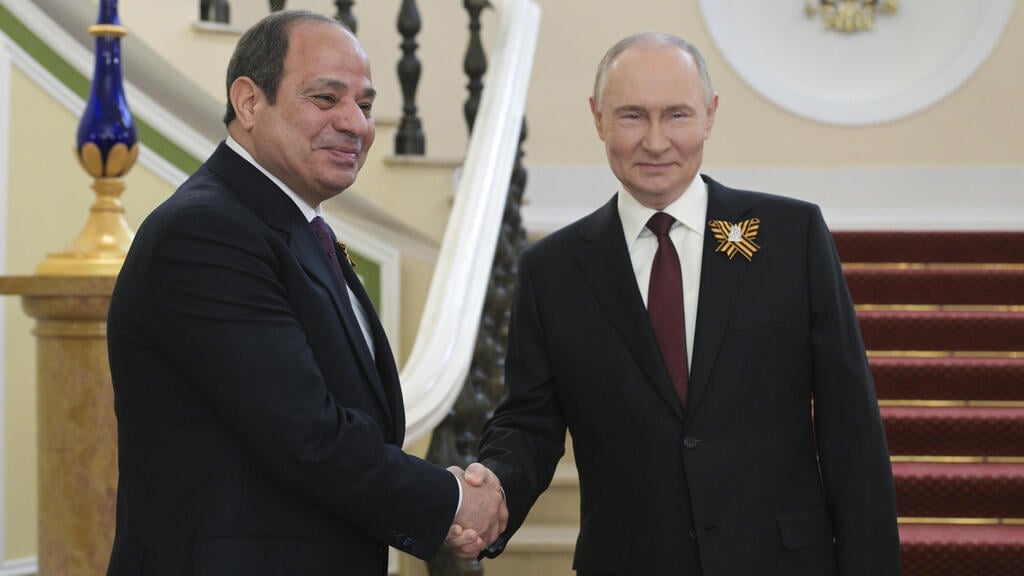
Egyptian President Abdel Fattah el-Sissi and Russian President Vladimir Putin in Moscow in 2025
(Photo: Alexey Nikolsky/Photo host agency RIA Novosti via AP)
But the loan is almost secondary to what follows construction: Russian fuel supply contracts, Russian-trained technicians, Russian waste reprocessing agreements, and Russian maintenance protocols will bind Cairo to Moscow for the entire operational lifetime of the facility. That lifetime could extend well into the twenty-second century. Egypt will not have simply purchased a nuclear plant. It will have purchased a permanent Russian strategic presence 30 minutes by air from the Israeli border.
The mechanism is neither unprecedented nor subtle. European gas consumers understood belatedly what infrastructure dependency does to sovereign foreign policy. The process at Dabaa is different in form but identical in logic. When Egyptian governments of the future face a choice between a policy that satisfies Moscow and a policy that aligns with Washington or Israel, four Russian-fueled reactors humming on the Mediterranean coast will be an unmistakable variable in that calculation.
The Egypt-Israel relationship, anchored by the 1979 Camp David Accords, has been a cornerstone of Israeli strategic planning for nearly five decades. Every Israeli defense budget, every military deployment framework, every contingency assessment run in the Kirya has incorporated a foundational assumption: the southern flank is quiet. That assumption does not require Egypt to be warmly disposed toward Israel. It requires Egyptian governments to make decisions that align, at minimum, with a broadly pro-Western orientation. Every percentage point of Egyptian strategic calculus that Moscow captures is a percentage point that the US and Israel lose. Russia has demonstrated, repeatedly and without apology, that it uses infrastructure dependency as a tool of coercive leverage. Israel cannot afford to learn this lesson on the same timeline as Europe.
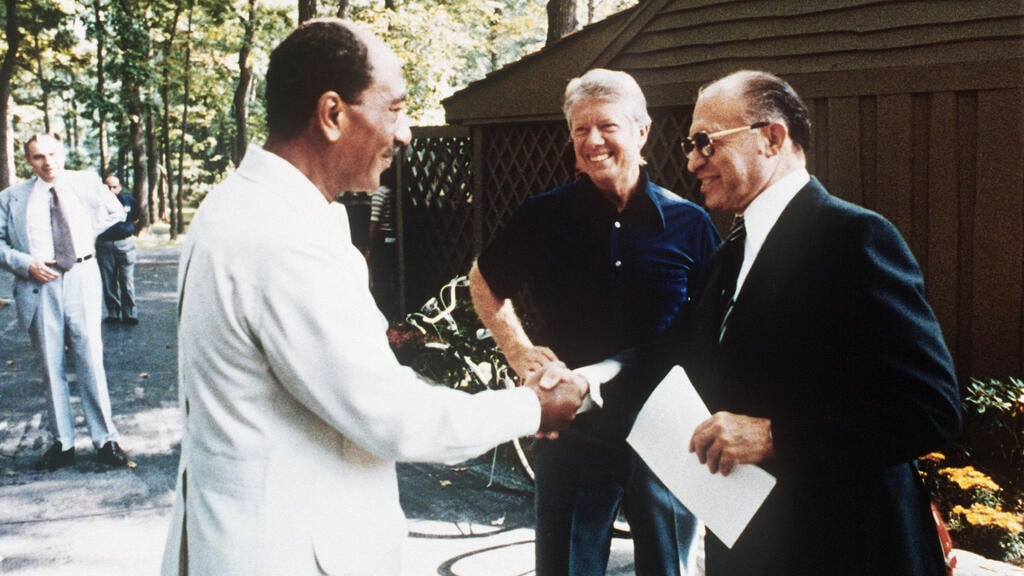
The Egypt-Israel relationship is anchored by the 1979 Camp David Accords
(Photo: AFP)
The Kremlin has understood the regional geometry of this for years. Putin is simultaneously the nuclear patron of both Iran and Egypt, the two most consequential states bracketing Israel's strategic environment. Rosatom built Bushehr in Iran. Rosatom is building Dabaa in Egypt. Moscow has quietly positioned itself as the indispensable nuclear interlocutor across what was once a regional divide. This is not commercial opportunism. It is a patient policy of structural penetration, and it has proceeded largely uncontested.
The timing of Putin's announcement sharpens the concern considerably. Putin made his Dabaa remarks at the same briefing in Saint Petersburg where he noted that he is actively consulting with Egyptian President Abdel Fattah el-Sisi on the Iranian nuclear conflict, describing their coordination as ongoing and substantial. The strategic geometry this creates deserves careful attention. The man building Egypt's nuclear future is simultaneously positioning himself as the essential backchannel in negotiations over Iran's nuclear future. Russia holds nuclear leverage over Cairo and is advising Cairo on Tehran at the same moment. Israel has no comparable structural lever in any part of this equation. The Abraham Accords were a genuine diplomatic achievement, but normalization agreements do not produce the kind of deep infrastructure dependency that rewires a country's long-term orientation. Rosatom does.
There is a commercial dimension to this that reinforces the strategic concern. Russia is not limiting its Dabaa footprint to the reactor site itself. Moscow negotiated a separate $4.6 billion Russian industrial zone inside Egypt's Suez Canal Economic Zone. Russia is, in other words, purchasing a commercial anchor at the throat of the waterway through which a significant share of Israel's external trade flows. The combination of nuclear infrastructure dependency, a permanent military-adjacent industrial presence, and debt leverage over one of the Arab world's most powerful governments represents a degree of Russian strategic penetration into Egypt's core that would have been unimaginable when Anwar Sadat expelled Soviet advisors in 1972. Putin has spent decades reversing that humiliation. He is succeeding.
Washington and Jerusalem have been so consumed by Iranian centrifuge counts, Gaza operational tempo, and the Lebanon reconstruction argument that they have allowed Moscow to establish nuclear beachheads across the region in plain sight. Russia now holds nuclear infrastructure relationships with Iran, Egypt, and previously with Syria, before the Assad government's collapse disrupted those plans. The pattern is coherent and the strategic logic is unmistakable: Rosatom is Russia's most effective instrument of long-range regional penetration, operating legally, at competitive commercial rates, with the full cooperation of host governments who believe they are purchasing electricity. They are purchasing something considerably more permanent.
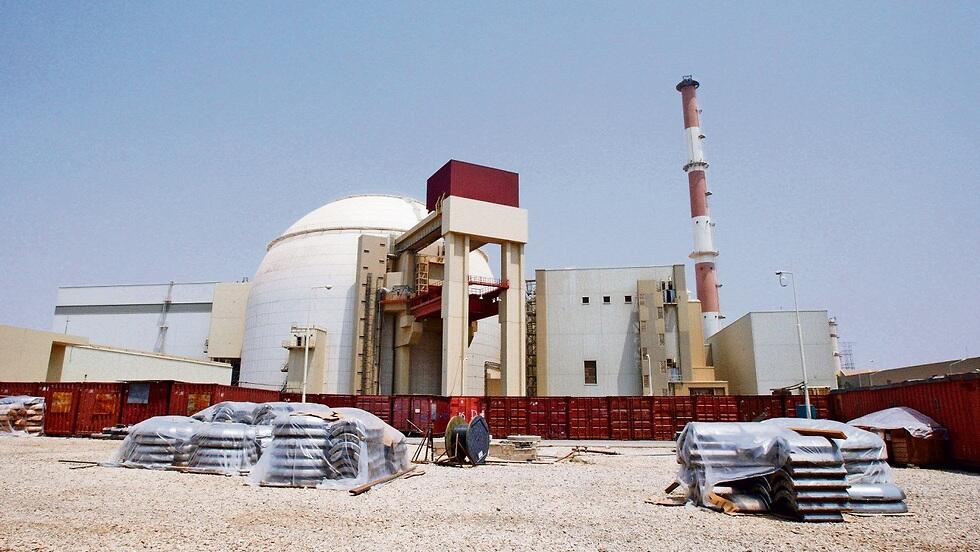
Russia built Iran's Bushehr nuclear power plant
(Photo: AP)
The question Israeli and American strategists must now confront is what the regional landscape looks like in 2045 when Egypt's power grid depends structurally on Russian nuclear fuel, Moscow holds a growing commercial presence inside the Suez Canal corridor, and Russia has established itself as the preferred mediator for every consequential nuclear conversation in the region. The answer is not that Israeli deterrence collapses through dramatic military assault. It erodes through the slow accumulation of Russian leverage over the states that once provided strategic buffer.
The counterterrorism-focused, operationally consumed security discourse that dominates Israeli and American policy discussions is understandable. The threats driving it are real and immediate. But Dabaa is a 50-year game, and Russia is playing it with a patience and structural coherence that the current moment demands its adversaries match. If Jerusalem and Washington do not develop a serious, funded and competitive strategy to challenge Russian nuclear patronage across the Arab world, the conversation will eventually close on Moscow's terms.
The reactors will be running. The dependency will be built. And the strategic window that Camp David opened in 1979 will have quietly closed, not through war, not through diplomatic rupture, but through the steady accumulation of Russian infrastructure across the southern flank that Israel spent half a century stabilizing.
- Amine Ayoub, a fellow at the Middle East Forum, is a policy analyst and writer based in Morocco.