


Beneath the noise of domestic politics and the constant churn of social networks, a significant shift may have escaped wider public attention: Israel has entered what senior officials describe as the “twilight of war” stage. It is a period marked by a temporary ceasefire and an emerging diplomatic push, during which the sides and international mediators begin shaping long-term arrangements intended to stabilize the region after more than two years of fighting.
Military activity may still occur, but the center of gravity is moving toward diplomacy, where the foundations for future security, political and regional frameworks are negotiated.
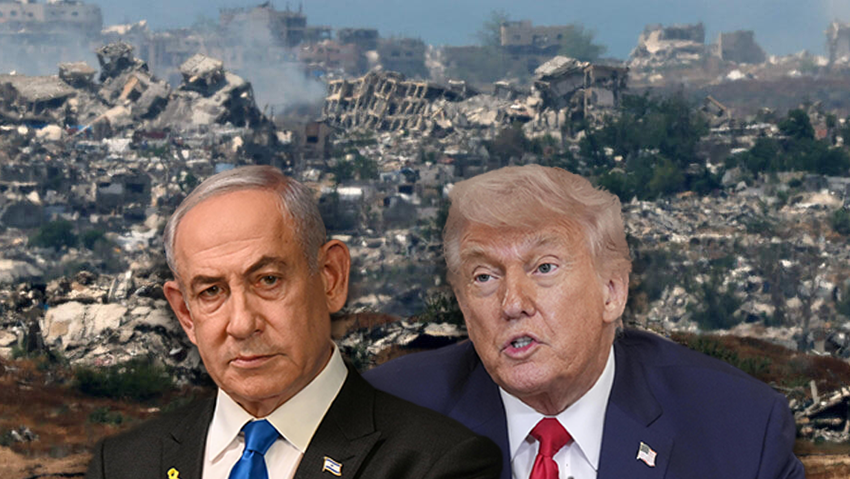
Trump presses Netanyahu to pivot
According to senior officials, this transition began Monday night when President Donald Trump called Prime Minister Benjamin Netanyahu and urged him to shift gradually from offensive operations and escalation threats in Gaza, Lebanon and Syria to diplomacy and confidence-building measures. The shift, Trump argued, is necessary to advance the civilian stage of his “20-Point Plan” for Gaza and to work toward a stable, long-term end to hostilities, with the possibility of additional normalization agreements.
Netanyahu is expected to discuss these issues with Trump during a visit to Washington on December 28 or soon afterward.
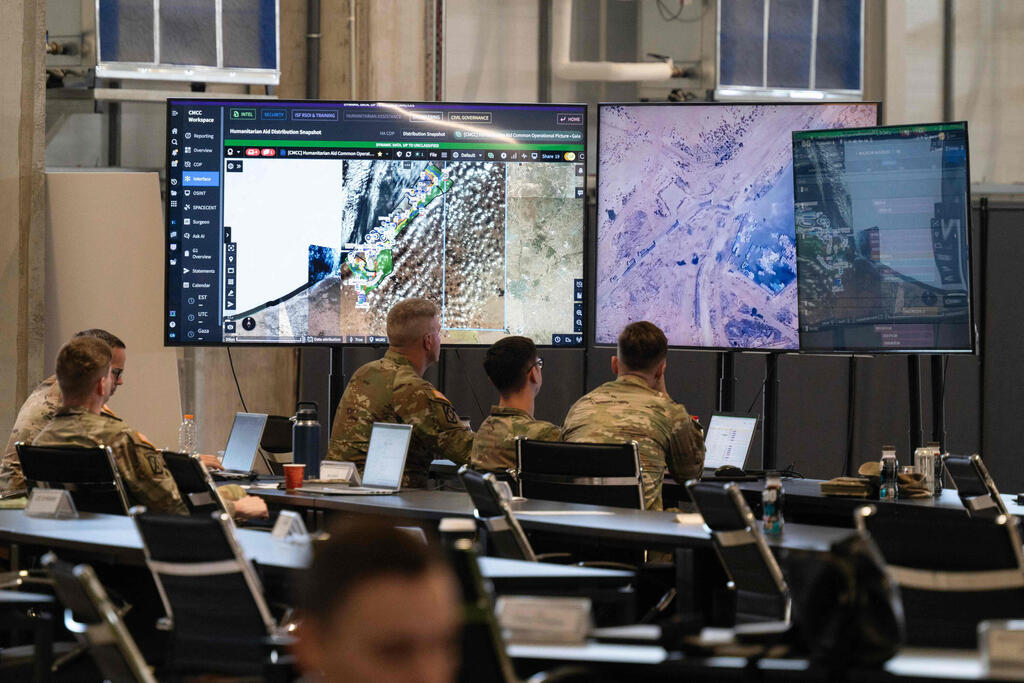
The Civil-Military Coordination Center (CMCC) in Kiryat Gat
(Photo: Ahikam Seri / AFP)
A senior security official said Netanyahu received similar counsel from top IDF commanders eager to begin rebuilding the military after extended combat and to prepare a larger, more modern force. Within the General Staff, there is broad support for aligning with Washington’s approach on Gaza and with recommendations from the U.S.-run Civil-Military Coordination Center (CMCC) in Kiryat Gat. In Lebanon, Syria and possibly Iran, many believe Israel can now secure most of its war aims through diplomatic arrangements that codify battlefield gains.
Lebanon deadline nears
A major date approaches: December 31, when Trump’s ultimatum for the Lebanese government to dismantle Hezbollah’s arsenal expires. Jerusalem has already notified Beirut that if disarmament does not occur, the IDF will escalate. Trump appears determined to avoid such a scenario, much as he seeks progress on his Gaza plan.
Following the Trump–Netanyahu call, the government announced Wednesday it would open the Rafah crossing for wounded and sick Gaza residents, overseen by Palestinian Authority representatives and European monitors. Egypt immediately denounced the move, fearing it could evolve into large-scale migration from Gaza into Sinai, including individuals tied to the Muslim Brotherhood, which Cairo views as a direct threat.
It remains unclear whether Rafah will open, particularly with PA and European involvement and with the body of a fallen hostage still held by Hamas. Still, officials say the willingness to consider such a move is a notable diplomatic concession pressed by Washington.
Quiet signals in Lebanon
Another meaningful development occurred Wednesday in Lebanon, where Israel appointed Dr. Uri Resnick of the National Security Council to lead its delegation to the military coordination committee operating there. Lebanon appointed veteran diplomat Simon Karam to lead its own team. Netanyahu’s office said the two would discuss economic matters, but the symbolism is broader: This is the first direct civilian diplomatic contact between the sides since the early 1990s Madrid Conference.
The decision by Lebanese President Joseph Aoun and Prime Minister Nawaf Salam to allow the meeting reflects interest — not shared by Hezbollah — in reducing tensions, exploring normalization and possibly laying early groundwork for a future peace agreement.
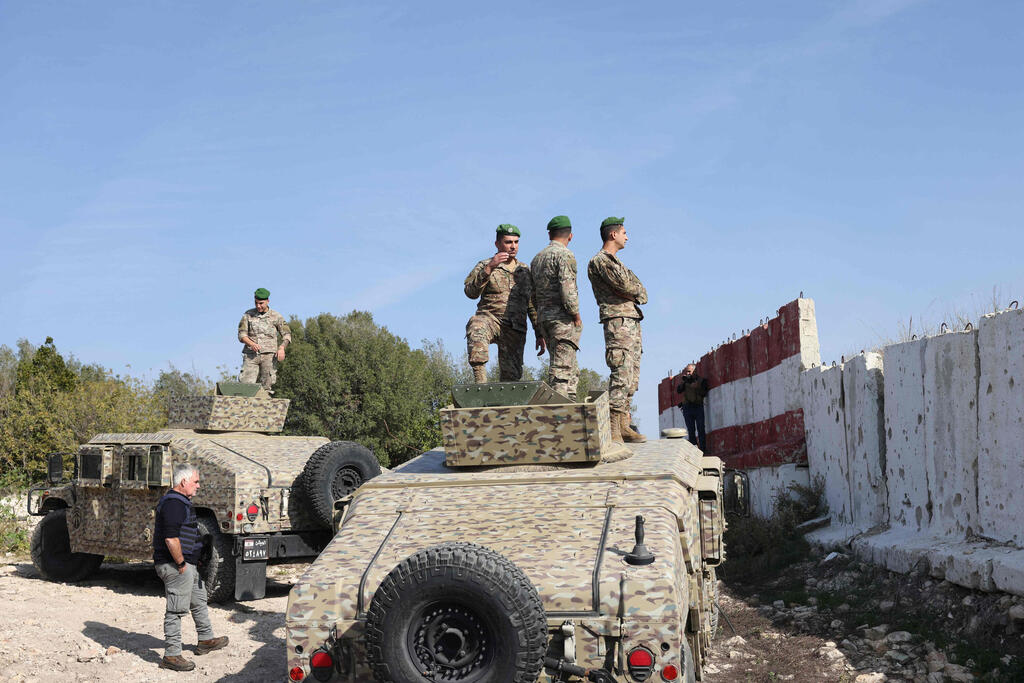
(Photo: Anwar AMRO / AFP)
Trump’s envoy, Morgan Ortagus, visited both Jerusalem and Beirut this week, underscoring Washington’s shift toward active mediation meant to prevent escalation and assist Lebanon’s reconstruction.
Rules for the ‘day after’
Trump appears to be establishing new rules for the postwar period. First, primary efforts in Gaza, Lebanon and Syria should move to diplomacy. Israel may continue enforcing ceasefire understandings and applying selective pressure against Hamas and Hezbollah, but mainly through precise, limited airstrikes, not ground maneuvers.
Under this framework, dismantling terrorist arsenals would be pursued through diplomatic pressure and mediated agreements rather than deep IDF incursions into areas under Hamas or Hezbollah control. Confidence-building steps would be expected from all sides.
Diverging agendas
Trump seeks regional stability for personal and strategic reasons. He has expressed interest in a Nobel Peace Prize and wants long-term economic partnerships in the Middle East that align with U.S. interests rather than Chinese or Russian influence. He also aims to reduce U.S. troop levels in the region.
Netanyahu’s objectives differ. Although Israel’s leverage stems from military gains in Gaza, Lebanon, Syria and against Iran’s regional networks, Netanyahu continues to pursue what he calls “total victory”: dismantling Hamas and Hezbollah, demilitarizing Gaza and Lebanon and removing heavy weapons and jihadist elements from southwest Syria.
His inner circle remains extremely tight, limiting strategic visibility for the Cabinet and the defense establishment. This slows decision-making and has opened space for Trump to play a greater role in shaping Israel’s direction.
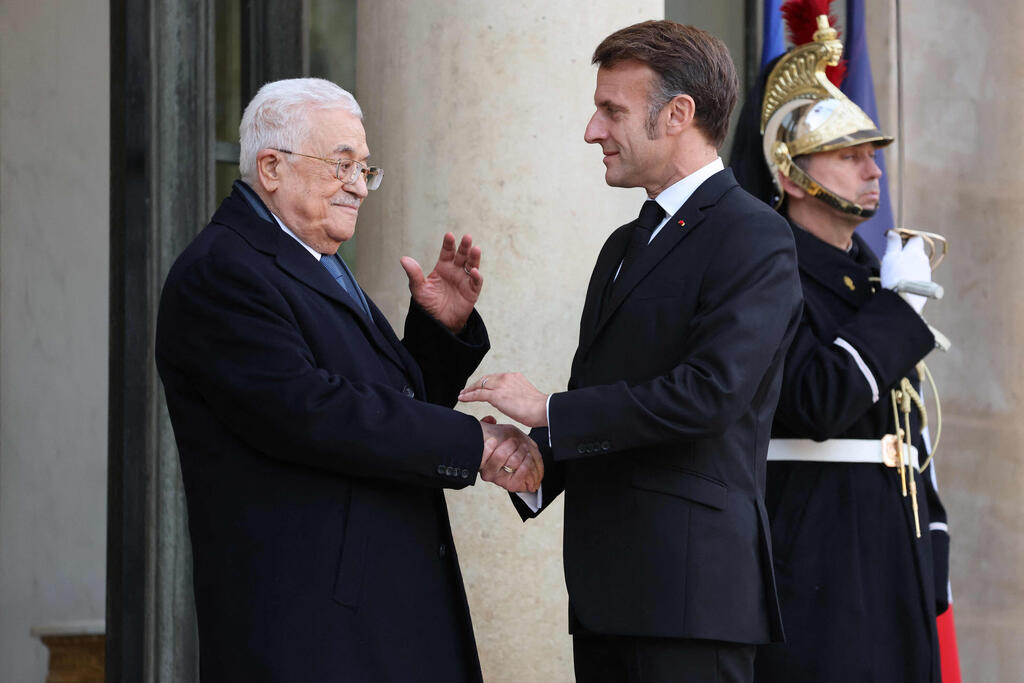
(Photo: Ludovic MARIN / AFP)
Netanyahu insists on preventing any Palestinian Authority role in Gaza to avoid the emergence of a Palestinian state including the enclave. He also seeks to block Turkish or Qatari involvement in reconstruction.
In Lebanon, Jerusalem signals openness to withdrawing IDF positions beyond the border, returning detainees and allowing displaced Shiite villagers to return, but only if the area remains demilitarized of Hezbollah fighters and weapons. Israel also demands demilitarization of central and northern Lebanon, especially the Beqaa Valley.
Hezbollah rebuilds
Security officials say Hezbollah, assisted by Iran and Syrian smugglers, is rapidly rebuilding manpower and infrastructure. Last month, the IDF killed the group’s new military commander, Haytham Ali Tabatabai, who had been driving the reorganization effort. Of the 130,000 munitions Hezbollah possessed before the war, officials estimate about 20,000 remain, including only a few hundred precision-guided missiles. The group is now accelerating its drone buildup north of the Litani River and in the Beqaa Valley.
While the Lebanese Army, with IDF pressure behind it, has largely cleared Hezbollah from southern Lebanon, dismantling its capabilities north of the Litani is beyond Beirut’s capacity, especially since about a third of Lebanese soldiers are Shiite and unlikely to confront the organization.
Israeli strikes in southern Lebanon
(Video: IDF)


Meanwhile, pressure from other Lebanese communities — including influential Shiite voices — is rising, with many blaming Hezbollah for Lebanon’s destruction and urging it to avoid steps that might provoke more Israeli strikes. Trump appears to be relying on this internal pressure to push Lebanon toward a durable ceasefire and, eventually, possible normalization modeled on the Abraham Accords.
Gaza: Netanyahu keeps the military option
Netanyahu says he prefers to see Hamas disarmed through diplomacy but maintains that if this does not occur within months, the IDF will maneuver into Hamas-controlled areas of western Gaza to dismantle underground networks and weapons facilities, similar to operations now underway in Rafah, Khan Younis and Beit Hanoun. These areas still contain underground pockets of resistance that the IDF is encircling.
A deeper maneuver into Gaza City, the central camps or al-Mawasi would require prior evacuation of civilians, which depends on the implementation of the U.S.-backed “New Gaza” plan. The international stabilization force envisioned by Washington has not yet been formed.
(Photo: Omar AL-QATTAA / AFP)
Meanwhile, the proposed “Peace Council” led by Trump and Saudi Crown Prince Mohammed bin Salman is slowly taking shape, along with a Palestinian administrative council for Gaza. Netanyahu insists Hamas must be disarmed and removed from power soon and rejects any role for the Palestinian Authority.
Syria, Iran and the region
Netanyahu seeks a 20-kilometer demilitarized zone in southern Syria and demands that Iran halt its accelerated missile and drone buildup and prevent any renewal of its nuclear program.
Israel is also focused on protecting Red Sea shipping and preventing Houthi or Iran-aligned militias from attempting rapid assaults through Jordan or the Syrian Golan — scenarios the IDF has studied, given those groups’ training for seizing Israeli outposts.
IDF priorities and constraints
The IDF’s leadership, like Trump, wants to transition to a stable ceasefire. Chief of Staff Lt. Gen. Eyal Zamir emphasizes rebuilding the military after more than two years of operations, replenishing stockpiles and forming new digital and AI-driven units. Reducing the burden on reservists is a top priority, alongside integrating thousands of ultra-Orthodox recruits and restoring full training cycles for regular forces.
The new security doctrine centers on preventing threats early, maintaining forward defense with physical presence between threats and civilian communities and achieving full readiness for a surprise attack without intelligence warning.
Budget limitations, the unresolved ultra-Orthodox draft exemption law and the absence of a clear political endgame complicate this transition. Without a coordinated framework with Washington that ends active fighting and establishes new security arrangements, the IDF cannot fully pivot from intensive combat to rebuilding and preparing for future threats.