


On Friday, three flags stood side by side in Washington as Israel, Lebanon and the United States signed a framework meant to end a war that has burned through south Lebanon since March. By Saturday, Hezbollah leader Naim Qassem had already declared the deal null and void. He dismissed the signature of his own government as worthless paper. It took less than twenty-four hours for the newest peace document to collide with the oldest truth of this conflict. Hezbollah does not negotiate. It does not compromise. It does not consider itself bound by anything Beirut signs in its name.
This should surprise no one who has watched Israel fight this organization since 1982. Hezbollah has survived the killing of nearly every senior commander it has ever had. The list runs from Sheikh Ragheb Harb in 1984 to Abbas al Musawi in 1992 to Imad Mughniyeh in 2008 to Hassan Nasrallah himself in 2024. Each time, Israel marked a decapitation strike as a turning point. Each time the organization promoted the next man in line and kept fighting. Qassem is the next man. His defiance this weekend is not a personality flaw. It is the predictable output of a machine engineered to survive exactly this kind of loss.
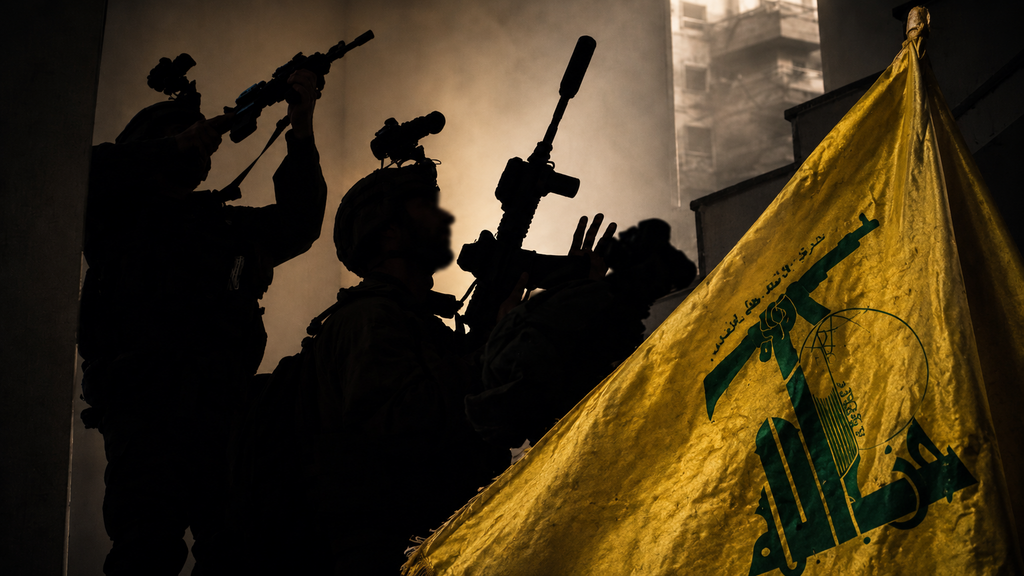
That machine is the real problem, not the man currently running it. Hezbollah is not a terror cell that can be beheaded into irrelevance. It is a parallel state grafted onto a real one. It runs its own banking network, its own schools, its own hospitals, its own television station, its own intelligence service, and a private army better equipped than Lebanon's official one. It elects members of parliament while fielding a militia that answers to nobody. Lebanese voters chose. Killing the men at the top of that structure rearranges the organizational chart. It does not touch the structure itself.
Defense Minister Israel Katz said this week that Israeli forces are preparing for an extended stay in the security zone in southern Lebanon until Hezbollah disarms. Finance Minister Bezalel Smotrich went further, saying Israeli troops may remain even after disarmament, because the country needs defendable borders. Both are right to hold the line. Both should recognize that a buffer zone alone solves nothing. A security zone freezes the front. It does not dismantle the rear. Hezbollah's weapons depots, its financing channels, its recruitment pipeline through Shiite villages, and its ideological apparatus all sit comfortably north of any line Israeli troops can physically occupy. A fence does not kill an ideology.
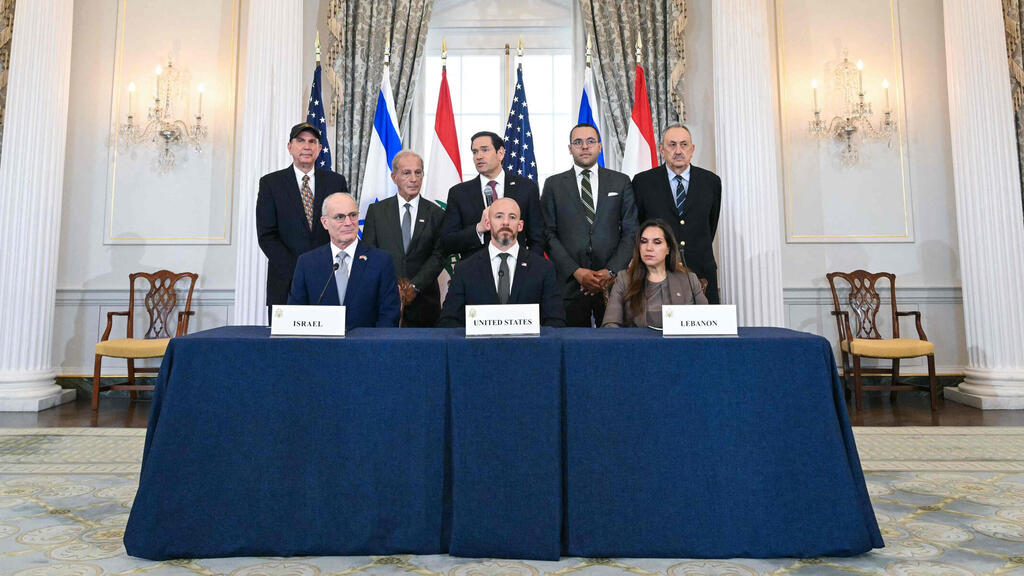
Israel, Lebanon and the United States signed a framework meant to end a war that has burned through south Lebanon since March
(Photo: SAUL LOEB / AFP)
That ideology is the part almost nobody says out loud. Hezbollah is not merely a militia that happens to be Shiite. It is the armed expression of an Islamist revolutionary doctrine exported from Tehran and adapted for Lebanese soil. The same doctrine built Hamas in Gaza, the Houthis in Yemen, and a constellation of militias across Iraq and Syria. Every one of these movements shares the same operating logic. Religion fuses with weapons. Weapons fuse with social welfare. Social welfare fuses with political power. The line between mosque, militia and ministry disappears completely. An airstrike cannot kill that logic. Only ripping out the institutions that keep manufacturing believers can.
This is exactly the mistake Israel made with Hamas before October 7. For years, Jerusalem treated Gaza as a leadership problem. It eliminated commander after commander while leaving Hamas governing institutions, its school system, its mosque network and its tunnel economy fully intact. Each strike bought a few months of quiet. None of them bought safety. The same logic now playing out in Lebanon should worry anyone who lived through that failure. A ceasefire that disarms commanders but leaves Hezbollah's parallel state standing is not peace.
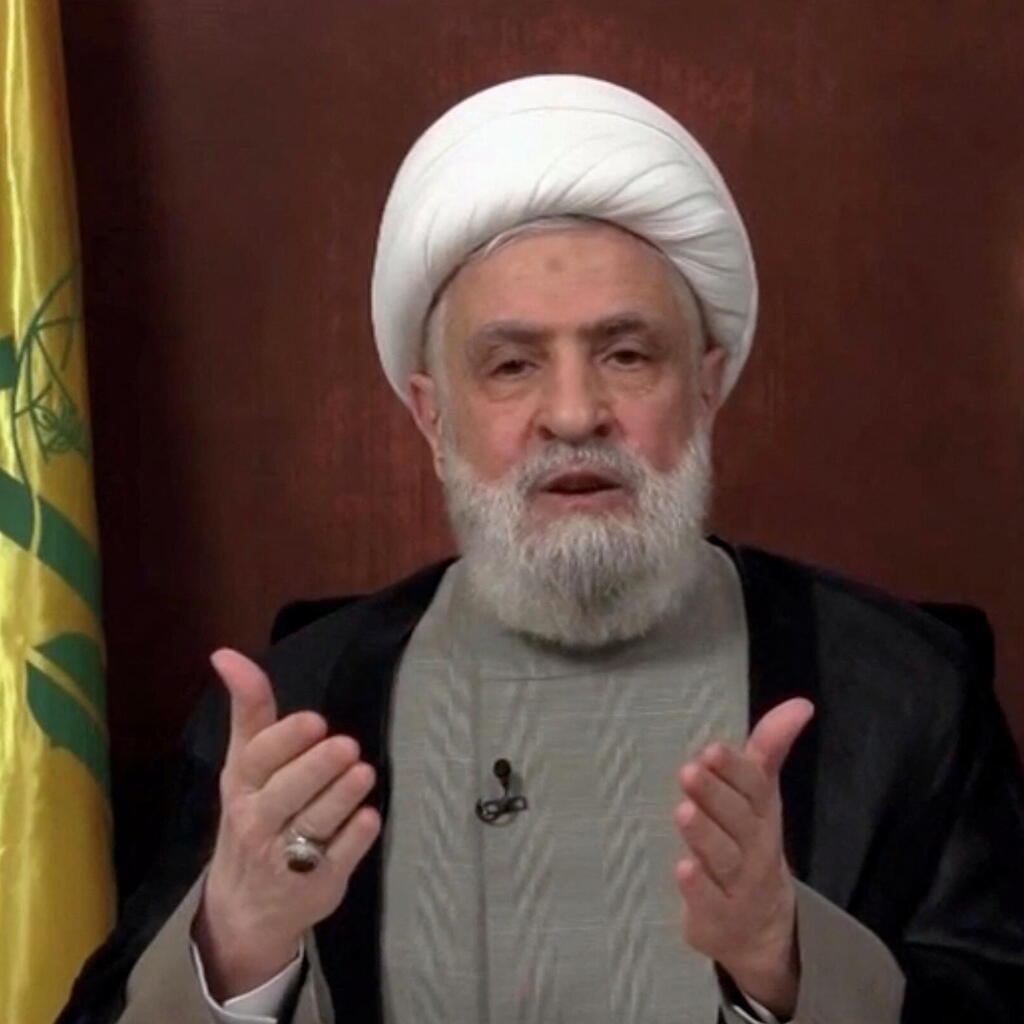
Hezbollah leader Naim Qassem had already declared the deal null and void
(Photo: Al Manar TV/Reuters)
Lebanon's own government understands this better than its Western backers seem to. Prime Minister Nawaf Salam signed a deal that his own coalition partners know Hezbollah will never honor. Beirut has no army capable of forcing the issue and no political class willing to try. That is precisely why the burden now falls on Israel and its allies to demand something the Lebanese state cannot deliver on its own. Total disarmament is required, not negotiated coexistence.
Total disarmament means far more than confiscating rockets and launchers. It means dismantling Hezbollah's banking arm, which launders money for the organization across the region. It means shutting down its media operation, which manufactures the next generation of fighters before they ever touch a weapon. It means severing its supply lines through Syria regardless of how cooperative Damascus now appears to Washington. It means treating Hezbollah's parliamentary bloc the way any functioning democracy treats an armed party that refuses to disarm.
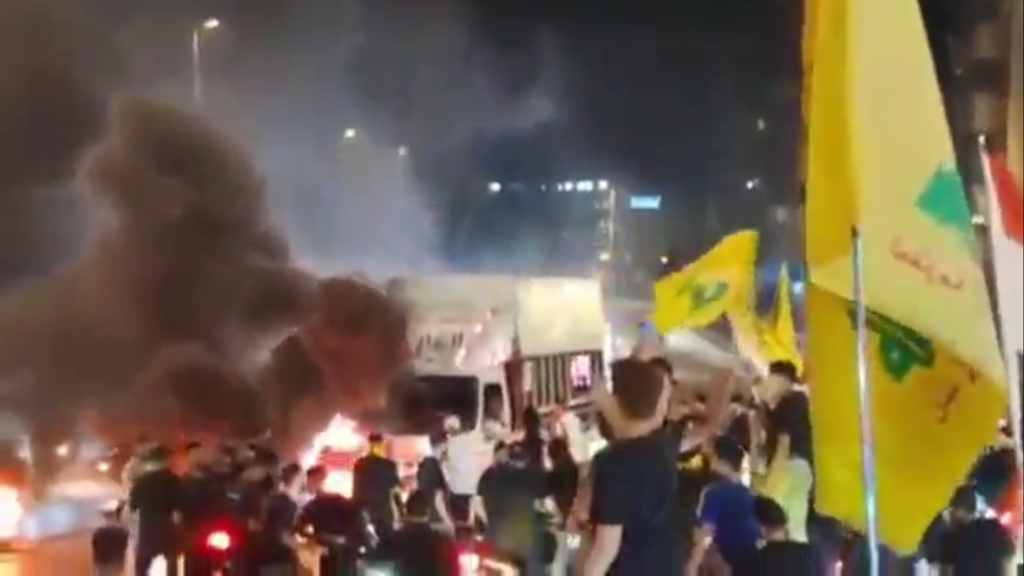
Documentation of the pro-Hezbollah riots in Beirut
Critics will call this maximalist, unrealistic, a recipe for endless war. They said the same about dismantling Hamas governing structure in Gaza right up until October 7 proved the alternative was far worse. The honest answer is that eradicating an institution this deeply embedded will take years, not a single campaign. It will require Israel to keep pressure on the ground, the United States to keep pressure on Beirut's budget and its army, and Gulf states to keep pressure on Hezbollah's financing networks stretching from West Africa to Latin America.
What is not necessary, and what four decades have already disproven, is the fantasy that one more dead commander finally breaks the cycle. Qassem will eventually join Nasrallah, Mughniyeh and al Musawi on the list of martyrs Hezbollah uses to recruit its next generation. Someone will replace him within days polished by the same training, financed by the same patrons, fluent in the same grievance. The only question that actually matters now is whether Israel, Lebanon and Washington finally treat that replacement as proof the old strategy is broken or keep mistaking a body count for a victory.
 Amine Ayoub
Lebanon signed a deal this week that Hezbollah spat on within hours of the ink drying. That is not a diplomatic failure to be patched with another round of talks. It is Hezbollah telling the world exactly what it is. It is an organization that cannot be negotiated with, only dismantled. Killing its leaders alone bought Israel forty years of funerals, eulogies and replacements.
Erasing the organization itself, its weapons, its banks, its media, its grip on the Lebanese state, is the only strategy nobody has actually seriously tried. The time has come for a decisive approach that prioritizes long term security over short term optics. Anything less repeats the deadly pattern of the past. The people of Israel and the region deserve better than another fragile pause that Hezbollah will exploit to rebuild and strike again. Full dismantlement offers the only realistic path to lasting peace.
Amine Ayoub, a fellow at the Middle East Forum, is a policy analyst and writer based in Morocco. Follow him on X: @amineayoubx