


The Board of Peace proposal regarding an arrangement in Gaza, published Thursday, did not come as a surprise. While Israel was immersed in campaigns in Iran and Lebanon and in domestic struggles, Qatar, Turkey and Egypt, the mediators on Gaza, were working on a plan for the future of the Strip, centered on the establishment of a Palestinian technocratic government instead of Hamas and the formulation of an ambiguous formula regarding the organization’s disarmament.
The person who brought about the breakthrough is, as always, U.S. President Donald Trump, for whom narrative and image are more important than truth. He is the one who will determine whether Hamas is disarming, regardless of reality, just as he declared in October that the organization had agreed to disarm, even though it publicly denied this, or that Iran had been defeated in the latest campaign, was begging for an agreement and its regime had become moderate.
Hamas, for its part, identifies more advantages than disadvantages in the agreement and therefore welcomes it. The organization, which dealt Israel the worst blow in its history and which Netanyahu promised would be eliminated, but which in practice survived after three years of bitter war and remains the dominant force in Gaza, does not assess that the arrangement threatens its status or its assets. In its understanding, it will be able to continue preserving its military and civilian power under the cosmetic cover of the technocratic government — in other words, adopting the Hezbollah model, meaning existing alongside a weak formal government.
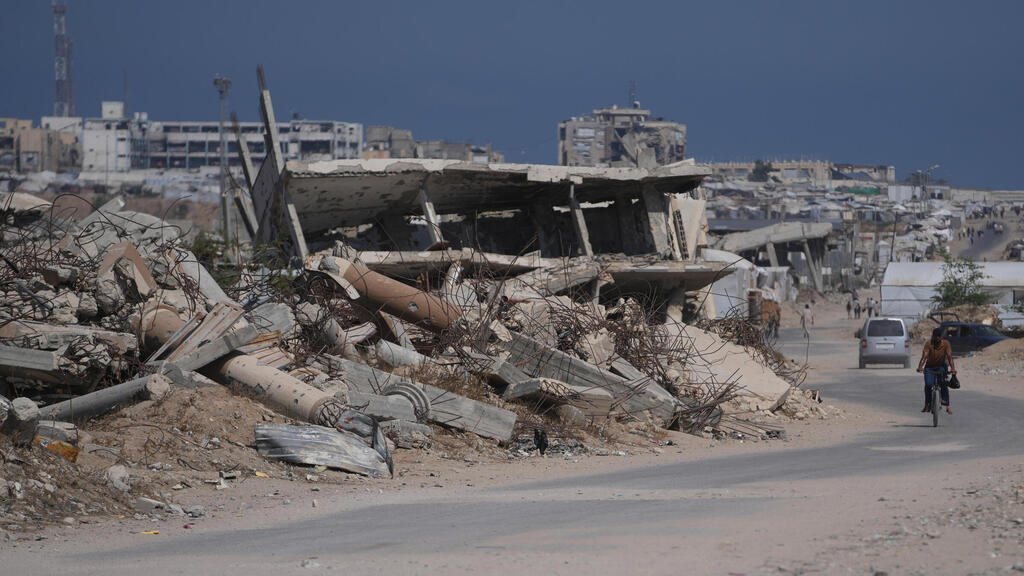
On the issue of weapons, the organization emphasizes that the demand for disarmament relates only to heavy weapons, of which in any case it has barely any left, and that this is a gradual process that includes, among other things, the possibility of keeping personal weapons and completely unclear steps such as storing and depositing weapons, without a clear condition that the arrangement will begin only after disarmament, as Netanyahu has consistently demanded. Moreover, Hamas is demanding a full IDF withdrawal from the Strip, even without disarmament, and insists that Israel not be involved in the issue.
The arrangement has not yet been signed and is still shrouded in question marks, but it already appears to be creating a trap for Israel. The greatest challenge lies in the possibility that Hamas will preserve its power under the technocratic government and the multinational force planned for deployment in the Strip, a move the government supported a week ago, despite the promise that nothing would be advanced in the area unless Hamas was first disarmed. Moreover, the very establishment of the technocratic government and the multinational force on the ground could narrow Israel’s room for maneuver, since arguments are likely to be raised that continued strikes would undermine the attempt to establish a “new order” in Gaza.
Another challenge could develop in relations with Washington. If Trump insists on advancing the arrangement, growing pressure on Israel could develop, to the point of dangerous friction between the two countries. In this framework, demands may be raised not only to allow the entry of the technocratic government, but also to moderate Israeli military activity, including the targeted killings of terrorist operatives, advance reconstruction and, above all, withdraw, even gradually, from the “yellow line” — all without full and immediate disarmament of Hamas.
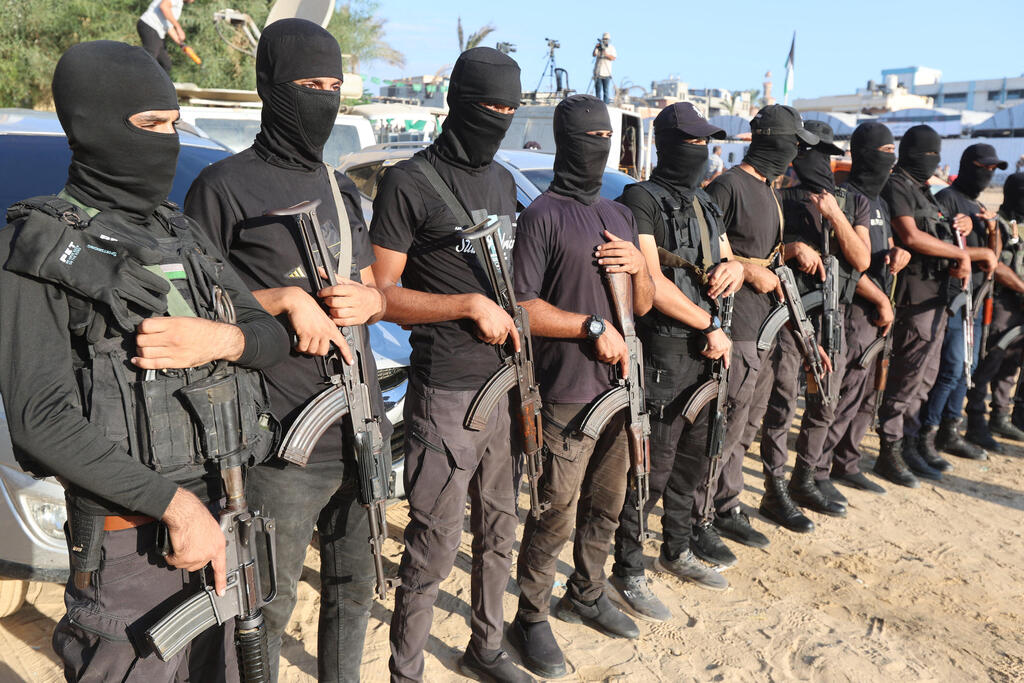
Hamas terrorists in Gaza
(Photo: Ramadan Abed/Reuters)
The Gaza arrangement is being advanced at the sensitive moment on the eve of elections and, if accelerated, it is likely to cast Netanyahu in a negative light after he promised total victory, praised the cultivation of the militias, which Hamas is demanding be dismantled under the agreement, and continues to deal with the possibility of emptying the Strip of Gazans. Deep frustration could lead to the initiation of a military move in Gaza on the eve of the elections, which would deteriorate relations with the U.S., all while Israel needs close ties with Washington to address the critical threat of Iran’s nuclear program and to consolidate an arrangement in Lebanon.
The arrangement presented embodies a significant gap from the goals presented in Israel and appears to have the potential to join a chain of strategic failures that occurred during the war and reflect the same flawed pattern: a leadership that never investigated its past failures, preserves their seeds and, unsurprisingly, suffers many failures, such as the GHF project in Gaza or the plan to topple the regime in Iran. All this while obsessively relying on prolonged use of force, harmful fantasies, the belief that Trump is always with us and contempt for the demand to formulate a strategy.
The outcome of the stubborn insistence on acting only by force, refusing to discuss the question of the day after and believing that fighting in Gaza would soon resume was known in advance: Trump’s enforcement of a policy that contradicts the principles Netanyahu presented, especially since the arrangement also mentions the goal of a Palestinian state in the future. All of this raises the thought that perhaps the same arrangement could have been reached without returning to fighting in March 2025, and that perhaps taking control of a large area of Gaza is not necessarily a “long-term strategic achievement,” as claimed, but a move expected to “fold” soon.
At the current moment, when Israel must focus on the Iranian nuclear threat and maintain close coordination and trust with Washington, it is dangerous to enter into a sharp confrontation over Gaza. The arrangement in the area is far from an achievement, but it is the lesser evil compared with the alternative to which many in the government cling: high-intensity war and even occupation of the Strip, against the backdrop of the ongoing, enthusiasm-filled wave — and to a large extent disconnected from reality — of “returning to Gaza” and establishing settlements in the area.
Under the circumstances that have been created, vital interests in Gaza must be defined in the spirit of the principle of “prevention,” first and foremost: preserving freedom of action against emerging threats in the area; designating a large area near the border where activity of any kind will be prohibited, all the more so the establishment of an enemy presence; preserving the right to veto foreign actors entering Gaza; and above all ensuring that the Philadelphi Corridor is not under Hamas control.
The writer is a senior researcher at the Dayan Center at Tel Aviv University.