


The way the battle above — and especially below — ground on the Ali Taher ridge ends will have a decisive impact on the outcome of the Third Lebanon War, and above all on the chances of disarming Hezbollah. That is why all the many parties involved in the fighting, and especially in the intensive diplomatic contacts taking place under the radar to end the confrontation, are maintaining as low a media profile as possible and releasing information sparingly.
Hezbollah and the Iranians fear that media reports could sabotage their chances of reaching, through mediators, an arrangement that would allow their men to emerge safely and with minimal humiliation from the underground trap in which they are stuck. But what makes the confrontation so explosive is the fact that, in addition to several dozen Hezbollah fighters and senior commanders, Al Arabiya reports that several dozen Iranian “advisers,” most of them officers in the Revolutionary Guards, are also beneath the rocks of the Ali Taher ridge. They arrived over the past year at Hezbollah’s underground command center for the combat sector north of the Litani River.
Attacks on the Ali Taher ridge last week


The importance of the ridge
What Hezbollah calls the “Badr operational sector” stretches from the Litani River in the south to the Zahrani River in the north. At the center of this sector are the Nabatieh plateau and the city of Nabatieh. The Ali Taher ridge rises to an elevation of 600 meters directly to their west. Hezbollah chose to place the Badr sector headquarters and its heavy firepower on this ridge because it commands observation and fire over all the roads and terrain routes providing access to the strategically important Nabatieh plateau, and is close enough to the Israeli border to direct rocket and missile attacks on the Galilee home front and conduct a blocking battle against the IDF if it advances northward.
Gallery
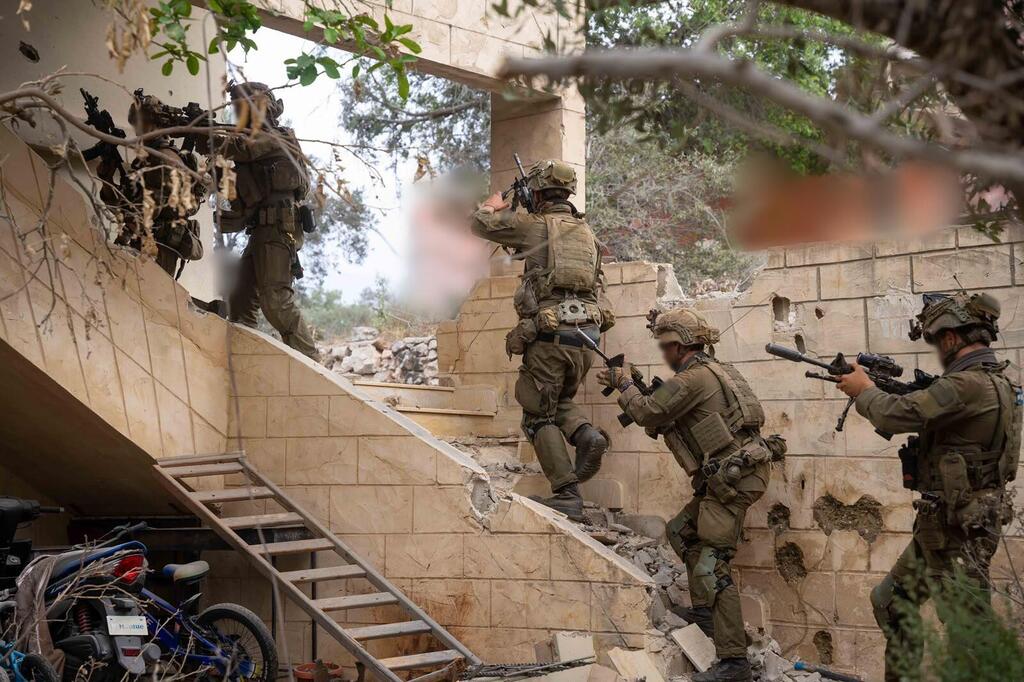
Dozens of terrorists and Iranian 'advisers' are trapped underground in the Ali Taher ridge. IDF activity in southern Lebanon
(Photo: IDF)
Recognizing the ridge’s strategic importance, the IDF sent units from the 36th Division to seize the outskirts of Nabatieh and the Ali Taher ridge while clearing the Beaufort ridge to the south. The rapid move, based on detailed, high-quality intelligence about the underground headquarters complex, caught Hezbollah unprepared. Its men were surprised when troops from the Egoz unit and the Yahalom combat engineering unit appeared at the entrances to several shafts and surrounded them. Since then, there have been numerous attempts by Hezbollah fighters and Revolutionary Guards personnel to break out of the complex, or alternatively to bring supplies and reinforcements into it from villages on the Nabatieh plateau.
In the fighting that developed from those attempts and from drone attacks, five IDF soldiers and officers were killed and 21 were wounded. Hezbollah lost more than 20 men, and the terrorist organization claimed recently that it had managed to bring reinforcements, water and food to those trapped inside, including through new shafts dug secretly and by drone.
The terrorists and Iranian ‘advisers’ trapped inside
The exact number of people trapped underground on the Ali Taher ridge is unknown, because some managed to escape before the IDF imposed a siege on the area about 10 weeks ago. Media estimates, including outlets close to Hezbollah such as Al Arabiya, put the number of Hezbollah members currently trapped underground at between 20 and 40, along with several dozen Revolutionary Guards officers.
Destruction of tunnels in the Beaufort sector
(Video: IDF)
The presence of the Iranians and U.S. pressure to avoid regional escalation are apparently what dictate the cautious, slow pattern of fighting by the IDF forces surrounding the ridge, above and especially below ground. It is reasonable to assume that the IDF could have ended the affair several weeks ago had it used in the ridge tunnels the methods and techniques for clearing and neutralizing tunnels that it developed in the latest war in the Gaza Strip and Lebanon.
But had the IDF used those aggressive and effective methods, Lebanese rescue services would have brought dozens of dead and wounded Hezbollah members and Iranians out of the tunnels. Such images would have forced senior officials in Tehran to act on the explicit threats they have been making since June toward the United States and Israel. Senior figures in the Revolutionary Guards and Iran’s Supreme National Security Council have been clear that they view Hezbollah as a vital strategic Iranian asset, all the more so when Revolutionary Guards personnel are directly involved.
It is therefore not difficult to guess how the Iranians would respond in the event of a bloodbath on the Ali Taher ridge. They would of course launch missiles and drones at Israel. The IDF would respond in Iran, and there is a strong chance that escalation would then spread to the Persian Gulf, with U.S. bases and Arab states along its shores coming under attack. At this time, such a development runs counter to the interests of the United States, Israel, the Arab Gulf states and the global energy market.
In effect, an overly aggressive Israeli operation on the ridge could create a regional “butterfly effect” that none of the parties wants. Israel’s government has no interest, on the eve of an election, in dragging the civilian home front into another destructive and deadly round with Iran and expending munitions and aircraft flight hours to achieve more of the same. U.S. President Donald Trump certainly has no interest in escalation ahead of the midterm elections, in which he could lose his majority in both houses of Congress. In addition, at least for now, CENTCOM appears to be successfully escorting a growing number of oil tanker convoys through the Strait of Hormuz without incident.
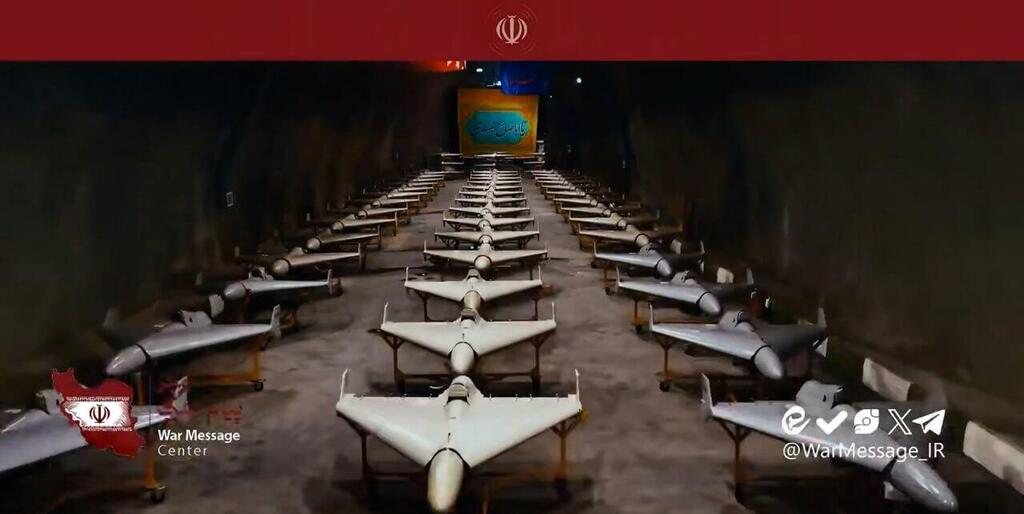
Iranian drones: A bloodbath on the ridge could lead to regional escalation
The U.S. economic blockade is also posing a growing threat to the Iranian regime, and another round of fighting could disrupt that. The Lebanese government, for its part, fears the effect that a casualty-heavy defeat on the ridge would have on its credibility among Lebanon’s Shiite community and on its standing across the country as a government capable of getting Israel to withdraw from territory it has captured.
The IDF has been in a similar situation — and patience paid off
Israel is in no rush, and the IDF certainly has no interest in waging prolonged battles that could result in heavy casualties in an underground maze that Hezbollah knows well and IDF soldiers must feel their way through. The IDF was already in a similar situation when it laid siege to a large tunnel complex in Rafah. In that battle, patience paid off. It took several weeks, but in the end most Hamas members trapped in the tunnels were killed, while a small number surrendered and were taken prisoner.
In private conversations, senior officers say they would not object to the Ali Taher ridge episode ending in a similar way, even if it means waiting a little longer and, in the meantime, risking additional drone attacks.
Destruction of a tunnel route and the activities of 7th Brigade forces in the Rafah area
(Video: IDF)
Hezbollah and its supporters, however, are in more of a hurry and are pressuring the Lebanese government, which in turn is pressuring the Americans. So alongside the fighting on the ground, diplomatic contacts are continuing constantly, almost all of them secret, in an effort to reach an endgame for the ridge without triggering a major escalation.
The arena of secret negotiations
The main negotiating arena is the direct talks between Lebanon and Israel, mediated by the United States, over a comprehensive arrangement to end the Lebanese-Israeli confrontation. The Lebanese are proposing that Hezbollah and Israel both withdraw and that the Lebanese army take control of the Ali Taher ridge and demilitarize it above and below ground. Under the proposal, the IDF would withdraw from the ridge and hand it over to the Lebanese army only after collecting the weapons and verifying that the Lebanese army will act to render the tunnels unusable.
Hezbollah, it can be assumed, will not agree to hand over its weapons and will demand that the withdrawal of IDF forces and its own men take place simultaneously. Hezbollah apparently hopes in this way to withdraw with heads held high and weapons in hand, thereby reducing the humiliation inherent in such a situation. For now, however, it should be noted, the negotiations are deadlocked.
All sides, as noted, now prefer to maintain a blackout both over what is happening on the ground and over what is happening diplomatically. Any publication could sabotage diplomatic efforts and trigger escalation across the region.
What can be said is that the IDF currently has strong observation and fire control over the access routes and over most of the shafts leading into the enormous underground complex. In recent weeks, reports in Lebanon have claimed that the IDF managed to enter the complex’s tunnels, advance through them and draw closer to the location where the trapped Hezbollah members and Revolutionary Guards personnel are believed to be.
For now, all that remains is to wait and see what happens next.