


Amid one of the most sensitive periods for U.S.–Israel security coordination, the IDF has had no permanent military attaché in Washington for two months—due to a dispute between Defense Minister Israel Katz and IDF Chief of Staff Eyal Zamir. Senior defense officials describe the situation as a “significant blow” to bilateral security ties, especially after the departure of Ron Dermer, Israel’s top liaison to Washington.
The key post has remained vacant since Maj. Gen. Hidai Zilberman completed his four-and-a-half-year term and assumed his new role as Head of the IDF’s Planning Directorate. While a temporary replacement—an Air Force attaché at the rank of brigadier general—is filling in, the official duties are being handled by Brig. Gen. Arik Ben-Dov until a permanent decision is made.
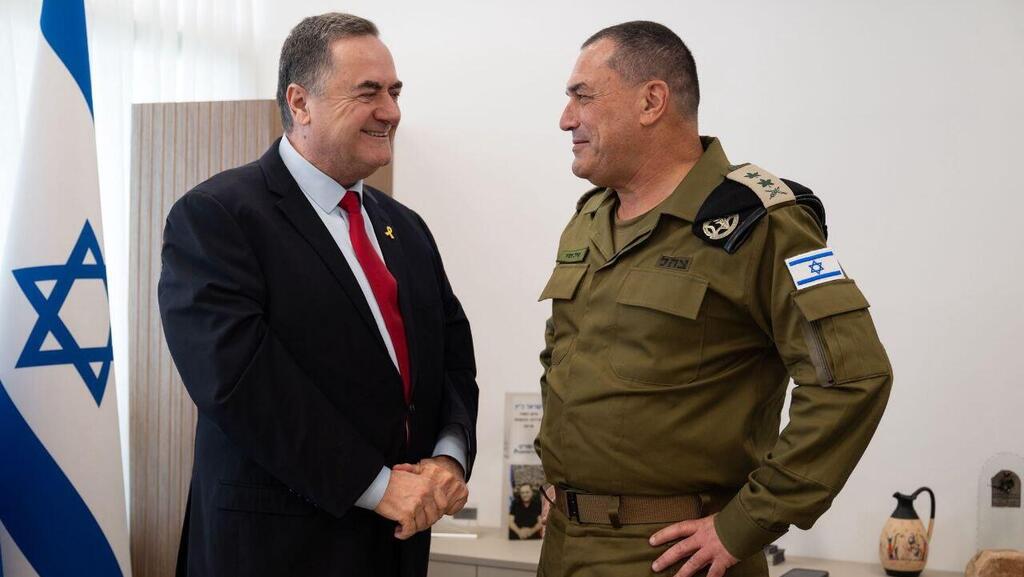
Defense Minister Israel Katz and IDF Chief of Staff Eyal Zamir
(Photo: IDF Spokesperson's Unit)
At the heart of the delay is a standoff: the IDF chief wants to appoint Brig. Gen. Tal Politis, who is expected to be promoted, while the defense minister insists on appointing his own military secretary, Brig. Gen. Guy Markizano. Prime Minister Benjamin Netanyahu has yet to intervene.
The attaché role is seen by defense officials as crucial—not just symbolically, but for real-time coordination with the Pentagon and U.S. defense institutions. Officials warn that the absence of a permanent appointment adds pressure to already strained diplomatic and military coordination mechanisms.
Working through an interim appointee in such a strategically critical post is far from ideal, sources say. The lack of continuity and authority undermines the IDF’s maneuverability in Washington at a time when seamless communication is essential.
Earlier this week, Maj. Gen. Shlomi Binder, head of Military Intelligence, visited Washington for coordination meetings—underscoring the depth of cooperation but also highlighting the need for a permanent, senior IDF presence in the U.S. capital.
Binder has become a central figure in intelligence coordination with the U.S., including in debriefings from Operation Rising Lion. American officials reportedly expressed surprise at the precision and timeliness of Israeli intelligence during that operation.
One of the key areas of cooperation remains U.S. aspirations for air superiority over Iran. During the 12-day war with Iran, Israel announced air dominance over western Iran, including Tehran, within 48 hours—a feat unmatched by even Russian forces in Ukraine or U.S. operations against Houthi threats in Yemen.