


The next test of the 2020 Abraham Accords is moving beyond diplomatic meetings to factories. At the Marrakech Air Show, Israel opened its first official national pavilion at a Moroccan defense exhibition, while Moroccan Military Industry's production plans offered a concrete measure of how far security ties may extend: from Israeli arms sales toward local manufacturing.
The question is whether that shift can deliver systems at scale, support Moroccan forces and attract foreign customers.
Gallery
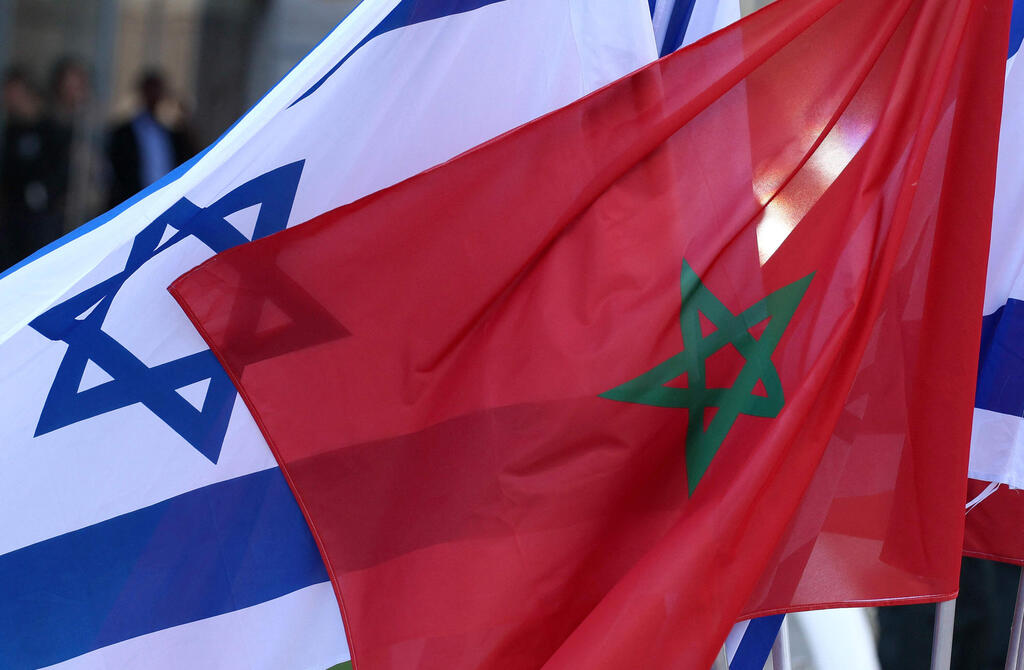
At the Marrakech Air Show, Israel opened its first official national pavilion at a Moroccan defense exhibition
(Photo: AFP)
Organized under the auspices of SIBAT, the Defense International Cooperation Directorate of the Israeli Ministry of Defense, the delegation brought top military and industry leaders to North Africa.
SIBAT Director Brig. Gen. (res.) Yair Kulas, Military Attaché Col. Sharon Itach, Head of Mission Yosef Ben David and Rafael CEO Yoav Tourgeman joined senior executives from Israel Aerospace Industries (IAI) and Elbit Systems at the exhibition. They gathered alongside Moroccan Minister Delegate for National Defense Administration Abdellatif Loudiyi.
Since Morocco and Israel normalized relations in 2020 and signed a defense cooperation agreement in 2021, their security relationship has expanded from arms purchases to technical cooperation and industrial projects.
Moroccan Military Industry (MMI) marks a further step: Rabat is seeking not only to acquire advanced systems but also to assemble and manufacture selected equipment at home. Local production could reduce exposure to external supply disruptions, although the degree of Moroccan value added will depend on what is manufactured locally and how much technology is transferred.
Linked to Elbit Systems through reported ownership ties and the use of Israeli technology, MMI reflects Rabat's effort to build a domestic defense-industrial base. Across North Africa, sophisticated military platforms and components have long depended heavily on foreign suppliers. Local manufacturing offers Morocco a way to expand its role in assembly, ammunition production and equipment support.
Across North Africa, sophisticated military platforms and components have long depended heavily on foreign suppliers. Local manufacturing offers Morocco a way to expand its role in assembly, ammunition production and equipment support.
MMI's industrial footprint includes a weapons systems facility in Midparc, near Casablanca, and an ammunition project at Sidi Yahya. Published accounts differ on how much manufacturing is already taking place at the second site, leaving the scale of current production unclear.
According to the company's general manager, 99% of its workforce, including engineers, is Moroccan. That is evidence of local participation, although it does not establish how much design expertise or control over core technology Morocco has acquired.
The next milestone is a planned start to deliveries in March 2027. MMI says it will produce turrets for Tata 8x8 armored vehicles assembled in Morocco.
Separately, MMI is developing an anti-drone version of the turret using 30 mm ammunition fitted with miniature radar sensors. According to the company's description, the sensor is intended to trigger an explosion near an approaching drone, releasing tungsten fragments to destroy it.
The objective is to provide a lower-cost alternative to missile interception, but the anti-drone variant should be described as a capability under development, not a system already proven in Moroccan army service.
MMI also plans to produce self-propelled mortar systems and says it expects to export to a European NATO member, although the customer, delivery timetable and order volume remain undisclosed.
Algeria remains a major Russian defense partner and fields substantial inventories of heavy armor, combat aircraft and air-defense systems. Algiers also continues to support the Polisario Front in Western Sahara, sustaining a security rivalry with Rabat that neither normalization with Israel nor new defense technology has resolved.
At the Marrakech Air Show, Israeli firms showcased a range of military technologies, from UVision's Hero loitering munitions and XTEND's tactical platforms to Asio Technologies' GPS-denied navigation systems. The displays highlighted the breadth of Israeli defense technology on offer, although they do not necessarily mean Morocco has purchased or deployed every system presented.
Beyond the exhibition floor, Israeli technology is already taking root in Morocco's defense industry. In November 2025, BlueBird Aero Systems, a subsidiary of Israel Aerospace Industries, advanced its local SpyX program, with defense industry reports describing a production facility in Benslimane and training for Moroccan technicians ahead of local manufacturing.
It remains unclear how many locally produced SpyX systems have entered Moroccan service. BlueBird also says the Moroccan army operates its WanderB-VTOL and ThunderB-VTOL surveillance systems for intelligence gathering, border security, convoy protection and other missions.
Further south, instability in the Sahel, driven by insurgent groups, smuggling networks and competing foreign security interests, presents a persistent threat to North African stability.
Moroccan forces' use of surveillance drones for border security missions can help them monitor remote areas and respond to potential infiltration. Their value is narrower but meaningful: persistent surveillance can improve awareness across remote terrain and provide earlier warning of potential infiltration.
These capabilities cannot eliminate the wider Sahel threat, but they can give Moroccan forces a better picture of the territory they must defend.
Israeli companies at Marrakech also presented electro-optical and satellite communications technologies that could improve Moroccan monitoring of its Atlantic and Mediterranean approaches if acquired and integrated.
The strategic question is whether Rabat moves beyond purchasing individual systems toward maintaining and integrating more of these capabilities within its domestic defense industry.
Morocco is a partner in NATO's Mediterranean Dialogue, a framework for cooperation rather than NATO membership. For Spain and other southern European states, stronger Moroccan defense capabilities could support maritime security cooperation, although longstanding sensitivities over Ceuta and Melilla remain.
The U.S.-led African Lion exercise offers a more concrete measure of military cooperation: Israel participated in the 2025 iteration alongside Morocco and the United States.
This demonstrates an existing basis for multinational military cooperation but does not establish a unified Israeli-Moroccan-American command or a combined defense network for Gibraltar.
For Israel, the value of the relationship extends beyond immediate arms sales. Co-production can widen markets for Israeli technology, create longer-term maintenance and industrial relationships and help Morocco build the capacity to support equipment at home.
The financial payoff depends on contracts actually secured; the strategic payoff depends on whether production, delivery and maintenance prove reliable over time.
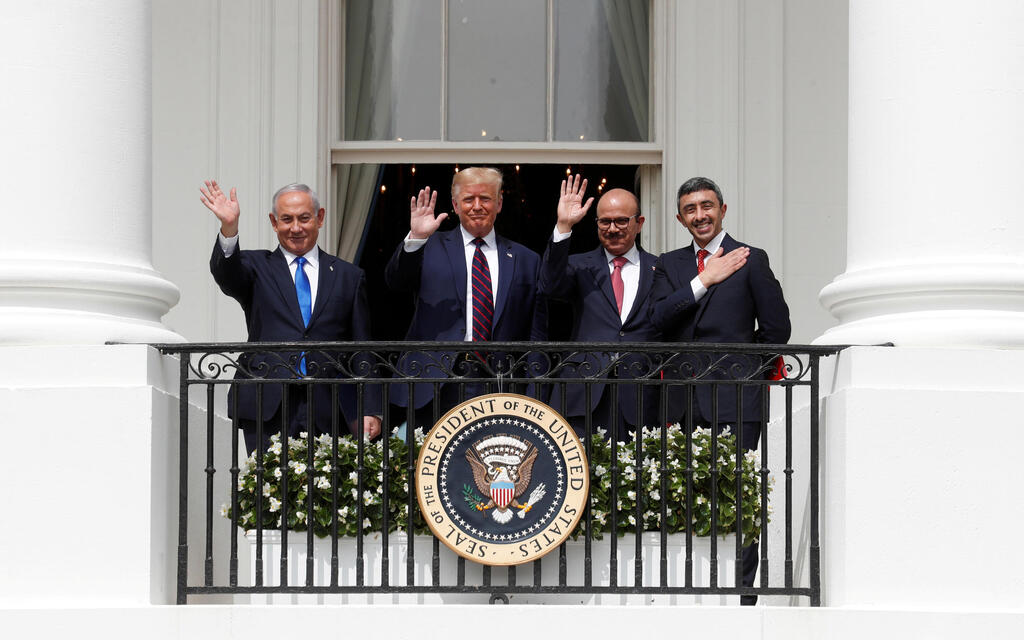
President Donald Trump with Prime Minister Benjamin Netanyahu and the foreign ministers of Bahrain and the United Arab Emirates at the signing of the Abraham Accords at the White House in Washington on Sept. 15, 2020
(Photo: Reuters)
That arrangement also requires discipline. Technology transfer can deepen the partnership, but Israeli companies must protect sensitive intellectual property while deciding how much manufacturing and technical expertise to localize.
The relationship's value will be measured by sustained output, dependable maintenance and repeat orders, not declarations of a new regional order.
The real test begins after the Marrakech Air Show: whether MMI delivers its turrets on schedule, whether Morocco can maintain and integrate the systems it produces and whether the company wins export orders beyond its home market.
If those milestones are met, the Abraham Accords will have produced something more substantial than diplomatic symbolism: a Moroccan defense industry built partly on Israeli technology.
Algeria is not facing an impassable shield today. It is watching a neighbor build more of its own defense capacity.
Amine Ayoub, a fellow at the Middle East Forum, is a policy analyst and writer based in Morocco. Follow him on X: @amineayoubx