


An IDF officer and two soldiers were seriously wounded overnight Friday when an explosive drone launched by Hezbollah struck a force operating in southern Lebanon, highlighting what has become one of the most persistent threats facing Israeli troops in the area.
One of the wounded soldiers has since improved and is now listed in moderate condition, while the other two remain in serious condition.
Israeli strikes on the Ali Taher Ridge


The drone struck at around 2:30 a.m. near a Yahalom combat engineering force operating as part of the Commando Brigade combat team in the Ali Taher Ridge area. The officer and two soldiers were evacuated by helicopter for medical treatment, and their families were notified.
In response, the IDF struck a series of Hezbollah targets across southern Lebanon, including in the Nabatieh and Ansar areas, and killed two senior commanders.
One strike targeted what the military described as a central Hezbollah command post, where Ali Samir al-Hajj Hassan, a battalion commander in the Radwan Force, was killed. According to the IDF, other terrorists involved in advancing attacks against Israeli forces in the security zone were also killed alongside him.
The IDF said Hassan’s family was also inside the command post at the time of the strike and was reportedly harmed. The military stressed that the relatives were not the target and accused Hassan of using them as human shields while staying with them inside a military facility.
Later, the IDF killed Abu Hassan Alaa, a senior commander in Hezbollah’s Badr unit, in the Deir al-Zahrani area. According to the military, Alaa had been involved in advancing numerous attacks against IDF forces, including explosive-drone launches in southern Lebanon.
The IDF said the strike was carried out in response to Hezbollah’s attack on Israeli forces and described Alaa’s killing as a blow to the Badr unit’s command capabilities.
A threat that has become central to the fighting
The weekend strike again focused attention on one of the principal threats facing IDF forces in southern Lebanon.
In recent months, Hezbollah has significantly expanded its use of explosive drones against Israeli troops, with some attacks causing serious casualties. Since the beginning of March, Hezbollah has claimed more than 70 attacks using explosive drones.
Since the ceasefire took effect in mid-April, fiber-optic FPV drones have become Hezbollah’s primary means of attacking IDF troops in the security zone.
FPV, or first-person-view, drones are relatively small and are controlled in real time through a camera mounted on the aircraft, giving the operator a direct view of the target area. They can carry explosive payloads weighing several kilograms and can be directed toward targets from distances of dozens of kilometers.
Fiber-optic guidance gives the drones a key battlefield advantage because it allows them to bypass some of the electronic warfare systems used by the IDF. Instead of relying on a conventional radio link that can be jammed, the drone remains connected to its operator through a thin fiber-optic cable.
A review by the Meir Amit Intelligence and Terrorism Information Center said Hezbollah is believed to operate workshops in southern Lebanon and the Bekaa Valley to assemble the small aircraft, which reportedly cost only $300 to $400 each.
The most common battlefield variant is the fiber-optic-guided drone, whose cable can extend for dozens of kilometers and makes conventional electronic jamming far less effective.
Although the pace of Hezbollah attacks has declined in recent weeks as agreements have advanced, the latest incident demonstrated that the group still retains the ability to launch explosive drones against IDF forces and inflict casualties.
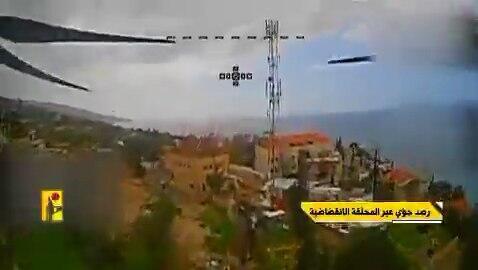
Hezbollah fiber-optic drone explodes in southern Lebanon
It was also not Hezbollah’s first attempt to strike Israeli troops with a drone since the ceasefire.
At the end of July, one of the group’s explosive drones hit an IDF engineering vehicle during a patrol on the Ali Taher Ridge, the same area where the three soldiers were wounded this weekend. No one was hurt in that incident, but the IDF described it as a “blatant violation” of the agreement.
In response, the military later destroyed a substantial portion of Hezbollah’s tunnel network in the Beaufort Ridge using roughly 700 tons of explosives. According to the IDF, the underground network had served as a major Badr unit command center and had also been used over the years to support explosive-drone launches.
Threat extends beyond troops in Lebanon
The drone threat is not limited to IDF units operating inside Lebanon.
During the fighting, Hezbollah also succeeded in sending explosive drones into Israeli territory and striking areas near northern border communities.
In May, three civilians were wounded by a drone strike near Rosh Hanikra. Fiber-optic cables left behind by Hezbollah drones were also found in Zar’it after the aircraft flew above homes in the community.
Their ability to fly at low altitude, strike with relatively high precision and resist electronic disruption makes the drones a threat not only to troops but also to communities close to the border.
That is one reason the IDF has been working to push Hezbollah cells and launch sites farther away from the frontier.
More than 100 counter-drone solutions tested
The difficulty of countering explosive drones has been recognized within the defense establishment for months.
The IDF and Israeli defense companies have already tested more than 100 different systems designed to detect and intercept the aircraft, with some moving into operational trials.
Among them is the Iron Drone Raider System, deployed in southern Lebanon. The system combines radar with an interceptor drone that fires a net at the hostile aircraft.
It has been used in operational tests, but the IDF has previously said its effectiveness is still insufficient. Other detection technologies also have been deployed to provide troops with several seconds of warning before an incoming drone strikes.
Prime Minister Benjamin Netanyahu addressed the threat in May, saying he had ordered the establishment of a special project to find a solution.
“A few weeks ago I ordered the creation of a special project to neutralize the drone threat, and today I will already be presented with a progress report on the issue,” he said at the time. “It will take time, but we are on it. We will continue to ensure Israel’s superiority in every arena.”
Alongside efforts to develop technological defenses, the IDF is also targeting Hezbollah infrastructure, drone operators and launch points.
On Wednesday, troops from the 55th Brigade operating in the Marah Aqaba area located a booby-trapped Hezbollah building, RPG rockets and other weapons. The structure and weapons were subsequently destroyed.
The weekend attack, one of the more serious incidents since the ceasefire entered into effect, again demonstrated that despite continued Israeli strikes on Hezbollah commanders and infrastructure, the organization retains the ability to operate explosive drones and wound troops in southern Lebanon.
The IDF is continuing to target the operators and commanders behind those launches while pursuing additional operational and technological solutions to a threat that has become increasingly central to the fighting.