

Disturbing footage released by Hamas over the weekend showing hostages Rom Braslavski and Evyatar David in severely deteriorated condition has shocked the Israeli public — but not the country’s leadership, officials familiar with the matter told Ynet on Sunday.
According to the sources, senior government officials had received intelligence in recent months warning of a significant decline in the health of hostages held in Gaza, including specific reports of intentional starvation. While the public reaction was one of horror, government sources told Ynet that the images confirmed what they already knew.
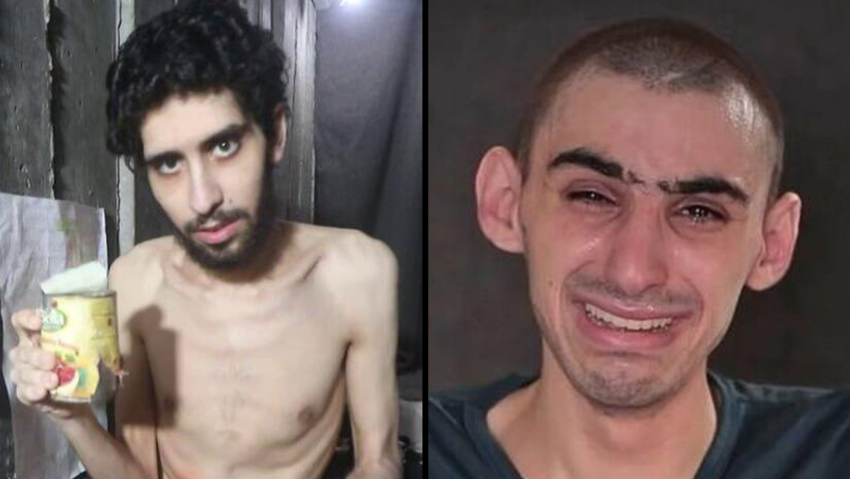
“The visuals are horrifying, but this isn’t something we didn’t already know,” said one official familiar with the classified assessments.
Braslavski was last shown in Palestinian Islamic Jihad (PIJ) custody in April 2025, and David appeared in a previous video released in February. Both men looked unwell at the time, but the new footage — reportedly filmed in mid- to late July — shows a steep decline in their physical condition, including signs of extreme malnourishment.
Get the Ynetnews app on your smartphone: Google Play: https://bit.ly/4eJ37pE | Apple App Store: https://bit.ly/3ZL7iNv
The intelligence about their treatment was presented in meetings of the inner Security Cabinet, which includes Prime Minister Benjamin Netanyahu, Defense Minister Israel Katz, and ministers Bezalel Smotrich and Itamar Ben-Gvir, among others. The information was also discussed in expanded Security Cabinet sessions attended by senior Cabinet ministers such as Yariv Levin and Gideon Sa’ar, and during private consultations held by Netanyahu with defense and intelligence leaders.
While authorities say families of the hostages were informed that their loved ones’ condition was worsening, the families of Braslavski and David have expressed deep frustration and shock.
Hostage Evyatar David depicted in Hamas propaganda clip


“They didn’t update us about any deterioration. He’s been missing for two weeks now,” said Ofir Braslavski, Rom’s father. “No one speaks to us except [Coordinator for the Hostages and the Missing Persons] Gal Hirsch occasionally, and even he has no answers. We keep asking.”
The father added that the new footage — the first in four months — left him devastated. “We saw he’s in critical condition. Israel is letting him die there. I just want to tell my dear Rom to hold on a little longer, even though it’s hard.”
PIJ, another terrorist group operating in Gaza, claimed last month that it lost contact with Braslavski and those guarding him. Israeli officials have not confirmed or denied that claim. In the past, the group has issued false statements about the condition and fate of hostages.
Evyatar David’s sister, Yeela David, also said she was caught off guard by the footage. “When I saw him, I broke down crying,” she told Ynet. “He looked so thin — like a child in the Holocaust. I never imagined he looked like that, certainly not after the video in February. He looked bad then, but I didn’t know it could get worse.”
'The prime minister listened in silence'
Netanyahu spoke with Braslavski and David's families on Saturday, assuring them the government is aware of their loved ones’ dire condition and is working to secure their release. But according to the families, the conversation offered little comfort — and no concrete answers.

Ofir Braslavski
(Photo: Paulina Patimer)
“It was a painful conversation,” said Braslavski's father. “We confronted him with everything we had to say, but got no answers. They just keep saying ‘yes, yes,’ while continuing with business as usual, like they have for the past two years. There’s no time left. The hostages are dying, and everyone keeps going about their lives.”
Braslavski described the call as tense and emotional. “The prime minister listened in silence,” he said. “I told him, ‘You and your wife looked us in the eye. Don’t disappoint us.’ This isn’t politics. My son is between life and death, he’s dying in agony. They must get them out today. Enough with the games. It’s been two years. This is death. It’s a Holocaust. The whole world, the whole nation, needs to understand that.”
Braslavski added that his son, once emotionally resilient, now appears to have given up hope. “He never cried in his life, and now he looks like someone who no longer wants to live,” he said. “How can they leave him there like that? I don’t understand.”
Despite public pressure and recent reports suggesting a comprehensive deal is in the works to return the remaining hostages in exchange for ending the war, a senior security official said no agreement is currently on the horizon.

Thousands rally in Tel Aviv in demand to release hostages held in Gaza
(Photo: REUTERS/Ammar Awad)
The main obstacles, the official said, include Israel’s conditions — such as the simultaneous release of all 50 hostages—both living and deceased, retention of Israeli control over the Philadelphi Corridor along Gaza’s southern border with Egypt and security buffer zones to protect communities near the Gaza border.
Hamas, for its part, has publicly rejected those terms. On Saturday, the terrorist group reiterated it would not disarm until a Palestinian state is established with Jerusalem as its capital.
The official also confirmed Hamas is demanding the entry of 600 aid trucks per day as a precondition to restarting negotiations — more than what was proposed in previous partial ceasefire agreements.
“The chances of a comprehensive agreement are slim,” the official said. “But perhaps we can at least get back to the negotiating table.”
According to reports, Israeli officials have also rejected Hamas’ proposed prisoner exchange ratios — such as releasing 200 convicted murderers in return for just 10 hostages — out of concern that not enough high-value prisoners would remain for future negotiations.