


An Israeli security official said Saturday that there is “no deal on the horizon” in ongoing negotiations with Hamas, as the terrorist group continues to reject Israel’s conditions for a comprehensive ceasefire and hostage release agreement.
“There’s no deal on the horizon,” said a senior security official. “It doesn’t look realistic. Hamas is demanding 600 aid trucks a day just to return to the negotiating table—more than what was offered in the partial deal. The best we can hope for now is to get the talks going again.”
Gallery
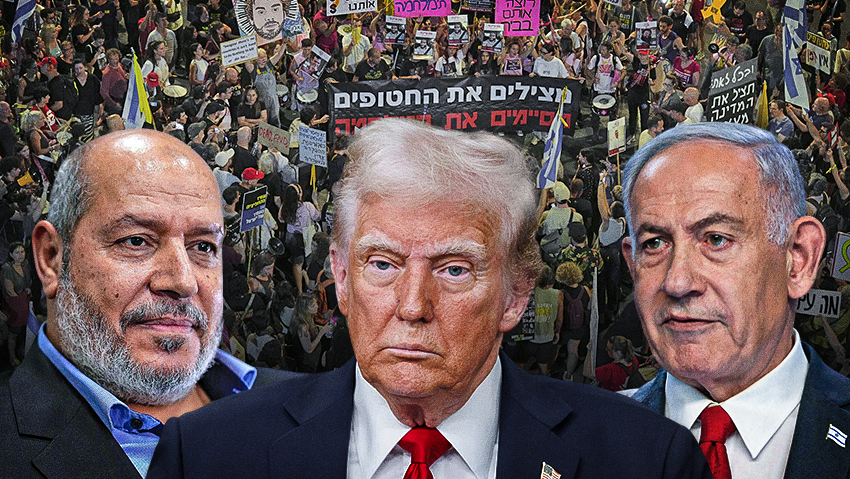
Khalil al-Hayya, Donald Trump, Benjamin Netanyahu
(Photo: AP Photo/Ariel Schalit, AP Photo/Khalil Hamra, REUTERS/Ronen Zvulun, Joshua Sukoff/Shutterstock)
The statement comes amid growing pressure on Israel's leadership, following the release of new Hamas videos showing Israeli hostages in dire condition. Saturday marked 666 days since Hamas’ October 7, 2023, attack and the abduction of more than 200 people, with Israel now facing one of the most dramatic decision points in the war.
Both Prime Minister Benjamin Netanyahu and U.S. Middle East envoy Steve Witkoff have said in recent days that any future deal must involve the release of all remaining hostages in a single phase and include a full end to the war in Gaza. But Israeli officials acknowledge that the chances of such an agreement remain slim. The alternative, launching a decisive military operation to defeat Hamas, raises grave concerns for the safety of hostages still in captivity.
The latest Hamas videos, including footage of hostages Evyatar David and Rom Braslavski, have shocked the Israeli public. In the recordings, the captives appear emaciated, drawing comparisons to Holocaust victims and prompting families to plead for international intervention. Braslavski’s family reportedly requested that the video be shown to U.S. President Donald Trump and envoy Witkoff.
Israeli analysts believe Hamas and Palestinian Islamic Jihad are using the footage as psychological warfare, portraying hostages as starving to mirror accusations that Israel is depriving Gaza’s civilian population of food. Israeli officials describe the tactic as a deliberate "hunger equation" intended to emotionally blackmail the Israeli public and escalate pressure on its leaders.
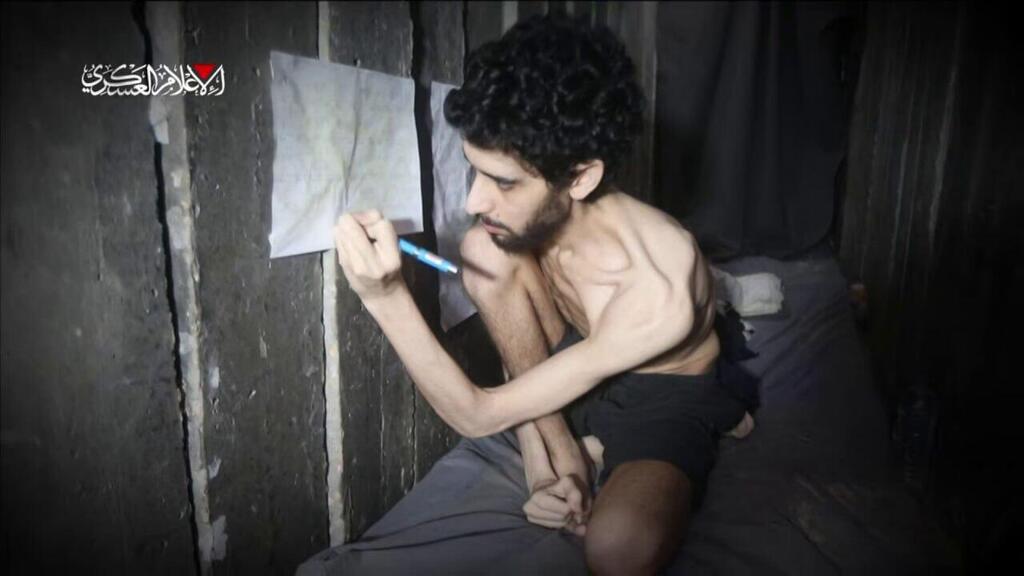
Hostage Evyatar David in a Hamas propaganda clip

Hostage Rom Braslavski in a Palestinian Islamic propaganda clip
Even when Israeli officials produce evidence that some of the widely circulated images are manipulated or feature gravely ill children unrelated to the war, the damage is done. “The world has had enough,” one Israeli official said. “It wants this war to end—and soon.”
According to Israeli sources, Hamas has demanded that any deal be anchored in a UN Security Council resolution and include American guarantees for a ceasefire, conditions Israel finds unacceptable. Hamas has also insisted that Witkoff be a formal signatory to any agreement. The terrorist group continues to reject disarmament, declaring it will not lay down arms until a sovereign Palestinian state with Jerusalem as its capital is established.
Meanwhile, Israel has drawn clear red lines: the release of all 50 remaining hostages, continued Israeli military control of the Philadelphi Corridor along the Gaza-Egypt border, and the prevention of large-scale releases of convicted terrorists. Israel has refused Hamas' demand to release 200 life-sentence prisoners for just 10 hostages, fearing it would leave insufficient leverage for those who remain.
Israel has also rejected the release of operatives of Hamas' elite Nukhba unit who have not yet been convicted and insists on the full disarmament of Hamas and the demilitarization of Gaza. Some officials have indicated Israel might accept symbolic exile of Hamas leaders and the establishment of a technocratic government in Gaza, but only if disarmament is part of the deal. Without that, they say, Netanyahu cannot return to his voters with an acceptable outcome.

Since collapse of Gaza ceasefire in March, Israel received proof of life from 12 hostages
Israeli and American officials now appear aligned on the principle that there will be no further phased agreements. A full deal must include an end to hostilities, hostage releases and disarmament—an outcome that is likely to require extensive negotiations. Yet time is running out for the hostages, a reality Hamas’ videos underscore with increasing urgency.
Rifts among Israeli leadership and rising diplomatic isolation
As the war in Gaza drags on and international patience wears thin, divisions within Israel’s leadership and mounting global pressure are complicating the path forward. While U.S. officials urge a dramatic increase in humanitarian aid to the war-torn enclave, Israeli leaders are locked in a standoff, both with Hamas and among themselves.
Get the Ynetnews app on your smartphone: Google Play: https://bit.ly/4eJ37pE | Apple App Store: https://bit.ly/3ZL7iNv
The Trump administration has reportedly pressed Israel to expand humanitarian access to Gaza, with the president said to be developing his own plan to address the crisis. U.S. officials have signaled that Israel has wide latitude to continue its military campaign against Hamas, but only until a political resolution takes shape.
In Jerusalem, Prime Minister Netanyahu has yet to convene the Security Cabinet this week, delaying key decisions as he coordinates with Washington. A Cabinet meeting is expected in the coming days, where ministers will weigh their options, ranging from diplomatic efforts to a possible expanded military offensive.
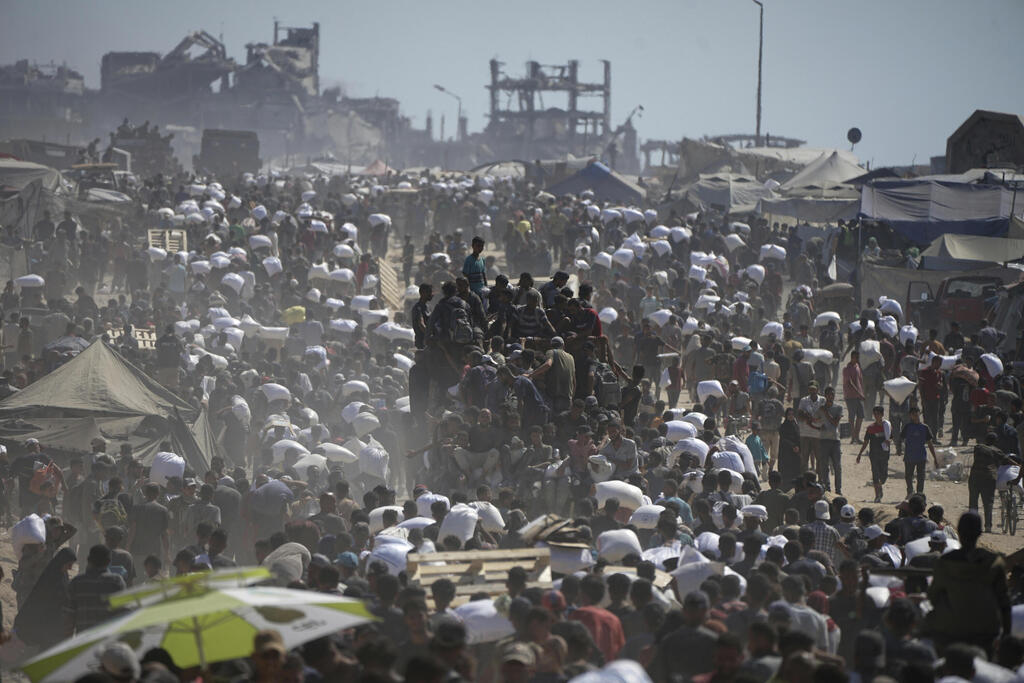
Palestinian masses looting humanitarian aid convoys in Gaza
(Photo: AP Photo/Jehad Alshrafi)
But decision-making is hampered by internal disagreements. Cabinet hardliners are calling for a full conquest of Gaza, while military officials warn such a move could endanger the lives of remaining hostages. According to Israeli media reports, Netanyahu has privately promised Finance Minister Bezalel Smotrich that if no hostage deal is reached, he will authorize symbolic annexation measures, potentially including the northern buffer zone along Gaza’s border.
Any annexation, however, risks deepening Israel’s diplomatic isolation. Israeli officials warn that such a move could prompt additional countries to join France and Canada in formally recognizing a Palestinian state when the issue arises at the United Nations in September.
Military planners are reportedly considering a tighter encirclement of Gaza City and other population centers as an alternative to a full occupation, though the army continues to caution against being drawn into a prolonged and costly ground war.
For now, Israel is giving Witkoff, along with Qatari and Egyptian mediators, a few more days to try and restart negotiations with Hamas and propose a framework for a comprehensive ceasefire and hostage deal.
But Hamas, Israeli officials say, has so far benefited from the stalemate. The group continues to seize humanitarian aid entering Gaza, without releasing a single hostage. Leaders of the terror group recently left Doha for Turkey and severed contact with mediators, signaling defiance. “They’re getting what they want for free—more aid, no concessions,” one Israeli official said. “It’s extortion, plain and simple.”