


Amid White House optimism over an emerging agreement with Iran, briefings presented at the Security Cabinet meeting on Wednesday night indicated that U.S. President Donald Trump views renewed fighting as a “last resort” and does not want it. Meanwhile, Israel fears a “bad deal” that would release billions of dollars to Iran, and is concerned that it will not include the issue of ballistic missiles.
Israel believes the current situation is not bad from its perspective, despite a Washington Post report saying Iran could withstand a blockade for several more months and that it still possesses most of the missiles and launchers it had before the war. Israel’s first preference is, of course, renewed fighting and strikes on power plants and infrastructure — attacks that Israel believes would accelerate the fall of the regime. But Trump does not want to resume the fighting and is pursuing a deal, and absent renewed hostilities the preferred option is to continue the blockade.
Gallery
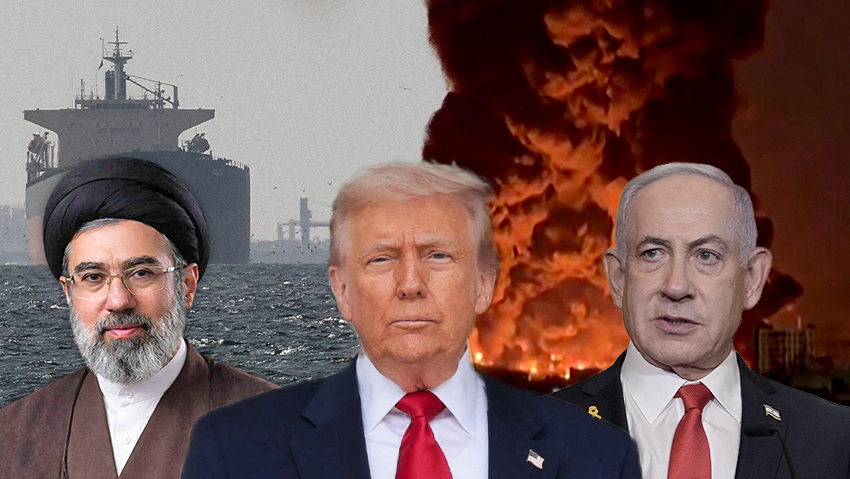
'The US is acting in its own interest': Netanyahu, Trump and Khamenei
(Photos: AFP-Source: UGC/UNKNOWN, Jessica Koscielniak/Stringer/Reuters, Oliver Contreras/AFP)
Because of the U.S. blockade, Iran is losing about half a billion dollars a day, severely damaging the Islamic Republic’s economy. Senior Israeli officials said the Americans are currently insisting on issues important to Israel, first and foremost halting the nuclear program and removing the enriched uranium.
Still, the central question is whether the Americans will insist on this until the end — and there is no answer to that. At the moment, it does not appear the sides are on the verge of a “bad deal” for Israel, but it is not at all certain there will be any agreement, given the wide gaps. For that reason, Israel estimates that at most there will be a two-stage deal, or a framework agreement similar to the phased agreement with Hamas. In such a scenario, the United States would lift the blockade on Iran, Iran would lift the blockade on the Strait of Hormuz, and the sides would continue negotiations. According to reports, such negotiations would last 30 days, but it is far from certain the sides will reach an understanding in that period.
At the same time, the current signs indicate that Trump does not want to return to fighting. He has also encountered difficulties from Saudi Arabia, which restricted U.S. use of bases in the kingdom out of fear of Iranian retaliation. Israel was furious with Saudi Arabia, since it had pushed behind the scenes for the fall of the regime in Tehran, but at the moment of truth got cold feet and blocked Trump. On Thursday evening, The Wall Street Journal reported that both Saudi Arabia and Kuwait had lifted the restrictions they imposed on the Americans. The same report said the Trump administration is considering renewing “Project Freedom,” but a U.S. official denied that in an interview with Al Jazeera.

Ships in the Strait of Hormuz
(Photo: Amirhosein Khorgooi/ISNA/WANA (West Asia News Agency) via Reuters)
Israel is troubled by an agreement that would inject large sums of money into Iran, which could seek revenge and use the billions of dollars to arm its proxies. Meanwhile, a senior Israeli official said it is “not at all certain there will be an agreement.”
“If each side remains in its position and does not make a dramatic change, then on the face of it there cannot be an agreement, or there will be a two-stage agreement,” he said. “Trump does not want to resume fire, but in the end he needs to come back with something. The Iranians are not helping him conclude this.”
Israel also stresses that coordination with the U.S. is continuing and that there is intensive and good dialogue, but officials note that “we do not run the United States. In the end, they decide according to American interests.”
As for the fighting against Hezbollah in Lebanon, Iran is insisting on linking the fronts, but from Israel’s perspective, there is not much change.
Destruction of Hezbollah underground infrastructure
(Photo: IDF spokesperson's unit)


“If in the end there is a ceasefire like the one that existed before the start of the war, and we remain in the security zone in southern Lebanon, that is a very good result for us and our situation has improved,” a senior Israeli official said.
“We also created a security zone and dismantled all the Shiite villages in the first line, flattening the homes that are all Hezbollah infrastructure,” he said. “On the other hand, we will retain the right to act against any emerging threat, as in the previous ceasefire agreement. If we get there, the result is successful.”
He added that more than 2,000 Hezbollah operatives were killed during the war, and about 250 since the most recent ceasefire.
“Under the ceasefire, we are clearing the village areas,” he said. “Hezbollah is under great pressure from this because it understands that if they are taken down, they will not be able to return. So they fire at us to force us to stop, and we fire at them. So there is already a ceasefire, but it is not working because Hezbollah is not prepared for it, since we are continuing our activity. We are gradually expanding our freedom of action.”
A day after the first Israeli strike in Beirut in a long time, in which the commander of Hezbollah’s Radwan Force was killed, it emerged that a third meeting between Israeli and Lebanese representatives will be held in Washington. The ambassadors of the two countries will meet next week in the U.S. capital. The meetings will be held Thursday and Friday at the State Department, and for the first time working teams from Israel — from the National Security Council and the IDF — will also take part.
Regarding the situation in Gaza, briefings presented to the Cabinet said Hamas is evading the issue and has not given an official answer. A senior Israeli official noted: “It was expected that Hamas would not rush to disarm. The situation in Iran and Lebanon affects the resumption of fire in Gaza. The current situation is not bad for us. The IDF holds 60% of the Gaza Strip and continues to strike Hamas every day, including Wednesday, killing the son of Khalil al-Hayya. That fire was not aimed at him personally, but at a terrorist moving around with other terrorists.”