


The IDF is entering an especially tense weekend, one that casts a dramatic question mark over the four main fronts. A question mark that could, at any moment, lead to a dramatic turn of events.
Iran is still defined as a central arena. The IDF is currently at a significant stage of preparing additional plans regarding Iran and all theaters, as part of forward planning and thinking ahead. There is close coordination with the U.S.: Israeli and U.S. forces remain in daily contact, with ongoing meetings and discussions focused primarily on ensuring that operational plans for a potential Israeli entry into a full-scale campaign are aligned with Washington, both defensively and offensively. The IDF repeatedly stresses that the military is at peak readiness for the possibility that it will be required to strike.
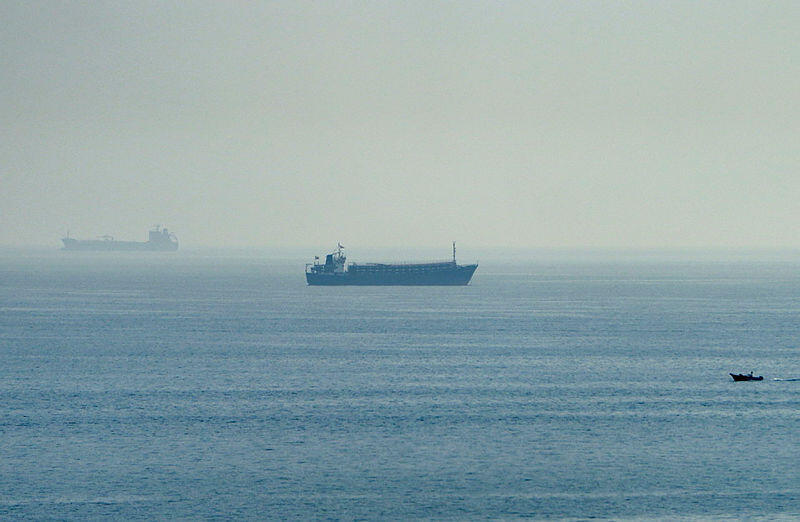
Over the past month, there were at least two occasions when the IDF was certain it was about to enter a campaign, but ultimately President Donald Trump halted the attack. Senior security officials explain that the challenge in the Iranian arena is also its advantage: the close cooperation with the U.S.
Either way, in the event of escalation, security officials will seek to build an exceptional target bank that can produce a rapid effect while avoiding a prolonged war similar to the one that took place during Operation Roaring Lion.
Lebanon: A delicate balancing act
In Lebanon, the IDF continues investigating the deadly explosion in which Major (Res.) Harel Birenstock and combat medic Sergeant Major (Res.) Tamir Vaknin were killed, while four other soldiers were seriously wounded.
Hours after the initial inquiry and throughout the night, large forces raided the site of the blast in the village of Majdal Zoun and began a deeper investigation into its source. The IDF announced that Hezbollah had violated the ceasefire, despite the fact that the investigation is still ongoing.
Security officials explain that the fact that soldiers were injured by an explosive device in this manner during a ceasefire itself constitutes a violation of the understandings.
Either way, the IDF has already focused its strikes on an area it has identified as a priority for days: the village of Al-Mansouri. The village, half of which has been completely destroyed, is located inside the “yellow line” area and is controlled by the IDF through surveillance and firepower. The IDF has also recently struck members of Hezbollah’s elite Radwan Force in the village.
However, in recent weeks Lebanese residents have begun returning to the village, and several hundred civilians are now there. The development has deeply concerned the security establishment, which distributed warning leaflets, though without success.
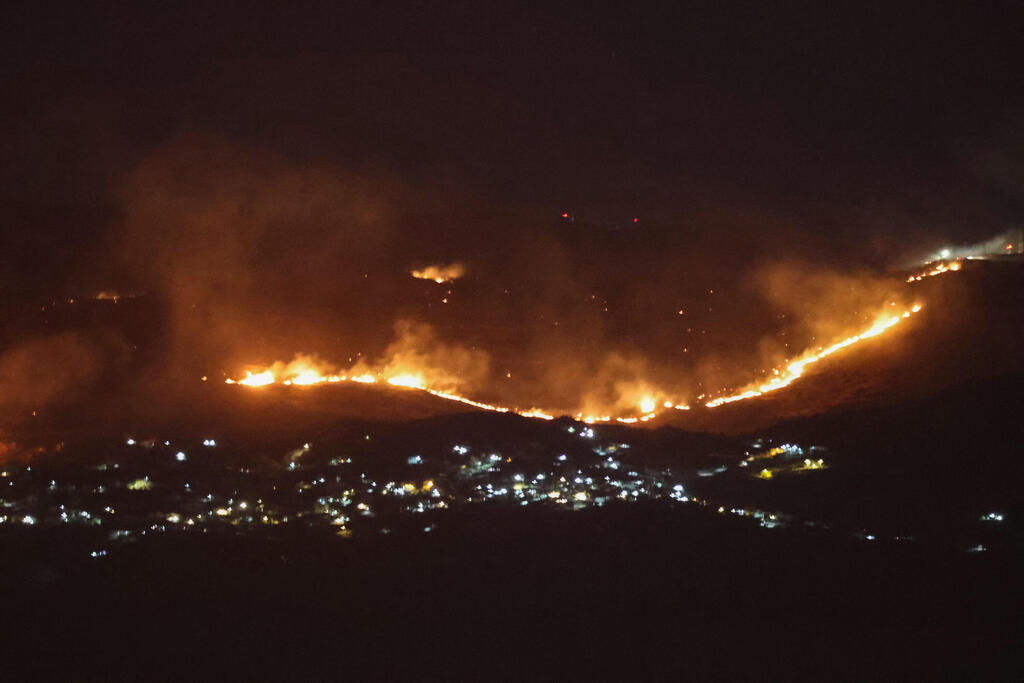
The blast in the village of Majdal Zoun
(Photo: AFP)
The IDF is determined to prevent residents from returning to the village, which is located only about 13 kilometers from the border. This is the reason behind the heavy concentration of strikes there.
The entire situation in southern Lebanon is unfolding on a knife-edge. On one hand, the IDF is careful not to dismantle the framework created under the pilot arrangement. Security officials say there is currently no desire to destabilize the situation. The IDF maintains strong control over the area along the yellow line and is preparing additional targets should fighting resume.
At the same time, the military is strengthening its presence in the area in a more permanent manner. Northern Command is analyzing the terrain and, based on its conclusions, deciding where to establish a more permanent military presence and where to maintain a lighter footprint. The decisions depend mainly on operational needs and the terrain conditions that make such deployments possible.
All of this is taking place against the backdrop of tense talks between Israel and Lebanon over the continuation of the pilot arrangement. The main dispute currently concerns the oversight mechanism for the Lebanese army: Who will determine that its actions in the pilot areas — destroying infrastructure, confiscating weapons and demilitarizing the area — have actually been completed successfully, allowing the process to continue to additional villages?
The Lebanon front is entering a tense period. Hezbollah, for its part, will do everything it can to undermine the negotiations. Another factor complicating the decision-making process is that underground infrastructure remains on the Ali Taher ridge that has not yet been addressed.
The political leadership will now have to decide whether to dismantle those sites, what impact such a move would have on the framework agreement and how the Americans would respond.
Freedom of action has narrowed
In Gaza, Southern Command has enjoyed especially broad freedom of action in recent months, eliminating dozens of Hamas operatives almost every day. At the same time — and perhaps because of an understanding that this freedom could later be curtailed — Southern Command pushed the boundaries of the yellow line even further.
Today, according to assessments, the IDF controls about 63% of the Gaza Strip. However, despite initial denials from the IDF, a dramatic shift occurred at the beginning of the week, and the pace of strikes dropped significantly.
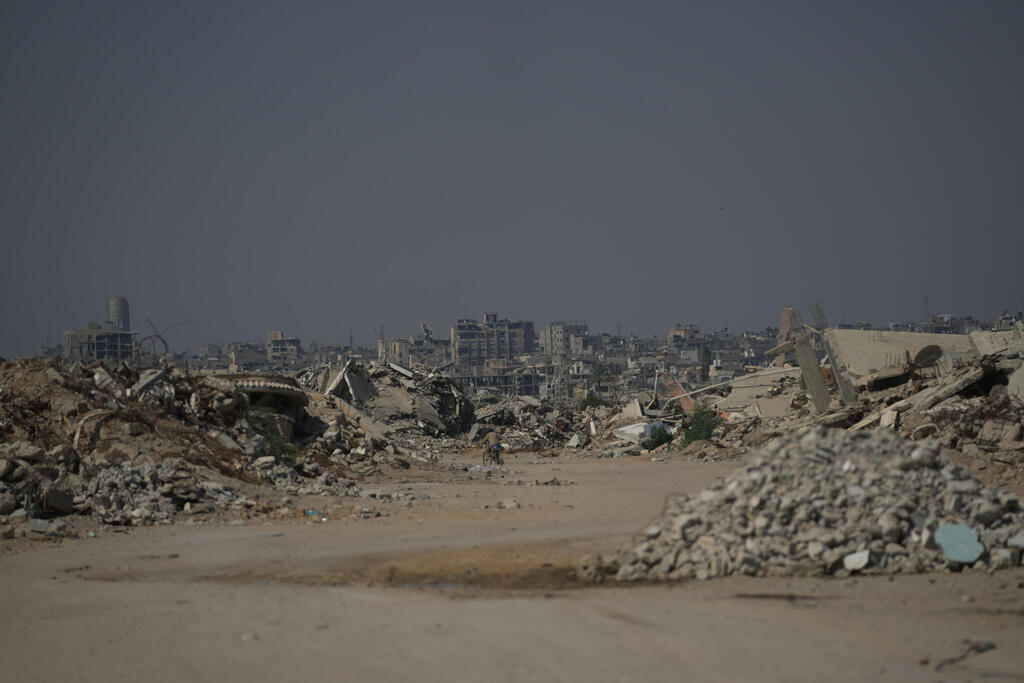
Gaza Strip. Where does the situation go from here?
(Photo: AP Photo/Abdel Kareem Hana)
For comparison, from the beginning of June until the start of this week, Hamas operatives were eliminated in the Gaza Strip almost every day, including during the tense days of fighting with Iran. Now, there are almost no planned strikes.
Because of the diplomatic sensitivity, the IDF raised the approval level required for planned operations to the chief of staff himself. The purpose is to ensure that he updates the political leadership and that operations are carefully calibrated.
No official has stated that forces will now act only against immediate threats, but that is effectively what is happening on the ground. The Gaza front has never operated this way before, even during ceasefires surrounding hostage releases.
Where does the situation go from here?
On one hand, Southern Command’s freedom of action has been severely reduced compared with only days ago, in an effort to allow negotiations to move forward. On the other hand, there is still a deep dispute over the issues of demilitarization and withdrawal.
Will Hamas disarm before the IDF moves back even a single centimeter? Will the process happen in the opposite order? Or can the two steps be carried out simultaneously?
The result is a dangerous stalemate. In this sensitive situation, any small incident in the Strip involving terrorist activity — something that until two days ago would have been immediately targeted — will now become a major question requiring consideration at the chief of staff’s desk.
The West Bank front is boiling
The West Bank is entering an explosive and highly tense weekend. Since the deadly attack in which Benayahu Mellet and Maj. Yuval Ezra were killed, the area has been on edge.
At least 24 battalions are currently deployed across the West Bank, and Central Command has already begun operations: extensive arrests, mapping the attacker’s home ahead of its demolition and the detention of all those involved in the attack.
But beneath the surface, intense pressure is building from settlers toward Defense Minister Israel Katz. They argue that the response is insufficient and that the same tools are being used now as those used before October 7, 2023.
Even setting aside the dispute that developed this week between Katz and Central Command chief Maj. Gen. Avi Bluth, the political leadership — meaning the defense minister himself — has already publicly announced that he instructed the IDF to submit plans for taking over another refugee camp.
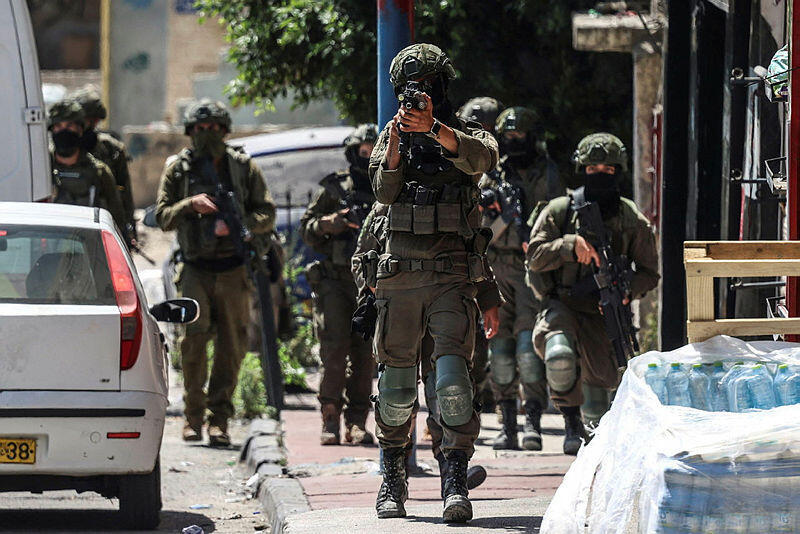
The IDF took control of the Jenin, Tulkarm and Nur Shams refugee camps
(Photo: Zain JAAFAR / AFP)
The pilot program of taking over refugee camps in the northern West Bank has been considered highly successful. The IDF took control of the Jenin, Tulkarm and Nur Shams refugee camps and reduced the level of terrorism by dozens of percentage points.
However, taking control of a camp is only the first stage of the campaign. Afterward, forces must remain there continuously, requiring a massive troop commitment.
At present, the army does not see an operational need to take over another refugee camp. Such a move would significantly disrupt the order of operations and affect troop levels and activity throughout the entire sector.
Despite this, forces have prepared for focused and significant operations, as is currently taking place in Qalandiya, where troops are searching for terrorist infrastructure and, in particular, Hamas-linked cells.
One of the main goals is preventing lone-wolf attacks, which are heavily influenced by incitement.
In practice, Central Command is seeking to split the operation into phases and pursue either prolonged operations or a more aggressive campaign, but one that would not end with the demolition of hundreds of structures in a refugee camp and the permanent deployment of forces, as occurred in the northern West Bank camps.
At the same time, Central Command is attempting to calm tensions on the ground but is struggling to contain nationalist crime incidents that continue almost daily.
The deep concern is that such an incident could reignite broader security instability.
The Central Command front enters the weekend facing a deep uncertainty: Will forces move toward taking over another refugee camp? Is the region heading toward a broader multi-front escalation? Or will the military succeed in containing the situation?