


Against the backdrop of U.S.-Iran talks in Oman and Israel’s concern that Iran’s missile program is not being addressed, Prime Minister Benjamin Netanyahu has urgently moved up his trip to Washington, where he is set to meet with U.S. President Donald Trump. The move does not mean that a potential U.S. strike on Iran is off the table, but rather reflects Israel’s effort to ensure that the issue of Iran’s ballistic missiles is firmly on the agenda.
The prime minister was the one who requested the meeting, in part out of the belief that his personal chemistry with Trump would help him once again enlist the U.S. president firmly on Israel’s side. Senior Israeli officials noted that every time Netanyahu and Trump entered a closed room and the prime minister laid out Israel’s real security needs, the American president was there for Israel. Now as well, Netanyahu wants to make sure that Trump does not retreat from the red lines that were agreed upon both at their previous summit in Mar-a-Lago and in the talks held by U.S. envoy Steve Witkoff and his meetings with Israel’s security chiefs.
Gallery
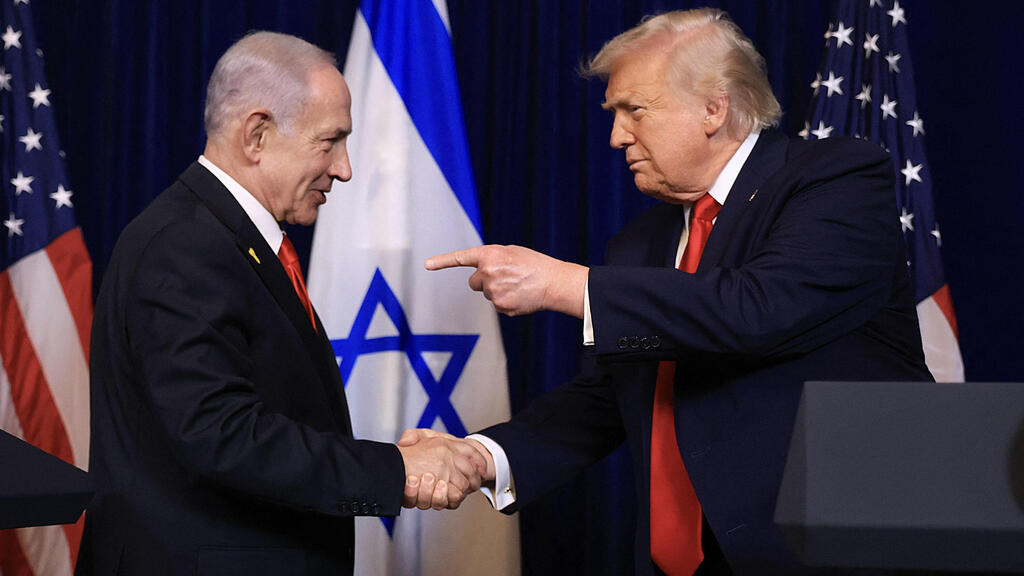
Prime Minister Benjamin Netanyahu and US President Donald Trump in Florida in December
(Photo: Joe Raedle / Getty Images North America/ AFP)
Israel is in fact concerned that Trump does not view ballistic missiles as a red line, and Netanyahu is therefore expected to convey to him that this is a historic opportunity to dismantle the axis of evil and to capitalize on the fact that Iran is battered and weak. Netanyahu’s central message to Trump will be that those missiles pose an existential threat to Israel, given the scale and ranges Iran is planning, and that it is imperative to ensure once and for all that Israel is no longer under a threat of annihilation.
In addition, the prime minister will present Israel’s willingness to assist the United States in any military action it chooses, arguing that Israel’s power vis-à-vis Iran would be a major force multiplier for the Americans. Netanyahu’s meeting with Trump is intended as a counterweight to the immense pressure being exerted on him by Qatar, Turkey and Iran, alongside elements within the MAGA movement who do not want to see further U.S. involvement in a war they view as not their own.

'Rain of missiles': A new threatening sign hung in Palestine Square in Tehran
In Jerusalem, officials listened with concern to Iranian statements that the talks have been and will be limited solely to the nuclear issue, and they fear that Iran may ultimately show flexibility on that front—leading Trump to see it as a sufficient achievement and refrain from launching an attack.
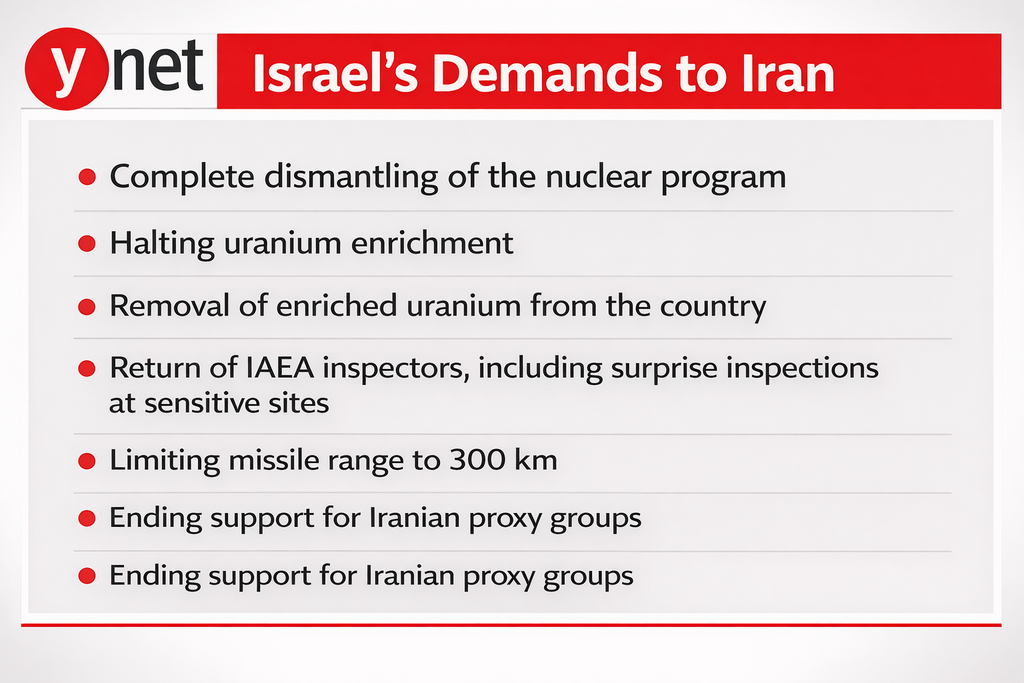
For Israel, however, there are additional burning issues: dismantling the axis of evil; removing enriched uranium; zero enrichment; zero enrichment capabilities; limiting the range of ballistic missiles to 300 kilometers so they cannot reach Israeli territory; and halting financial support for proxy forces. The chances that Iran would accept these demands are slim, as from Tehran’s perspective they amount to a surrender document.
Meanwhile, the Americans are continuing their force buildup, giving them more time for negotiations—until their “armada” is fully in place. A security official assessed that the United States will ultimately strike, and that the likelihood of an agreement under the conditions Washington is presenting to Tehran is slim to impossible. That is why close coordination between Netanyahu and Trump is considered crucial.
An additional reason for the rushed trip—perhaps the central one—is Netanyahu’s desire not to be in Washington during the convening of Trump’s Board of Peace on February 19. The last thing the prime minister wants is to be seen alongside Turkish President Recep Tayyip Erdoğan, Qatari Prime Minister Al Thani and, possibly, Mahmoud Abbas. Netanyahu understood that such a scenario could entangle him with his political base and, therefore, pushed to move the visit up by a week.
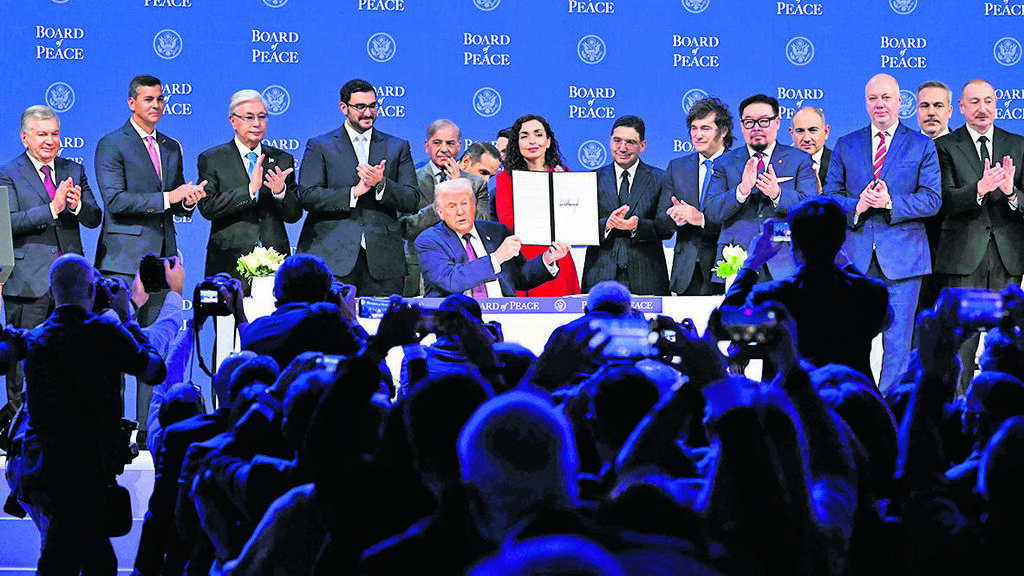
Founding of the Board of Peace
(Photo: Fabrice Coffrini/AFP)
At the same time, some Israeli government officials, including National Security Minister Itamar Ben-Gvir, are pointing an accusing finger at the pair of American mediators, Witkoff and Jared Kushner—whom they claim are advancing a conciliatory, concessionary line toward Iran and could persuade Trump to step back from the military option. This, in their view, is yet another reason why Netanyahu believed it was necessary to whisper directly in Trump’s ear at this moment.
Alongside all this, it cannot be ruled out that the urgent trip is a form of deception or an attempt to lull the Iranians. This has happened before, with Netanyahu’s trip to deliver a speech at the UN that lulled Hezbollah Secretary-General Hassan Nasrallah before his assassination, and with the negotiations between Witkoff and the Iranians that preceded the Israeli strike last summer.
First published: 21:37, 02.08.26