

U.S. President Donald Trump does not appear eager to renew the war with Iran. He has declared that he has “all the time in the world” to reach an agreement, while the U.S. blockade of Iran’s ports continues to choke its economy and prevent it from profiting from oil exports. At the same time, he has argued that time is not on the ayatollahs’ side. “Clock is ticking!” he posted last week.
He later canceled the departure of the U.S. delegation for talks in Islamabad, said negotiations could be conducted by phone and reportedly rejected Iran’s new proposal submitted over the weekend, which called for the blockade to be lifted first and only then for nuclear talks to begin. CNN reported that Iran is expected to submit a revised proposal.
Gallery
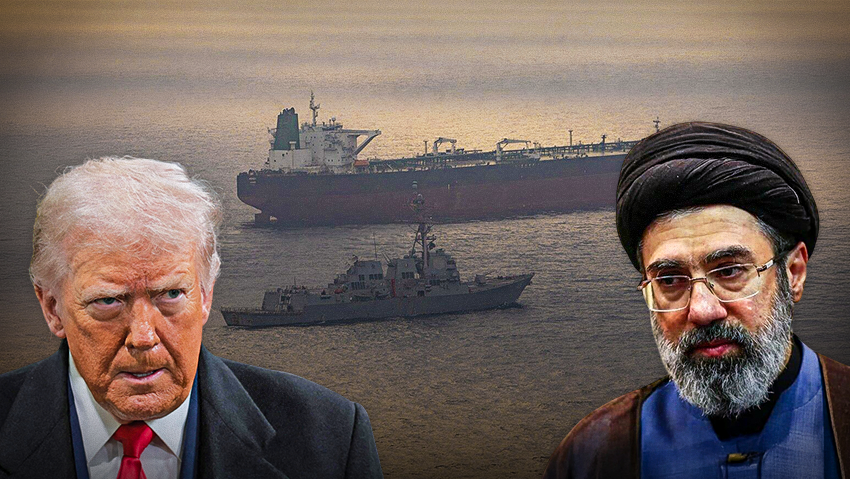
US President Donald Trump and Iran Supreme Leader MOtjaba Khameini
(Photos:: Anna Moneymaker / AFP, CENTCOM)
One of the issues looming over this waiting game — in which Trump is betting that Iran will “break” and agree to concessions before the global economy breaks under the oil crisis caused by the closure of the Strait of Hormuz — is how much time Iran’s oil industry has before it runs out of storage space for oil it is struggling to export, mainly to China. Such a situation could force it to shut down pumping at some of its oil wells, a move that experts say could cause long-term damage.
Trump claimed Sunday in an interview with Fox News that Iran had only three more days “before it just blows up,” but those days have already passed with no sign of that happening. Other experts estimate it will take at least two months before Iran runs out of storage space. Last night, Trump sounded confident that Iran is in a desperate position, claiming it had “informed” the United States that it was “in a state of collapse,” perhaps referring to this issue.
Meanwhile, the damage to the global economy continues as oil prices rise. Although they have fallen slightly from the peak reached at the height of the war, they remain high, with Brent crude at $108 a barrel — hurting Trump politically at home. Reuters published a new poll Tuesday showing his approval rating had fallen to the lowest point of his second term, with only 34% of Americans satisfied with his performance, down from 36% in a previous poll conducted about a week earlier.
Against that backdrop, and amid Republican fears that the political damage could cost them control ofCongress in the November midterm elections, Reuters published another report saying U.S. intelligence is examining a dramatic scenario: a unilateral declaration of victory over Iran by Trump and a withdrawal from the conflict.
According to the report, based on two U.S. government officials and another source familiar with the matter, U.S. intelligence is assessing how Iran would respond to such a declaration by the president, along with other questions, at the request of senior Trump administration officials. The goal is to understand the consequences of such a possible move. Reuters stressed, however, that there is currently no real indication Trump is leaning toward such a declaration — and that he could just as easily decide to resume bombing Iran.
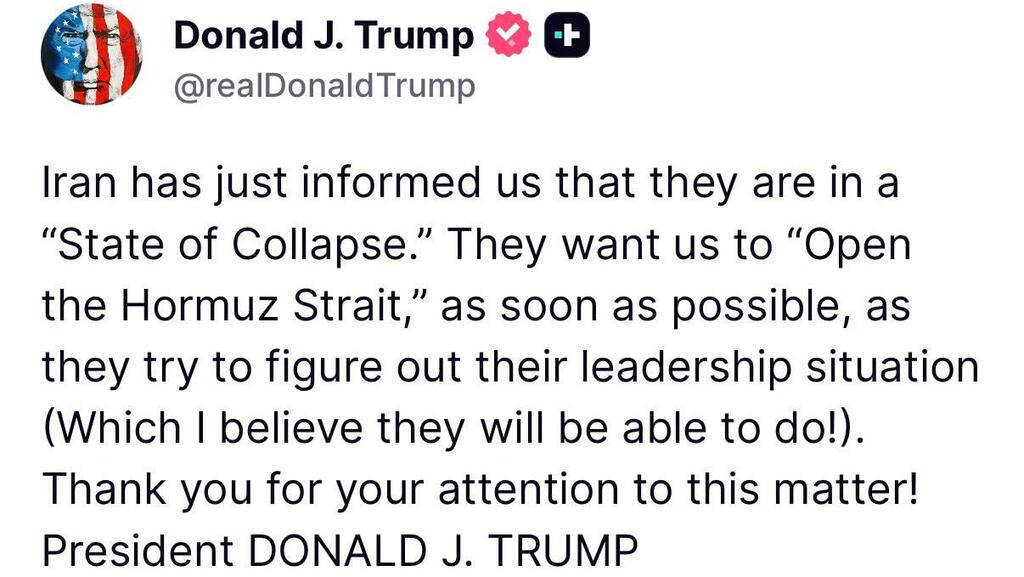
(Photo: X platform)
Still, Reuters noted that “a quick de-escalation could ease political pressure on the president, even if it could leave behind an emboldened Iran that may eventually rebuild its nuclear and missile programs and threaten U.S. allies in the region.”
Reuters reported that the U.S. intelligence community had already examined, after the war began in late February, a scenario in which Trump unilaterally declared victory. The assessment at the time was that if such a declaration were accompanied by a withdrawal of U.S. forces from the region, Iran would view it as a victory for itself. But if Trump kept the heavy military presence in place, Iran would see it merely as a negotiating tactic — and such a declaration would not necessarily lead to the end of the war.
U.S. public opinion polls show the war is deeply unpopular. In a Reuters poll last week, only 26% said it was worth the cost, and just 25% believed it made the United States safer. Three sources familiar with discussions held in recent days at the White House said Trump is well aware of the political price he and Republicans are paying.
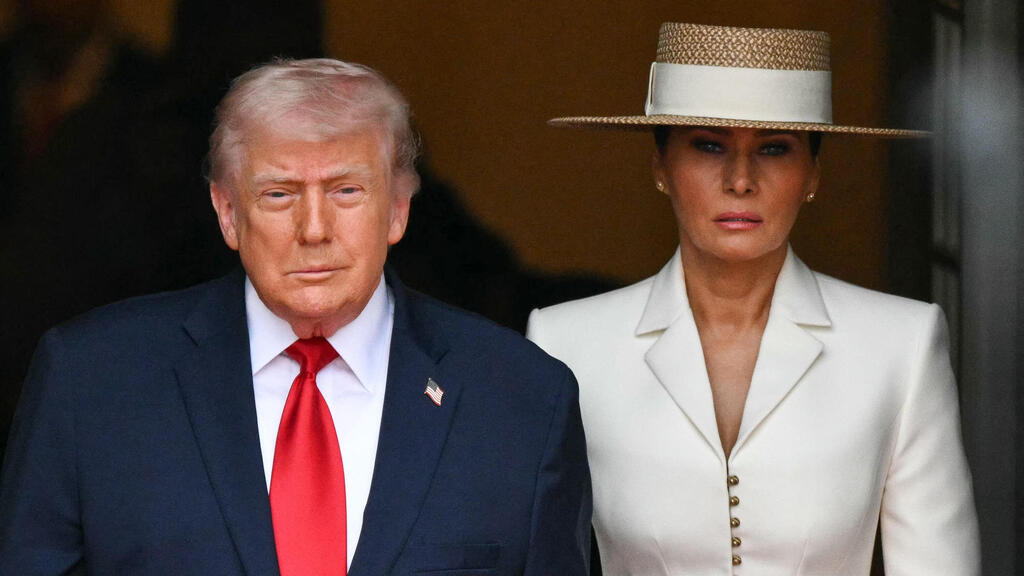
US President Donald Trump and First Lady Melania Trump
(Photo: Mandel Ngan / AFP)
A White House official said the internal pressure on the president to end the war is “enormous.” One source who spoke with Reuters said Iran used the temporary ceasefire to bring missile launchers, ammunition, drones and “other materials buried in Israeli and U.S. strikes in the first weeks of the conflict” back out from underground. As a result, the source said, the “tactical costs” of fully renewing the war could be higher than they were in the first days of the ceasefire.
Trump responds to chancellor’s attack: ‘He doesn’t know what he’s talking about!'
Despite all this, Reuters stressed that renewed strikes against Iran remain one of the options on the president’s table. Trump himself is not signaling any intention of retreating from his central demand — that Iran have no ability to enrich uranium and thus preserve a future breakout capability toward a nuclear weapon.
He responded Monday night to the unusual criticism leveled at him by German Chancellor Friedrich Merz, who said Iran was “humiliating” the United States in drawn-out negotiations and had proven stronger in the war than previously believed. Merz also criticized Trump, saying he had entered the war without any clear strategy.
A day later, Trump wrote on his social network Truth Social: “German Chancellor Friedrich Merz thinks it is OK for Iran to have a nuclear weapon. He doesn’t know what he is talking about! If Iran has a nuclear weapon, the entire world will be held hostage. I am doing something with Iran, right now, that other nations, or other presidents, should have done long ago. No wonder Germany is doing so badly, both economically and otherwise!”
The American blockade: Documentation of the seizure of a ship - which was released after it became clear that it was not on its way to Iran
(צילום: מתוך X)


Returning to the question of whether Iran can withstand the U.S. blockade for much longer: The New York Times reported overnight that there is disagreement within the Trump administration on the matter. Some officials believe that continuing the naval blockade for another two months could cause long-term damage to Iran’s energy industry, given the shortage of storage space for oil being pumped from underground. Those officials argued that oil wells cannot simply be turned on and off, and that forced shutdowns would exact a heavy price from Iran, which would want to reach an agreement to avoid long-term harm.
However, according to the report, other officials in the administration argue that this assessment is flawed, pointing as evidence to Iran’s hardening positions in the negotiations. Tehran has repeatedly rejected U.S. proposals to halt its nuclear program and hand over its stockpile of enriched uranium. Officials briefed on Trump’s discussions said a heated debate had emerged over who has more leverage in the negotiations and which country is better positioned to bear the economic consequences.
Desperate measures for desperate times
Trump has given a timeline of only a few days until Iran runs out of space to store crude oil, but that appears to be a rather optimistic estimate on his part. Bloomberg reported Tuesday, based on an analysis by research firm Kpler, that Iran’s unused storage space will last between 12 days and 22 days. The company’s report was published Monday, and there are also longer estimates.
The U.S. blockade prevents Iran from exporting oil, and Kpler said in its report that, contrary to Iranian claims, it had not detected tankers that succeeded in breaking it. According to the report, Iran has already been forced to significantly reduce the amount of crude oil it pumps daily. If the blockade continues, it will have to cut its daily oil output by about half by mid-May, to 1.2 million to 1.3 million barrels per day. But Kpler stressed that Iran is unlikely to feel the financial damage from the halt in oil exports quickly, and that this will happen only if the blockade continues for several more months.
Still, the blockade could force Iran to shut down wells, and according to The Wall Street Journal, it is taking a range of steps to avoid that. The newspaper’s report also relied on Kpler data and estimates, noting that Iran has capacity to store about 86 million to 95 million barrels of oil and is currently storing about 49 million barrels. In practice, various limitations, including safety concerns, prevent full use of the available storage space.
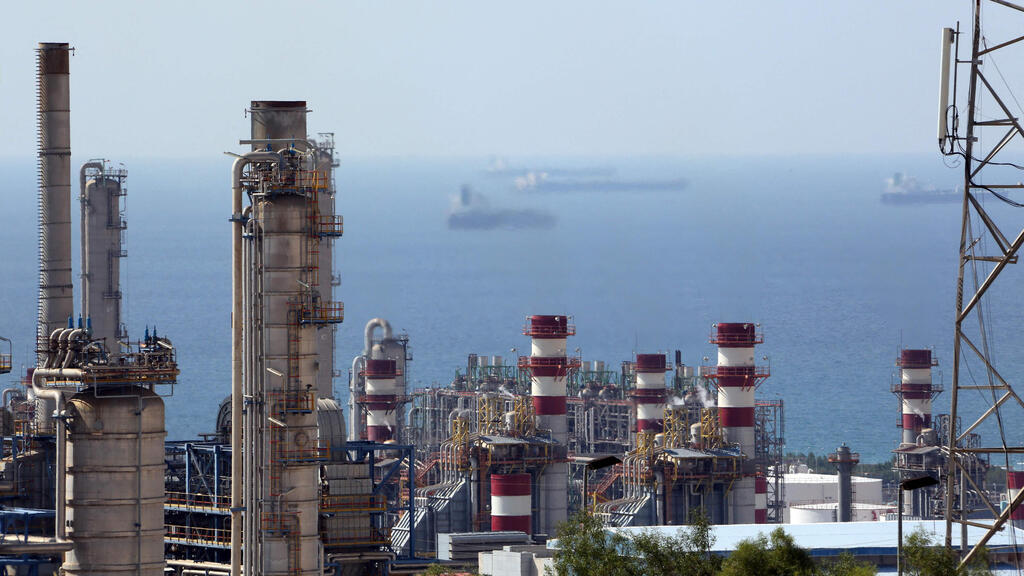
Oil facility in Asaluyeh
(Photo: Atta Kenare / AFP)
Iran is therefore finding temporary solutions: It is filling empty tankers stuck in the Persian Gulf with oil and also using unused tanks in the country’s north, including in Asaluyeh, which Israel struck during the war. An Iranian official said those tanks had so far been avoided because of their poor condition.
Iran is also transporting oil by train to refineries in China. But that is a far more expensive journey than shipping by tanker, neutralizing the advantage Iranian oil has for Chinese buyers, since it is sold to them at a discount in violation of U.S. sanctions. According to The Wall Street Journal, it is more “a sign of distress than a solution.” Erica Downs, an expert on China’s energy industry at Columbia University, said it is unclear whether Chinese refineries will continue buying Iranian oil if transportation costs rise, but she described Iran’s steps as “desperate measures for desperate times.”
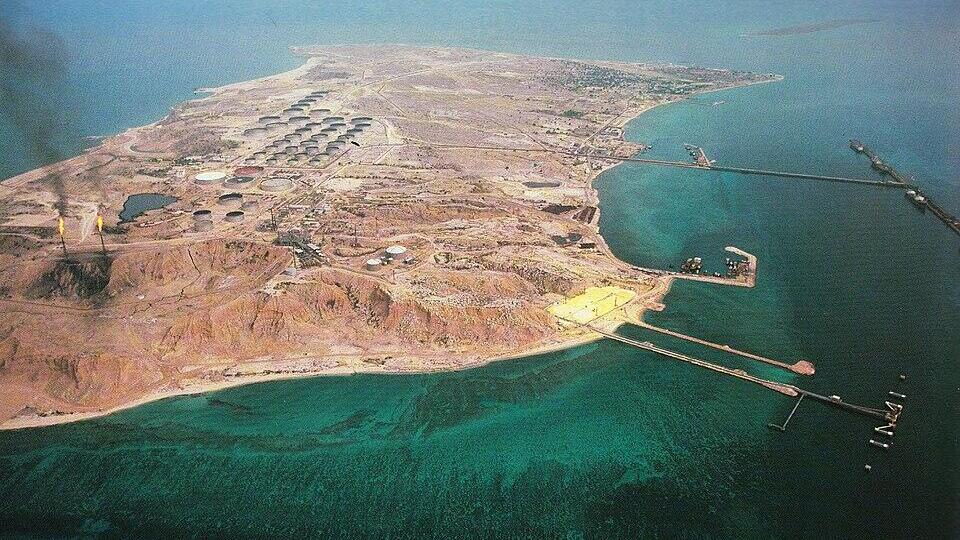
Kharg Island in a photo from 1973
In any case, analysts agree that the U.S. blockade is a significant pressure lever — and Trump does not appear ready to give it up quickly. “Shutting down the Iranian oil production industry will add pressure and drive them to negotiations,” Sanam Vakil, head of the Middle East and North Africa program at the British think tank Chatham House, told The Wall Street Journal.
Iranian Vice President Ismail Saqib Isfahani issued an explicit threat Sunday over the possibility of damage to the Islamic Republic’s oil wells. “We will respond to any act of war. If any infrastructure, including oil wells, is damaged as a result of the blockade, we promise that four times that damage will be inflicted on the countries that provide support to the aggressor,” he wrote on X, referring to the Arab Gulf states. “We have a different way of doing math. One oil well equals four oil wells,” he added.
First published: 01:00, 04.29.26